

Every serious auction catalog contains two documents. The first is the one everyone reads: the bullet points, the estimate, the adjectives. The second is buried in the prose, and it is the one that tells you what you are actually buying. Broad Arrow’s listing for the 1990 Monte Carlo Automotive Centenaire, chassis EL 0002 GB, which crosses the block at the Zoute Concours Auction in Knokke-Heist on October 9 with an estimate of €900,000 to €1,200,000, is a textbook case of a car whose second document is more interesting than its first. Read closely, the paperwork on the MCA Centenaire EL0002 tells a subtler story than the bullet points.
We have already made the case for why the Centenaire deserves a place in the history of the carbon-fiber supercar. This piece is about something else: how a buyer should read the car. Because the Centenaire’s entire value proposition rests on one word—first—and the catalog itself, to Broad Arrow’s credit, supplies the qualifications that every bidder ought to underline.
Five Built, Three That Count
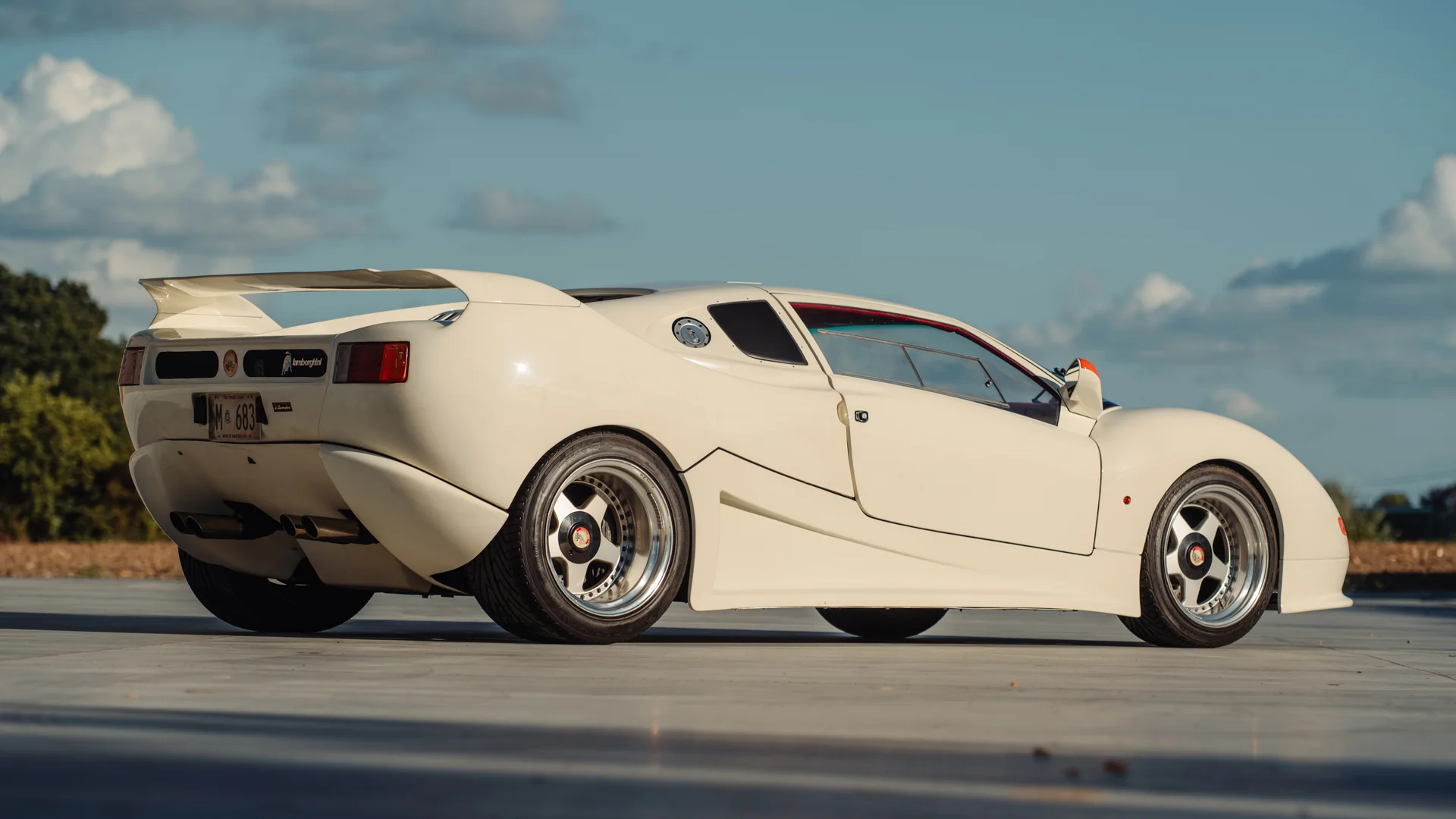
The headline figure is five. The bullet points describe this car as “the first of just five MCA Centenaires produced,” and that is the number that will travel. Read further and the catalog draws a finer line: Monte Carlo Automotive’s supercar “evolved throughout the 1990s with examples sporting different names and powerplants,” culminating in the Méga Monte Carlo of 1996, “but only three original Centenaires were produced between 1990 and 1992 with the original Lamborghini V12.”
That distinction is not pedantry. It is the difference between a model and a lineage. When a small maker’s design is re-engineered, renamed and re-engined across a decade, collectors eventually decide which version is canonical, and the canonical version is almost always the original specification. For the Centenaire, that means the Lamborghini-powered cars: the ones built around the 5.2-liter four-valve V12 from the Countach 5000 Quattrovalvole, rated at 455 PS and paired with a ZF six-speed manual, under an engine-supply agreement Fulvio-Maria Ballabio secured from Sant’Agata in 1990. A copy of that contract is in the history file. For a car of this kind, that single piece of paper arguably does more to anchor the Centenaire’s identity than any badge on the body.
So the relevant population is not five. It is three. And of those three, this is the first.
Chassis 001, Now EL0002
The second detail worth underlining is the car’s identity. According to a letter from MCA representative Matteo Ramello that accompanies the car, this was originally chassis number 001—the first Centenaire completed, used for development, testing and presentation. Once that work was done, it was redesignated EL0002 and spent roughly a decade at Lamborghini’s Sant’Agata Bolognese factory before being gifted back to Ballabio in the early 2000s.
Renumbered development cars are not unusual among low-volume manufacturers, and a renumbering is not a red flag in itself. But it is exactly the kind of detail that experienced buyers reconcile before they bid, not after. The questions are simple: which documents refer to 001, which refer to EL0002, and does the paper trail connect the two without gaps? The Ramello letter is the bridge. Period photographs of the car inside the Lamborghini factory are the corroboration. A bidder who has seen both, and who has asked the specialist department for anything else touching the car’s years at Sant’Agata, is bidding on a known quantity. A bidder who hasn’t is bidding on a story.
The Odometer Is the Least Important Number Here
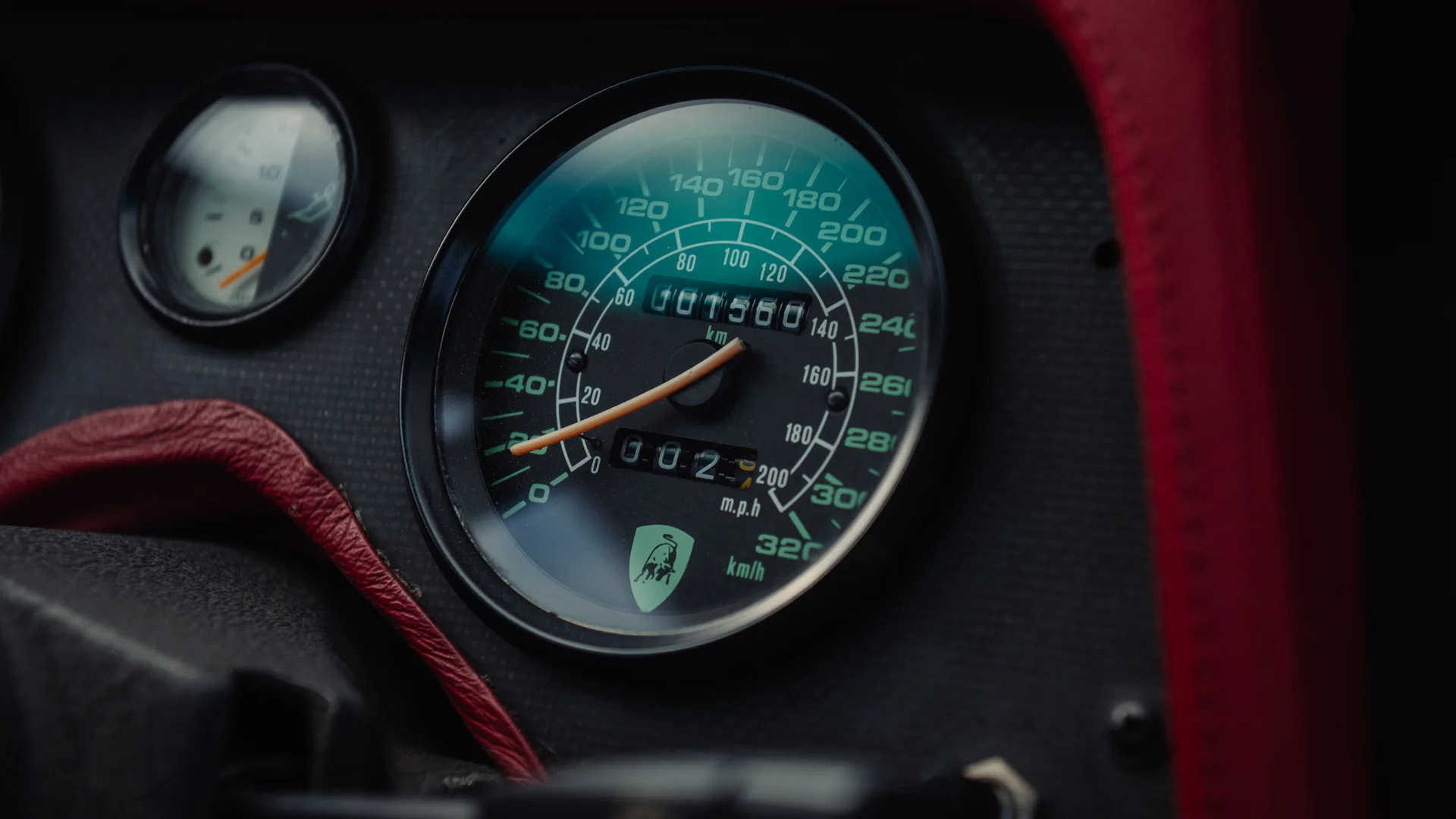
The catalog records 1,560 kilometers at cataloging, then immediately—and commendably—qualifies it: given the car’s life as MCA’s development, test and presentation machine, “it is quite likely that the chassis accumulated additional mileage before its odometer was reset and the car was sold to its first private owner.”
Collectors conditioned by low-mileage Diablos and delivery-mile Ferraris will want to treat 1,560 km as a selling point. It isn’t, and Broad Arrow isn’t pretending otherwise. On a development car, the kilometers that matter are the ones the odometer never recorded—the testing, the presentation work, the reason the car exists in the form it does. Here, use is provenance. The meaningful condition questions are not about how far the car has traveled but about what a 36-year-old carbon structure looks like today: has the tub been inspected by someone who understands early composites, is there any record of damage or repair from its test life, and who in Europe could competently repair it if it were ever needed? Those answers belong in the pre-sale inspection, not in the post-sale regret.
White, Blue, and White Again
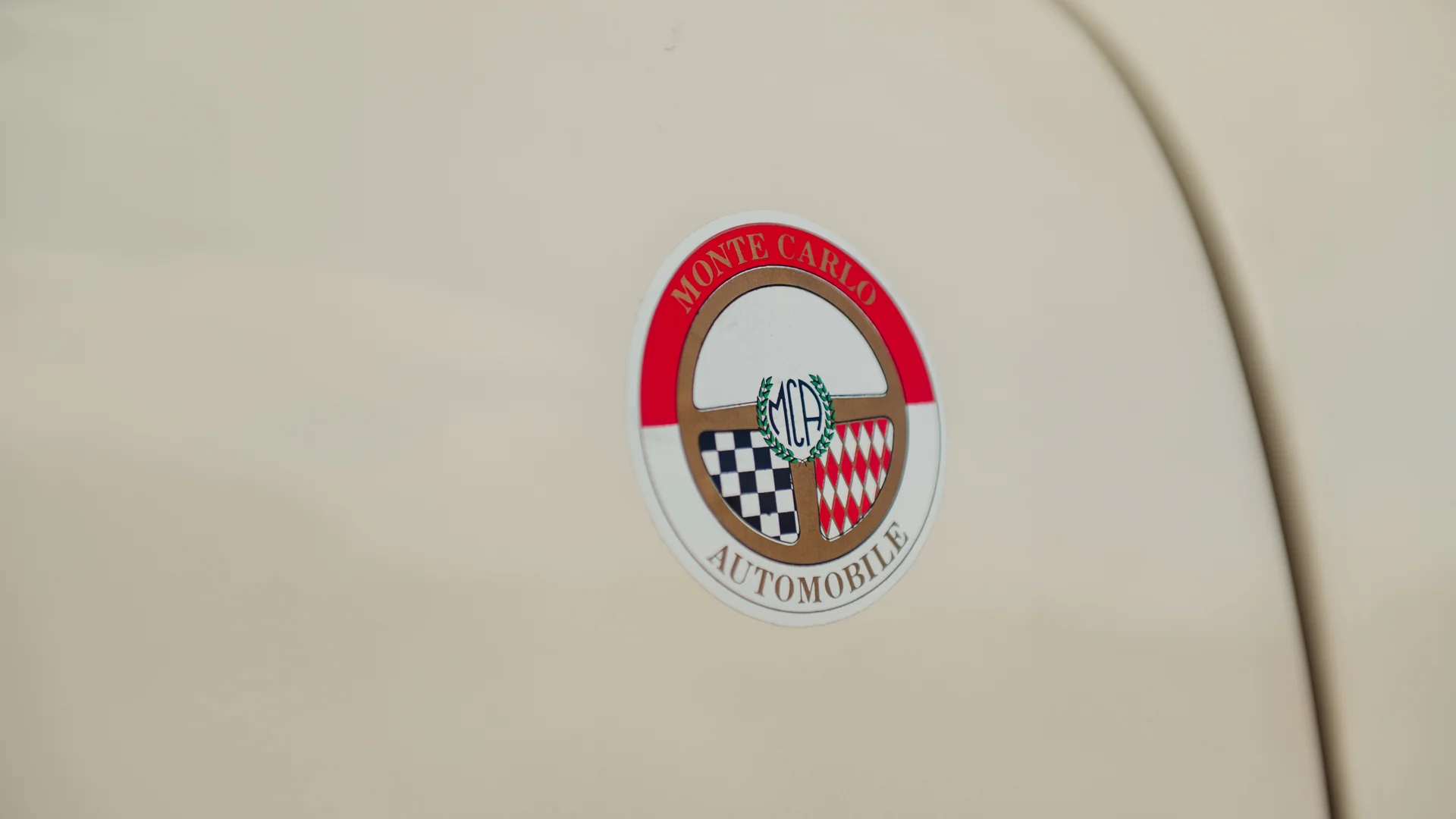
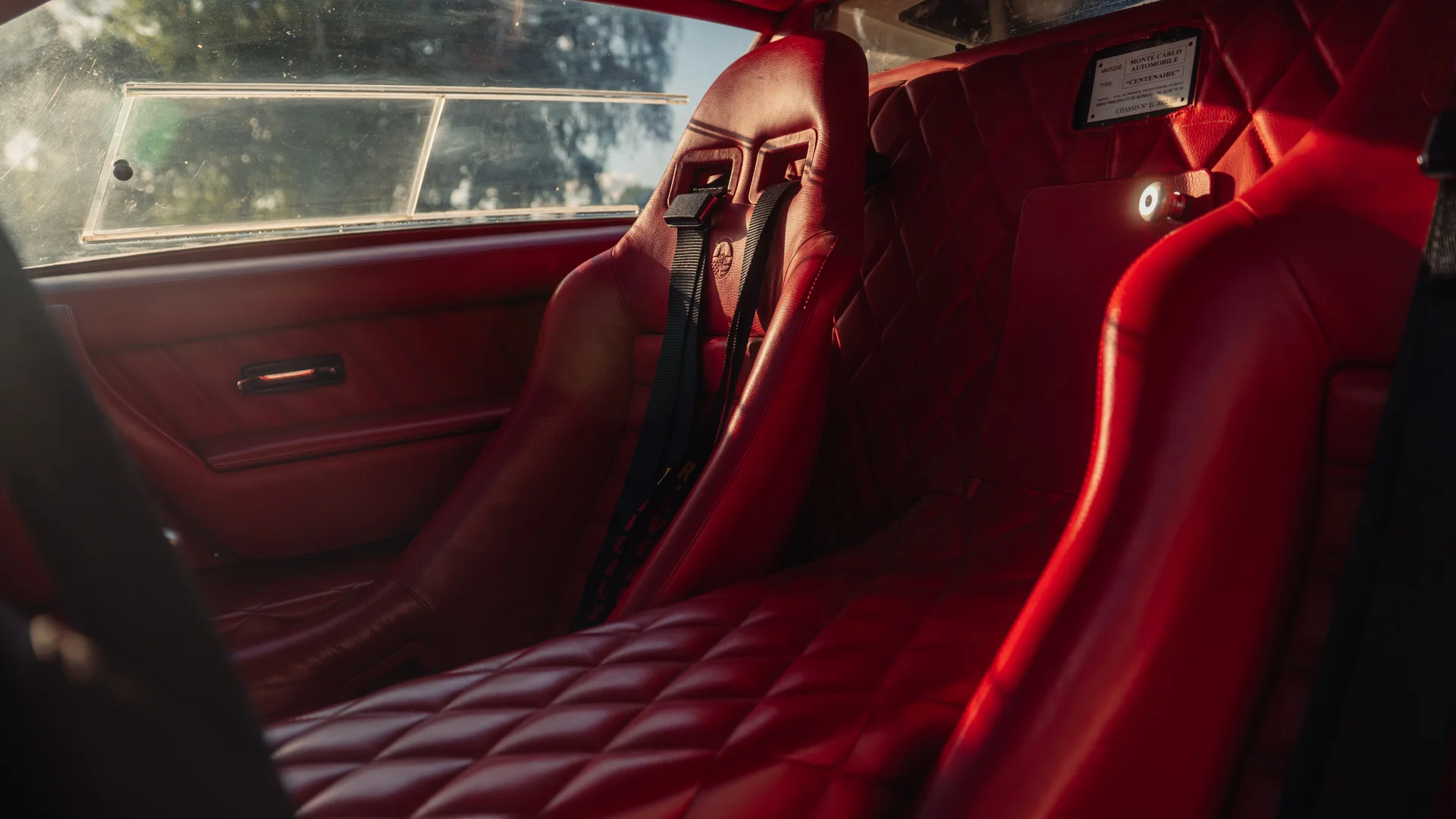
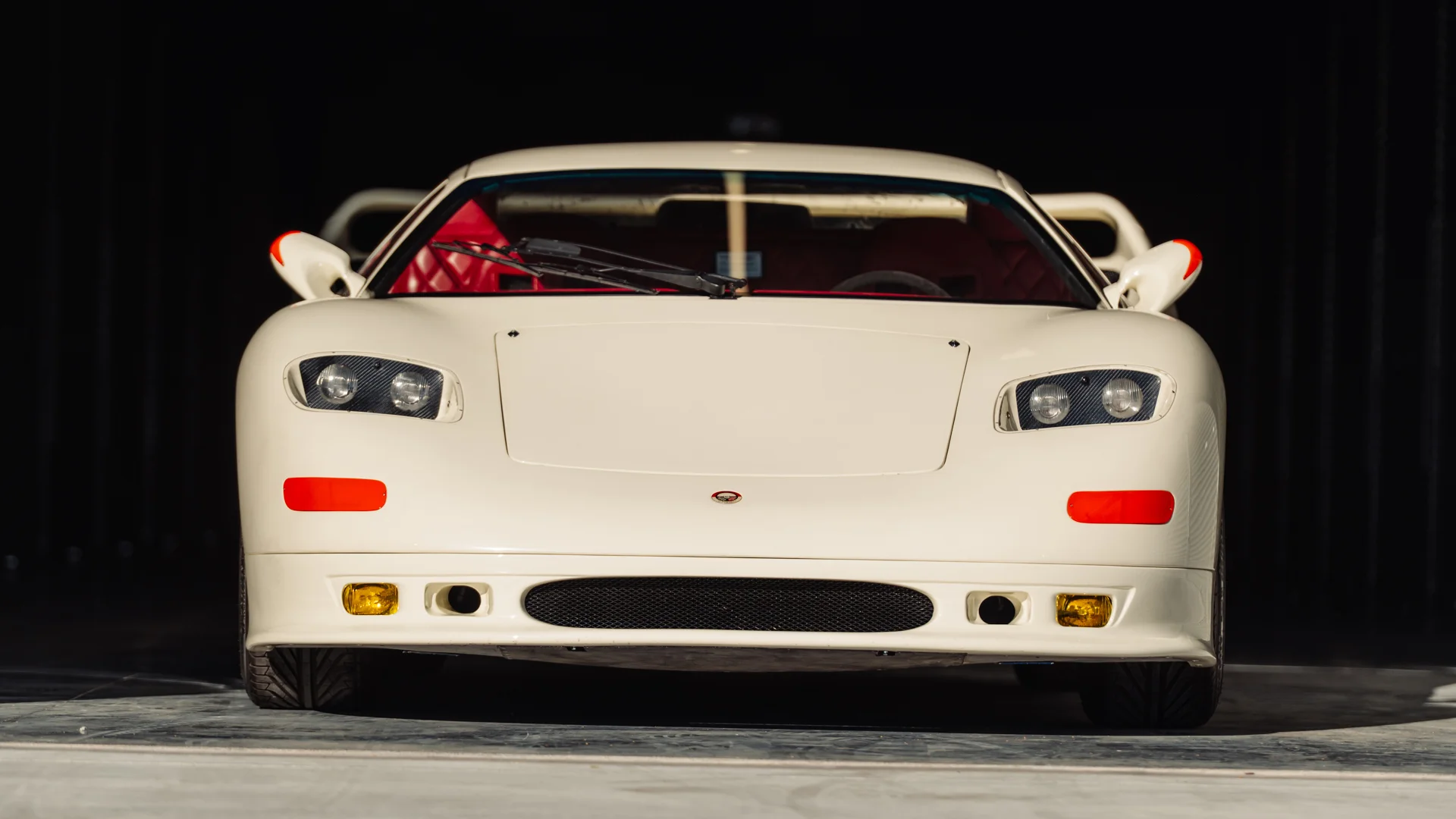
EL0002 was the only Centenaire originally finished in Ivory White over red leather—Monaco’s national colors, a choice made for a car presented to Prince Albert II to mark the Automobile Club de Monaco’s centenary. It was refinished in blue around 2007 for Rétromobile, where it was shown alongside the one-off Lamborghini Pregunta. The consignor acquired it in France in 2014, and around 2016 the bodywork was restored by Établissements Lecoq and returned to Ivory White, with the original red leather preserved.
That is the right sequence of decisions. The blue livery was a chapter; the white was the car’s identity. Returning a car to its launch specification is only defensible when the launch specification is documented and meaningful, and in this case it is both. The preserved interior matters just as much: on a car where most of the structure was experimental, the surfaces the first owner, the factory and the Prince would have touched are the most direct link to 1990 that survives.
“First” Is a Claim. Buyers Should Treat It Like One.
Broad Arrow bills the Centenaire as the first road car with a carbon-fiber monocoque, unveiled in May 1990—ahead of the Jaguar XJR-15, announced that November, and well ahead of the McLaren F1, which is so often credited with the achievement. Elsewhere in the same catalog, the phrasing is more precise: MCA is described as the maker of “the first homologated carbon fiber monocoque supercar for the road.”
That qualifier—homologated—is where the claim will be tested. Automotive “firsts” are contested precisely because they depend on definitions: first shown, first sold, first registered, first built in series. The Centenaire’s priority on dates appears sound. Its priority on definitions is something a buyer should be able to demonstrate from the file, because that is exactly what a future buyer, a concours committee or a museum curator will ask to see.
Here is the uncomfortable truth about historical firsts: in the collector market, being first is worth only as much as history is willing to write down. The McLaren F1 is not remembered as the carbon pioneer because it came first. It is remembered because it won Le Mans, set a speed record and carried Gordon Murray’s name. The Centenaire’s two Le Mans development cars reportedly saw 354 km/h on the Mulsanne Straight during trials for the 1993 race, but the Centenaire itself never built a competition record. Its claim to history rests on paper. Whoever buys EL0002 is not just buying a car; they are taking on the job of making the rest of the world remember it.
The Comparable Sale Is Sitting in the Same Catalog
There are no public auction comparables for an original Lamborghini-powered Centenaire, which is typical of cars built in single digits. But the most instructive reference point comes from the same consignor and the same sale. At Broad Arrow’s inaugural Zoute auction in 2025, the 1998 Lamborghini Pregunta—the concept this Centenaire stood beside at Rétromobile 2007—sold for €2,143,750, the third-highest result of the weekend.
Both cars are Lamborghini-adjacent, both are one-of-a-kind or close to it, both came from the same seller, and both shared the same stand in Paris. The Centenaire’s estimate sits at roughly half the Pregunta’s result. The gap is the price of a name. The Pregunta is a Lamborghini; the Centenaire is a car with a Lamborghini engine built by a company most collectors have never heard of. That spread is the market’s current valuation of brand equity, and it will narrow only if the Centenaire’s story becomes common knowledge. It is also why the estimate is not a verdict on the car’s importance, only on how widely that importance is understood.
The broader context helps. Collectors have spent the past several years reassessing the orphaned supercars of the late 1980s and early 1990s—the cars built on the momentum of the Ferrari F40 and killed by the recession that followed. Buyers are increasingly willing to pay for engineering substance from makers who did not survive. That trend is real. What remains unproven is how far it extends down the recognition curve, from the Jaguars and Bugattis at the top of the category to a Monégasque project with three original-specification cars. Zoute will offer one data point.
What Serious Buyers Should Weigh
- Population, properly defined. Five Centenaires, three with the original Lamborghini V12, and this is the first of those. Price the car against the smaller number.
- The chassis bridge. Confirm that the documentation connecting chassis 001 to EL0002 is complete and consistent, and seek anything further from Lamborghini’s records on the car’s decade at Sant’Agata.
- The structure, not the odometer. A specialist inspection of the carbon tub will tell you far more than 1,560 kilometers ever could.
- Mechanical support. The Countach 5000 QV V12 and ZF gearbox are known quantities with established specialists. The bespoke chassis and body are not. Budget accordingly.
- The “first” claim. Understand exactly which definition the documentation supports. It will be asked about at every concours field and every future sale.
- Exposure. Broad Arrow notes the car’s eligibility for events from Villa d’Este to Pebble Beach. For a car whose value depends on recognition, showing it is not vanity; it is stewardship.
The Verdict
The MCA Centenaire is a legitimate piece of supercar history, and EL0002 is the most important example of it: the development car, the launch color, the car Lamborghini kept, the car with the paperwork. But the value argument depends on a buyer reading the catalog the way Broad Arrow wrote it—including the parts that are not in the bullet points. Three original cars, not five. A renumbered chassis with a documented bridge. An odometer that tells you little. A “first” that rests on a precise definition.
None of that diminishes the car. It clarifies it. And for a buyer prepared to own the Centenaire’s story as seriously as the car itself, clarity is exactly what makes an obscure car worth collecting.
The 1990 MCA Centenaire, chassis EL 0002 GB, will be offered at Broad Arrow Auctions’ Zoute Concours Auction in Knokke-Heist, Belgium, on October 9, 2026, with an estimate of €900,000–€1,200,000. For more upcoming sales, see our auction coverage, including the no-reserve Miura P400S at Bonhams’ Zoute sale and the René Arnoux Miura heading to RM Sotheby’s Zurich.
The collector car market, every weekday morning.
Auction results, price moves and what’s crossing the block, read in four minutes. Free, from Modern Car Collector.
No spam, unsubscribe in one click. Or read more about the Brief.
Related Posts:
- Low-Mile 1987 Chevrolet Monte Carlo SS Aerocoupe for…
- Monaco's MCA Centenaire Beat the McLaren F1 to…
- Collector Car Market Brief: A Belgian Record at…
- LaFerrari Prices Are Moving: A 13,000 km Car Made…
- Collector Car Market Brief: Sampras's BMW Z8, Two…

- Record Ferraris, Rare Icons and 15,000 RPM: The Week…

 Kyle Matthews