
In 2006, the Buck Jones Cadillac V-12 Speedster sold for $308,000 from the Otis Chandler estate. On October 8, it crosses the block again at RM Sotheby’s Hershey Auction as Lot 380. This time the estimate is $150,000 to $175,000, or about half the 2006 price before inflation. The drop isn’t because the V-12 or the cowboy story lost its appeal. What’s being offered has changed. In 2006, bidders were buying a Hollywood custom from Otis Chandler’s collection, catalogued as a Harley Earl design. In 2026 they’re buying an unfinished restoration in primer, and the Earl attribution is no longer in the catalog. The market prices those two offers very differently.
We’ve marked each section below. Verified means the information comes from the auction catalogs or other primary records. Interpretation means it’s MCC’s read of the market.
The Lot at a Glance (Verified)
- Lot: 380, RM Sotheby’s Hershey Auction 2026, Hershey, Pennsylvania
- Sale date: Thursday, October 8, 2026
- Estimate: $150,000–$175,000. The catalog page we reviewed doesn’t say the car is offered without reserve, so bidders should confirm reserve status with RM.
- Engine number: 1000459. This is the same number printed in Gooding’s 2006 catalog.
- Chassis/drivetrain: 1931 Cadillac V-12 with a 368-cubic-inch 45-degree V-12, a three-speed manual gearbox, and four-wheel mechanical drum brakes with a vacuum booster
- Title: U.S. title
- Current state: RM describes it as “a nearly completed restoration” in primed bodywork with a cowhide interior
The Platform: Cadillac’s 1931 V-12 (Verified)
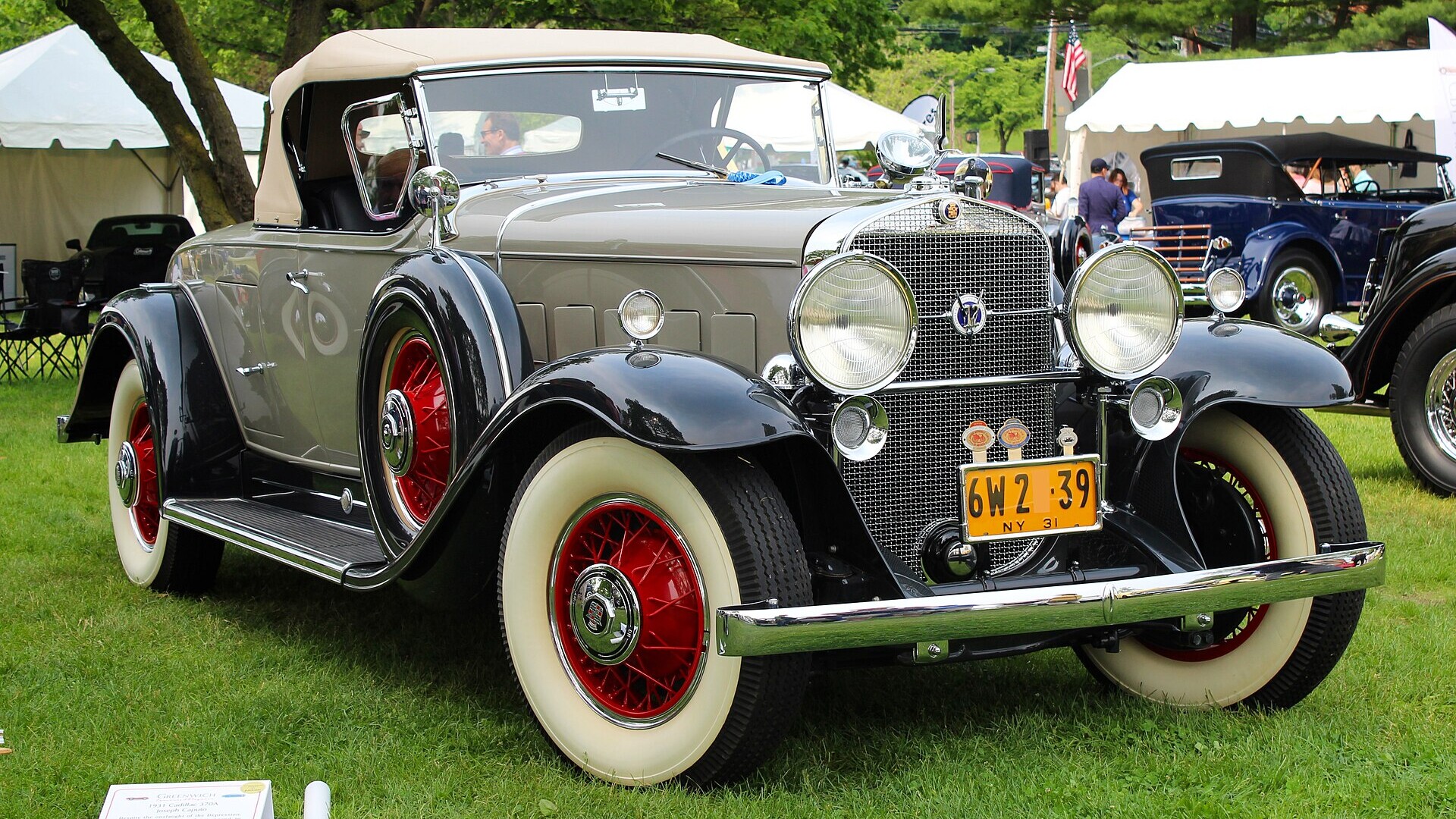
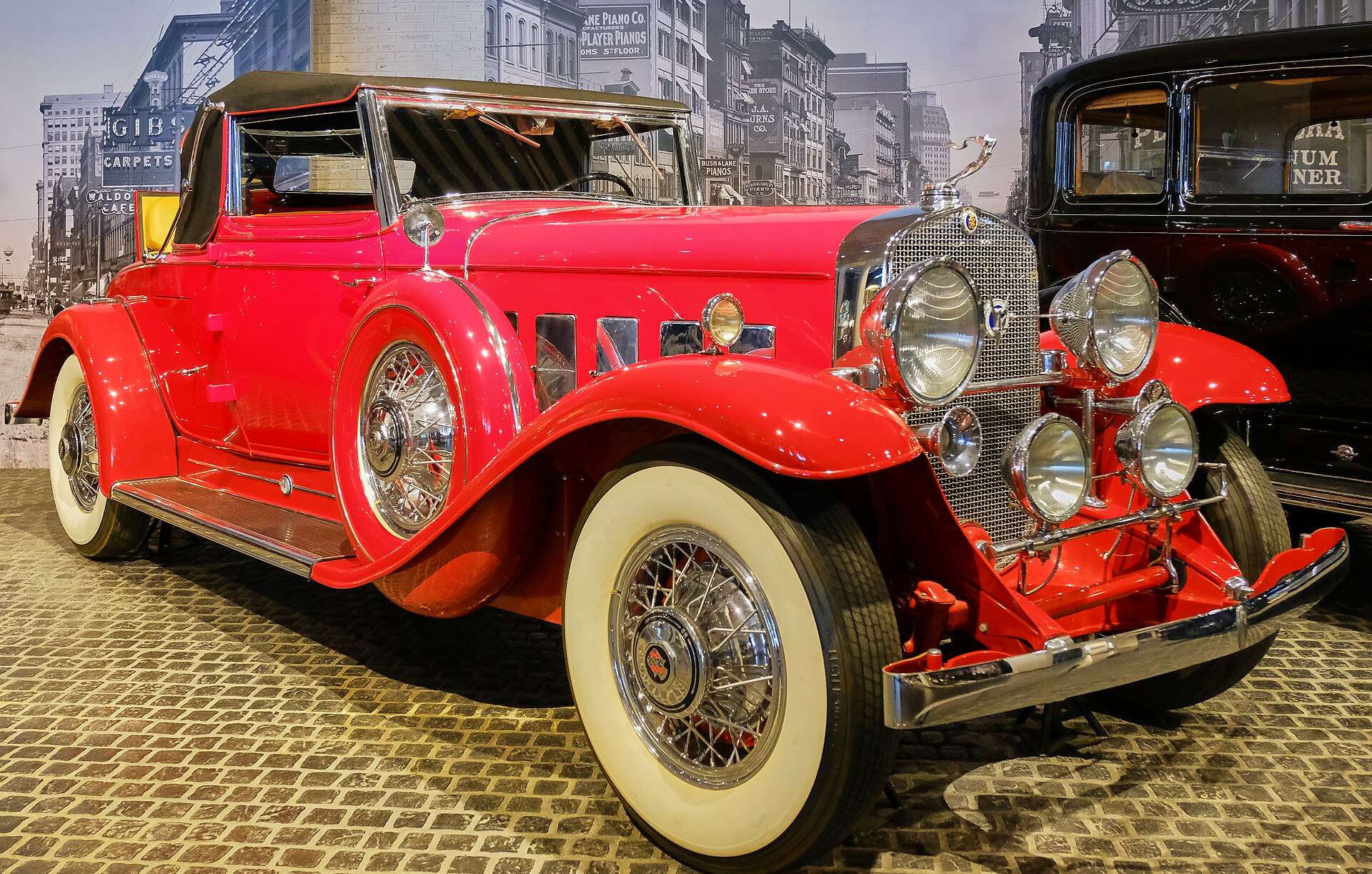
Cadillac introduced the Model 370-A in October 1930 to sit below its V-16 flagship. The V-12 displaced 368 cubic inches and was rated at 135 horsepower, and the car was built on 140- or 143-inch wheelbases. Prices started at $3,795. Production figures differ a little by source. Gooding’s 2006 catalog put combined 1930–31 Series 370 and 370-A output at about 5,725 cars, and other references list roughly 5,733 for the 1931 model year. Either way, the platform is rare, but plenty of factory-bodied examples still exist. That’s why this car’s value depends so heavily on what was done to it after it left Detroit. Readers who followed our look at the Pierce-Arrow Twelve’s Bonneville run will know this period well. It was the peak of the American multi-cylinder luxury race, just before the Depression ended it.
What Makes the Buck Jones Cadillac a Speedster (Verified, With Conflicting Attributions)
RM’s catalog describes a car built in Southern California in the early 1930s and assembled from parts of several model years. It has the cowl, windshield, and front doors of a 1928 Cadillac dual-cowl phaeton, a handmade streamlined radiator shell, and modified 1934 Cadillac “biplane” bumpers. It also has rounded pontoon-style fenders like an Auburn speedster and a tapered tail with tall fins. The V-12 was fitted with two Winfield downdraft carburetors on special manifolds. The full catalog description is on RM’s lot page.
Sources disagree on who built it. Gooding’s 2006 catalog credited the coachwork design to Harley Earl, but RM’s 2026 lot page doesn’t mention Earl. Reporting by The Old Motor suggests Don Lee Coach and Body Works in Los Angeles may have built it. The same report describes the body as a modified 1928–29 Cadillac roadster and says it was updated at least twice, with biplane-style bumpers in the mid-1930s and more work later that decade. Nobody has documented the builder, and our interpretation below explains why that matters.

Buck Jones Cadillac Provenance: The Ownership Chain (Verified)
Buck Jones was born in Indiana in 1891 and worked as a test driver for the Marmon Motor Car Company before he started acting. By the mid-1920s he was one of the most prolific cowboy stars in Hollywood. He died in November 1942 from injuries he suffered in Boston’s Cocoanut Grove nightclub fire. His widow, Dell, later said he “was always fascinated with automobiles” and had raced at the Indianapolis Speedway. That quote is her account, and we couldn’t find race records to confirm it. According to RM, the car’s ownership history is:
- Early 1930s: Built in Southern California for Buck Jones. RM notes it appeared in 1939 publicity photographs with actress Helen Twelvetrees.
- Around 1940: Jones gave it to his stunt double, Ted Corder.
- 1947: Charles A. Wentland bought it with about 13,000 miles on it.
- Korean War era: Wentland sold it to Dave Barr, who owned the airport in Susanville, California.
- Late 1980s: Wentland and his son Kirk bought it back.
- 2005: Jon Janofsky bought it, and it then became part of Otis Chandler’s collection.
- 2006: Lee Munder of Florida bought it at the Chandler estate sale. It was Lot 94 at Gooding’s Otis Chandler Auctions, estimated at $250,000–$350,000 and offered without reserve, and it sold for $308,000.
- 2015: It was shown in the “Cars of the Cowboys” class at the Amelia Island Concours d’Elegance.
RM says Dell Jones authenticated the car while it was owned by a previous owner. The catalog doesn’t say whether written documentation of that goes with the car.
Condition (Verified, Then Interpreted)
Verified: RM’s full condition statement reads: “Today it is presented as a nearly completed restoration, wearing primed bodywork with a cowhide interior, and awaits completion in the care of its next owner.” The lot page doesn’t list which mechanical systems have been restored or whether the car runs.
Interpretation: In practice, “nearly completed” usually means the costliest visible work is still left to do. That includes final paint, plating, brightwork fit, weather equipment, and the sorting needed to make a one-off car reliable. On a coachbuilt Classic-era car those costs are hard to predict, because parts can’t be bought off a shelf. The Old Motor reported that the restoration targets the car’s mid-1930s appearance. The new owner will have to decide whether to finish it that way or return it to the form seen in the 1939 publicity photographs. Munder has owned the car since 2006, and the restoration was already underway when the car was shown at Amelia in 2015. Bidders should ask how long it has been in its current state.
Comparable Sales (Verified Results)
| Car | Sale | Result |
|---|---|---|
| This car, 1931 Cadillac 370 V-12 custom roadster (engine 1000459) | Gooding, Otis Chandler Auctions, 2006 | Sold, $308,000 (about $500,000 in 2026 dollars, based on CPI) |
| 1931 Cadillac V-12 Touring by Fleetwood, older restoration with patina and matching numbers | RM Sotheby’s Arizona 2025 | Sold, $106,400 |
| 1931 Cadillac V-12 370-A | Broad Arrow, Amelia Island, March 7, 2026 | Sold, $168,000* |
| 1931 Cadillac V-12 370-A | Gooding Christie’s, Amelia Island, March 5, 2026 | Sold, $100,800* |
| 1931 Cadillac V-12 370-A | Mecum Indianapolis, May 2026 | Bid to $215,000, not sold* |
| 1931 Cadillac V-12 370-A (two cars) | Bring a Trailer, May and June 2026 | Bid to $101,000 and $66,000, not sold* |
Interpretation: In 2026, 1931 V-12s have sold at auction for roughly $100,000 to $170,000. The best bid we could find was $215,000, and that car went unsold. RM’s $150,000–$175,000 estimate puts the Buck Jones Cadillac at the top of the market for stock examples, even though it’s still in primer. That premium is how much the market currently values the celebrity story and the custom body. It’s also much smaller than the premium buyers paid in 2006.
Five Factors That Will Decide the Hammer Price (Interpretation)
1. Unfinished cars sell at a discount
Bidders will subtract the cost of finishing the car and a margin for uncertainty from what it would be worth complete. That discount is usually larger than the actual bill, because bidders can’t see what they’d be paying for. Compare it with the 1956 Eldorado Brougham Town Car in our earlier Hershey analysis. That car’s estimate roughly matches its 2012 price adjusted for inflation. The Buck Jones car’s low estimate is less than a third of its inflation-adjusted 2006 price.
2. Fewer buyers remember the celebrity
Film-star provenance is worth the most when buyers remember the star. Buck Jones’s audience was at its largest in the 1920s and ’30s, and most people who watched him in theaters are gone. Compare that with the steady demand for Steve McQueen’s cars at auction. Cowboy-era provenance now attracts historians and specialist collectors more than a broad pool of buyers.
3. No one knows who built the Buck Jones Cadillac’s body
A documented Harley Earl design would change how this car is valued. Right now the Buck Jones Cadillac is a well-documented one-off by an unknown builder. The Earl credit appeared in 2006 but isn’t in the 2026 catalog, and buyers usually notice when a claim like that disappears. Any bidder should ask RM what documentation is available.
4. The car’s paperwork works in its favor
The ownership chain goes from the star to his stunt double to a 1947 buyer whose family owned it twice over the next six decades. The engine number is the same in two catalogs twenty years apart, and the car was shown at Amelia in 2015. That’s a better record than many celebrity cars have. It supports the Jones story, even though the story alone won’t bring back 2006 prices.
5. It fits the Hershey audience
Hershey draws a large group of pre-war specialists, and many of them restore cars themselves and don’t need a finished show car to bid with confidence. For more of this year’s Hershey lineup, see our Hershey Duesenberg market brief. If two restorers who already have a plan for the car bid against each other, it could go past the high estimate. If none show up, it may not reach the low estimate.
What Collectors Should Take From This
The $308,000 result in 2006 came from a no-reserve estate sale where the Chandler name and the Harley Earl attribution both attracted bidders. The 2026 estimate reflects a more cautious market that wants cars finished and fully documented before it pays for a story. For the right buyer, that gap could be an opportunity. A finished Buck Jones Cadillac, restored to a documented period configuration and supported by paperwork showing Dell Jones’s authentication, could be worth far more than its purchase price plus restoration costs. But the next owner will have to earn back that premium. The provenance alone won’t do it.
If you’re trying to work out how condition and documentation affect the value of your own car, start with our guide to what your car is worth. We’ll report the Lot 380 result after the sale on October 8.
Sources: RM Sotheby’s Lot 380 catalog; Gooding 2006 Otis Chandler Auctions, Lot 94; RM Sotheby’s Arizona 2025; The Old Motor; CLASSIC.COM. Images are from Wikimedia Commons under the licenses credited. The car photos show comparable Cadillac V-12s, not Lot 380. Inflation adjustment is an MCC estimate based on the U.S. CPI.
The collector car market, every weekday morning.
Auction results, price moves and what’s crossing the block, read in four minutes. Free, from Modern Car Collector.
No spam, unsubscribe in one click. Or read more about the Brief.
Related Posts:
- 1941 Harley-Davidson UL Flathead From the Rick…
- Cadillac's Junkyard Dream Car Returns to Auction.…
- The First Auburn 851 Speedster Heads to Hershey. Its…
- Supercharged 1936 Auburn 852 Boattail Speedster For…
- Record Ferraris, Rare Icons and 15,000 RPM: The Week…

- Everything Modern Car Collector Covered Last Week
 Shawn Henry
  Kyle Matthews