
RM Sotheby’s attached three pre-war headliners to its 20th-anniversary Hershey sale this week, Artcurial unveiled a 14-car private collection built by a German industrialist and racing patron, and a modest UK timed sale quietly closed with a lesson about what collectors actually pay for. None of it has run on this site yet. Here is what moved, and why each is worth a second look.
RM Sotheby’s Is Betting Its 20th Hershey Sale on Cars Older Than the Company Itself
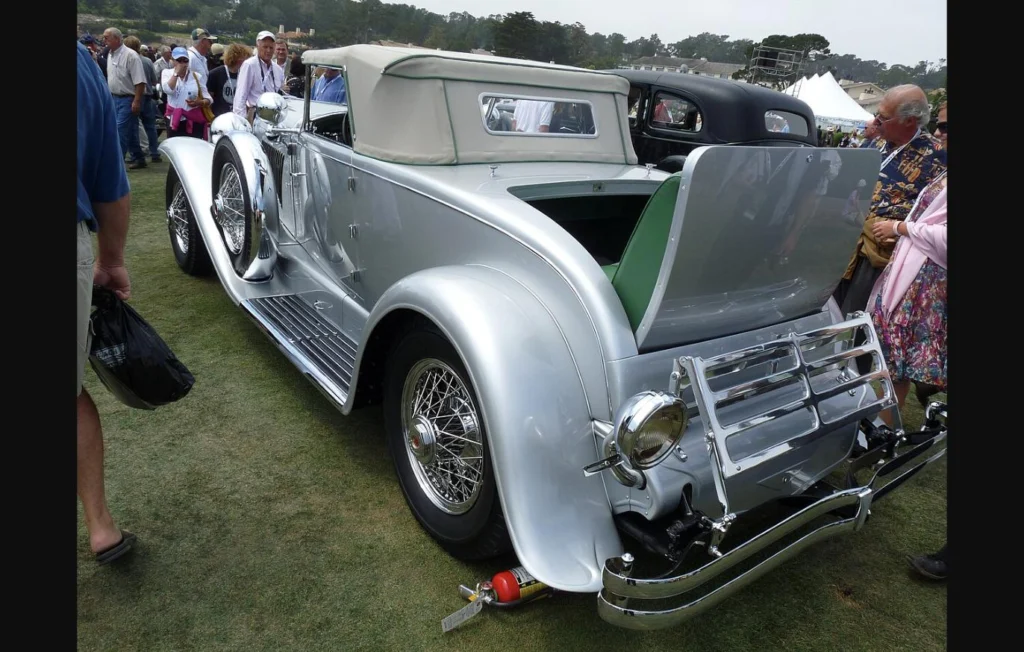
RM Sotheby’s has attached three headline consignments to its 20th-anniversary Hershey sale, set for October 7-8 at the Hershey Lodge in Pennsylvania. The 1934 Duesenberg Model J Convertible Berline by Murphy is one of roughly five surviving examples of this body style, delivered new in 1933 to William Boal Wood and later owned by noted collectors Charles M. Knipe, Lorin Tryon, and Jack Finden; it’s a recognized CCCA Full Classic and has just been mechanically recommissioned ahead of the sale. The 1935 Auburn 851 Supercharged Speedster is the first 851 Speedster built, Category 1 certified by the Auburn Cord Duesenberg Club, and a winner of the Roy Faulkner Award and a CCCA Primary First Prize, with more than $15,000 in mechanical and cosmetic work completed between 2025 and 2026. The third headliner is a 1915 Mercedes 28/60 HP Town Car and Tourer display chassis, believed to have been owned by Universal Pictures co-founder Carl Laemmle and featured in the 1931 film Waterloo Bridge; it has been shown in both body configurations, including at the 2011 Pebble Beach Concours d’Elegance.
RM Sotheby’s has not yet published pre-sale estimates for any of the three, and “one of five surviving” and “first one built” claims, like most pre-war provenance chains this deep, rest on club certification and consignor-supplied history rather than a factory build sheet — worth confirming against the CCCA and ACD Club’s own records before treating the numbers as settled.
In a market where headlines skew toward Enzos and numbers-matching 911s, RM Sotheby’s choosing to lead its 20th-anniversary Hershey sale with cars from 1915, 1934, and 1935 is itself a signal: institutional confidence that deeply documented pre-war iron still draws serious bidders when the paperwork is this complete, even as the broader market’s attention drifts toward postwar and modern collectibles. The Laemmle Mercedes is also a reminder that “celebrity provenance” isn’t a social-media-era invention — Hollywood money was already chasing brass-era cars a century ago. For more on how the pre-war Duesenberg market treats gaps in a car’s history, see our earlier look at The Gable Duesenberg Didn’t Sell in 2012. This Year It Made $9.08 Million and Clark Gable’s Custom 1935 Duesenberg Could Fetch $8 Million.
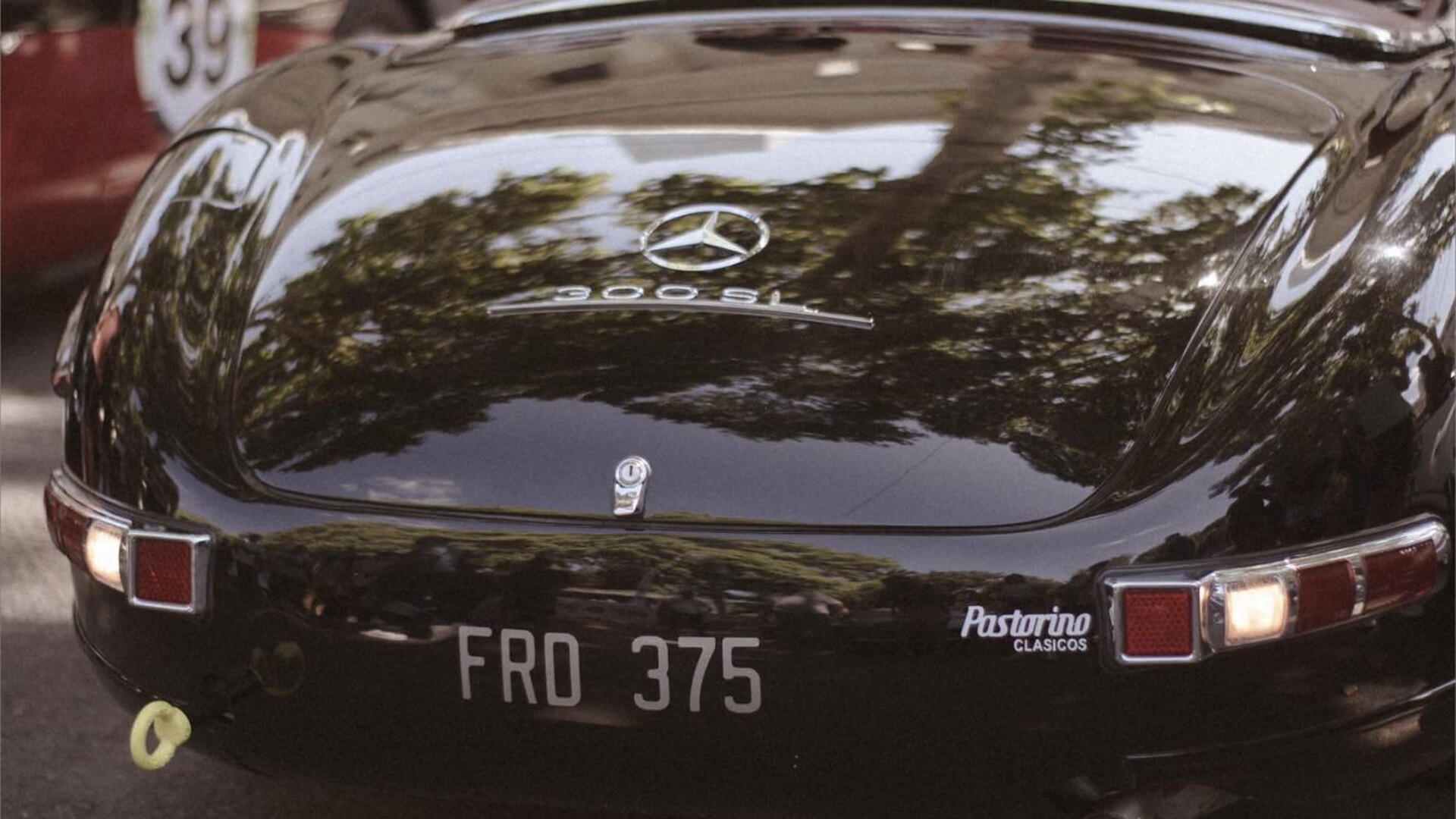
Artcurial Motorcars will offer the Guido Hommel collection at its “Automobiles sur les Champs” sale on October 25 in Paris, consigning 14 cars built by the German entrepreneur over several decades, 11 of them without reserve. The headliner is a matching-numbers 1955 Mercedes-Benz 300 SL Gullwing, owned since 1998 by Klaus Ludwig, a three-time Le Mans overall winner and three-time DTM champion, and fitted with its original Rudge wheels and bespoke luggage set. Alongside it sits a 2011 Mercedes-Benz SLS AMG that Hommel bought new, pairing two generations of gullwing-door Mercedes built 56 years apart, and a 1972 Ferrari Dino 246 GTS finished from new in the rare “Bianco Polo” color and since comprehensively restored. The rest of the fourteen spans further Mercedes-Benz, Jaguar, Volkswagen, and Porsche entries.
Artcurial has not yet published pre-sale estimates for the three highlighted lots, and the Gullwing’s “matching-numbers” status and Ludwig ownership chain, like most single-collection consignments, rest on Artcurial’s own cataloguing rather than an outside marque registry — worth a look at the printed catalog notes before treating the provenance as fully independent.
What makes the Hommel sale worth watching isn’t just the marque roster, it’s the shape of the collection itself: a single owner with hands-on restoration expertise, selling most of it without reserve, is a different kind of market signal than an institutional consignment — it tells bidders the seller isn’t fishing for a number he already has in mind. The Ludwig ownership does real work here too. We’ve made the case that the Mercedes 300SL Gullwing is the true contender for the world’s first supercar, and a three-time Le Mans winner’s decades-long ownership is exactly the kind of story that keeps that argument alive at auction, not just in print. Pairing the Gullwing with the SLS AMG Hommel bought new turns the lot into a 56-year time capsule of Mercedes running the same design trick twice, which is its own quiet argument for why gullwing doors keep coming back.
The collector car market, every weekday morning.
Auction results, price moves and what’s crossing the block, read in four minutes. Free, from Modern Car Collector.
No spam, unsubscribe in one click. Or read more about the Brief.
 John Lloyd
  Shawn Henry
  Eve Nowell