

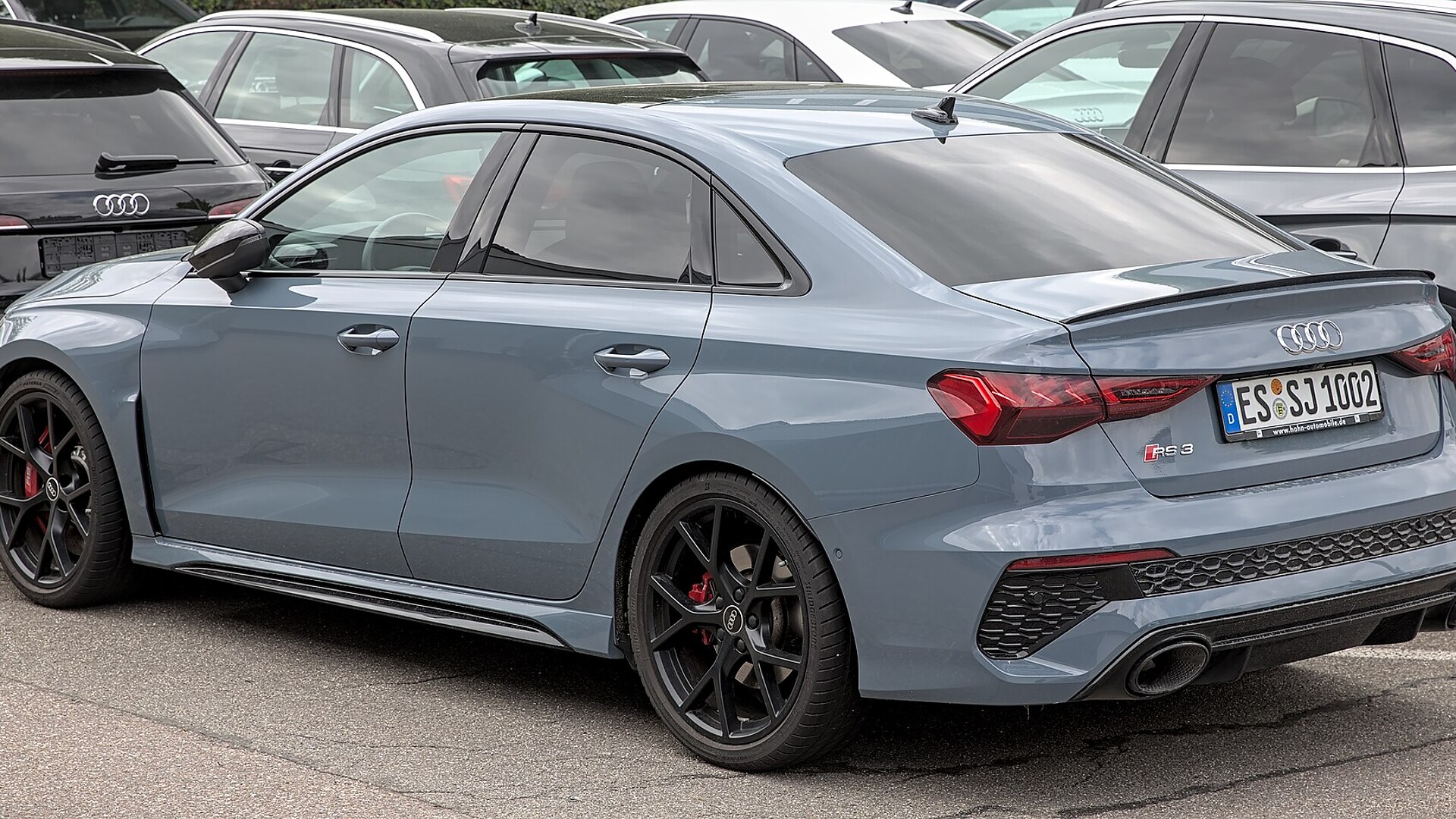
Audi announced the RS 3 Competition Limited in March as a 750-unit send-off for the current RS 3 and a birthday present for the engine under its hood: the turbocharged inline-five, which turns 50 this year. The car got a week of coverage, European deliveries began quietly over the summer, and the collector conversation largely moved on. It shouldn’t have. Of all the “limited” and “final” editions to arrive in 2026, this is one of the few where the special hardware is doing real work, and where the engine it celebrates has a racing and road-car pedigree that collectors already pay for. The question is whether that is enough to lift a hot compact above the depreciation curve. The honest answer is: possibly, but not for the reason most buyers will assume.
The Short Answer
The RS 3 Competition Limited has a more credible collector case than most of this year’s commemorative editions, because Audi changed the chassis rather than just the trim, and because it is tied to a genuine engineering lineage. But the “last five-cylinder” story that will be used to sell these cars is only half true. The engine is leaving Europe under Euro 7, not leaving the world, and that single fact caps how far the finality premium can run. Treat it as a strong candidate to hold value well and a speculative candidate to appreciate.
Production Numbers: 750, and the Split Matters More
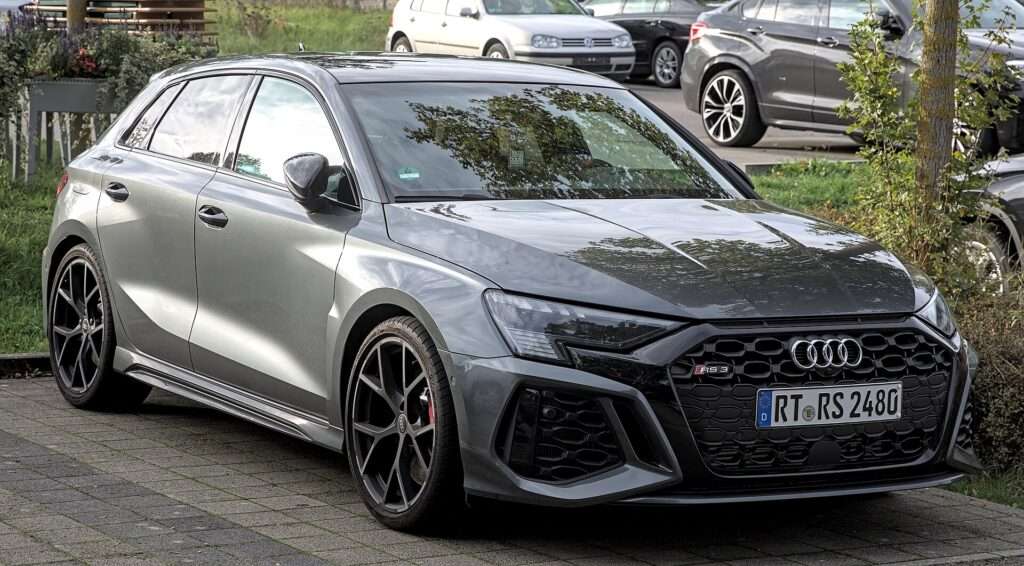
Audi’s official announcement caps production at 750 cars worldwide, each carrying a sequentially numbered plaque on the center console. Motor1 reported the split as 585 Sportbacks and 165 sedans, with 187 cars allocated to Germany alone. That breakdown is the most important number in this story. A 750-car run for a mass-platform hot hatch is limited, but it is not scarce in the way a collector means it; the sedan, at roughly one-fifth of production, is.
It also creates an unusual situation for American buyers. Early reporting indicated the Sportback almost certainly would not be sold in the United States, and as of this writing Audi has not confirmed a U.S. allocation or price. If any cars do come to North America, they are likely to be sedans, which means U.S. buyers could end up with the rarer body style by default. Whether Audi brings any at all is the first thing to watch.
Price: A Steep Premium Over a Standard RS 3
In Germany, Audi lists the Competition Limited at €108,365 for the Sportback and €110,005 for the sedan. For context, a standard 2026 RS 3 sedan starts at $67,395 in the U.S., including destination. Edmunds estimated that a U.S.-market Competition Limited, if offered, would land between $115,000 and $120,000. That places a compact Audi in the same transaction range as far more established collector-grade performance cars, which is the first hurdle it has to clear: at that price, it does not need to appreciate to disappoint, it only needs to depreciate normally.
Mechanical Uniqueness: More Than a Badge Package
This is where the Competition Limited separates itself from the appearance-package editions MCC has been skeptical of. The drivetrain is familiar: the 2.5 TFSI inline-five makes 400 PS (394 hp) and 500 Nm, routed through quattro all-wheel drive with the RS 3’s torque-splitting rear differential, for 0–100 km/h in 3.8 seconds and a 290 km/h top speed. What changes is underneath:
- Factory-developed coilover suspension with three-way adjustable dampers, a first for the RS 3, sitting about 10 mm lower than standard.
- A stiffer tubular rear anti-roll bar.
- Carbon-ceramic brakes as standard, with optional Pirelli P Zero Trofeo R semi-slick tires.
- Exclusive 19-inch ten-spoke wheels in matte Neodymium gold, matte carbon aero pieces, and an exclusive Malachite green paint alongside Daytona gray and matte Glacier white.
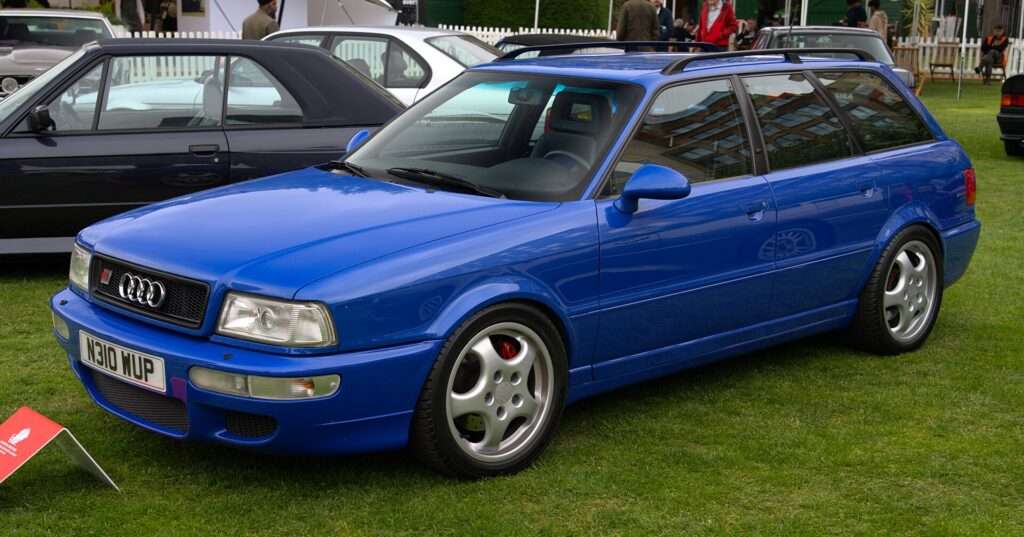
The interior references the 1994 RS2 Avant with white-faced digital instruments, and the matrix LED headlights animate the engine’s 1-2-4-5-3 firing order when the car locks or unlocks. Those are charming details, but the coilovers are the substance. Future buyers value editions whose differences cannot be replicated with a parts catalog and a wrap shop. Factory-engineered suspension, validated and documented by Audi Sport, is harder to fake than a paint color, which is exactly why originality of that hardware will matter on the resale market.
Historical Context: Fifty Years of Five Cylinders
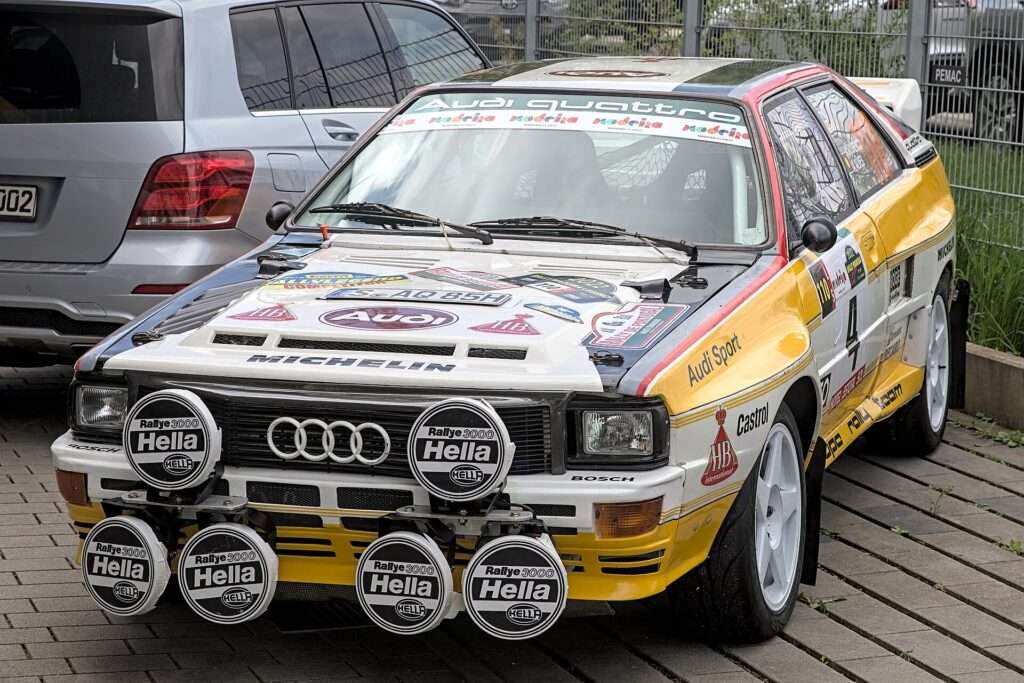
The heritage Audi is invoking is real, and Audi’s own timeline lays it out. The first five-cylinder arrived in the Audi 100 (C2) in 1976. The turbocharged version appeared in the Audi 200 5T in 1979, and in 1980 it powered the original quattro, which went on to win the World Rally Championship. The short-wheelbase Sport quattro of 1983 made 306 PS in road trim, the Group B variants went far beyond that, and Walter Röhrl won Pikes Peak in 1987 in a Sport quattro S1. The engine also powered Audi’s Trans-Am and IMSA GTO campaigns before the 1994 RS2 Avant, of which Porsche says 2,891 were built, established the RS badge itself.
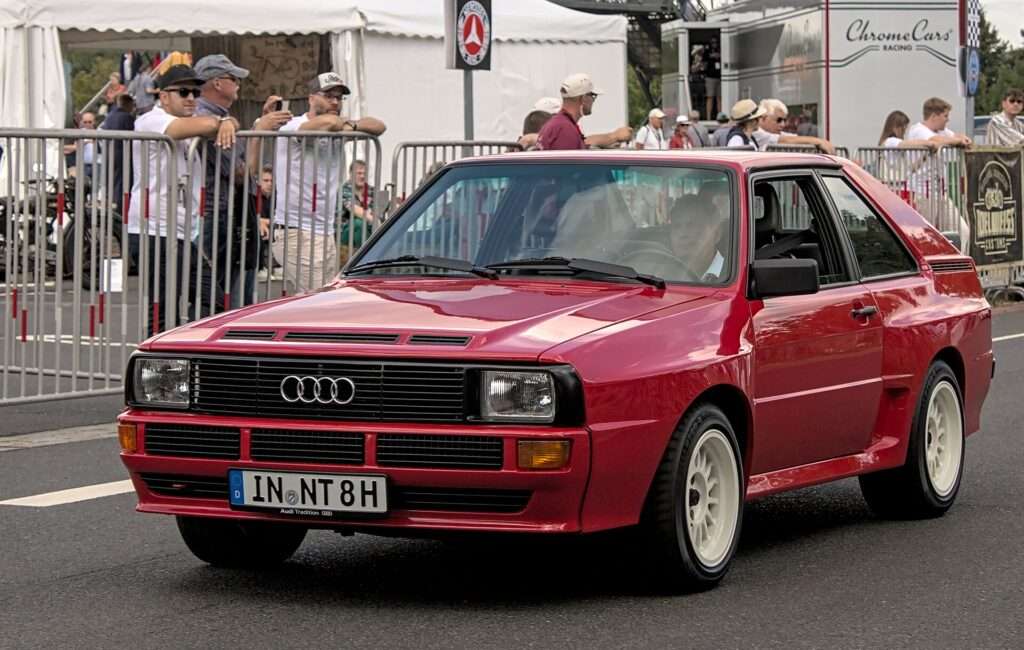
That lineage is why this car deserves a hearing. Collectors do not pay for a firing order; they pay for a line that connects to the cars they already chase. The Sport quattro and RS2 are established collector cars. The Competition Limited is the most direct factory reference to that bloodline that Audi is likely to build, and the numbered plaque makes the connection explicit.
The Catch: The Five-Cylinder Is Not Actually Dying Everywhere
Much of the coverage framed this as a eulogy. The reality is narrower. This spring, Audi confirmed that the five-cylinder and the RS 3 will end production for Europe in mid-2027 because bringing the engine into Euro 7 compliance did not make economic sense. But an Audi spokesperson also told Motor1 that the RS 3 will continue to be built in Győr, Hungary, for North America and other markets with less restrictive regulations. In the U.S., the standard RS 3 carries on.
That matters for value. The cars that benefit most from finality are the ones that are verifiably last. The Competition Limited is a commemorative edition built during the engine’s life, not at its end, and the definitive “last five-cylinder Audi” may still be a car that has not been announced yet.
Alternatives Collectors Should Weigh
- A standard RS 3. It shares the engine and most of the experience for tens of thousands less, and in the U.S. it will remain available after European production ends. Its value will set the floor the Competition Limited’s premium is measured against.
- Audi TT RS. The other modern five-cylinder Audi and a discontinued model. Its own farewell special, the 100-unit TT RS Iconic Edition, drew criticism from Motor Sport’s Andrew Frankel as a cosmetic upcharge on a mechanically identical car, a useful cautionary precedent.
- Audi RS2 Avant or an original quattro. For the buyer who wants the heritage rather than the tribute, the originals are the story the Competition Limited is quoting.
- Rival final-era performance cars. Buyers cross-shopping the “end of an era” theme should read MCC’s evaluations of the BMW Z4 Final Edition, the GR Supra MkV Final Edition and the naturally aspirated 911 GT3, which face similar questions with different engines.
Risks
- Platform familiarity. Hot hatches built on high-volume platforms have historically struggled to escape depreciation, because the silhouette is everywhere and the special parts are the only differentiator.
- Track use. Adjustable coilovers and semi-slick tire options invite hard driving. Cars with documented track time, replaced brake components or non-original suspension settings will be discounted by informed buyers.
- Price entry point. At roughly €110,000, owners start deep in the money. Even strong residuals may not return that premium.
- Muddy finality. If Audi builds another five-cylinder special for markets outside Europe, the “last one” narrative weakens further.
- Gray-market complications. If Audi never officially sells the car in the U.S., American enthusiasts will be looking at a 25-year wait for legal import, which limits the largest collector market’s access for decades.
What Would Need to Happen
For the RS 3 Competition Limited to become a true collector car rather than a well-kept used Audi, a few things have to line up:
- The five-cylinder has to actually end, everywhere, with no later special edition claiming the “last” title.
- Audi’s next compact RS has to be electrified or four-cylinder, making this the reference point for the inline-five era.
- The sedan has to be recognized as the scarce variant, with the market pricing the 165 sedans differently from the 585 Sportbacks.
- Original, documented, low-use cars have to be preserved, with factory suspension, ceramic brakes and the numbered plaque intact.
- The enthusiast community has to adopt the car the way it adopted the RS2, as a model with an identity, not just an upgrade package.
MCC Verdict
The RS 3 Competition Limited is a better-engineered commemorative edition than most in this cycle, and its tie to the Sport quattro and RS2 is legitimate rather than borrowed. It should hold value better than a standard RS 3. But its production number is moderate, its price is high, and the engine it celebrates is not truly finished. The collector case will be decided less by how many Audi built and more by whether Audi builds anything like it again. Watch the sedans, watch the U.S. allocation, and watch Győr. For more on how the market separates meaningful scarcity from marketing, see our analysis of manufactured scarcity and our guide to daily-driven collectibles.
The collector car market, every weekday morning.
Auction results, price moves and what’s crossing the block, read in four minutes. Free, from Modern Car Collector.
No spam, unsubscribe in one click. Or read more about the Brief.
Related Posts:
- The Complete Guide to the Yenko Camaro
- The Collector Car Market Paid Up for Certainty This…

- Record Ferraris, Rare Icons and 15,000 RPM: The Week…

- The Name Is the Story: Audi's Nuvolari Arrives in America

- Dodge Viper vs Acura NSX: Which Is The Better Collector Car?

- Collector Car Insurance Explained: What Every…
 Eve Nowell
  John Lloyd