

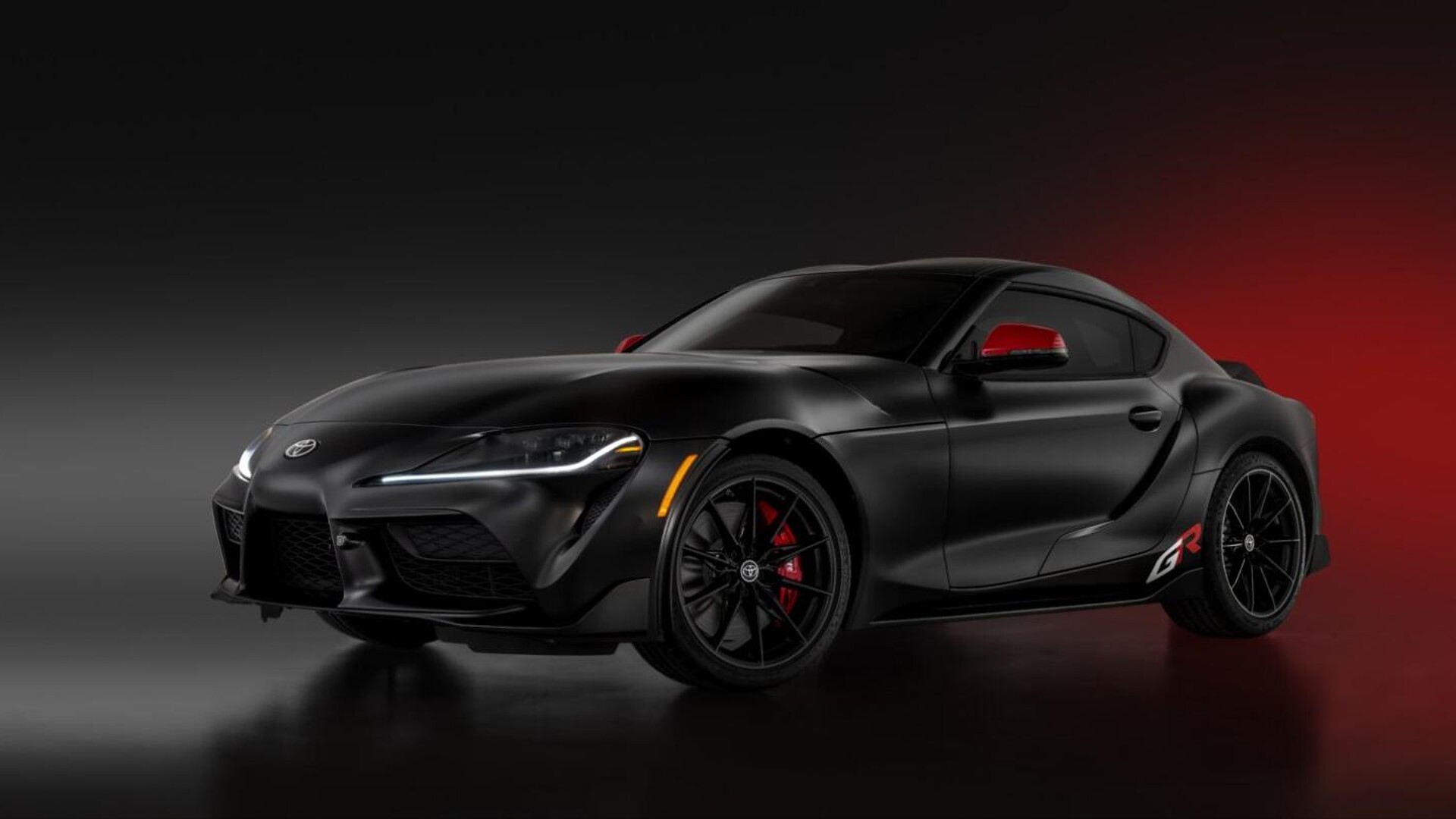
Toyota built its last GR Supra in the spring of 2026, closing out a seven-year run of the fifth-generation car with a send-off it calls the MkV Final Edition. Only 1,300 will reach American driveways. That is a small number by modern standards, and small numbers tend to catch a collector’s eye. But rarity alone has never been enough to make a car matter later, and the Final Edition’s own back story — a cheaper, less powerful version of a send-off Toyota reserved its best hardware for overseas — is exactly the kind of asterisk that separates a genuine future classic from a car that is merely the last one off the line.
The numbers
Toyota capped US production of the MkV Final Edition at 1,300 units, priced from $69,965, about $10,000 above a standard 2026 GR Supra 3.0 Premium. Buyers get a choice of an eight-speed automatic or a six-speed manual, the latter historically the rarer take rate on Supras and the one collectors have gravitated toward with every enthusiast coupe of the last decade. Every car carries the 3.0-liter BMW-sourced turbocharged inline-six at 382 horsepower and 368 lb-ft, run through Gazoo Racing’s own tuning of the differential, chassis, and steering.
The bigger number, in a sense, is the one Toyota did not build: across its full run from 2019 through early 2026, the fifth-generation Supra found roughly 28,800 buyers in the United States and about 4,400 more in Europe — a modest total for a nameplate with this much cultural weight, and one that puts the Final Edition’s 1,300 cars at well under 5 percent of total US production. For comparison, the 1997 Toyota Supra Turbo 15th Anniversary Edition — a fourth-generation car collectors already chase in low-mileage survivor form — was limited to just 409 automatic-equipped cars in the US, a scarcity the new car’s production run does not approach in absolute terms but rhymes with in spirit.
What makes it different
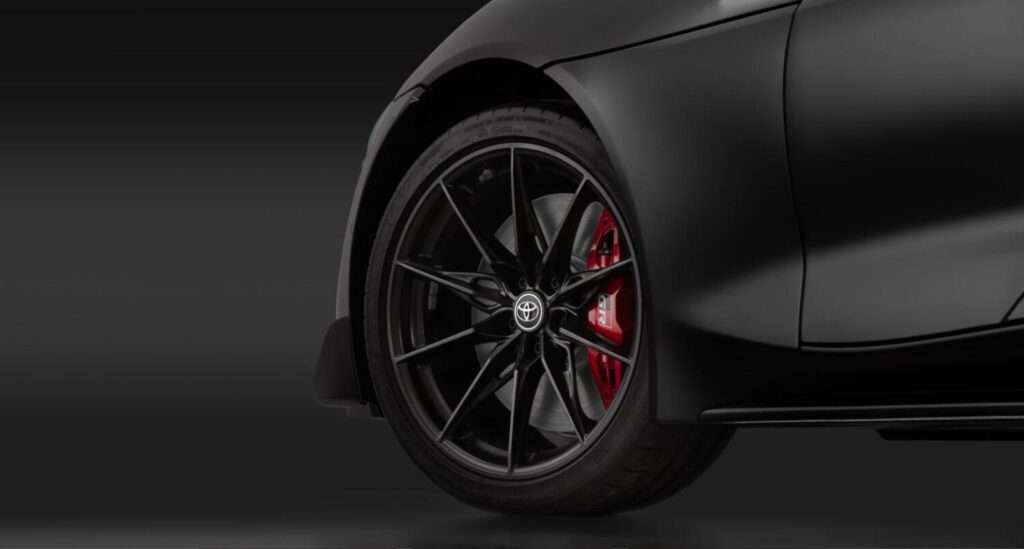
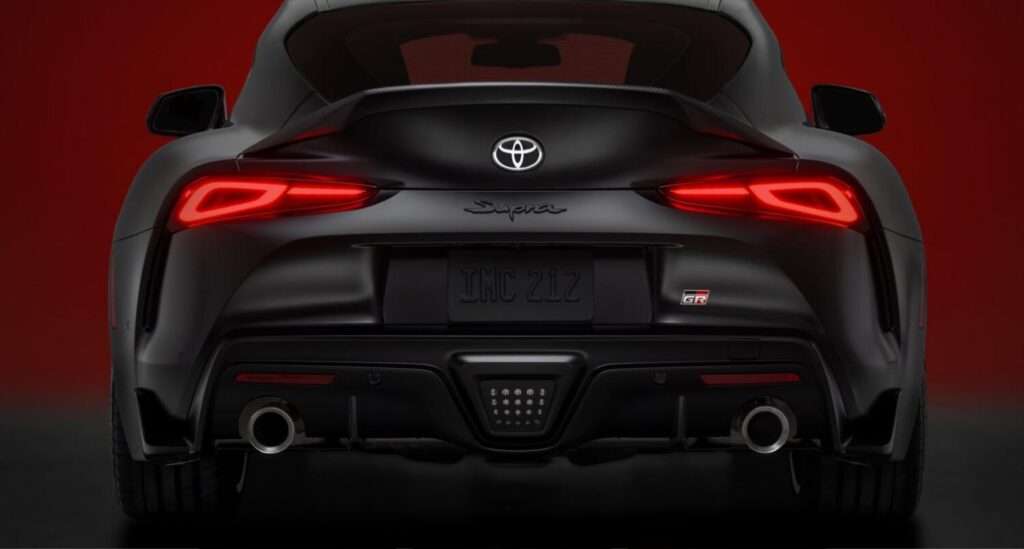
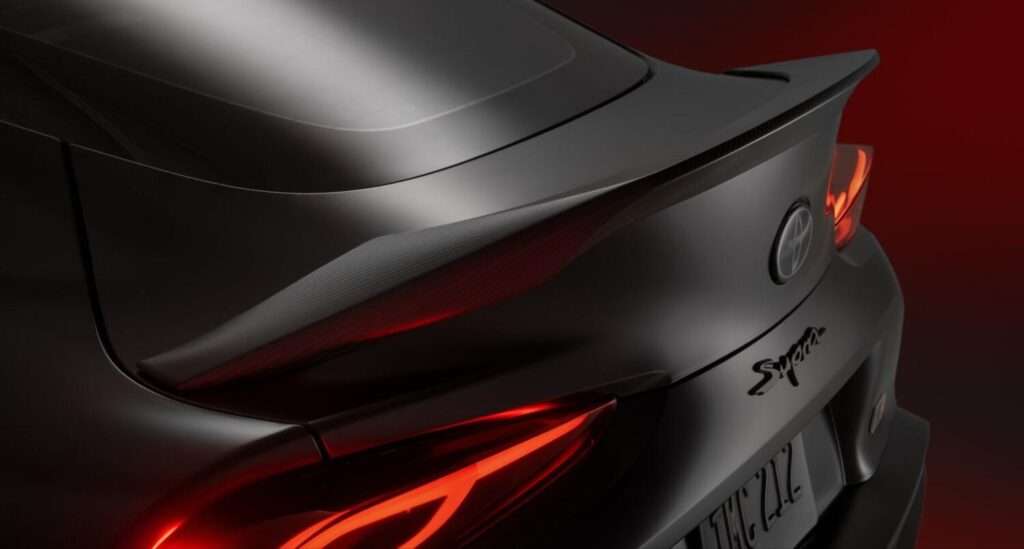
The Final Edition’s changes are chassis and brake work more than a power bump: larger Brembo brakes, retuned suspension and shock absorbers, a stronger underbody brace, and Gazoo Racing’s own differential mapping, wrapped in gloss carbon fiber mirror caps and rear spoiler, a matte black rear emblem, front wheel-arch aero flaps, and forged 19-inch wheels on Michelin Pilot Super Sport tires. American buyers can also option a GT4-inspired Style Pack with matte Burnout or Undercover paint and red mirror caps, a look borrowed from Toyota’s GT4 race program. Every car included a one-year National Auto Sport Association membership, a small but telling gesture toward buyers who might actually track the thing.
What the US car does not get is the full send-off. Toyota built a separate, more aggressive Final Edition for Japan and Europe, limited to just 300 units combined, with the B58 turned up to 429 horsepower and 420 lb-ft, a larger rear wing in place of the American car’s ducktail spoiler, a carbon hood duct, front canards, Recaro bucket seats, and no automatic option at all — manual only. The US car is, mechanically, the standard-output GR Supra with a chassis and cosmetics package layered on top. That gap matters for how this car should be read as a collectible: the international Final Edition is the purist’s version and the scarcer of the two by a wide margin, while the American car trades some of that specialness for a lower price and broader availability.
Historical context
The Supra name carries baggage that works in the Final Edition’s favor. The A80, built through 2002 and powered by the 2JZ-GTE, has become one of the most expensive Japanese performance cars at auction, propelled as much by movie and drift culture as by its factory 320 horsepower. When Toyota revived the nameplate for 2019, it did so controversially, sharing its platform and much of its engineering with the BMW Z4 and assembling both cars alongside each other at Magna Steyr in Graz, Austria. That collaboration bought the new Supra a genuinely excellent chassis and a strong BMW inline-six, but it also cost the car some of the purist credibility that made the A80 an icon in the first place — a tension that has followed the MkV throughout its run and that the Final Edition does not fully resolve.
Toyota leaned into that history for its own send-off: the company is reportedly sending a one-of-one, matte Phantom Gray final unit, VIN-tagged with a serial ending in 99999, across the block at Barrett-Jackson’s Scottsdale sale in January 2027, in an explicit callback to the $2.1 million paid for the first 2020 Supra at the same auction in 2019. Toyota’s own framing places the outgoing MkV in conversation with its most collectible predecessor — a useful data point on how the manufacturer wants this car remembered, even if a single charity sale for a one-off car says little about where the other 1,299 will land.
Alternatives
Collectors weighing a Final Edition are, in practice, weighing it against a short list of other cars leaving showrooms with some fanfare. The Dodge Viper’s build-and-hold-value pattern after its 2017 discontinuation is instructive: unsold, low-mile examples have traded well above their original window sticker years after the fact simply because the model stopped, though the Viper’s V-10 theater and decade-plus head start give it a different kind of collector pull than a turbo-six coupe. Closer in spirit is the Nissan Z NISMO, still in production and priced within a few thousand dollars of the Supra Final Edition, offering a twin-turbo V-6 with more outright horsepower but without a factory-declared “last one” narrative attached to it — a reminder that a farewell edition is worth a premium only if the story around it holds up over time. The Cadillac CT4-V Blackwing and Lexus LC 500, both also winding down in 2026, round out a small cohort of enthusiast cars being retired within months of each other, a genuine changing-of-the-guard moment for gas-engine performance cars that gives the Final Edition useful company rather than a category to itself.
The risks
The clearest risk is the one built into the car’s own marketing: Toyota has issued seven distinct special editions of this generation since 2020, from the 1,500-unit Launch Edition through the 45th Anniversary and a 300-unit international A90 Final Edition that predates this one. A model line that keeps saying goodbye eventually dilutes the word. Collectors who buy the US Final Edition expecting it to be the scarce MkV should know it will not be — that distinction likely belongs to the 300-car international version, and possibly to the low-volume manual-transmission US cars within the 1,300, rather than to the edition as a whole. Values also depend on Toyota not deciding, five or ten years from now, to revive the Supra a third time, which would soften the finality that gives any last-call car part of its premium; the marque has already shown twice that it is willing to bring the name back. And the MkV’s platform-sharing with BMW, whatever the chassis benefits, remains a genuine point of contention among the Japanese-performance-car buyers most likely to pay a premium for it — the same purism that inflates A80 prices could just as easily cap what people are willing to pay for a car built alongside a Z4.
What would need to happen
For the MkV Final Edition to command real money the way the 15th Anniversary A80 eventually did, a few things likely need to fall into place. Production needs to stay capped at 1,300 with no quiet extension, and Toyota needs to hold the line on this actually being the end of the Supra line for long enough that “final” keeps its meaning — a decade of silence would do more for values than any spec sheet. Manual-transmission cars, historically the minority take rate on performance coupes, need to be the ones the market singles out, the way it has with the A91-MT and with low-production stick-shift variants across the industry. And the car needs time: younger buyers are already reshaping which modern cars get collected, often prioritizing cars they grew up wanting over historical pedigree, which works in a Supra’s favor given the nameplate’s video-game and movie-franchise visibility — but that same generational shift makes near-term speculation unreliable. As with most modern limited editions, the honest answer today is patience: this is a car worth buying to drive and enjoy first, with any collector upside a matter of years, not months.
The collector car market, every weekday morning.
Auction results, price moves and what’s crossing the block, read in four minutes. Free, from Modern Car Collector.
No spam, unsubscribe in one click. Or read more about the Brief.
Related Posts:
- Toyota Supra Mk IV Turbo (1993–1998): Collector Spec Sheet
- The 10 Most Expensive Toyota Supras Ever Sold at Auction

- Is the Toyota GR GT a Future Collector Car? Scarcity…
- This Unmodified 1993 Supra Turbo Shows the Mk IV…
- Toyota FJ40 Buying Guide: The Rust, Engines and…

- Is the Alpine A110 a Future Collector Car? Only Some of Them

 Kyle Matthews
  Shawn Henry