

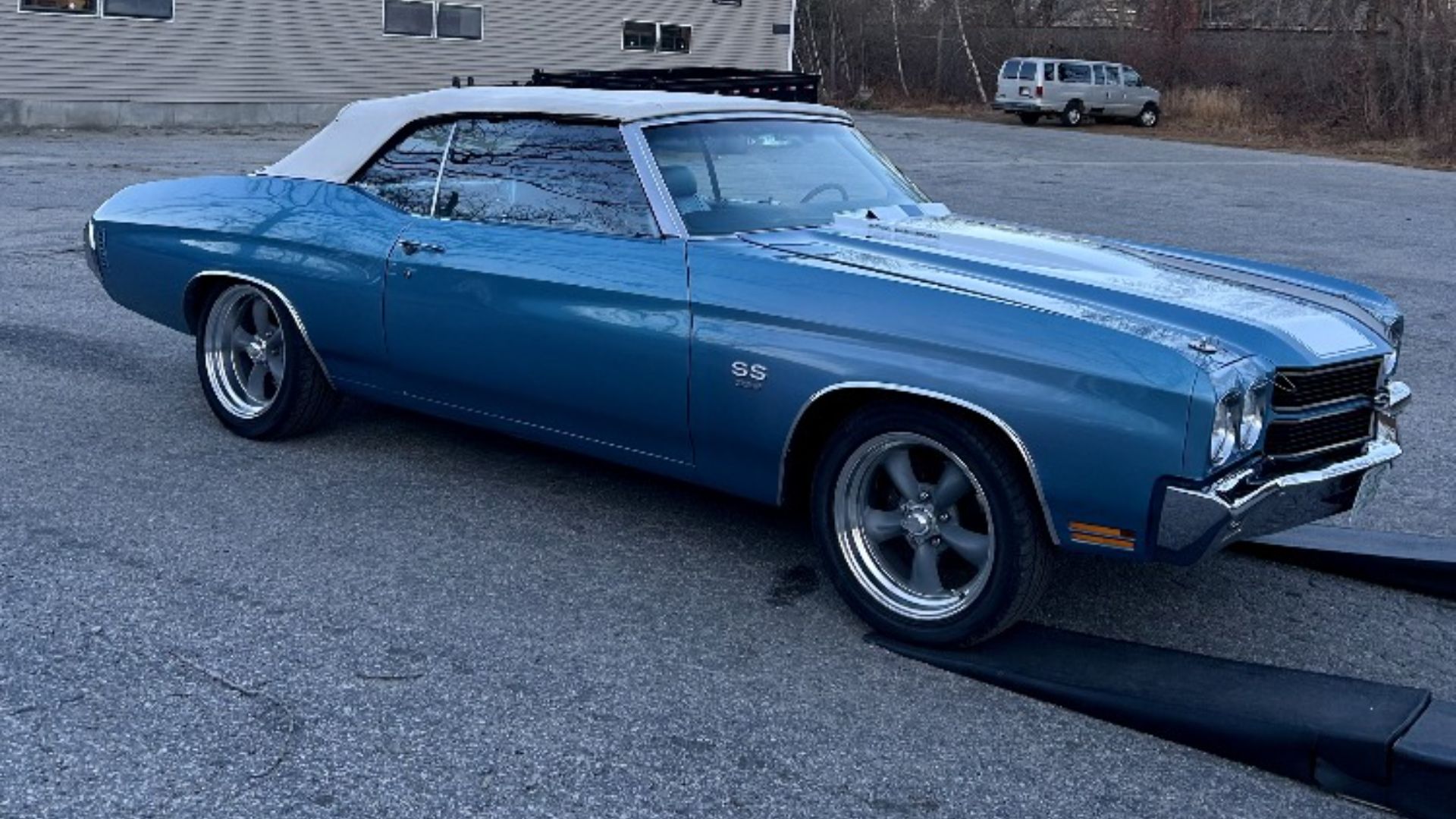
A 1971 Chevrolet Chevelle has surfaced on eBay out of New Jersey, offered by a private seller asking a firm $25,000 for a car he calls one of the nicest survivors he has seen. It carries a clean title, a base 307ci V8, and, by the seller’s own admission, paint that is only 85 percent original. It is not an SS454. It is not rare. It will not headline an auction catalog. And that is precisely why it is worth a closer look.
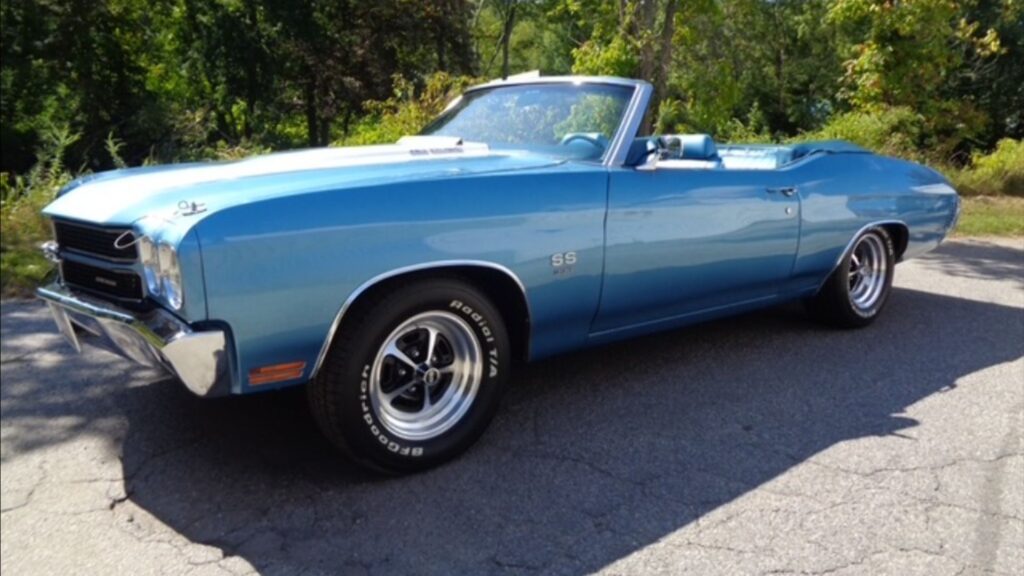
The interesting story here has nothing to do with horsepower or provenance-driven value. It is about language — specifically, how loosely the word survivor now gets applied in a market where buyers increasingly make five-figure and six-figure decisions from photographs alone. It is the same question raised by the 3,062-mile Ford F-250 Harley-Davidson Edition we examined recently: does a low-mileage, unrestored claim automatically deserve the term, or does the term itself need better guardrails? This Chevelle is a useful, low-stakes case study in what survivor should actually mean, what it doesn’t guarantee, and why the distinction matters far beyond one $25,000 listing.
Chevrolet built roughly 387,000 Chevelles for the 1971 model year, spread across an engine lineup running from a base six-cylinder up through the SS454, which topped out with the LS5’s 365 horsepower — the same big-block that made the 1970 Chevelle SS454 LS6 giveaway such a draw for readers earlier this year. The small-block 307, standard on this car, sat near the bottom of that ladder alongside the more popular 350 — engines bought by people who wanted the Chevelle’s shape and space without the insurance rates, fuel bills, or attention that came with a big-block. It was never meant to be fast. It was meant to be ordinary. That matters, because ordinary cars are exactly the ones that tend to get used up, modified, or discarded, which is what makes a genuinely untouched example, however modest its equipment, worth understanding on its own terms.
Survivor is not a factory term. It is a designation borrowed from the hobby itself, and it is supposed to describe a car that has never been restored: original paint, original interior, original mechanical components, aged but unaltered. That is the entire premise behind the label. So when a seller states upfront that the paint is only 85 percent original, meaning some portion of the body has already been repainted, the car has already stepped outside that strict definition. It may still be an honest, largely original car worth exactly what is being asked. But survivor and well-preserved with a partial respray are not interchangeable claims, and serious buyers should not let the first term paper over the second.
The listing compounds that tension by suggesting the car works equally well for a restomod build or to keep stock. That is a reasonable thing to say about a $25,000 driver-quality car, but it also shows how little weight originality is actually being given here. It is a tension Modern Car Collector explored in depth around the Jensen Interceptor GTX, which made the case that the cars holding value longest are rarely pitched as flexible platforms for reinvention. They are the ones whose owners understood that unrestored, unmolested history is not raw material. It is the entire asset.
What is absent from this listing is just as telling as what is in it. There is no mention of a build sheet, a Protect-O-Plate, a factory invoice, or any documentation tying the car to a traceable ownership chain — the paperwork that turns a seller’s description into something a buyer can actually rely on. Compare that with a car like the 1969 Yenko Camaro, one of the most thoroughly documented muscle cars in the hobby, or the numbers-matching 1963 Corvette Fuelie split-window that Modern Car Collector readers recently had a shot at winning, where verifiable history routinely separates six-figure results from cars that struggle to clear five. A clean title and an owner’s word are a starting point for due diligence, not a substitute for it.
None of this means the car is a bad buy. Base-engine, driver-quality Chevelles like this one are exactly the segment where new collectors actually enter the muscle car market, priced well below the SS454s and Yenkos that dominate headlines. That accessibility is healthy for the hobby. But accessibility and accuracy are not in conflict. A $25,000 car deserves the same precision of language as a $250,000 one, and buyers should hold sellers to it regardless of price point.
Anyone seriously considering this Chevelle should treat survivor as a claim to verify, not a certification to trust. That means an in-person inspection, panel-by-panel questions about exactly where the repaint occurred and why, a look underneath for the rust the listing describes as subtle, and any paperwork — registration history, prior invoices, even old photographs — that can independently confirm how the car has actually been used and maintained.
The real lesson of this listing has little to do with the Chevelle itself. It is a reminder that in today’s collector market, survivor has become a marketing word before it is a technical one — and the cars that will matter most in twenty years will not be the ones simply described as original. They will be the ones that can actually prove it.
The original listing can be viewed on eBay.
The collector car market, every weekday morning.
Auction results, price moves and what’s crossing the block, read in four minutes. Free, from Modern Car Collector.
No spam, unsubscribe in one click. Or read more about the Brief.
Related Posts:
- This Shay Thunderbird Is Rarer Than the Car It…

- Big-Block 1968 Chevelle SS Convertible With Air Ride…
- A 240Z Owned Since 1975 Proves the Odometer Is the…
- 10 Coolest Chevrolet Chevelles at Mecum Harrisburg 2026
- This 1969 Charger Is Really a 2016 Hellcat — and the…
- Record Ferraris, Rare Icons and 15,000 RPM: The Week…

 Kyle Matthews
  Shawn Henry