

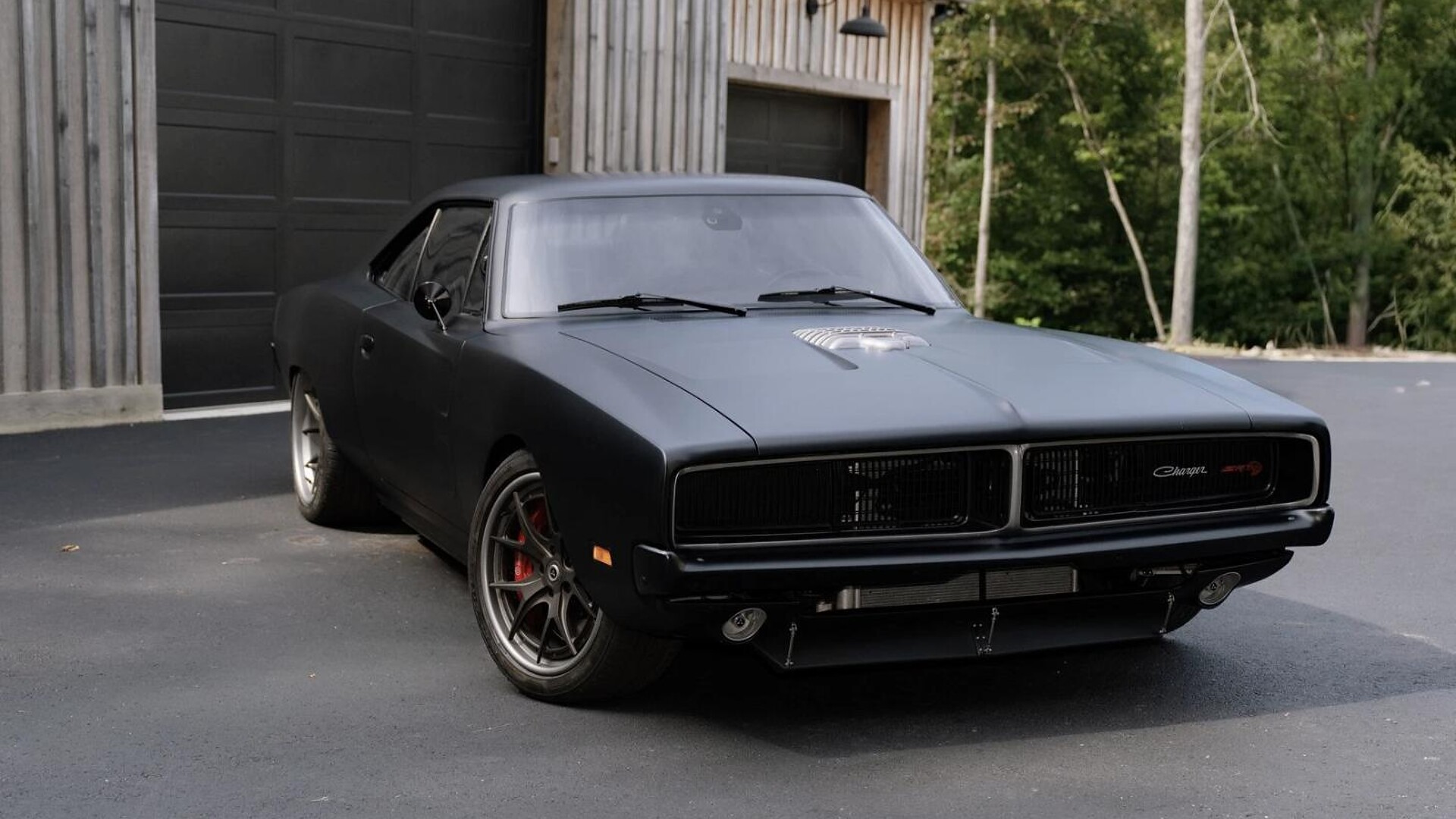
Nearly every Hemi-swapped muscle car built in the last decade began the same way. An old car goes up on a lift, the original drivetrain comes out, and something modern and supercharged goes in. The 1969 Charger Hellcat restomod now listed on eBay Motors out of Nashville was built in the opposite direction, and that single decision is the reason it deserves far more attention than its asking price.
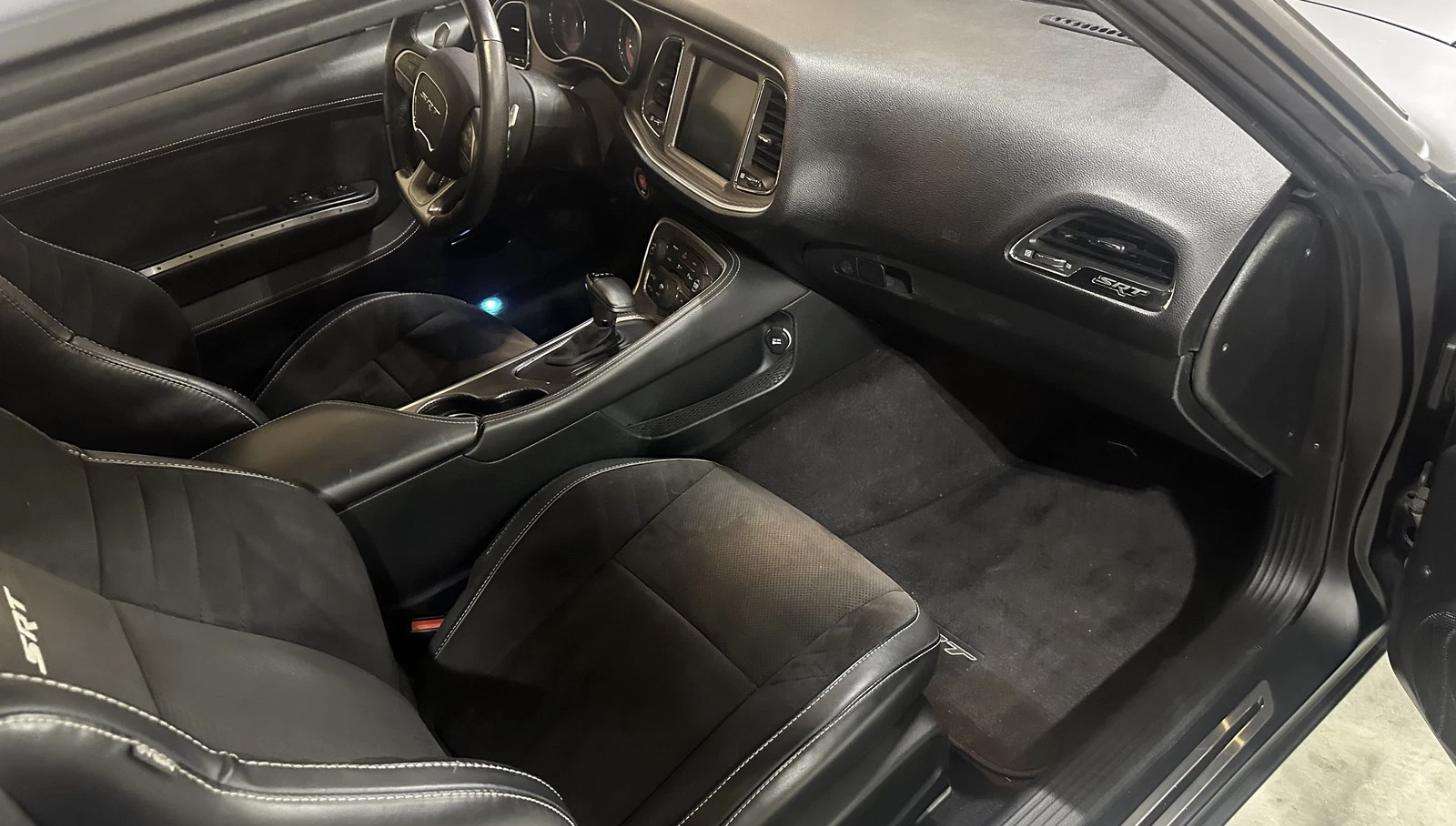
According to the seller’s description, T.C. Penick of Bay One Customs in Springfield, Tennessee, did not drop a 6.2-liter Hellcat into a Charger. He started with a complete 2016 SRT Hellcat and built a 1969 Charger body down onto it, retaining the modern car’s chassis, cabin and entire electrical architecture. Three and a half years and a claimed 3,948 man-hours later, the finished car is titled and sold as a 1969 Dodge Charger.
That is not a modified classic. It is a modern production car that has been re-bodied, a method with more in common with postwar coachbuilding than with anything that rolls out of a conventional pro-touring shop. And that distinction governs nearly everything a collector should think about here: how the car drives, how it ages, how it insures, how it titles, and what it is likely to be worth in a decade. This is also not the first modern Hellcat to be dressed in 1969 Charger clothing — we covered a retro-bodied Challenger Hellcat that channels the same shape — but it may be the most completely executed.
A Restomod Built in Reverse
Penick imposed two rules on the project, and they are more revealing than any horsepower figure. First, every system that worked in the 2016 Hellcat had to still work when the car was finished — park sensors, power windows, windshield-mounted sensors, remote start, Bluetooth, lighting — and the completed car had to remain scannable and serviceable at a dealership. Second, it had to be genuinely drivable, not a trailer queen.
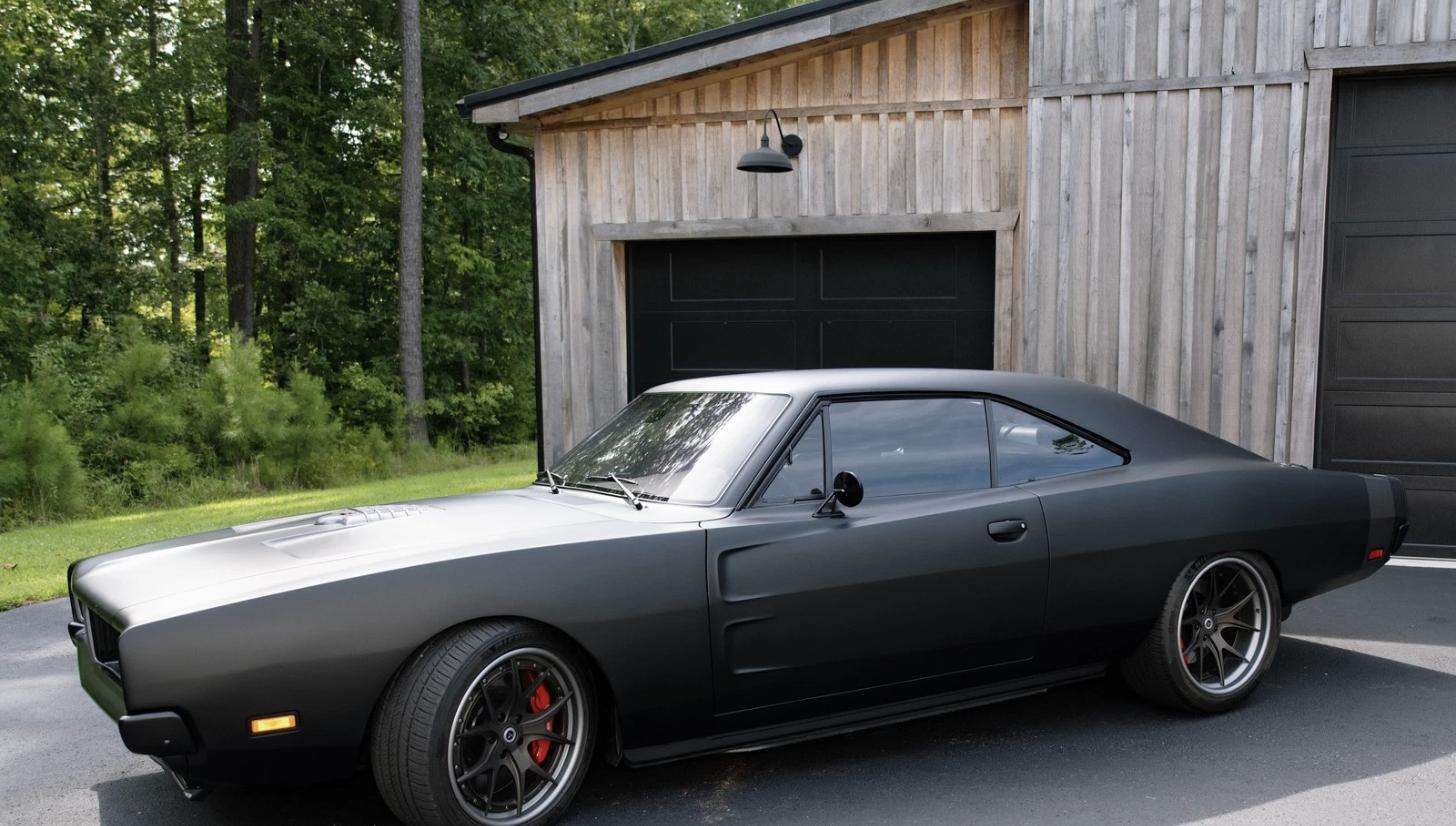
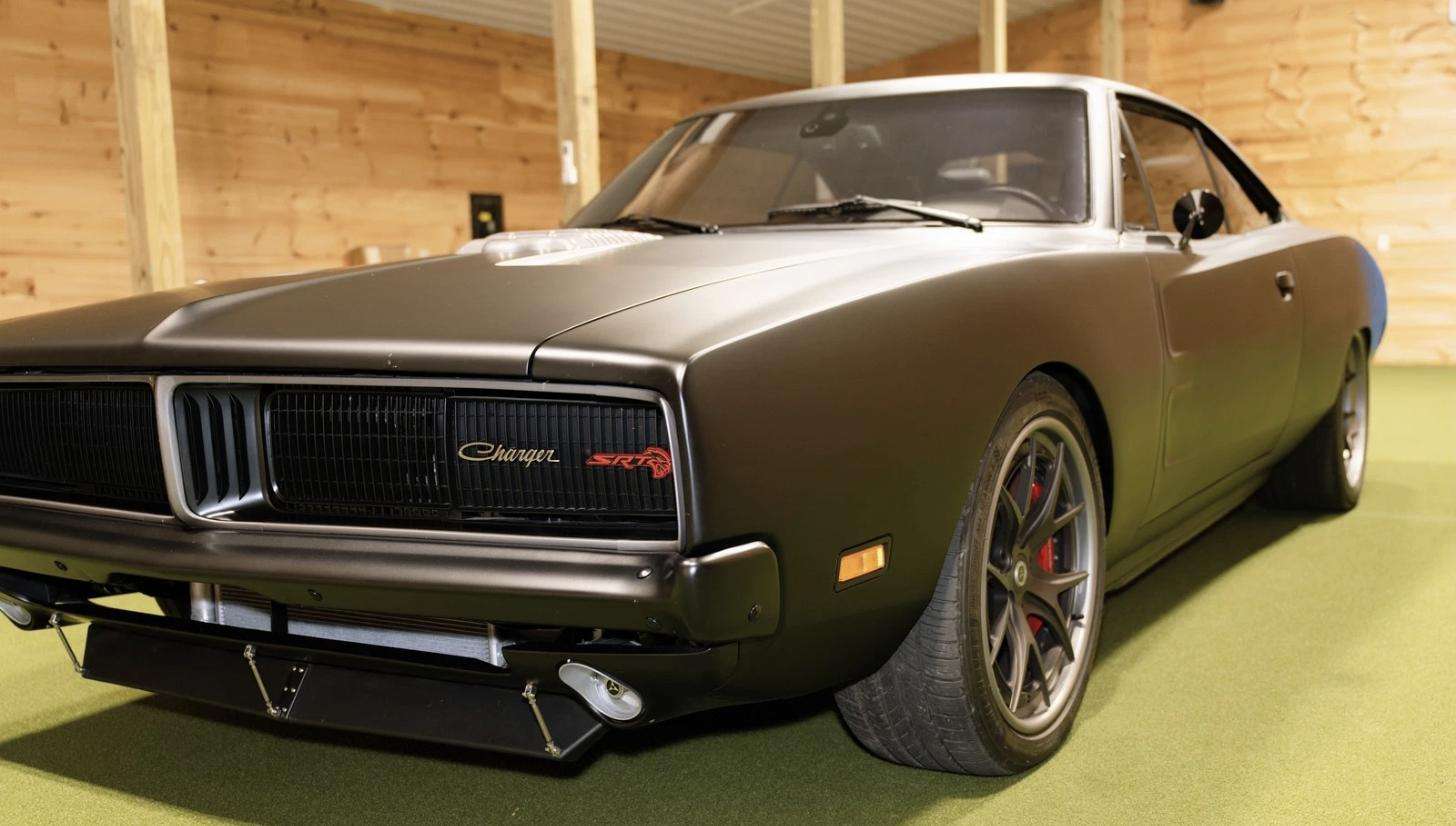
Those two constraints explain the engineering. A 1969 Charger shell was never asked to contain 707 horsepower, so Penick fabricated a hidden sub-structure beneath the vintage sheetmetal to keep the body from flexing under load. The track was widened front and rear because 1969 proportions had to be stretched over a modern footprint rather than the reverse. The finish is Lamborghini Nero Nemesis pearl under a matte clear, which photographs as stealth and reads in person as restraint. The seller reports roughly $600,000 and 3.5 years invested, with the build completed in 2024 and approximately 200 shakedown miles added since. Among the most ambitious restomods on the open market right now, few have been this thoroughly resolved.
Here is the part that matters to a buyer. Restomods are sold on their best feature and judged, years later, on their worst. The worst component in this car came off an assembly line in Brampton, Ontario, with a warranty booklet and a diagnostic port. That is an unusual position for a car of this type to occupy, and it is the strongest single argument in its favor.
What the VIN Actually Tells You
The listing gives the VIN as XP29H9B445460, and it is worth decoding, because it answers the first question serious Mopar people will ask. XP is a Charger two-door hardtop in the standard series, not the XS-code R/T. The H in the fifth position is the 383 four-barrel. The 9 is 1969, and the B is Hamtramck assembly.
In other words, the donor body was a 383 hardtop: a good car, a desirable car, and emphatically not a Hemi or a 440 R/T. That deserves saying plainly, because the collector market’s real objection to builds like this has never been modification. It is consumption. A 383 Charger given a second life is a different proposition, financially and otherwise, from a numbers-matching R/T that gets cut apart, and buyers who reflexively dismiss re-bodied cars should at least check which raw material was used before passing judgment.
The identity question is harder. Titled on a 1969 VIN, this car is fifty-seven years old on paper and nine years old in substance. eBay’s own platform could not produce a vehicle history report for it, and among the reasons the site lists is that the vehicle was manufactured before 1981. The 28,000 miles in the listing belong to the Hellcat chassis, not to a 1969 odometer, and because pre-1981 vehicles fall outside federal odometer disclosure requirements, that figure carries different weight than it would on a modern title. None of this is a defect. It is simply the paperwork reality of a car whose body and whose mechanical identity were manufactured forty-seven years apart, and it is the portion of this transaction that deserves an attorney’s attention rather than an enthusiast’s.
Why the Asking Price Sits Below the Build Cost
Roughly $600,000 went into this car. The ask is $399,000. That gap is not a distress signal; it is the ordinary arithmetic of the restomod market, the same mechanism we examined recently with a flawless 810-horsepower RTR Mustang that will not bring what it cost to build. Build cost is an input, not a valuation. The market does not reimburse hours. It prices names.
This is the part of the sector collectors consistently underrate. Ringbrothers, Speedkore, Singer and a small handful of others clear enormous premiums because the builder has become the collectible — the shop’s name does the work that a VIN does everywhere else in this hobby. Penick has real television exposure and a following, and the entire build was filmed and released episodically. For a car with no ownership history to speak of, a documented build is the closest thing available to a factory build sheet. Whether the market will pay classic-car money for that substitute is the open question, and it is the same one running underneath the reverse-restomod craze, the more disciplined tribute builds now emerging and every attempt to price a heritage name. Anyone weighing this car should first be clear-eyed about whether restomods work as investments at all.
Then comes the comparison every buyer at this level makes. At $399,000, the alternatives are real: an unrestored 1969 Charger Daytona brought $605,000, a documented 426 Hemi R/T trades within reach of this number, and a two-owner survivor R/T can be bought for a fraction of it. Those cars are liquid, gradeable and understood by every appraiser and auction house on earth. This one is not, at least not yet. It will find its buyer among people who want to drive a 1969 Charger at modern speeds, with modern climate control and modern hardware, and who understand they are buying a finished object rather than a position in a market.
What a Serious Buyer Should Verify
Nothing here is a warning against the car. These are the specific items that separate a confident purchase from an expensive education.
- Titling and inspection in your own state. A modern structure carrying a 1969 VIN is treated very differently in California than in Tennessee. Confirm before wiring funds, not after.
- Agreed-value insurance written against the actual structure. The appraisal needs to describe what the car is, not what the title says it is.
- The full documentation package. Receipts for the 3,948 hours, engineering notes on the sub-structure, the complete video record, and a written schedule of what is 2016 and what is 1969.
- Serviceability in practice. The build was designed to be dealer-scannable. Confirm which dealer has actually done it and what the scan tool expects to see.
- Sorting time. Approximately 200 miles since completion. Two hundred miles is a shakedown, not a validation. Budget accordingly.
The car was displayed publicly at the Triple Crown show in Nashville earlier this month, per the listing, which is how cars like this begin to assemble the only provenance available to them: a record of being seen, judged and accepted. It is offered as a Buy It Now at $399,000 through eBay’s Secure Purchase program with a $2,000 deposit, and the listing is scheduled to close on September 20.
The collector market has always paid for what sits underneath the paint. This Charger asks it to pay for the fact that what sits underneath is new, and to treat the 1969 body as the coachwork it functionally is. That argument is going to be made more often, not less. The supercharged 6.2-liter Hemi is finished, and the 2027 Super Bee confirmed the V8 era is closing. A decade from now, a 707-horsepower Hellcat drivetrain with a filmed build history will be a finite thing in a way that a 383 Charger body never was. Strip the price out of this listing entirely and the lesson survives: the next argument in the restomod market is not about horsepower or paint quality. It is about which car you are actually buying.
The collector car market, every weekday morning.
Auction results, price moves and what’s crossing the block, read in four minutes. Free, from Modern Car Collector.
No spam, unsubscribe in one click. Or read more about the Brief.



 Eve Nowell