
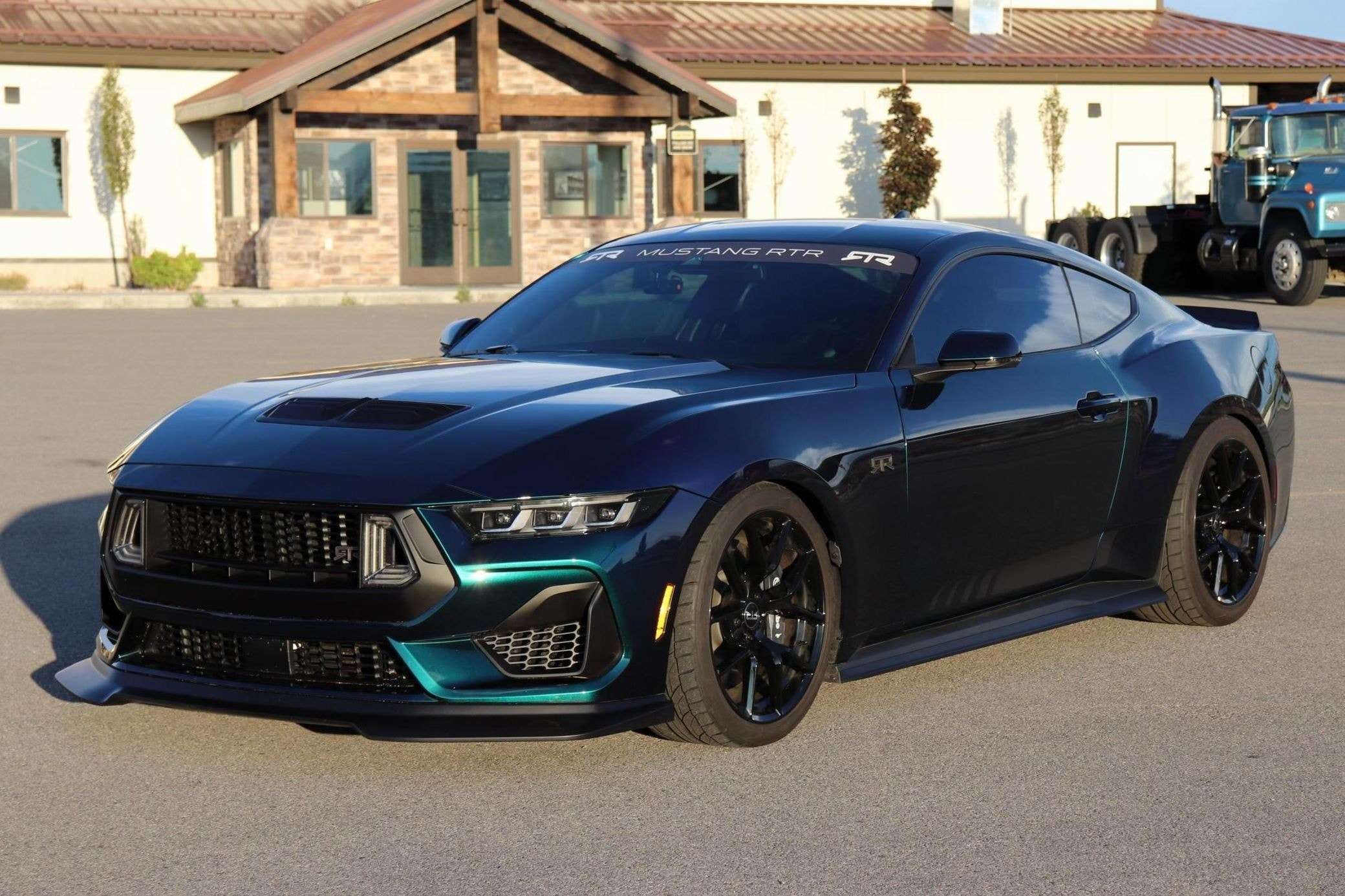
A 2025 Ford Mustang GT RTR Spec 3 Coupe is currently consigned to a reserve auction on Cars & Bids, and on paper it is about as close to flawless as a modified car gets. One owner since new in May 2025. A clean Utah title. No accidents, no mileage discrepancies, and a listing with no entries at all under “Known Flaws.” The car wears a Mystichrome chameleon finish over a spotless Black Onyx interior, has 6,500 miles on the odometer, and comes with the RTR certificate of authenticity, the original window sticker, the handheld Whipple tuner, service records, a suspension adjustment tool, and both keys. By the standards of a modified muscle car offered at auction, this is about as thorough a file as exists.
None of that has translated into strong bidding. At the time this was written, the high bid sat at $28,047, against a window sticker showing an original MSRP of nearly $61,000 before RTR ever touched the car, and a private-sale range that these builds typically command of $74,000 to roughly $95,000. The RTR Spec 3 package itself is not a cosmetic afterthought: a Whipple supercharger kit, upgraded fuel injectors, a dual-pass intercooler, adjustable coilovers and sway bars, a full aero kit, and forced-induction-rated wheels combine to lift output from the Coyote V8’s factory-rated 486 horsepower to a claimed 810. RTR is a legitimate shop, built around professional drifter Vaughn Gittin Jr.’s reputation, not a backyard operation. The gap between what this car cost to build and what it is bidding for is the real story here, and it has nothing to do with the quality of the work.
Documentation Isn’t Provenance
Everything included with this sale documents how the car was modified. None of it documents why the car should matter beyond its original buyer. A certificate of authenticity from a tuning house confirms that a specific supercharger kit and suspension package were installed correctly, a useful and honest piece of paperwork, but categorically different from a factory build sheet, a Marti Report, or a manufacturer heritage certificate that ties a car to its original specification and its place in a marque’s history. Collectors have wrestled with this distinction before. Our look at Eccentrica’s V12 roadster built from a Lamborghini Diablo raised the same question in more extreme form: skilled, well-documented modification can transform a car’s capability without adding a single dollar of the kind of provenance that actually drives long-term collector demand.
The one element of this Mustang with a genuine factory paper trail is the paint. Mystichrome is a color-shifting finish that traces back to the Mustang SVT Cobra’s 10th Anniversary Edition, using pigment technology that shifts between purple and green depending on the light and the angle of view, a process expensive enough that Ford has revived it only sparingly since. Here it was a $14,995 factory option on the 2025 GT, which means it is the single most authentically documented feature on the car. It is also now inseparable from an RTR body kit and a supercharged drivetrain that a future buyer cannot undo without starting over.
What the Market Is Actually Pricing
Cars & Bids was built for exactly this kind of car: enthusiast-grade modern performance vehicles, bought by people who intend to drive them, not by family offices building a hedge against inflation. A soft opening bid on this listing is not evidence that the market is broken. It is evidence that the buyer pool for a supercharged Mustang is different from the buyer pool for a numbers-matching Cobra or a factory-original Boss 429, and that even a strong result here will likely just recover what the car cost to build, not reward it with a premium. Compare that with the muscle cars that do carry real premiums at auction: a restored 1969 Yenko Camaro carries value because Yenko’s dealer-built performance cars are a documented, finite chapter of Chevrolet history, not because someone recently made a Camaro faster. Ford has proven the same point from the other direction. When the company licensed the 1967 Mustang Eleanor nameplate for a 25th-anniversary continuation model, that car brought $550,000 at Barrett-Jackson’s inaugural Columbus sale, not because of horsepower, but because the manufacturer’s own intellectual property and blessing were attached to it.
One practical note for anyone watching this auction closely: there is an outstanding loan on the car, and the seller has said proceeds will go toward paying it off before the title is released. That is a common and manageable situation in private-party and online auction sales, but it is worth confirming lien payoff timing and title-transfer contingencies in writing before any funds change hands, a detail that matters far more to a buyer’s outcome than horsepower figures ever will.
Strip away the auction price, and this Mustang still teaches something worth remembering. Modification can make a car faster, louder, and more capable than the factory ever intended, and RTR has clearly done that job well here. But speed has never been what moves a car into serious collector territory. History does. The paperwork on this Mustang proves exactly how it was built. It does nothing to prove why it should matter in twenty years, and the bidding so far is simply pricing in that gap. See it here.
The collector car market, every weekday morning.
Auction results, price moves and what’s crossing the block, read in four minutes. Free, from Modern Car Collector.
No spam, unsubscribe in one click. Or read more about the Brief.

 Shawn Henry
  Kyle Matthews
  Eve Nowell