

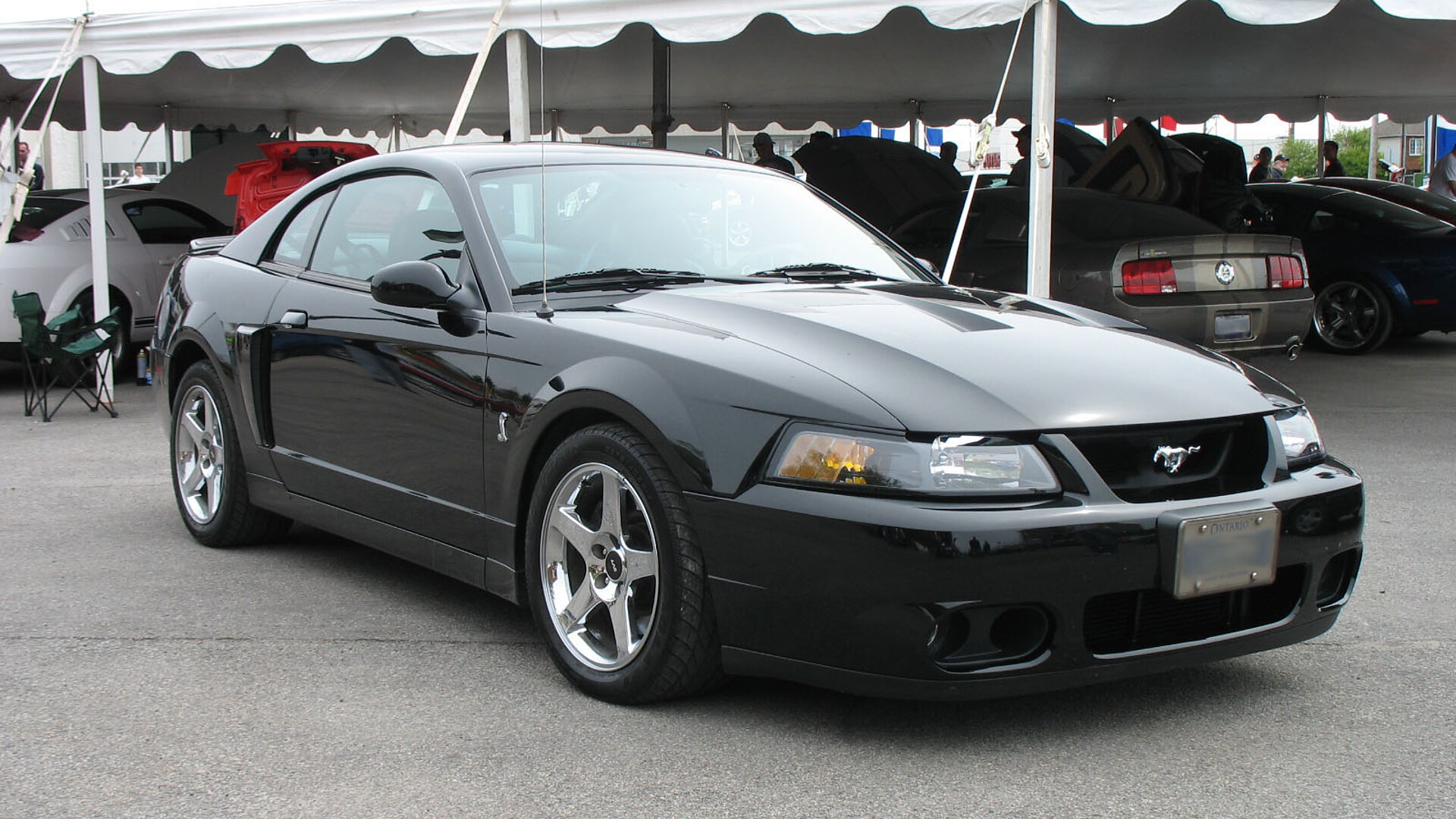
Any Terminator Cobra buying guide has to start with one fact: the 2003–04 SVT Mustang Cobra was not built in small numbers. Ford made 19,140 of them. That should shape how you shop: rarity will not protect you here, so condition, originality and paperwork are the whole proposition. A stock, documented Terminator and a heavily modified one wear the same badge, and the market prices them very differently.
This Terminator Cobra buying guide covers what separates the good cars from the rest: which years and variants matter, what the factory built, what owners commonly change, where the known problems sit, how recent sales compare, and which version suits which kind of buyer. It is a purchasing guide, not a history lesson. For context on how other supercharged American performance machines from the same era are being valued, see our comparison of the Syclone, Lightning and 454 SS super trucks.
Why the Terminator matters to collectors
Ford’s Special Vehicle Team, led by John Coletti, developed the car, and Hagerty’s profile of it describes the forced induction as unusual for a 2003 production performance car (Hagerty Media). It also followed a troubled stretch for the SVT Cobra. CJ Pony Parts’ history of the model notes the 1999 power shortfall and the 2001 aluminum-block failures before SVT returned to a cast-iron block for 2003 (CJ Pony Parts). The Terminator was the reset: a car meant to be fast on arrival and worth upgrading afterward.
That second point is the buyer’s central problem. SVT engineered the car to be modified, and many owners did. The collector value of a Terminator today sits in how much of the car is still the car Ford shipped.
The specification that matters
| Item | 2003–04 SVT Cobra |
|---|---|
| Engine | Supercharged 4.6-liter DOHC 32-valve V8; cast-iron block, forged crankshaft, Manley connecting rods |
| Supercharger | Eaton M112 Roots type, 8 psi maximum boost |
| Output | 390 hp at 6,000 rpm; 390 lb-ft at 3,500 rpm (factory ratings) |
| Transmission | Tremec T-56 six-speed manual (the only transmission offered) |
| Rear axle | 3.55:1, 31-spline half-shafts, independent rear suspension |
| Curb weight | About 3,665 lb coupe; 3,780 lb convertible |
| Performance | 0–60 mph in 4.5 seconds in Car and Driver testing; electronically governed to 153 mph |
| Original MSRP | 2003: $33,460 coupe, $37,835 convertible. 2004: $34,575 coupe, $38,950 convertible |
Sources for the table: Wikipedia’s SVT Cobra entry (which cites Ford and SVT materials and the Car and Driver road test), the SVT Performance Terminator FAQ for weights and ratings, and CJ Pony Parts for the internals. Owner dyno runs often read higher than the rating (CJ Pony Parts cites figures closer to 420 hp), but treat those as owner reports, not factory data.
There is no engine or transmission choice to make. Every car has the same powertrain, so your decisions come down to year, body style, color and package, and above all to the individual car’s history.
Years, variants and production
| Variant | Production | What to know |
|---|---|---|
| 2003 Cobra coupe | 8,394 | Largest group; the base case for most comparisons |
| 2003 Cobra convertible | 5,082 | Heavier by roughly 115 lb |
| 2003 10th Anniversary Edition | 2,003 (1,003 coupes, 1,000 convertibles) | Built June–July 2003; Black, Torch Red or Silver; red leather inserts, red calipers, dark argent wheels; mechanically the same as a standard Cobra |
| 2004 Cobra coupe | 3,768 | Short model run, November 2003 to March 2004 |
| 2004 Cobra convertible | 1,896 | Black top only |
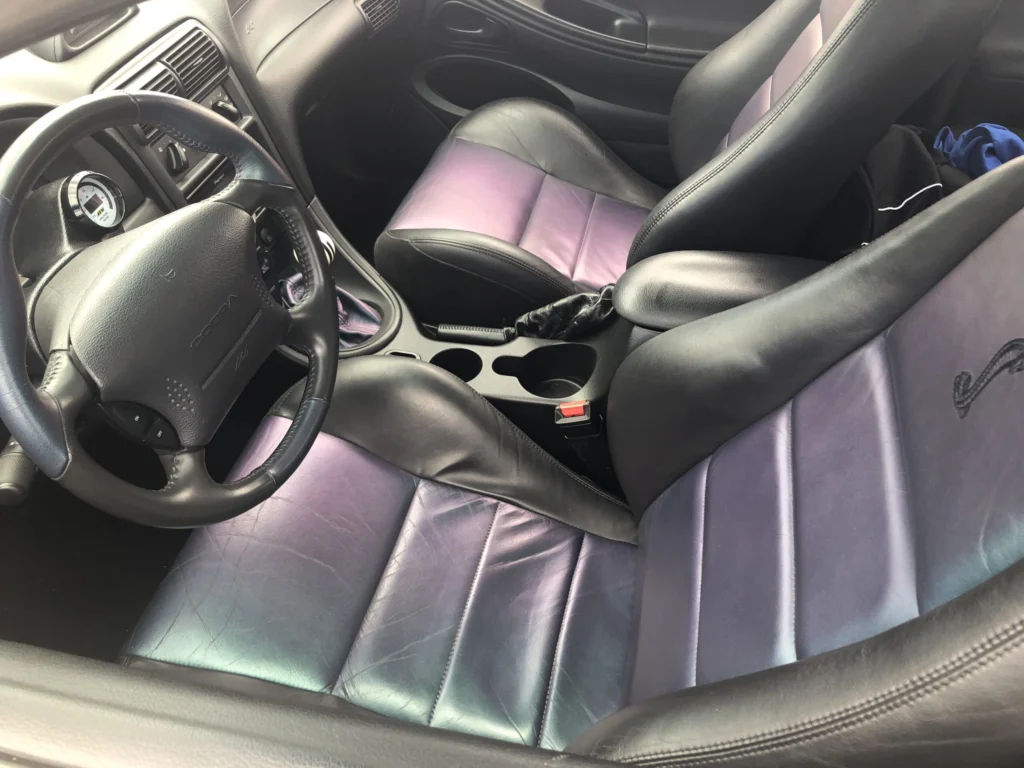
| 2004 Mystichrome | 1,010 (515 coupes, 495 convertibles) | Order code 68M, $3,650; color-shifting paint and leather; built December 2003–January 2004 |
Totals are 13,476 for 2003 and 5,664 for 2004, per the production figures cited by Wikipedia and the SVT Performance FAQ, and consistent with Hagerty’s combined 19,140. Some secondary sources quote different year totals, so when a seller or listing leans on a production number, ask for the Ford documentation behind the car rather than repeating a figure.
Changes between years are small. For 2004, Ford slightly updated the exhaust, added an integrated shift light that removed the $1,000 gas guzzler tax applied to 2003 cars, made Sirius satellite radio available, swapped Zinc Yellow for Screaming Yellow, dropped Medium Parchment suede and limited convertible tops to black. The 2003 cars also saw a mid-year spark plug change (AGSF12FM1 on first-run cars, AGSF22FM1 on second-run cars, per SVT Performance), which is worth knowing when you read a service record.
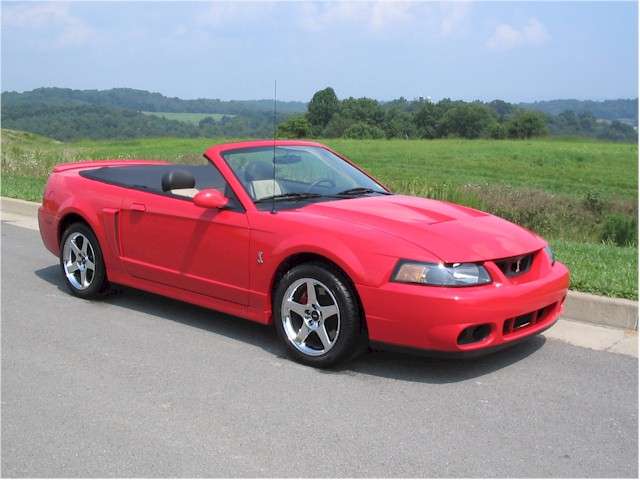
2004 color production, coupe and convertible, as listed by CJ Pony Parts: Black 820/392, Silver Metallic 551/266, Mystichrome 515/495, Redfire Metallic 509/209, Torch Red 477/167, Oxford White 316/128, Screaming Yellow 299/167 and Competition Orange 281/72. Those coupe and convertible totals match the 3,768 and 1,896 above, which is a useful cross-check on the source.
Engine and drivetrain: what the factory built
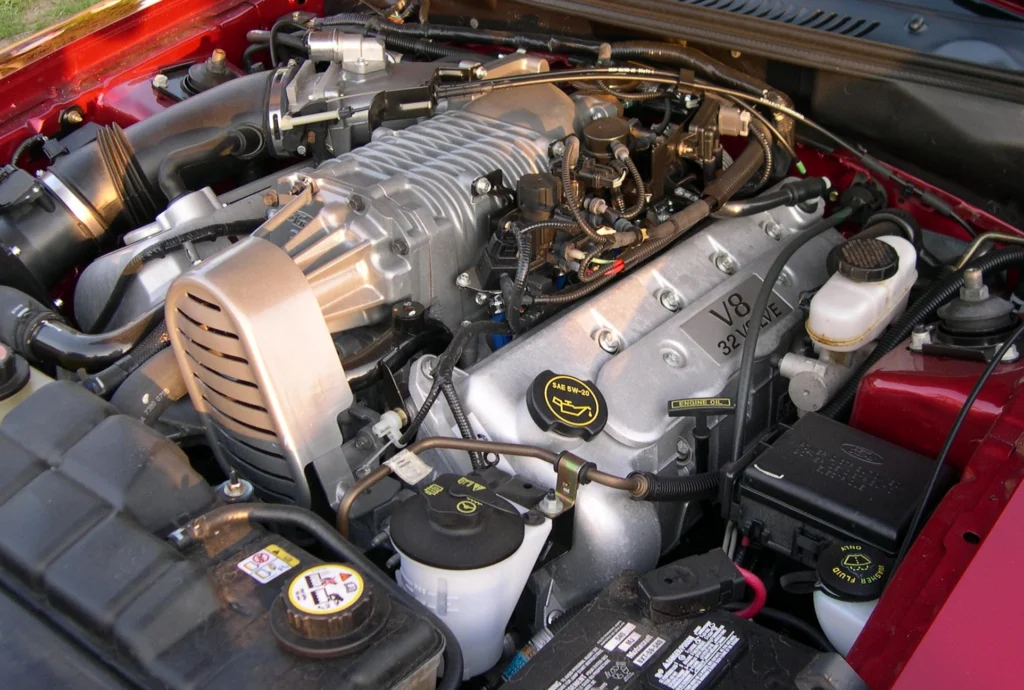
Beneath the blower, SVT specified forged internals, a lightweight aluminum flywheel, an aluminum driveshaft and strengthened axle components. The independent rear suspension, per Hagerty, is a compact modular design that bolts into the unibody mounting points used by the solid-axle cars. All of that was designed around a stock calibration. Anything that adds boost or changes the tune moves the car outside the margin the factory built in.
Known problems and ownership risks
Published, authoritative reliability data for these cars is thin, so the items below are labeled by source quality. Treat the enthusiast reports as prompts for inspection rather than proven failure rates.
Documented by a model-specific reference
- Engine “tick.” The SVT Performance FAQ says a tick can occur on any 2003–04 4.6-liter DOHC engine, affects a small percentage, and that the head revision that addressed it arrived in January 2005, after the Cobra’s run. Ticking that worsens with rpm deserves a specialist’s attention.
- Cooling. The same FAQ warns that running low on coolant with aluminum heads is very bad for the engine. Ask for cooling-system service history.
- Hood paint. The FAQ notes a technical service bulletin for flaking paint on the hood.
- Mystichrome paint. Mystichrome.com says repairs at Ford dealer body shops required a Dearborn-based Ford employee to bring and supervise the paint, and that early December 2003 builds were undersprayed in hidden areas such as the engine bay, door jambs and underside of the hood and trunk. A refinished Mystichrome car is not the same collectible as an original one.
Reported by owners (anecdotal)
- Owners in enthusiast forums describe heat sensitivity in the pistons under detonation, hotter cylinders 7 and 8, and oil pump gear wear at very high rpm. These claims are unverified and the discussions are inconsistent on details, so use them as reasons to ask a Cobra-experienced shop what it looks for.
- Wheel hop and rear-suspension wear are mentioned by owners of hard-driven cars; one owner reported that good tires solved the hop on his car.
Maintenance costs and parts availability
We could not find credible published running-cost figures for these cars, so we are not quoting a yearly number. What can be said: fluid and plug specifications are straightforward (Motorcraft 5W-20 synthetic blend oil and Motorcraft VC-4-A coolant, per SVT Performance), and aftermarket support is deep. Specialist retailers such as CJ Pony Parts and AmericanMuscle carry dedicated 2003–04 Cobra parts. The expensive items are the ones that are specific to the car: supercharger service, original-style wheels and tires, and, on a Mystichrome, anything involving paint. Get written quotes before you buy.
Inspection priorities
Hire a Cobra-experienced specialist for the pre-purchase inspection, and ask for a cold start. The checks below combine the model-specific guidance above with standard practice.
- Engine and blower: listen for rpm-related ticking, check coolant level and condition, and look for stored codes and tune evidence. SVT Performance advises that a dot in the center of the blower snout end can suggest a pulley change, and that tool marks on the throttle-body bolts or intake clamp screws suggest tampering.
- Oil and filler cap: heavy residue under the oil filler cap can indicate infrequent oil changes or hard use.
- Drivetrain: check clutch engagement point (SVT Performance notes an engagement that is too low may need adjustment), the T-56’s shift quality, and any clunks from the driveline or rear suspension under load.
- Tires and wheel wells: abnormal tire wear, rubber residue in the wheel wells, or brand-new tires on a supposedly low-mileage car can point to launches and track-style use.
- Body and paint: inspect the hood for flaking paint, compare paint depth panel to panel, and on a Mystichrome car verify the finish is original.
- Wheels: factory wheels were 17×9-inch five-spoke; 10th Anniversary cars wore dark argent seven-spoke wheels and Mystichrome cars chrome wheels.
Originality and documentation
Because so many Terminators were modified, originality is where price is made. Ask for the window sticker, the original build and ownership records, service invoices, and any tune files or dyno sheets. Mechanical reversibility matters: a car whose bolt-ons were removed and kept is a better bet than one whose modifications were mixed with factory parts. For a sense of how documentation drives value elsewhere in the market, see our Boss 429 originality check.
Common modifications to expect, per the SVT Performance FAQ’s own headings, include upper and lower pulley swaps, boost bypass, fan modifications, tunes, headers, cold-air intakes and lowered suspension. None is automatically disqualifying, but each changes the price you should pay and the questions you should ask.
Market values: what recent sales show
Two independent snapshots frame the market. Hagerty’s valuation data, cited in Five Smart (and Fun) Collector-Car Buys in 2026, puts the median #2 “excellent” 2003–04 Cobra at $33,500, against a 2024 peak of $41,800 and $23,200 five years earlier. Classic.com shows a market benchmark of $28,444 for 2003 cars. The two measure different things, so do not expect them to match.
| Date | Price | Mileage as listed | Notes |
|---|---|---|---|
| Nov 19, 2025 | $26,250 | 21k | Modified |
| Nov 3, 2025 | $45,500 | 17k | Original or highly original |
| Oct 29, 2025 | $14,300 | 45k | Original or highly original |
| Oct 27, 2025 | $31,000 | 13k | Original or highly original |
| Sep 4, 2025 | $38,000 | 9k | 10th Anniversary Edition |
| Aug 13, 2025 | $25,300 | Not stated | 10th Anniversary Edition |
| Jul 23, 2025 | $31,000 | 9k | Original or highly original |
| Jul 21, 2025 | $34,400 | 19k | Modified |
Source: Classic.com’s 2003 SVT Cobra results page. Classic.com’s listing data had inconsistent mileage fields, and the most recent sales its page displayed to us ran through November 2025, so verify any comparable against its original listing before you rely on it.
Three things stand out. First, the spread is wide: $14,300 to $45,500 in the same months, driven by mileage and originality rather than by body style. Second, the two 10th Anniversary sales ($25,300 and $38,000) do not show a consistent premium over standard cars in this small sample. Third, we did not find enough verified recent Mystichrome results to quote a range, so check current Bring a Trailer and Hagerty Marketplace results for that variant.
One result sits far outside all of this. Gear Patrol reported that a 14-mile 2003 Cobra sold on Bring a Trailer in March 2026 for $175,067. That price reflects a delivery-mileage survivor with factory plastics still on, not the car you are likely to find. It shows what an untouched example can bring, and says little about a driven one. One unusual result is not a trend.
What separates exceptional from average from problematic
| Grade | What it looks like |
|---|---|
| Exceptional | Unmodified or fully reversed to stock; low mileage; complete records including window sticker and service history; original paint; clean cooling history; no tune questions |
| Average | Mid mileage; some reversible bolt-ons; partial records; honest wear, with no signs of abuse |
| Problematic | Unknown tune or pulley changes; hard-use evidence such as tire residue or heavy oil-cap residue; ticking or cooling neglect; refinished Mystichrome paint; missing paperwork |
Which Terminator to buy
For a first collector-car purchase
Look for a stock, well-documented 2003 coupe. It is the most available version, and the comps above show that clean, unmodified examples trade across a broad band. Pay for records and originality, not for the Cobra badge alone.
For top-down driving
A convertible gives you the open-air version of the same powertrain at a weight penalty of about 115 lb, and convertibles are the smaller group in each year (5,082 in 2003, 1,896 in 2004). Inspect the top mechanism and body rigidity as carefully as the engine.
For a collector chasing the scarce versions
The 10th Anniversary and Mystichrome cars are packages on the same mechanicals, so what you are buying is scarcity and appearance. Verify the paperwork, the paint code (G6 for Mystichrome) and interior code (MD), per Mystichrome.com, and be wary of any car without the documents to match.
For a tuner or track-day buyer
A well-built modified car can make sense if you want to drive it hard and are not buying for originality. Ask for dyno sheets and receipts, and budget for the engine and cooling work a previous owner may have skipped. Understand that you are buying someone else’s choices.
Who should pass
Anyone who needs a car to be a guaranteed store of value. The market has moved, up and down, within a few years, and this guide offers no price forecast.
Before you bid
- Ask for the window sticker, service history and any modification receipts.
- Confirm the supercharger pulley, tune and throttle-body hardware are as described.
- Check for ticking on a cold start and review the cooling-system history.
- Look for tire-wear and wheel-well evidence of hard use.
- Verify Mystichrome and 10th Anniversary codes against the paperwork.
- Compare asking price to recent sold comps, not to the single outlier.
For a comparison of how we evaluate other modern collectibles, see our Mercedes 500E buying guide, and for an American V10 alternative from the same era, our Dodge Viper RT/10 spec sheet. Browse more ideas in The Most Undervalued Collector Cars in Today’s Market.
Sources
- Hagerty Media, “25 Greatest Mustangs: 2003 SVT Cobra Terminator”
- Hagerty Media, “Five Smart (and Fun) Collector-Car Buys in 2026”
- Wikipedia, Ford Mustang SVT Cobra
- SVT Performance, Terminator FAQ
- Mystichrome.com, Mystichrome facts
- CJ Pony Parts, The Terminator Cobra
- Classic.com, 2003 SVT Cobra market data
- Gear Patrol, Terminator Mustang auction report
The collector car market, every weekday morning.
Auction results, price moves and what’s crossing the block, read in four minutes. Free, from Modern Car Collector.
No spam, unsubscribe in one click. Or read more about the Brief.



 Kyle Matthews
 Shawn Henry

