

Walt Hansgen was born on October 28, 1919, in Westfield, New Jersey, and the cars he drove have outlived him in a way few drivers’ cars have. Hansgen is the clearest case in American road racing of a driver whose seat time is the provenance. A Jaguar is a Jaguar, but a Jaguar he raced for Briggs Cunningham is a documented piece of the story of how American amateurs and professionals took on Europe in the 1950s and early 1960s.
That is the thesis of this anniversary: with Hansgen, the premium is not for the driver’s fame, which has faded, but for a verifiable chain of events that ties a specific chassis to a specific race.
A Jersey Jaguar Dealer Who Became America’s Best Sports-Car Driver
Hansgen started as a welder at the family firm his father, Fred, founded, and went on to run a Jaguar dealership and body shop in New Jersey, according to the Old Racing Cars driver database. He served in World War II and began racing in 1951 in a Jaguar XK120 he had restored at the family business. That origin matters to collectors. He was a mechanic and a bodyman who understood the cars he drove, and his results were earned in the same Jaguars his customers bought.
By the late 1950s he was driving for Briggs Cunningham. A history of his Virginia International Raceway wins dates his Cunningham tenure to 1957 through 1963, and credits him with SCCA national points titles in 1957 and 1958 plus a 1957 “U.S. Sports Car Driver of the Year” award from Sports Illustrated. Jaguar Heritage calls him a four-time SCCA champion. In a Jaguar D-Type he won the SCCA’s C Modified class in 1956, 1957 and 1958, and in a Lister-Jaguar he won it again in 1959.
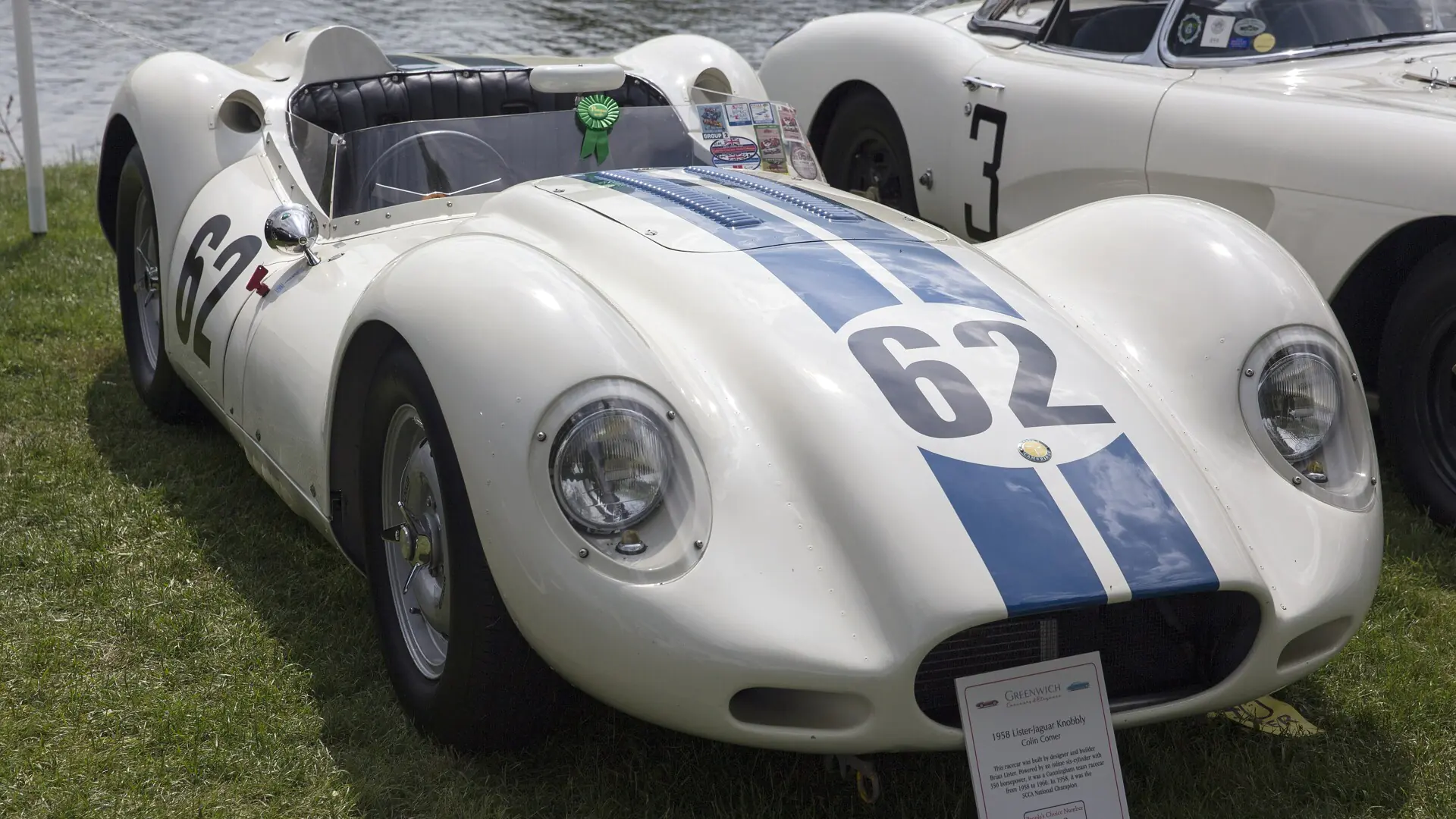
The Lister Knobbly: Cunningham’s American Jaguars
Cunningham ordered two Jaguar-powered Lister Knobblys for the 1958 Sebring 12 Hours, and Hansgen shared the first with Archie Scott-Brown. According to RM Sotheby’s catalog research, that car, chassis BHL EE 101, retired after a shunt on lap four, was re-engined, and went on to win SCCA races with Hansgen at the wheel before Cunningham sold it in the mid-1960s.
The market has priced that history. RM Sotheby’s sold BHL EE 101 for $1,980,000 at Monterey in 2013. A different Knobbly, BHL 119, which RM says Hansgen drove for the Lister works at Silverstone in July 1958 and in two wins at Snetterton, sold for $802,500 in Arizona in 2021. Those are different cars, eight years apart, and they do not make a trend. What they show is that Hansgen’s name appears in the catalog copy of Knobblys at both ends of a wide range, and buyers have treated his documented drives as part of what they are paying for.
E2A at Le Mans: Seven Hours That Built a Five-Million-Dollar Car
The Jaguar E2A was a one-off works prototype that previewed the E-Type. Per Octane, Cunningham funded its entry at the 1960 24 Hours of Le Mans, although the car remained Jaguar’s property. His intended drivers were Hansgen and Ed Crawford. Crawford destroyed the engine in practice, and Cunningham replaced him with a rising Dan Gurney. The car ran only seven hours and six minutes before a cracked injection line ended its race.
The rest of the E2A’s season is the part collectors should not skip. Fitted with a 3.8-liter engine and carburetors, it went to Bridgehampton in August, where Hansgen won outright, according to the same account. Bonhams sold the E2A for $4,957,000 at Quail Lodge in 2008, then the highest price paid for a Jaguar at auction. In June 2026 the specialist dealer Fiskens sold it again, for an undisclosed sum, and Octane reports it is headed for a museum at Le Mans. A car that never finished the race it was built for is worth that much because its record is complete and its chassis is unique.
Cunningham’s Last Years, Indianapolis and Laguna Seca
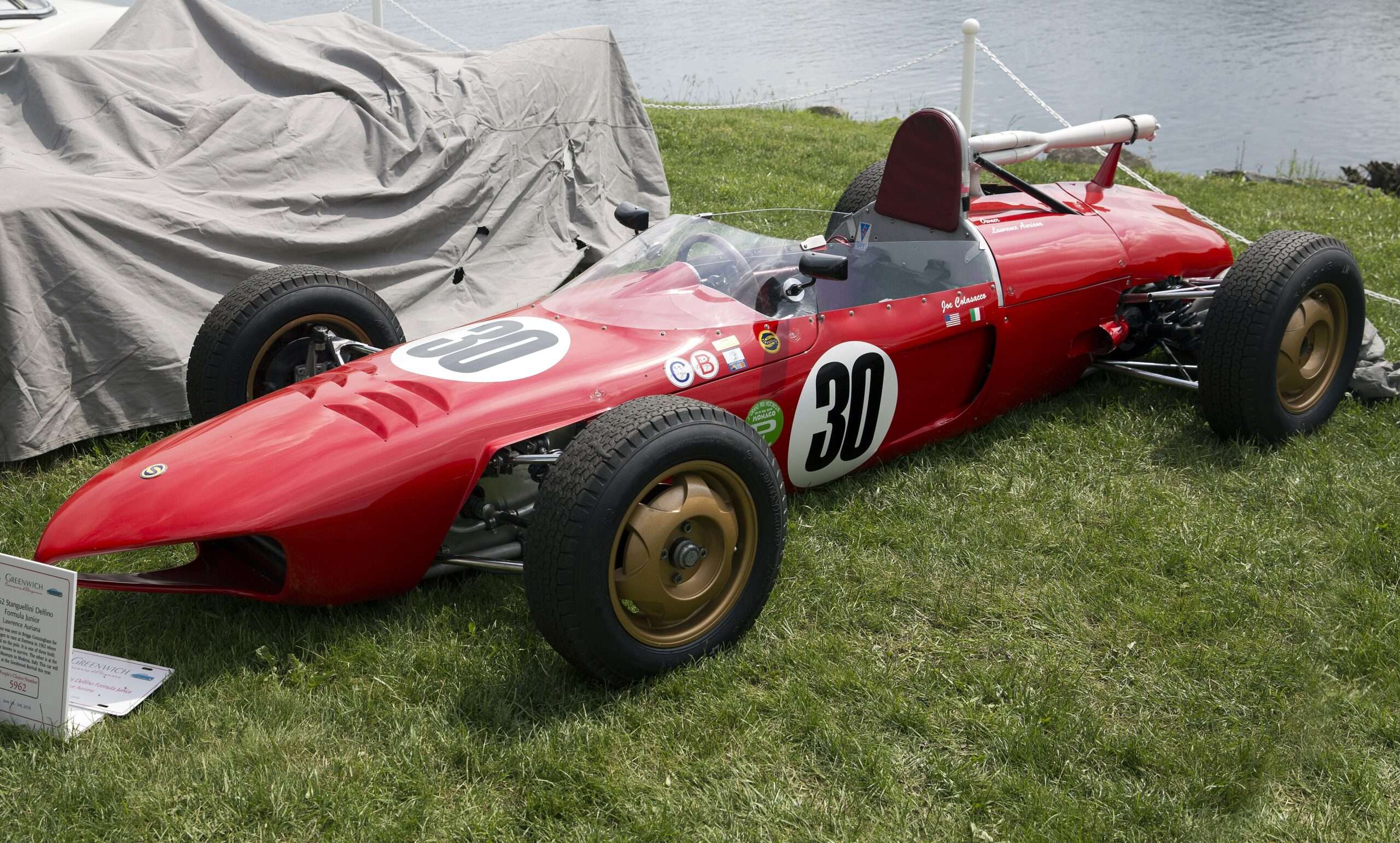
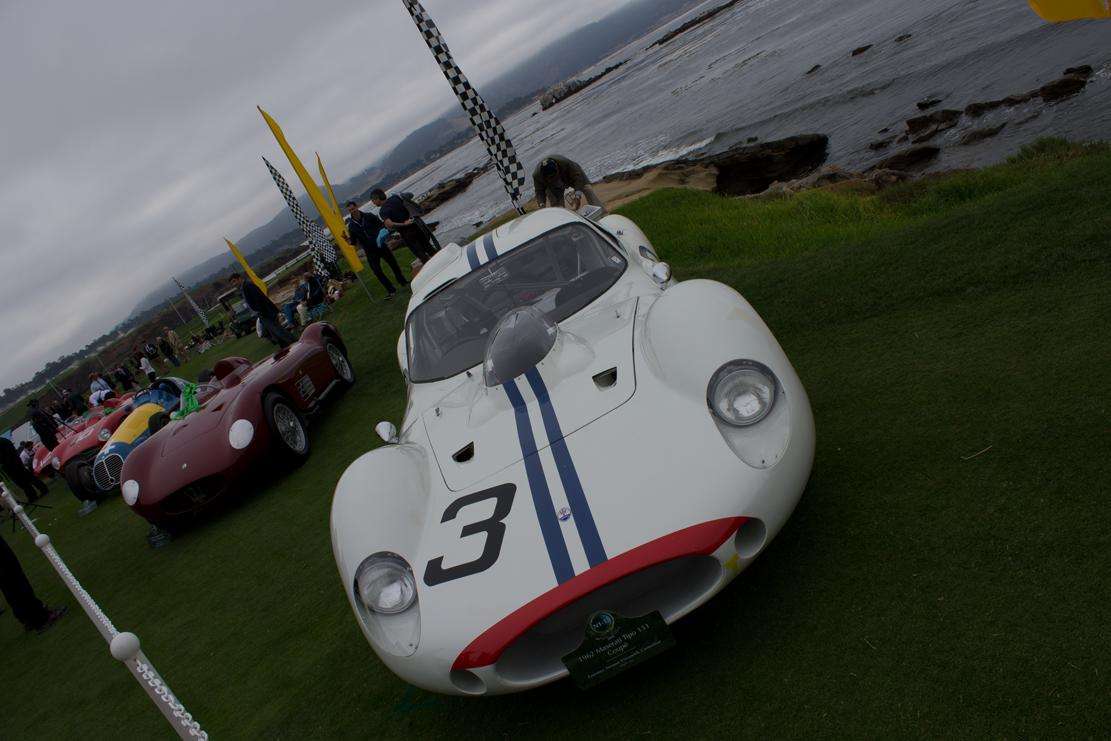
Hansgen kept returning to Le Mans for Cunningham, in a Maserati Tipo 63 in 1961, the Tipo 151 coupe in 1962 and a lightweight Jaguar E-Type in 1963. None finished. Away from endurance racing he won a Formula Junior race at the inaugural U.S. Grand Prix meeting at Sebring in December 1959 in a Stanguellini, started the 1961 and 1964 U.S. Grands Prix, and finished fifth in the second, driving a Team Lotus 33. He started the Indianapolis 500 in 1964 and 1965, finishing 13th and 14th.
On October 17, 1965, he won the Monterey Grand Prix at Laguna Seca in John Mecom’s Lola T70-Ford. That was the same circuit where, as we covered, Roger Penske won in the Zerex Special in 1962, and Dave MacDonald won in the Shelby King Cobra a year later. Laguna Seca was where the American road-racing scene Hansgen belonged to did its best work.
The End at Le Mans
In April 1966, while testing for Le Mans in the rain, Hansgen crashed a 7-liter Ford GT40 Mk II. He died on April 7 in a French hospital, aged 46, according to the VIR history and the Old Racing Cars database. Accounts differ on whether an escape road was blocked by a barrier, so we will not settle that here. The 1966 Ford GT40 Mk II that went to auction with an $11 million estimate belongs to the same program he was testing for.
Why Hansgen Matters to Collectors Now
Hansgen’s story gives collectors a method as much as a name. When a seller offers an “ex-Hansgen” or “ex-Cunningham” car, the premium depends on whether period results, team records and chassis identity line up. The Lister numbering shows why. The first Knobbly was stamped “EE” for Ecurie Ecosse, then over-stamped “BHL,” and RM’s catalog describes both. A buyer who cannot read that paper trail is buying a story.
If you are weighing a Hansgen-era car, check three things before the bidding opens: that the chassis number is tied to the specific race results, not merely the model; that the engine fitted is documented for the period in question, since the Knobbly was re-engined between 1958 and 1959; and that the driver attribution comes from race results or team records rather than a placard. As a market signal, Hansgen’s cars point to a simple lesson. The $4.957 million E2A and the $1.98 million Knobbly were not bought for trophies. They were bought for a documented record, and the work of keeping that record intact belongs to the next owner.
For the road-going side of the Jaguar story from the same era, see our look at XK 150 values, and for another look at Formula Junior in the market, our piece on a 1959 Stanguellini Formula Junior at auction.
The collector car market, every weekday morning.
Auction results, price moves and what’s crossing the block, read in four minutes. Free, from Modern Car Collector.
No spam, unsubscribe in one click. Or read more about the Brief.

 Shawn Henry