

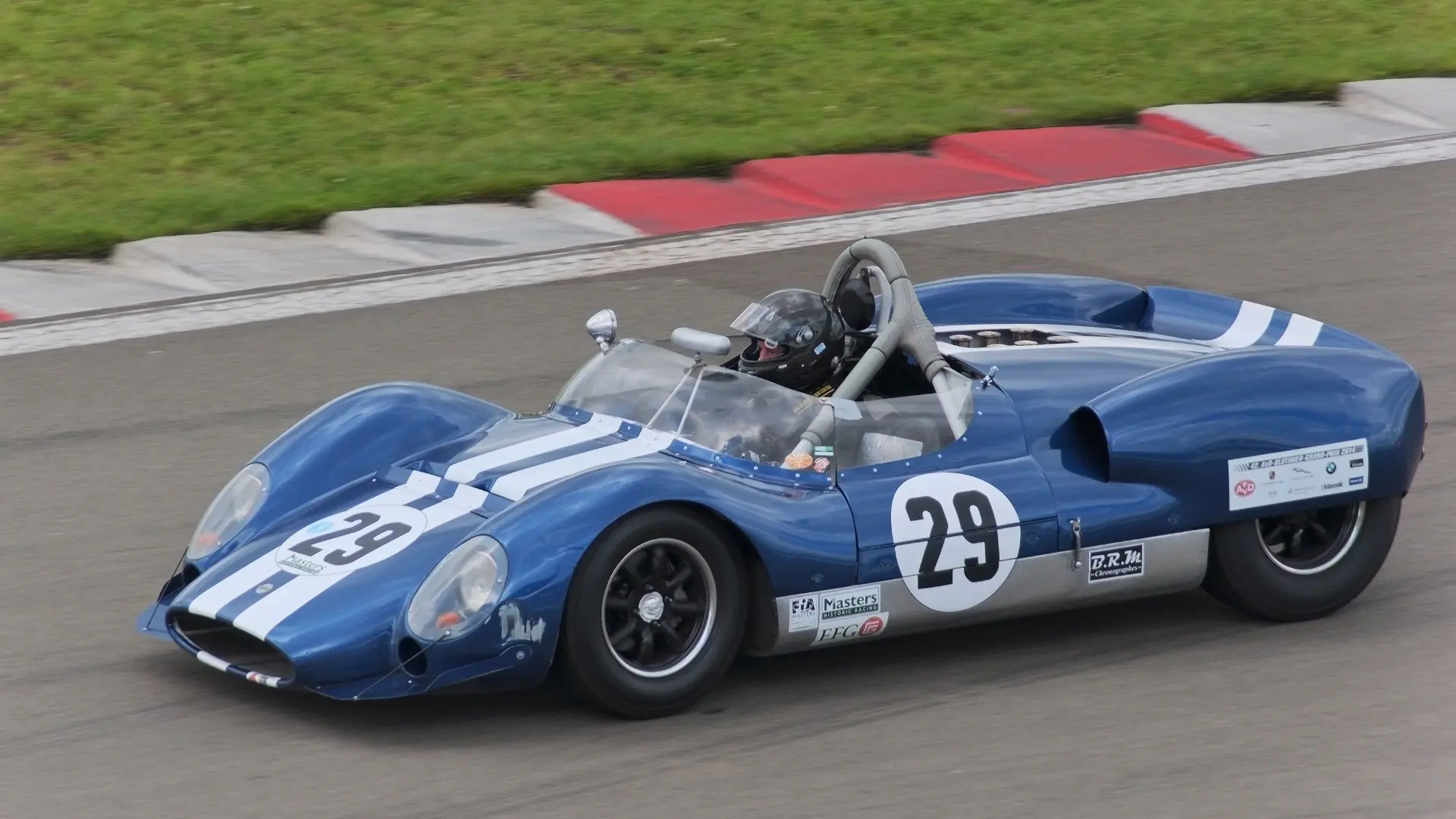
On October 20, 1963, Dave MacDonald won the Pacific Grand Prix at Laguna Seca in a Shelby King Cobra, a mid-engine sports racer that had failed to finish its debut just three weeks earlier. The win was the second in a row for the car, and it is the clearest evidence that Carroll Shelby’s team could take a Cooper chassis, drop in a Ford V8 and beat the best American sports racers of the day. It is also the reason the King Cobra matters to collectors now: a program that burned bright for roughly two seasons, left very few cars behind, and is hard to verify chassis by chassis.
What happened at Laguna Seca
The 1963 Pacific Grand Prix, run on Sunday, October 20 at Laguna Seca Raceway in Monterey, California, was a 100-lap sports-car race. MacDonald won in 2 hours, 9 minutes, 19.2 seconds in the Cooper-Ford entered by Shelby American, according to the race results compiled by the Autosport Nostalgia Forum and the chassis record for CM/1/63 at Racing Sports Cars. He started 13th on the grid and still won.
A. J. Foyt finished second in a Scarab-Oldsmobile that John Mecom had bought from Lance Reventlow shortly before the race, about 45 seconds behind at 2:10:04.0. Jim Hall was third in a Chaparral 2A-Chevrolet, three laps down. The Cobra-powered Cooper had beaten Foyt, Hall and the cars that were supposed to represent the cutting edge of American sports racing.
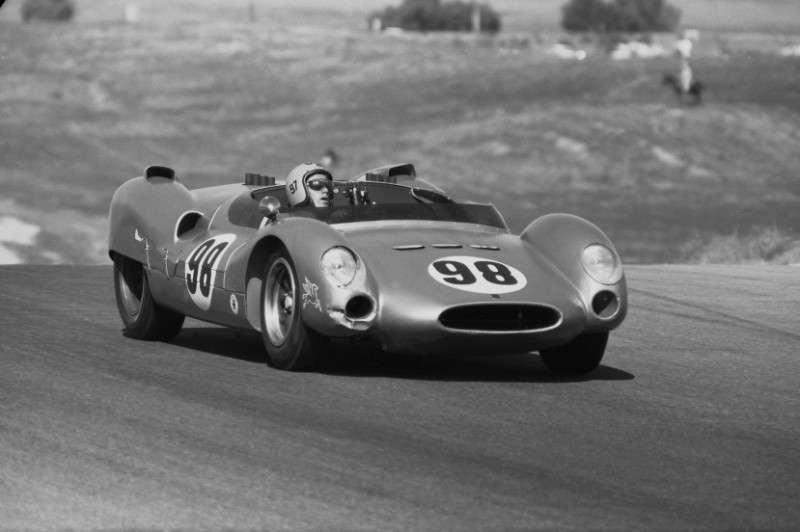
Laguna Seca was the second leg of a pair. The week before, on October 13, MacDonald had won the Los Angeles Times Grand Prix at Riverside in the same chassis, the car’s first victory. The King Cobra’s debut on September 29 at Kent, Washington, had ended with a water pump failure and a blown tire, so two wins in seven days after a DNF was a fast turnaround by any standard.
A Cooper chassis with a Cobra heart
The King Cobra was Shelby’s answer to the mid-engine revolution. Shelby bought two Cooper Type 61 “Monaco” chassis, numbered CM/1/63 and CM/3/63, and had Cooper modify them to take a Ford 289-cubic-inch V8 in place of the Coventry Climax four-cylinder. The result was a tube-frame car of roughly 1,300 to 1,400 pounds with an output that sources put between about 370 and 400 horsepower. Bob Holbert drove CM/3/63 in the fall series, while MacDonald drove CM/1/63.
Accounts of how many King Cobras were built vary, which is part of the story. Supercars.net and Collectors Car World say six; Sports Car Market’s profile of one chassis cites eight built by Shelby among twelve Type 61M Monacos in total. Collectors should treat any production count as a range until a chassis is documented. For context, the cars were sold on to private owners after Shelby’s program ended for around $3,000 each, a fraction of the roughly $12,000 list price Sports Car Market reports for the original package.
Why it mattered in 1963
At the time the Cobra was the car to beat in GT racing, but the fastest sports racers of the early 1960s were rear-engine and increasingly aluminum-bodied specials. The King Cobra let Shelby American compete for overall wins against purpose-built sports racers rather than only in GT classes. MacDonald’s back-to-back victories in October 1963, ahead of Foyt and Hall, showed that the team could do it with a Ford V8 and Cooper engineering.
The program was short. In 1964 Ford turned Shelby’s attention to the GT40, and the King Cobra effort was sidelined. According to Gooding & Company’s catalog entry for chassis CM/5/64, one of the cars went to Ford Advanced Vehicles in England in early 1965, where Roy Salvadori drove it, and a Barrett-Jackson listing for CM/3/63 also describes it as a development car for the GT40 program. In other words, the King Cobra was both a winner in its own right and a stepping stone to Ford’s Le Mans effort.
The driver: Dave MacDonald
MacDonald was born on July 23, 1936, in El Monte, California, and started racing in 1956 on Southern California drag strips. Carroll Shelby hired him away from Chevrolet at the start of 1963, and in February of that year he won both days of a Riverside race in Cobra CSX2026, giving the Cobra some of its earliest wins. He died on May 30, 1964, at age 27, after a fiery crash on lap two of the Indianapolis 500 in a Mickey Thompson car, a race that also claimed Eddie Sachs.
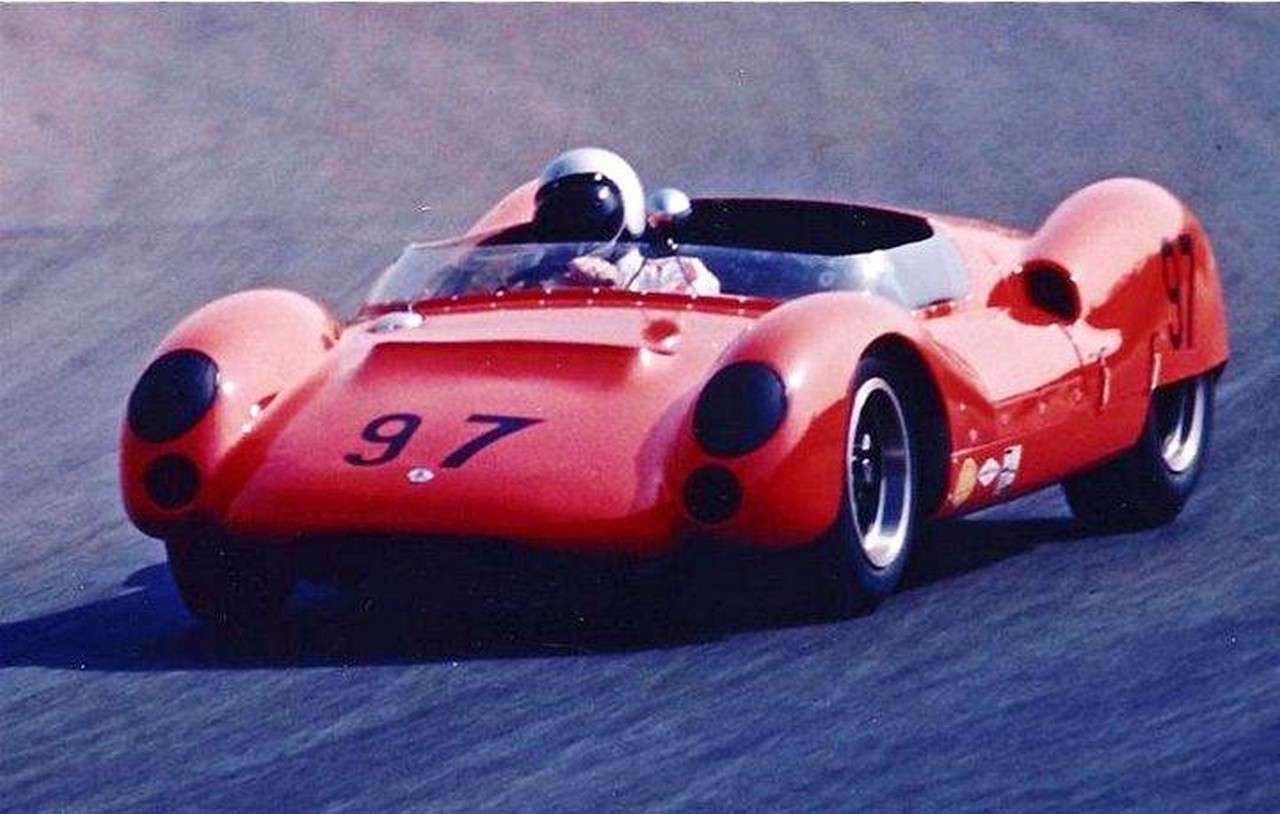
His short Shelby career is why the King Cobra’s 1963 wins carry weight. He drove it to the two big victories that put the car in the history books, then was gone before the 1964 season was half over.
What collectors should know today
Very few King Cobras have changed hands publicly, so the market is thin. Chassis CM/3/63 sold for $935,000 at RM’s Amelia Island sale on March 10, 2007, did not sell at Gooding & Company’s 2008 Pebble Beach auction, and was reported at about $1.65 million at Barrett-Jackson Scottsdale in January 2014. More recently, chassis CM/5/64 sold for $533,000 at Gooding & Company’s Pebble Beach auction in August 2023, according to Ultimatecarpage.
Those numbers are not like for like. The 2023 car is a 1964 chassis whose body history includes a Genie fiberglass shell and a mistaken restoration to a sister chassis’s specification before a restoration completed in 2020, per the Gooding catalog, while CM/3/63 was marketed with Carroll Shelby’s written authentication and Shelby Registry verification. The spread between them says more about provenance and period correctness than about the model, which is the point worth taking away.
What should a buyer verify? The chassis plate and number against Shelby American and Cooper records; whether the body is original aluminum or a later replacement; the rear-facing exhaust and duct modifications made after 1963; and the documented chain of ownership, particularly for cars that were raced hard by privateers for years after Shelby sold them. Both CM/3/63 and CM/5/64 have been described in sale listings as original King Cobras, so a claim of originality needs to be tested rather than assumed.
For readers who follow Shelby’s early history, the same discipline applies across the marque. Our coverage of the $14 million Shelby Cobra mystery around CSX2000, why a top Shelby historian chose to build rather than buy a 427 S/C Cobra, and the $18.7 million Corvette Grand Sport shows how much value rests on documentation.
Sources: race results from the Autosport Nostalgia Forum and Racing Sports Cars (chassis CM/1/63); biography from Wikipedia and the Dave MacDonald archive; production and auction data from Supercars.net, Sports Car Market, RM Sotheby’s, Gooding & Company, Barrett-Jackson and Ultimatecarpage. Featured image: Kogo, CC BY-SA 3.0 DE via Wikimedia Commons, cropped to 16:9.
The collector car market, every weekday morning.
Auction results, price moves and what’s crossing the block, read in four minutes. Free, from Modern Car Collector.
No spam, unsubscribe in one click. Or read more about the Brief.
Related Posts:
- For Sale at Freije & Freije Auctioneers: 2017…
- Big-Block 1968 Chevelle SS Convertible With Air Ride…
- Today in Collector Car History: Roger Penske Wins at…
- Black 1996 Dodge Viper RT/10 Roadster With a Dyno…
- Low-Mile 1987 Chevrolet Monte Carlo SS Aerocoupe for…
- Original-Paint 1972 Chevrolet Corvette Convertible…
 Shawn Henry
 Kyle Matthews
 John Lloyd