

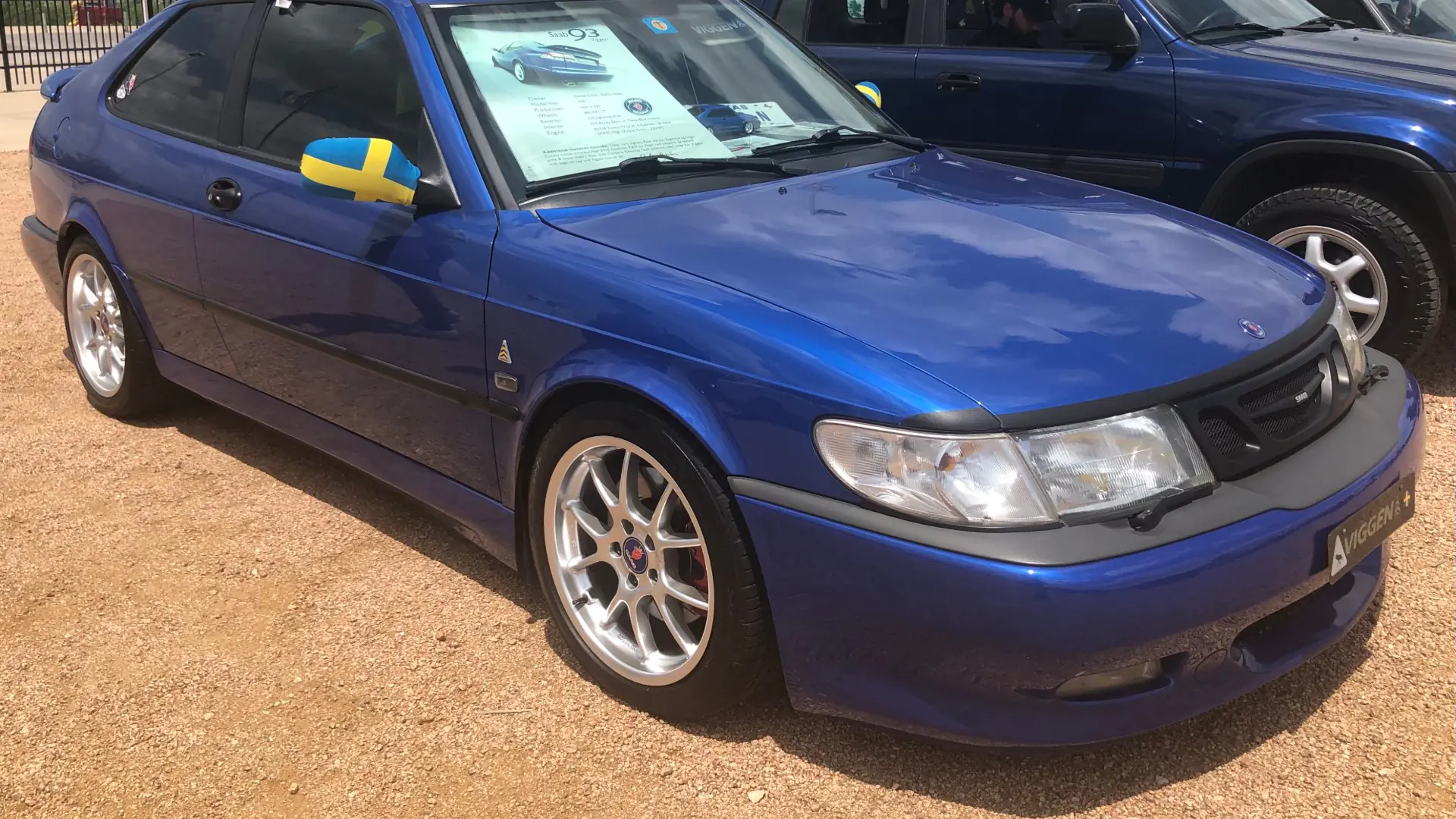
The Saab 9-3 Viggen is a collector candidate whose problem is not scarcity but orphanhood. Saab built 4,600 of them between 1998 and June 2002, and the company that built them is gone, so the supply is finished and the factory support network is too. Whether that makes the Viggen a future collector car depends on a question the market has only started to answer: will buyers pay for a turbocharged Swedish front-driver on its own merits, or only when it is nearly new?
Our view, in short: the Viggen has an established enthusiast following and a thin, recent record of strong prices for low-mileage cars. What it does not yet have is a broad collector base. This article separates the two.
Why the Viggen matters
The Viggen was named for the Saab 37 Viggen fighter and developed by Saab’s Special Vehicles Operations team with Tom Walkinshaw Racing (TWR) in England. It was assembled at Valmet Automotive in Uusikaupunki, Finland, from bodies built in Trollhättan, Sweden. It was the fastest Saab of its time and, with a five-speed manual as the only transmission, one of the last Saabs engineered around an enthusiast driver before the brand’s decline.
For collectors that combination is the point: a limited run, a clear performance mission, a specialist-tuner pedigree, and a manufacturer that no longer exists to build more.
Production numbers
The commonly cited total is 4,600 cars. Wikipedia’s breakdown by model year, which sums correctly, is below; we treat it as the best public tally rather than a Saab-certified one.
| Model year | Built | Imported to the U.S. |
|---|---|---|
| 1998 | 14 | — |
| 1999 | 1,099 | 426 |
| 2000 | 1,621 | 804 |
| 2001 | 1,251 | 1,152 |
| 2002 | 615 | 550 |
| Total | 4,600 | 2,932 |
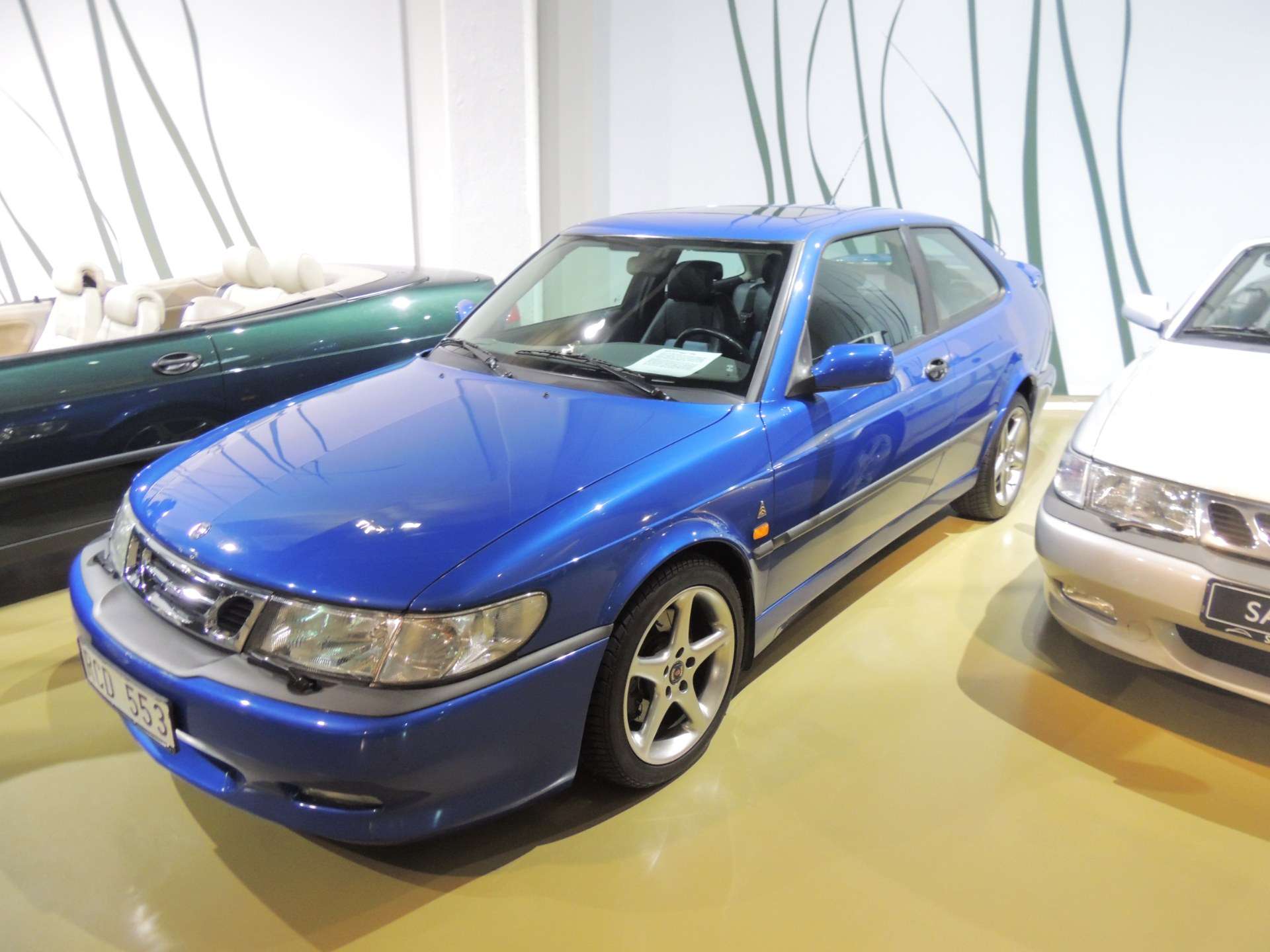
Of the 2,932 U.S. cars, 1,305 were convertibles, 764 were three-door hatchbacks and 863 were five-door hatchbacks. About 500 cars went to the UK. The 1999 U.S. allocation was just 426 three-door cars, and 420 of them were Lightning Blue, a color exclusive to the Viggen. Saab’s launch material described output as limited to 2,500 cars a year; actual output never reached that.
Engine and drivetrain
The Viggen used a 2.3-liter turbocharged four-cylinder, code B235R, with a Mitsubishi TD04-HL15-5 turbocharger, a larger intercooler and a 9.3:1 compression ratio. It was the first 9-3 with Saab’s Trionic 7 engine management. Output was 225 hp and 252 lb-ft in 1999 and 230 hp and 258 lb-ft thereafter. Boost figures vary by source: Wikipedia lists roughly 15 psi, while MotorWeek’s 1999 test cited up to 20 psi, so buyers should not treat any single number as definitive.
The drivetrain was a five-speed manual only, with a stronger output shaft, clutch and CV joints. MotorWeek reported that the car limited torque electronically to 184 lb-ft in first gear and 243 lb-ft in second to protect the gearbox and tame torque steer. That is the kind of detail that explains the Viggen: more power than the front-drive platform could comfortably use, managed in software.
Performance was strong for 1999: MotorWeek recorded 0–60 mph in 7.0 seconds and the quarter-mile in 15.2 seconds at 96 mph. The test car’s base price was $38,325.
Mechanical uniqueness and chassis
Beyond the engine, the Viggen received lowered and stiffened springs (MotorWeek reported a 10 mm drop, with the rear stiffened by more than 25%), firmer dampers, revised anti-roll bars and steering-rack mounts, larger vented front brakes with grooved rotors, and model-specific 17-inch wheels with 215/45R17 tires. Aerodynamic changes cut the drag coefficient to 0.31 and reduced rear lift.
Factory options, colors and identifying details
- Body styles: three-door hatchback, five-door hatchback and convertible. The convertible and five-door arrived in the U.S. for the 2000 model year.
- Colors: Black, Metallic Silver, Steel Grey, Monte Carlo Yellow, Laser Red and Lightning Blue. Lightning Blue was exclusive to the Viggen.
- Interiors: bolstered leather seats in four combinations: Charcoal, Deep Blue, Flame Ochre and tan.
- Trim changes: carbon-fibre interior trim was offered from 1999 to mid-2001 and then replaced with a printed grey pattern. Traction control was introduced in 2001 according to Wikipedia, though other sources describe it as standard on U.S. cars, so confirm it on the car in front of you.
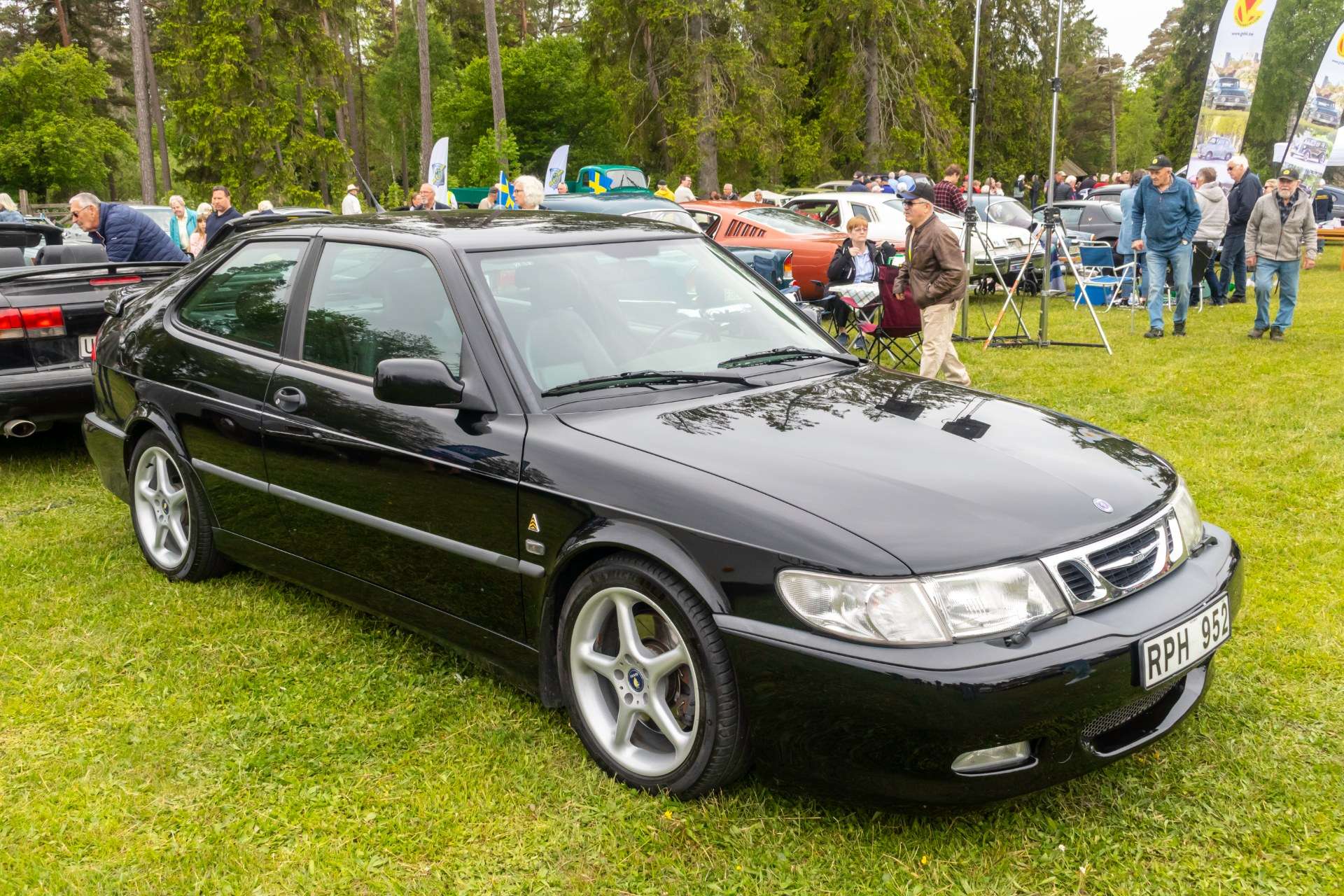
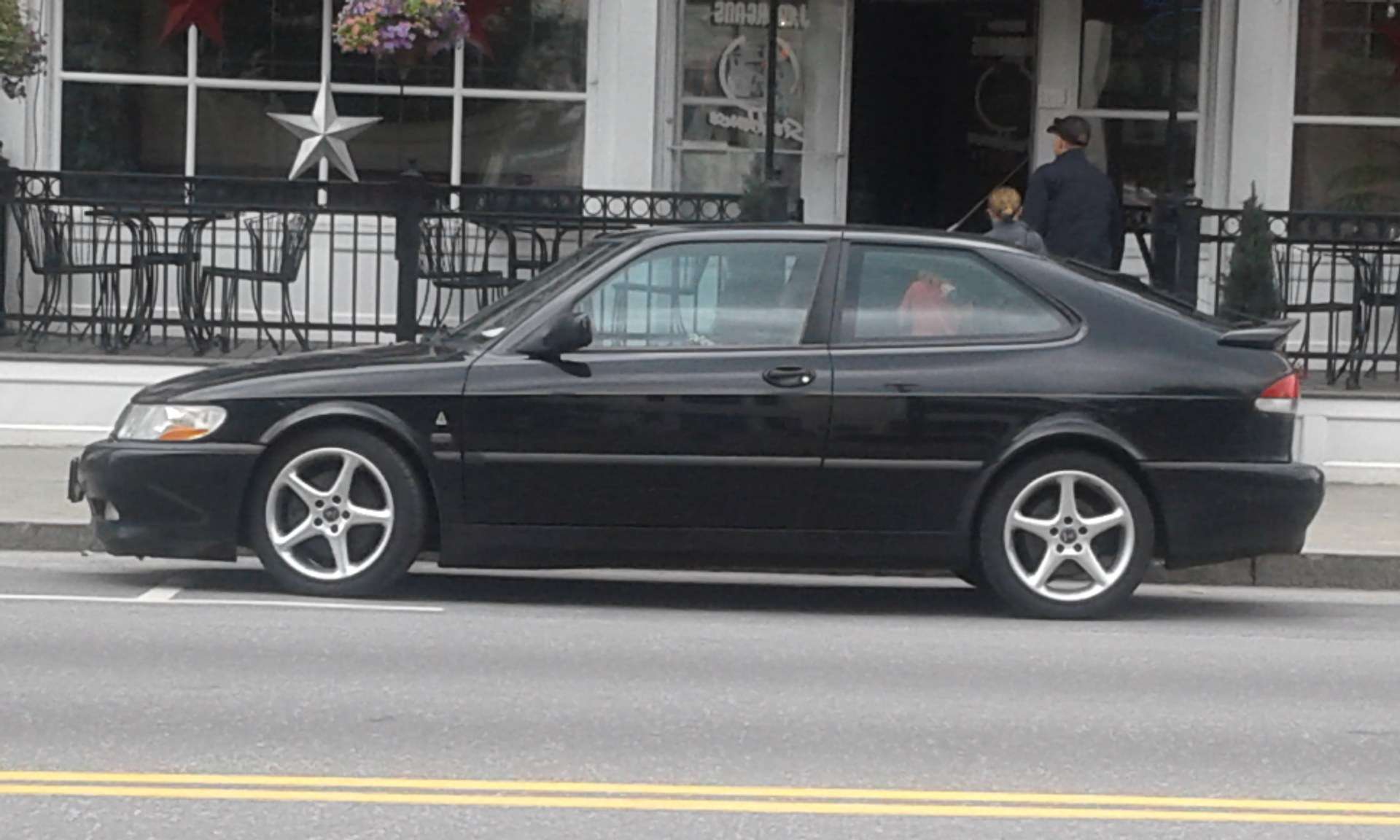
- Visual tells: a larger rear wing, aerodynamic bumpers and side skirts, and the model-specific 17-inch wheels. Be careful with the 2001 9-3 Aero, which borrowed some Viggen parts (body kit except the large rear wing, seats, turbocharger and intercooler). Verify the VIN and build details rather than trusting appearance.
- Flight Academy: buyers of a new Viggen in 2000 received a certificate for a two-day driving course at Road Atlanta. A car with its original certificate and paperwork is a nice documentation find.
Market values and comparable sales
Public data is thin because so few cars trade, but the recent record is clear: the best cars have moved well past the era of buying a neglected one for under $10,000. Using Bring a Trailer results compiled by Classic.com for cars it labels Viggen, 2026 sales were:
| Sale date | Car | Mileage | Price |
|---|---|---|---|
| Sep 4, 2026 | 1999 Viggen | 50k | $27,000 |
| Aug 28, 2026 | 1999 Viggen | 84k | $20,350 |
| Jul 2, 2026 | 2002 Viggen | 80k | $13,350 |
| May 12, 2026 | 2001 Viggen | 165k | $12,930 |
| Jul 30, 2026 | 2001 Viggen (Canada) | 59k | $11,250 |
| Jan 17, 2026 | 2001 convertible | 132k | $6,500 |
| Jul 15, 2026 | 2000 Viggen | 170k | $5,700 |
Two earlier data points frame the trend. A 1999 Viggen with a replacement engine, about 119,000 miles and a 2007 accident on its history sold on Hagerty Marketplace in March 2023 for $8,881. And, according to SaabPlanet, a 2001 convertible sold on Bring a Trailer for $18,000 in August 2021 and $13,000 in April 2025, with the author noting that convertibles tend to lag hardtops. Together they say that mileage, condition and body style matter more than the badge.
Read this as a signal, not a price guide. Seven results are a small sample, Classic.com’s figures are compiled automatically, and a single enthusiast bidder can move one auction by thousands.
Ownership costs and known weaknesses
The Viggen shares most of its mechanical and electrical weak points with other turbocharged 9-3s. Classics World’s UK buyer’s guide, the best consolidated source we found, flags the following (figures are in pounds and indicate cost scale, not U.S. pricing):
- Oil sludge: turbo engines suffer if not fed fully synthetic oil on time. A blocked sump strainer can cause low oil pressure and noisy chains.
- Head bolts and leaks: early 9-3s could develop loose head bolts and oil leaks; re-torquing is the first step.
- Direct ignition cassettes: about £250 for the part; Trionic 7 cars use black cassettes.
- Clutch and hydraulics: a clutch job can run to about £900 in the UK, and the hydraulic pipe often splits at the rigid-to-flexible join.
- Steering-rack mount cracks: the rack sits on the bulkhead and the mount can crack; check for pedal movement when turning the wheel.
- Turbo: a replacement was quoted at about £500; watch for white smoke and boost whistles.
- Corrosion: bubbling wheelarches and stone chips; convertibles add worn tops and, as SaabPlanet noted of one 2025 sale, underbody corrosion.
- Electrics: information-display pixel failures, dropping audio channels and broken heater-control shafts are common and repairable.
Service parts are described as readily available and repair panels exist for rust-prone areas, but some trim can be hard to find, and used parts may be the only route. The guide does not say whether Viggen-specific components are easy to source, which is the main long-term ownership question.
Originality considerations
Because the Viggen is easy to tune, modification is the biggest threat to value. Remapped ECUs, aftermarket turbos and non-original wheels are common. For collectors, an unmodified car with the original wheels, the correct seats and interior trim, and a full service history is the target. A replacement engine, as in the 2023 Hagerty Marketplace car, is not a deal-breaker but belongs in the price. Original owner’s manuals, the Flight Academy certificate and dealer paperwork add confidence.
Competing vehicles
The Viggen sat between hot hatches and German sport sedans. Contemporary and later rivals include the BMW E46 M3 (333 hp), Audi S4 B5 (2.7-liter twin-turbo V6, 250 hp), Volkswagen Golf R32 (240 hp in U.S. form), Mitsubishi Lancer Evolution VIII (271 hp in U.S. form) and Volvo S60 R (300 hp). Against these the Viggen has the smallest production run and the most unusual brand story, but it is front-drive and torque-steer prone while the Evo and Audi are all-wheel drive. Collectors who value rarity and oddness may prefer it; those who value outright performance may not.
Within MCC’s coverage, the closest parallels are other turbocharged cars with fixed supply and passionate followings: the Buick GNX and the Toyota Supra Mk IV Turbo. For the small-run specialist angle, see our looks at the Donkervoort P24 RS and the Alpine A110.
What separates exceptional examples from average ones
- Mileage and condition: the 2026 results above suggest 50,000–85,000-mile cars bring multiples of 130,000-mile-plus cars.
- Originality: unmodified engine management, original wheels and the correct interior trim.
- Documentation: service records, evidence of timely synthetic oil changes, and any original paperwork.
- Color and body style: the 1999 U.S. allocation was almost entirely Lightning Blue, and hatchbacks have generally outperformed convertibles at auction. Rarer combinations may command more over time, but that is speculation.
- Mechanical condition: a documented clutch, ignition cassettes, steering-rack mount and oil-system service count heavily.
Established value versus speculative potential
What is established: the Viggen has an active enthusiast community, a documented performance reputation, a known production total and a modern auction record in which good cars bring real money. The market has already repriced them since the days of sub-$10,000 cars.
What is speculative: that broader collectors will treat the Viggen as a lasting blue-chip. Saab’s collapse limits future parts and dealer support. Prices have fallen back at times (the 2021 and 2025 convertible results above), and the car’s front-drive, turbocharged character is a taste rather than a consensus. Compare the 997.2 GT3 price jump we examined: a strong quarter is not a trend.
What could strengthen or weaken its desirability
Strengthening: continued appearances at Radwood-style shows, more low-mileage survivors trading at auction, growing nostalgia for Saab, and the fact that supply cannot be extended. Weakening: parts attrition, rust and deferred maintenance thinning the pool of good cars, modified cars flooding the market, and a collector audience that prefers all-wheel-drive rivals.
Our view
The Saab 9-3 Viggen is a legitimate future collectible in its best form: low-mile, original, documented, and preferably a 1999 or 2000 hatchback. It is not yet a safe store of value, and average cars are still ordinary used Saabs. Buy the best one you can find, buy it for the driving, and treat any appreciation as a bonus.
Sources
- Wikipedia, Saab 9-3 (production by year, U.S. imports, specifications)
- SaabPlanet, The fastest Saab of its time: the Viggen
- MotorWeek, 1999 Saab 9-3 Viggen road test
- Saab Network, 9-3 Viggen summary
- Classics World, Saab 9-3 buyer’s guide
- Classic.com, Saab 9-3 Viggen market data
- SaabPlanet, Viggen convertible auction price drop
- Hagerty Marketplace, 1999 Saab 9-3 Viggen (sold March 2023)
The collector car market, every weekday morning.
Auction results, price moves and what’s crossing the block, read in four minutes. Free, from Modern Car Collector.
No spam, unsubscribe in one click. Or read more about the Brief.

 Eve Nowell
 Kyle Matthews