

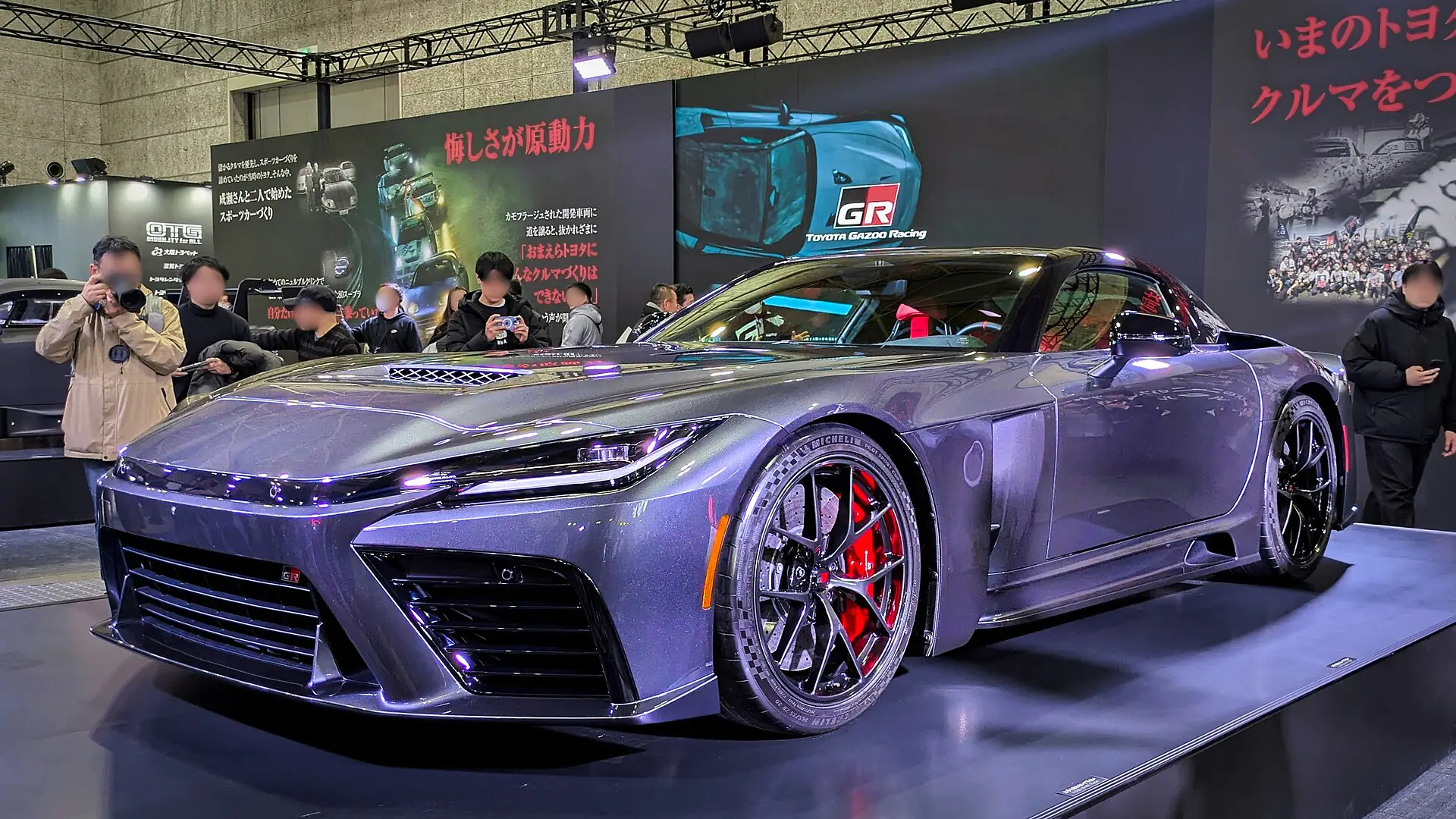
Toyota says it will not build enough GR GTs to meet demand, and that this is deliberate. In August, Toyota senior vice president Andrew Gilleland told The Drive the first U.S. allocation was “already sold.” A day later the company walked that back. A spokesperson told Jalopnik there was “nothing pre-sold, no names attached to any vehicles.” The car has no announced price or production total, and no customer has taken delivery. For now, any GR GT collector car argument rests on reported numbers, not official ones.
Collectors are already asking whether it will be the next LFA. MCC covered the run-up to the December 2025 reveal and the twin GR GT and Lexus supercar plan. Here’s what’s known, what isn’t, and what has to go right.
The Numbers: Scarce, but Not Officially Limited
Toyota has not announced a global production total. The most cited figure, about 500 cars, came from Japan’s Magazine X and was reported by Motor1. Toyota has not confirmed it. For the U.S., The Drive reported an initial allocation of roughly 200 to 250 cars.
The wording matters. A “first allocation” is not a fixed production run. Toyota plans production from 2027 as a 2027 model, and nothing it has said rules out more cars in later years. Collectors pay most for scarcity that is certain, such as a numbered run or a fixed end date. Scarcity that a factory can decide to end later is worth less. Right now the GR GT has the second kind.
- Global production: not announced. About 500 has been reported, but Toyota has not confirmed it.
- Initial U.S. allocation: about 200–250, according to The Drive
- Production start: 2027, in Japan
- U.S. deliveries: not yet started. Reports from Laguna Seca point to late 2027.
Price: GT3 Money, Not LFA Money
Toyota hasn’t published a price either. When asked about cost at the reveal, project manager Takashi Doi said there are “a lot of GT3 cars on the market today, so use that as a reference.” Most outlets estimate about $225,000. Autoblog reported in May that the price would be “over $225,000,” with the final figure still to come.
That price puts the GR GT next to the Porsche 911 GT3 and Mercedes-AMG GT, the two cars Toyota benchmarked. It is far below the Lexus LFA, which launched in the U.S. at $375,000 in 2010, or $445,000 with the Nürburgring Package. For collectors, the lower entry price helps. A car that costs about as much as a GT3 can rise in value from a lower starting point. An LFA-level sticker would have pushed most of that potential gain into the purchase price.
Mechanical Uniqueness: A Lot of Firsts
Most cars called “future collectibles” have a wing and a press release. This one has an all-new V8, a hybrid system and Toyota’s first aluminum space frame. Much of the hardware is new to Toyota:
- A new 4.0-liter twin-turbo V8 (G40E) with a 90-degree “hot vee” layout, both turbos inside the vee, and dry-sump lubrication
- A parallel hybrid system with one motor-generator built into the rear transaxle. Toyota quotes 641 hp and 627 lb-ft combined.
- A rear-mounted eight-speed automatic that uses a wet start clutch in place of a torque converter, plus a mechanical limited-slip differential and a carbon-fiber torque tube
- Toyota’s first all-aluminum space frame, with carbon-fiber panels for the hood, roof, and rear bulkhead
- Front-mid-engine layout, 45:55 weight distribution, double wishbones at each corner, carbon-ceramic Brembos, and Michelin Pilot Sport Cup 2 tires developed for the car
The road car is also directly tied to the GR GT3 race car. The two were developed side by side, and the race car uses a non-hybrid version of the V8. That connection matters for long-term value. Road cars built alongside a homologation racer usually hold collector interest better than flagships built only for the showroom.
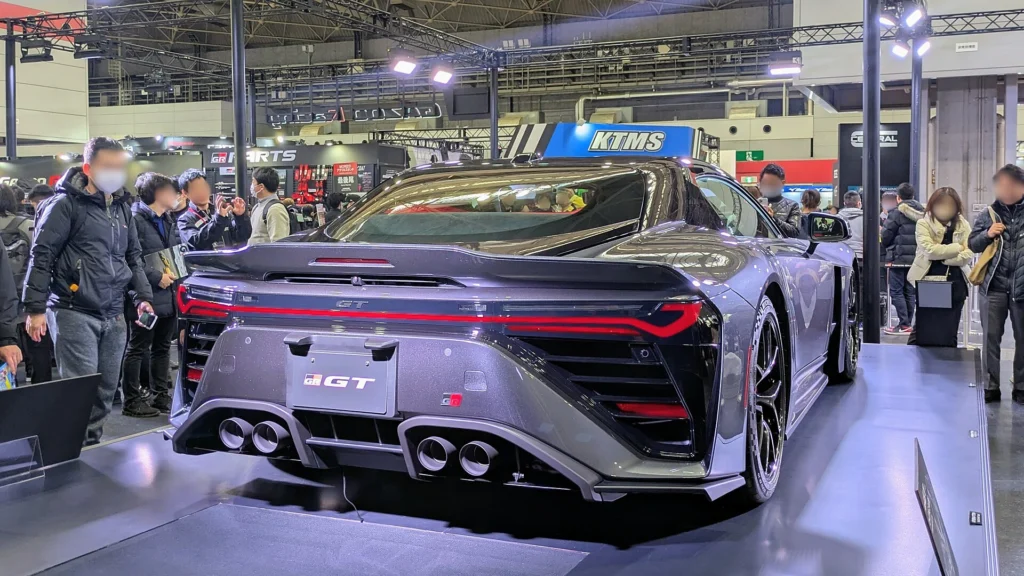
Two numbers count against it. A 3,858-pound curb weight is heavy for a car sold as a race car for the road. And there is no manual transmission, which many collectors now look for first in modern cars. The LFA had no manual either, and its values haven’t suffered, so this is a weakness rather than a disqualifier.
Historical Context: The 2000GT and LFA Line
Toyota has built a true halo car only a few times, and those cars have done well with collectors. The 2000GT of the 1960s, with roughly 350 built, is now a seven-figure car. MCC covered one when Bobby Rahal listed his 1967 example. The Mk IV Supra became a cultural icon, and unmodified six-speed cars now bring serious money.
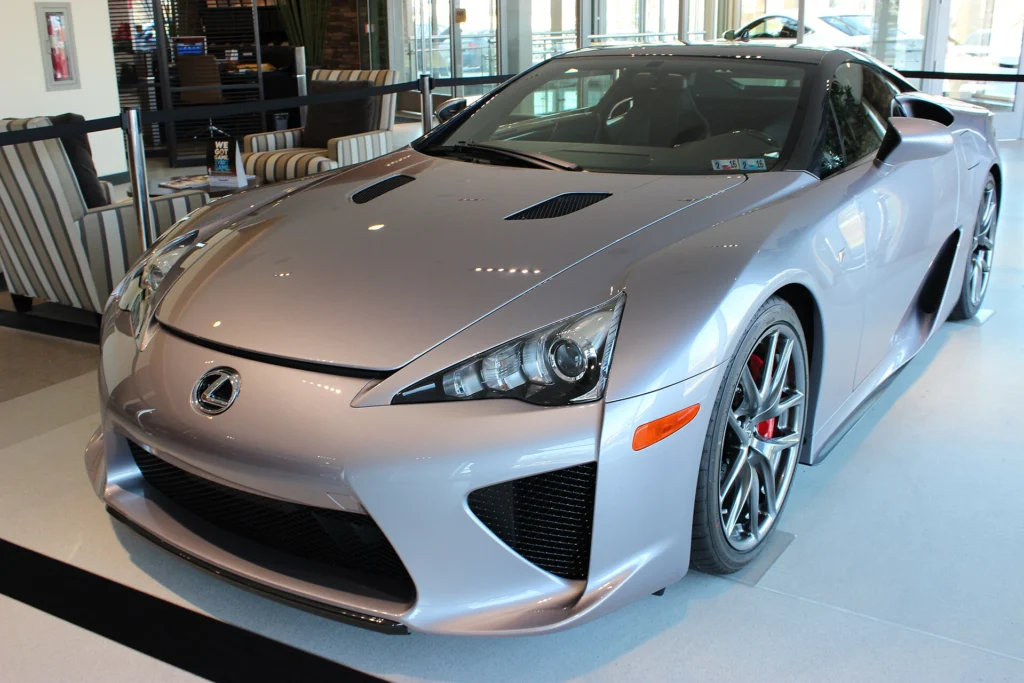
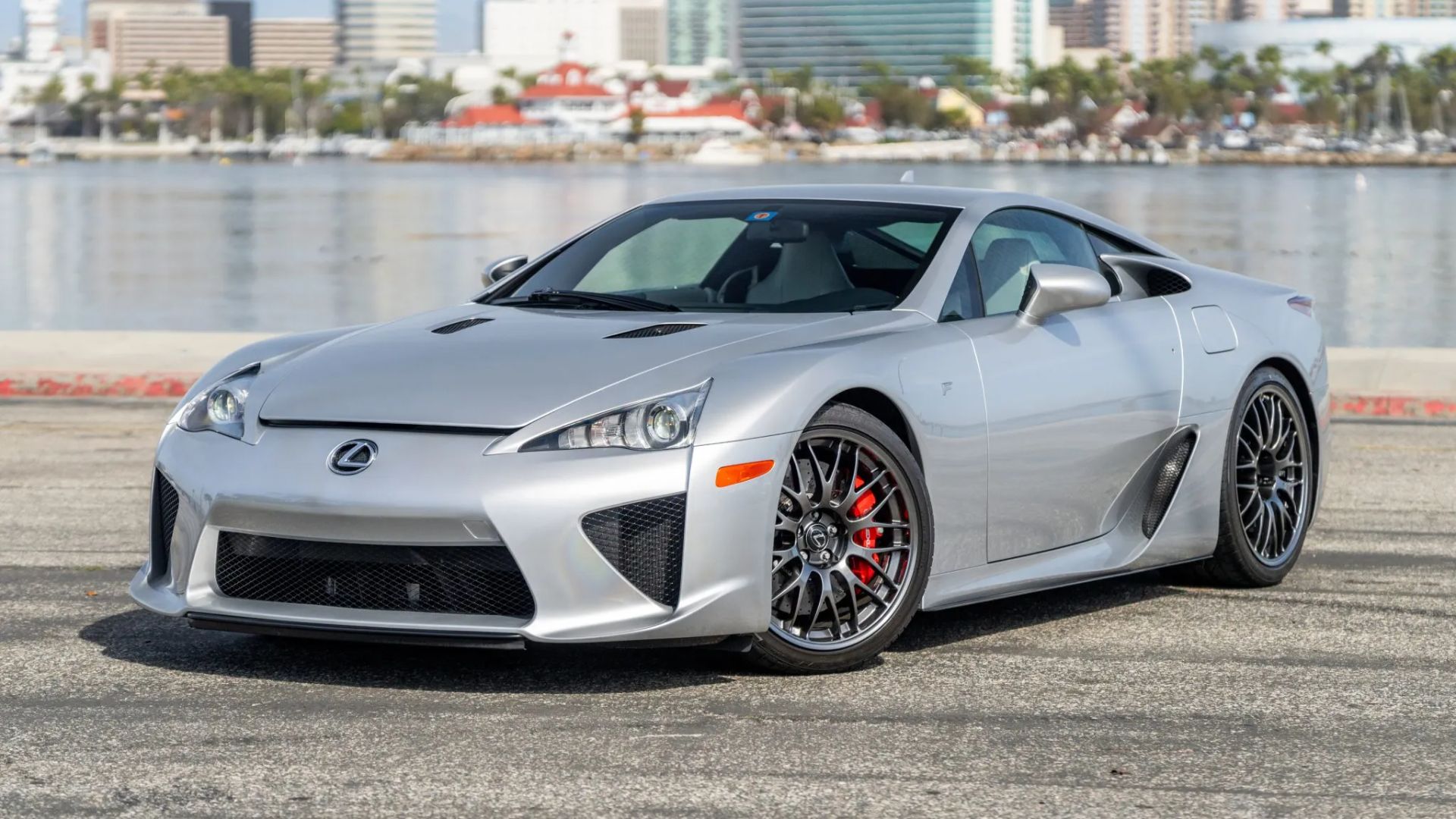
The Lexus LFA is the closest comparison, and it is also a warning. Lexus built 500 between 2010 and 2012. Sales were slow at first, and some cars sat unsold well after production ended. Values rose only later. Hagerty’s records show an LFA selling for $618,055 on Bring a Trailer in March 2025, with a top recorded sale of $1.87 million. A low-mileage Nürburgring Edition, one of 50, brought $918,500 at Barrett-Jackson Scottsdale. The LFA got there eventually, and eventually took years and a shift in market sentiment.
The Buyer-Vetting Factor
The way Toyota is selling the car could affect values as much as the hardware. In the U.S., the GR GT will be sold only through select Lexus dealers. Each buyer will be paired with a trained “GR Meister.” Toyota has said it does not want to sell to flippers or to influencers who mainly want to show the car off online. Gilleland told The Drive, “We only want people who are going to drive it.”
That cuts both ways. Owners chosen because they intend to drive the car will put miles on it, so there will be fewer zero-mile examples for future buyers to fight over. On the other hand, a curated buyer list helps keep early prices from spiking and then collapsing. That pattern hurt several recent limited cars, as MCC saw when a Corvette ZR1X convertible sold for $441,000 on Bring a Trailer. Toyota has not announced a formal no-sale clause like the one Ford used on the Mustang GTD.
Alternatives Collectors Will Compare It To
- Chevrolet Corvette ZR1X (from $209,700): costs about the same and is also a hybrid, but it is built in far higher numbers. See MCC’s ZR1X collector verdict.
- Porsche 911 GT3 (over $230,000): the car Toyota benchmarked. It has a proven collector market and a manual option, but Porsche builds it in volume year after year.
- Ford Mustang GTD (over $325,000): another American road car tied to a GT3 racer, with stricter resale terms and a higher price.
- Lexus LFA: the established blue chip, now at several times its original sticker
- Acura NSX Type S: the most recent Japanese hybrid flagship sold as a final run. The first-generation NSX shows how long it can take a Japanese supercar to be taken seriously by collectors.
Risks to the Toyota GR GT Collector Car Case
- Production is open-ended. With no confirmed cap, later years could add hundreds of cars.
- The hybrid system will age. Batteries, inverters, and software will need long-term support from Toyota. The LFA’s natural V10 had none of these concerns.
- Only an automatic is offered. The cars most in demand from this period tend to have manuals or come in very small numbers.
- Special versions could overshadow it. Motor1 reported possible GRMN or track-focused versions and a removable-roof model. A harder edition would likely take most of the collector premium, as happened with the Supra Final Edition.
- Early hype can fade. Strong demand at The Quail doesn’t show where prices will be in ten years.
What Would Need to Happen
Four things would make the collector case much stronger:
- A confirmed production cap or end date. This would do more for long-term value than anything else.
- Racing success for the GR GT3. Racer reports it should debut in the World Endurance Championship in 2027, replacing the Lexus RC F GT3. Class wins at Le Mans or Daytona would give the road car a story collectors pay for.
- Toyota’s next supercar going electric. If the Lexus LFA Concept shown alongside the GR GT becomes a battery-electric car, the GR GT may end up as Toyota’s last V8 supercar. That status is what has made many final combustion models collectible.
- Long-term parts support. Toyota has already reissued parts for older sports cars. Doing the same for the GR GT’s hybrid system would ease the biggest ownership worry.
The Verdict: Is the Toyota GR GT a Future Collector Car?
Probably, with conditions. The GR GT has much of what has made modern cars collectible: all-new engineering, a direct link to a race car, controlled distribution, and a maker whose previous halo cars are now worth far more than they cost. Its likely price, close to a 911 GT3, gives values room to grow.
But the car hasn’t been priced, delivered, or capped, and its scarcity is currently a sales policy, not a fixed number. Early U.S.-allocation cars in strong colors with low but honest mileage are the most likely to become blue chips, especially if Toyota confirms a cap and the GT3 starts winning. Buy one to drive, as Toyota wants. If you’re paying a dealer markup in the hope of an LFA-style gain, remember that the LFA’s rise took most of a decade, and that a Carrera GT-style rise generally comes after production has ended, not while it is still going.
Toyota says it only wants buyers who’ll drive it. If you got the call, would you really put miles on a car you were hoping would appreciate?
The collector car market, every weekday morning.
Auction results, price moves and what’s crossing the block, read in four minutes. Free, from Modern Car Collector.
No spam, unsubscribe in one click. Or read more about the Brief.




 John Lloyd
  Kyle Matthews