

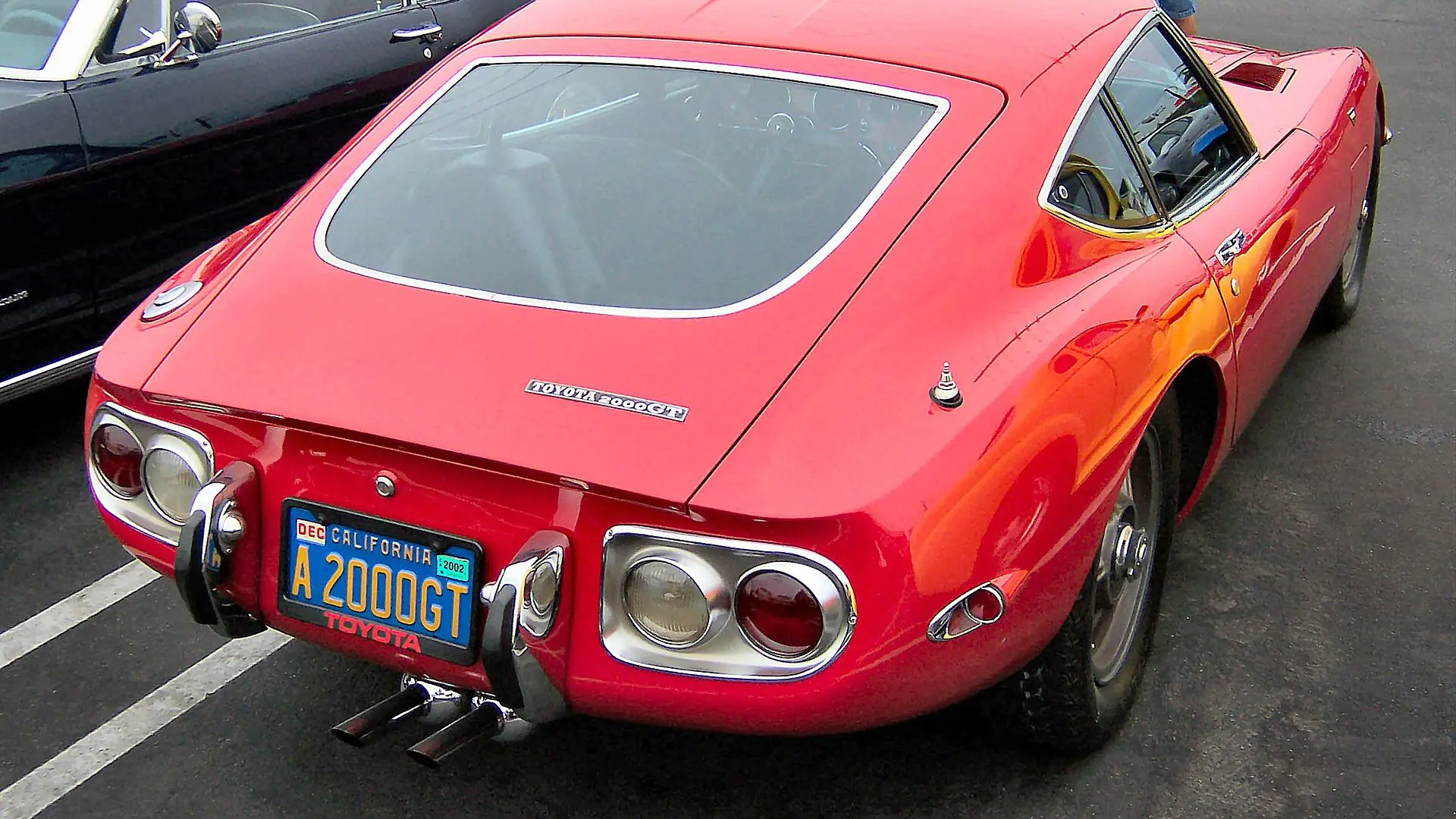
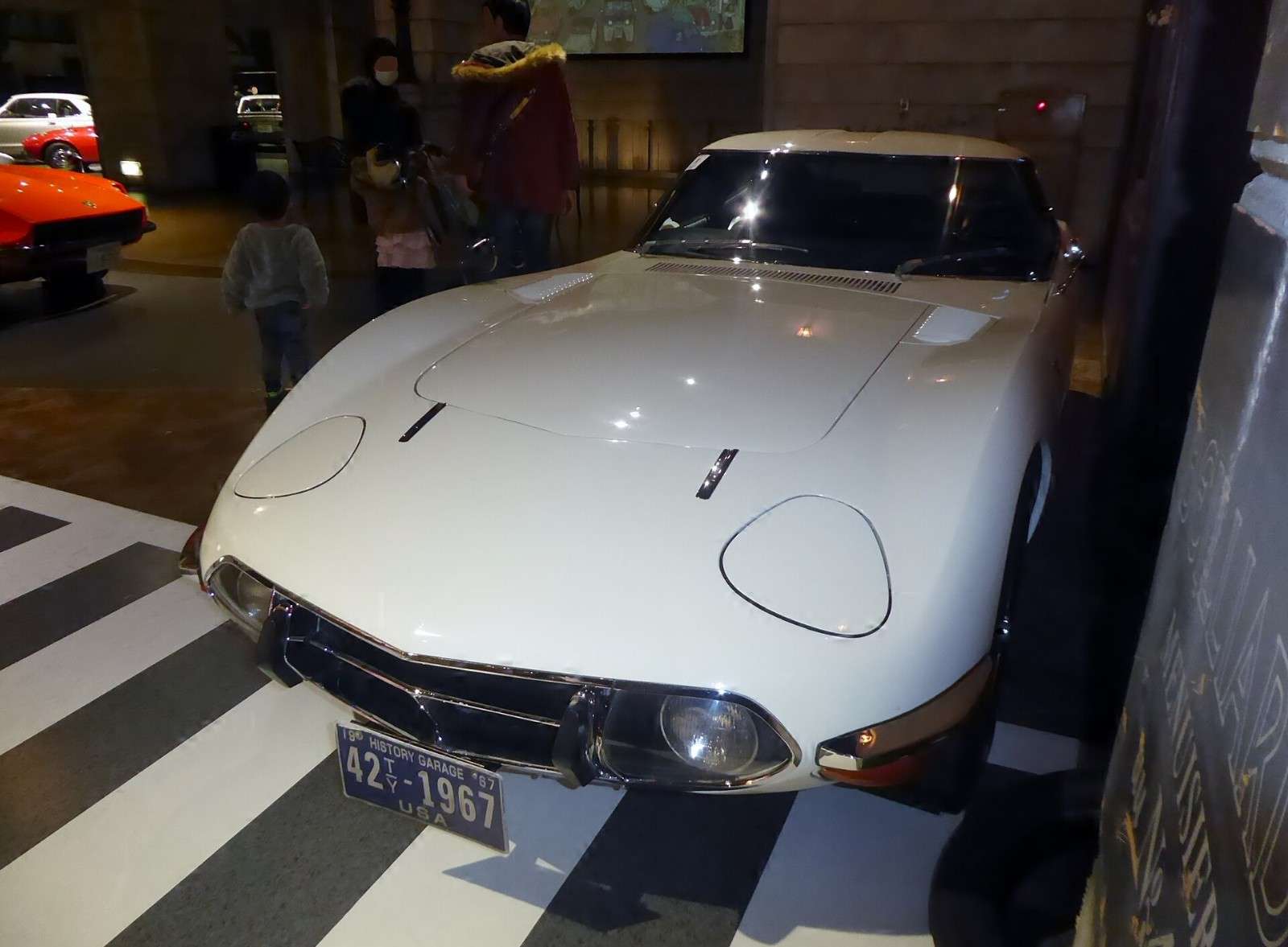
Toyota built the 2000GT as a closed coupe. By Toyota’s own count it made 337 of them between 1967 and 1970, and it never offered a Toyota 2000GT convertible. The only open 2000GTs the factory ever produced were two prototypes cut down for the James Bond film You Only Live Twice. That makes body style the originality detail on this car. An open 2000GT, however handsome, is a claim that has to be proven, not a feature a buyer can accept on sight.
Why a Toyota 2000GT’s Body Style Moves the Price
The 2000GT was a joint project between Toyota and Yamaha, built around a 2.0-liter DOHC inline-six,. Toyota’s own 2020 announcement puts production at 337 units; many references, including the Bobby Rahal listing we covered, say 351, a figure that counts prototypes. Either way the run is tiny, and every comparable sale, registry entry and price guide describes the same thing: a closed coupe.
Those coupes are expensive but not uniformly so. RM Sotheby’s sold a restored left-hand-drive car, chassis MF10-10100, for $912,500 at Elkhart in 2020, and Jalopnik reports that standard coupes regularly reach seven figures, with a Shelby-entered car topping $2.5 million, a price carried by racing history rather than body style. The market’s reference points assume a factory roof. A car that does not have one is outside the comparison set.
The Only Factory Open Cars Were Film Props
For You Only Live Twice (1967), Toyota converted two coupes into open cars. Jalopnik’s account describes them as prototypes rather than production models, with no folding top; a tonneau cover rolled behind the seats stood in for one. The often-repeated explanation, that the roof came off to fit the 6-foot-2 Sean Connery, is described there as a rumor. The same report says neither film car has sold publicly, so there is no auction history to benchmark one against.
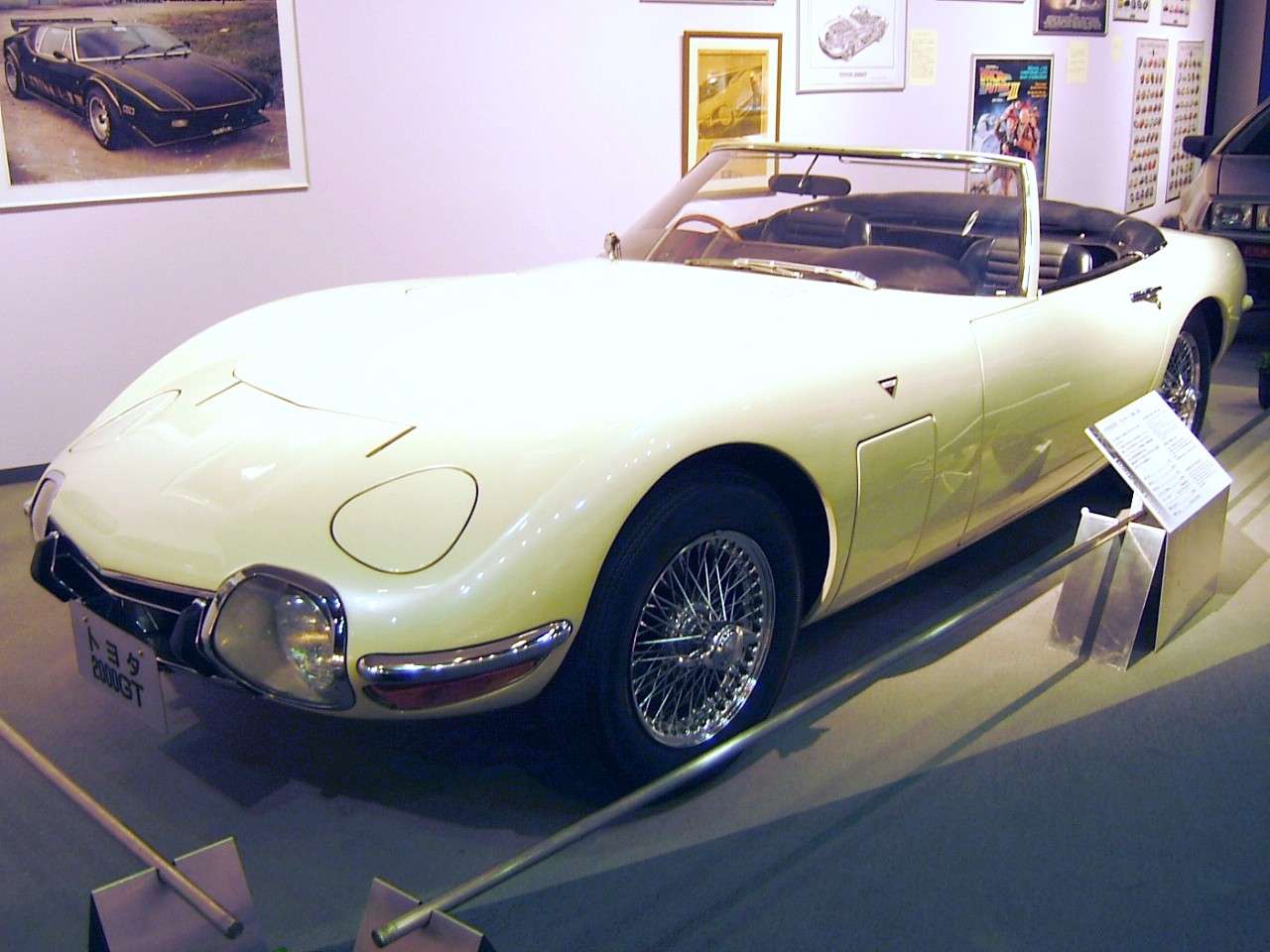
The consequence is blunt: apart from those two cars, an open 2000GT left the factory with a roof. Anything else is a modified coupe, a tribute or a replica, which may be a perfectly good car but is not priced as a 2000GT coupe and should not be described as one.
How a Coupe Becomes a “Toyota 2000GT Convertible” on Paper
Because the production record is so narrow (one body style, two prototypes), the red flags are easy to name. Challenge any listing that calls an open car a “factory convertible” or “Toyota-built roadster.” Challenge any claim of being “one of the Bond cars” that cannot trace the car to the film with documents. And separate “Bond-style” or “You Only Live Twice tribute” wording, which describes a configuration, from anything that implies the factory built it. Removing a fixed roof changes the body structure, so a specialist should look at how it was reinforced and by whom. We made the same distinction for the Ferrari Daytona Spyder, where the factory body is likewise the whole argument.
Three Other 2000GT Details to Check at the Same Time
Engine type. Production cars used the twin-cam 2.0-liter six. A 2.3-liter single-cam 2M-B six exists in the MF12 series, but BH Auction’s catalog lists only nine MF12L prototypes, none of which entered production, and Japanese Nostalgic Car reported that the first, MF12-000001, sold in Tokyo in 2019 for ¥88 million, about $820,000. Both sources say Toyota holds the second prototype and its U.S. museum the sixth. A car sold as an ordinary production coupe but carrying the 2.3-liter engine needs a documented explanation.
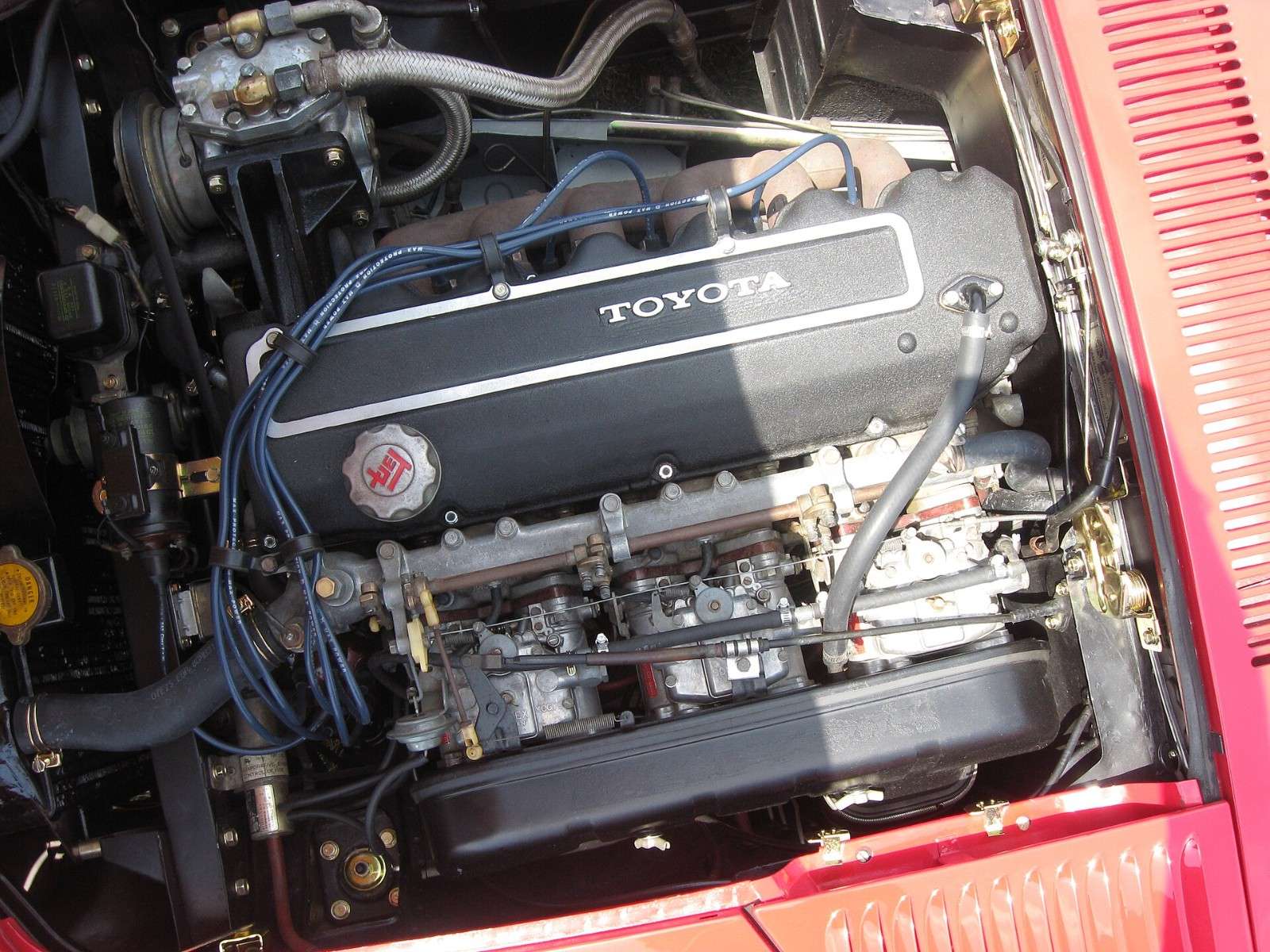
Numbers and drivetrain. Production 2.0-liter cars carry MF10 chassis numbers, such as MF10-10100 at RM and MF10-10129 at Bonhams. A 2000GT found in a Sydney garage and covered by Motor Authority is a reminder of what an incorrect one looks like: its restorer said the chassis had been modified and the engine and transmission were not original.
Paint and parts. Even prototype MF12-000001 was originally Solar Red and has since been repainted Pegasus White, so a repaint is not automatically disqualifying, but it should be disclosed. Toyota’s genuine-parts program for the 2000GT began with transmission and differential items and is limited to owners, with a cap per car. New genuine parts are not a flaw, as with Honda’s heritage parts program for the NSX, but the invoice trail should show which components are new and which are original.
What Buyers Must Verify Before Buying a Toyota 2000GT
- Body style on every document. Confirm the car is recorded as a closed coupe from the earliest paperwork forward. Treat any open car as a modified coupe unless documents prove it is one of the two film cars.
- The film-car chain. If a seller claims Bond provenance, require a documented chain back to the production. Neither film car has been publicly sold, according to Jalopnik, so an unverified claim deserves maximum skepticism.
- Chassis number. Check the MF10 prefix and serial against the title or registration and any registry record, and be wary of mismatches between those documents. See our guide to what “matching numbers” really means.
- Engine and transmission. Verify the engine is the 2.0-liter DOHC six and that its number and the gearbox are documented to the car, rather than assumed.
- Roof structure. Have a 2000GT specialist inspect the roof, header and sill areas for cutting, re-welding or reinforcement.
- Paint history. Ask for the original color and any repaints in writing, and compare against the factory palette.
- Parts and restoration records. Ask for invoices separating reproduced genuine parts from original ones. We argue in Why Documentation Is Becoming More Important Than Restoration Quality that the file now carries much of the value.
- An independent inspection. Use a specialist who has handled 2000GTs, and get their findings in writing before the sale closes.
How Originality Moves 2000GT Value
This is analysis rather than a published price schedule: we found no public sale record for a verified factory open car, which is exactly the point. Coupe values rest on a deep set of comparable sales; a cut-roof car has no equivalent set, so it has to stand on its own merits and will be judged against documented coupes. A buyer paying coupe money for an undocumented open car is paying for a story. The Bond connection is real history, but it belongs to two specific prototypes and not to the model.
The Bottom Line
On a Toyota 2000GT, the roof is the originality detail. Toyota built a closed coupe, and two film-prop open cars; every other open example needs proof that it is one of those two, or it should be priced and described as a conversion. Verify the body style first, then the chassis number, engine and paint history. Before spending seven figures on a Japanese icon, read how the number plates and hatch vents decide a real Series I 240Z, and weigh restoration against preservation. Collectors of Toyota’s next halo car can follow the GR GT.
The collector car market, every weekday morning.
Auction results, price moves and what’s crossing the block, read in four minutes. Free, from Modern Car Collector.
No spam, unsubscribe in one click. Or read more about the Brief.



 Eve Nowell
 John Lloyd