

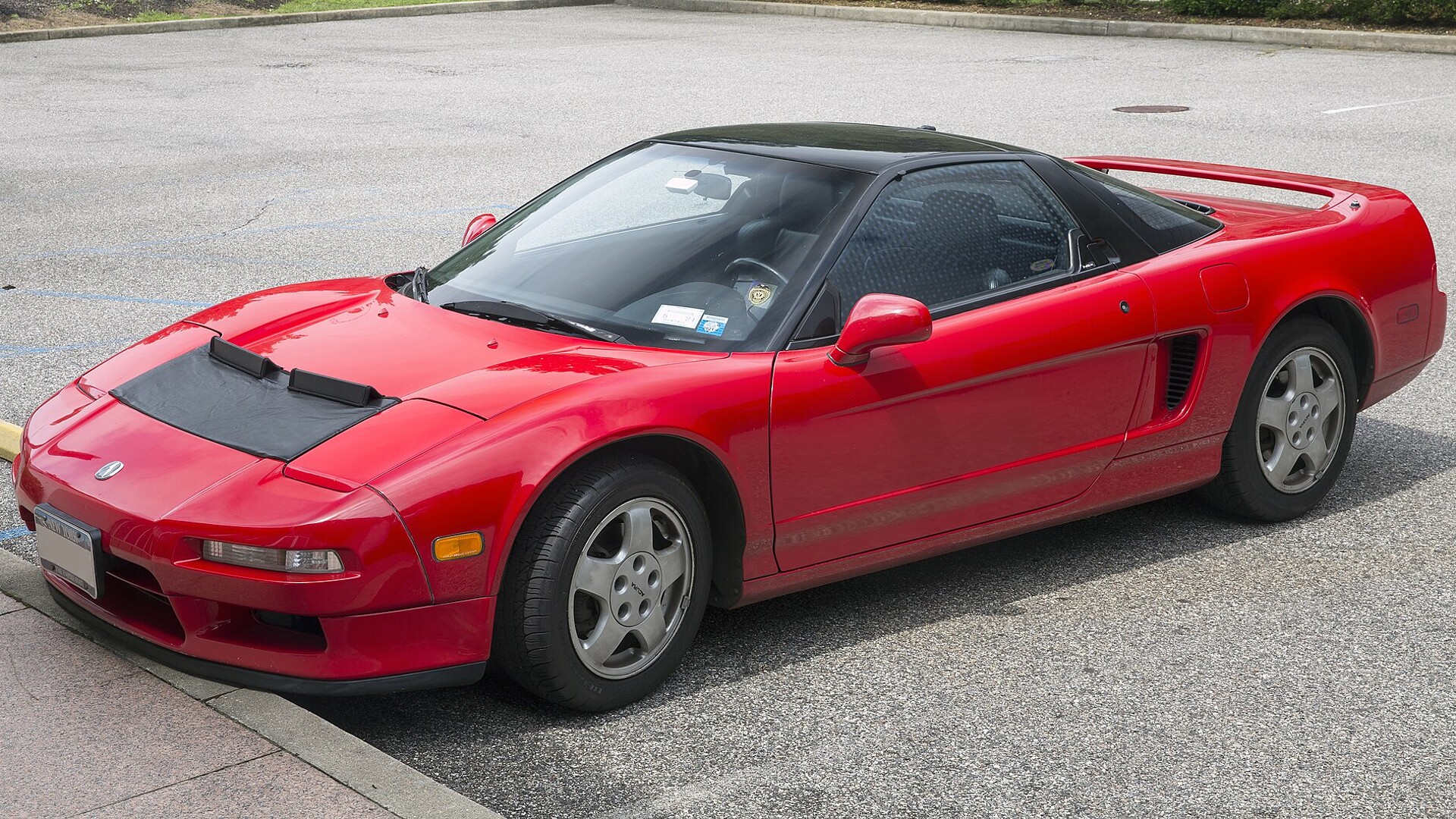
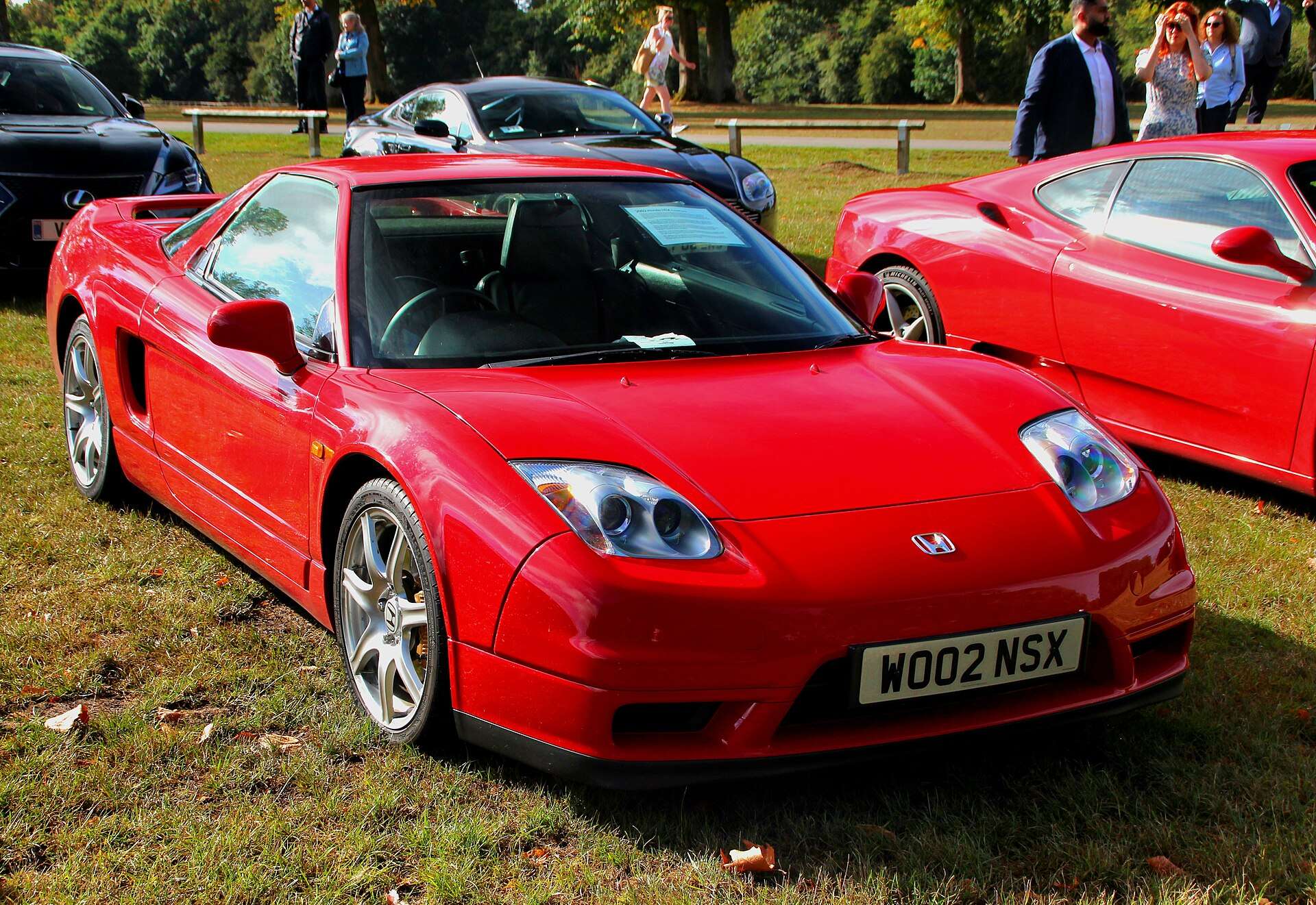
The first-generation Acura NSX is the rare modern collector car whose market rewards restraint more than rarity. Honda built 18,685 of them between 1990 and 2005, enough that buyers can be selective, and the prices now show it: a documented, unmodified car with its original paint trades at a clear premium over an average example of the same year. This spec sheet covers the production figures, mechanical changes, identifying details, known weak points and current values that separate the two.
At a Glance
| Item | Specification |
|---|---|
| Production | August 1990 – November 2005 (U.S. model years 1991–2005) |
| Total production | 18,685 (all markets, all variants) |
| U.S. (Acura) total | 8,997 |
| Assembly | Takanezawa, Tochigi (1990–2003); Suzuka (2004–2005) |
| Chassis codes | NA1 (3.0-liter), NA2 (3.2-liter) |
| Layout | Transverse mid-engine, rear-wheel drive; all-aluminum monocoque |
| Engines | C30A 3.0-liter DOHC VTEC V6; C32B 3.2-liter DOHC VTEC V6 (manual cars from 1997) |
| Output | 270 hp (3.0 manual), 252 hp (3.0 automatic), 290 hp (3.2 manual) |
| Transmissions | 5-speed manual (1991–96), 6-speed manual (1997–2005), 4-speed automatic (SportShift from 1995) |
| Body styles | Coupe; NSX-T removable-roof targa (from 1995) |
First-Generation Acura NSX Production Totals
Most sources settle on 18,685 first-generation cars across all markets, with Honda itself reporting “over 18,000” by mid-2005. Roughly half, 8,997, were sold in the United States under the Acura name. Europe, the Middle East and Africa accounted for 1,559. The remainder went mostly to Japan, which also received nearly every lightweight variant.
| Variant | Built | Key details |
|---|---|---|
| NSX Type R (NA1) | 483 | 1992–1995, Japan only; roughly 120 kg lighter than the standard car |
| NSX Type S | 209 | 1997–2001, Japan only |
| NSX Type S-Zero | 30 | 1997–2001, Japan only; stripped circuit-oriented variant |
| Alex Zanardi Edition | 51 | 1999, U.S. only; New Formula Red NSX-T, 3.2-liter six-speed, 149 lb lighter than a standard NSX-T |
| NSX-R (NA2) | 140 | 2002–2005, Japan only; carbon-fiber body parts, balanced engines, no power steering |
| NSX-R GT | 5 | 2005, homologation run; only one sold to a private buyer |
In practice, the lightweight variants are a separate market. A U.S. buyer is almost always choosing among standard coupes and NSX-Ts, and the Zanardi Edition is the only factory special sold new in America.
First-Generation Acura NSX Engine and Drivetrain
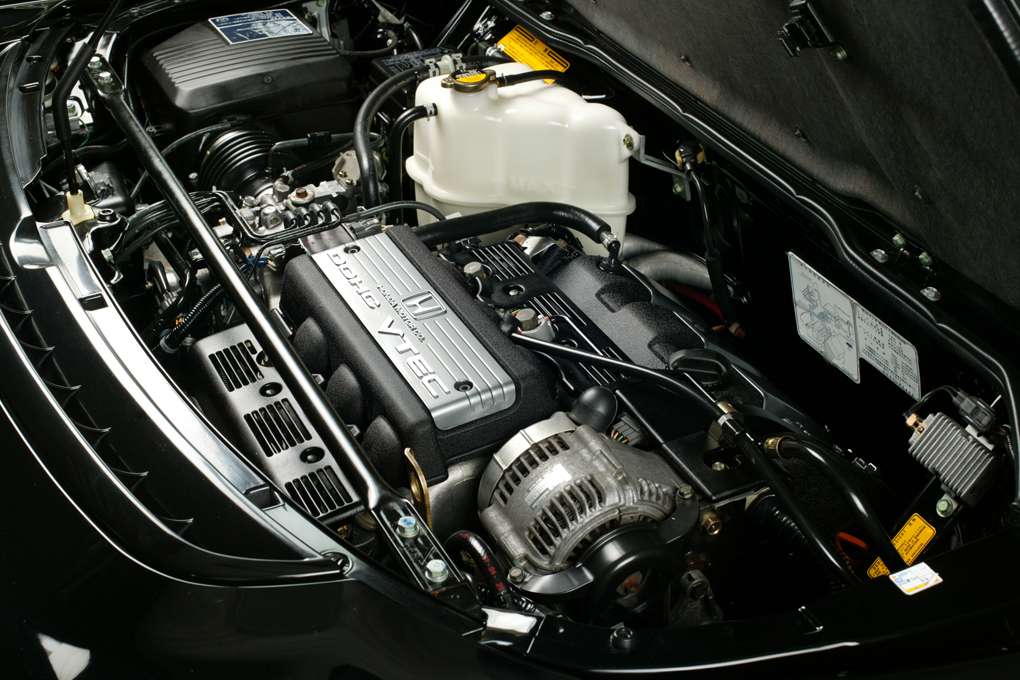
Every first-generation Acura NSX uses a transversely mounted, naturally aspirated DOHC VTEC V6 behind the cabin, driving the rear wheels. The launch C30A displaced 3.0 liters and made 270 hp and 210 lb-ft with the five-speed manual. However, cars ordered with the four-speed automatic were rated at 252 hp.
For 1997, manual cars received the C32B, enlarged to 3.2 liters and rated at 290 hp and 224 lb-ft, paired with a new six-speed gearbox using closer ratios and dual-cone synchronizers. Meanwhile, automatic cars kept the 3.0-liter engine and 252 hp through the end of production, so a late automatic is mechanically closer to a 1991 car than to a six-speed of the same year.
The 1995 update brought drive-by-wire throttle, OBD-II diagnostics, a lighter exhaust, the optional column-mounted SportShift for automatics, and electric power steering on all cars. Before 1995, however, only automatic cars had power assist; early manual coupes have unassisted steering, which many purists prefer.
Special Options and Year-by-Year Changes
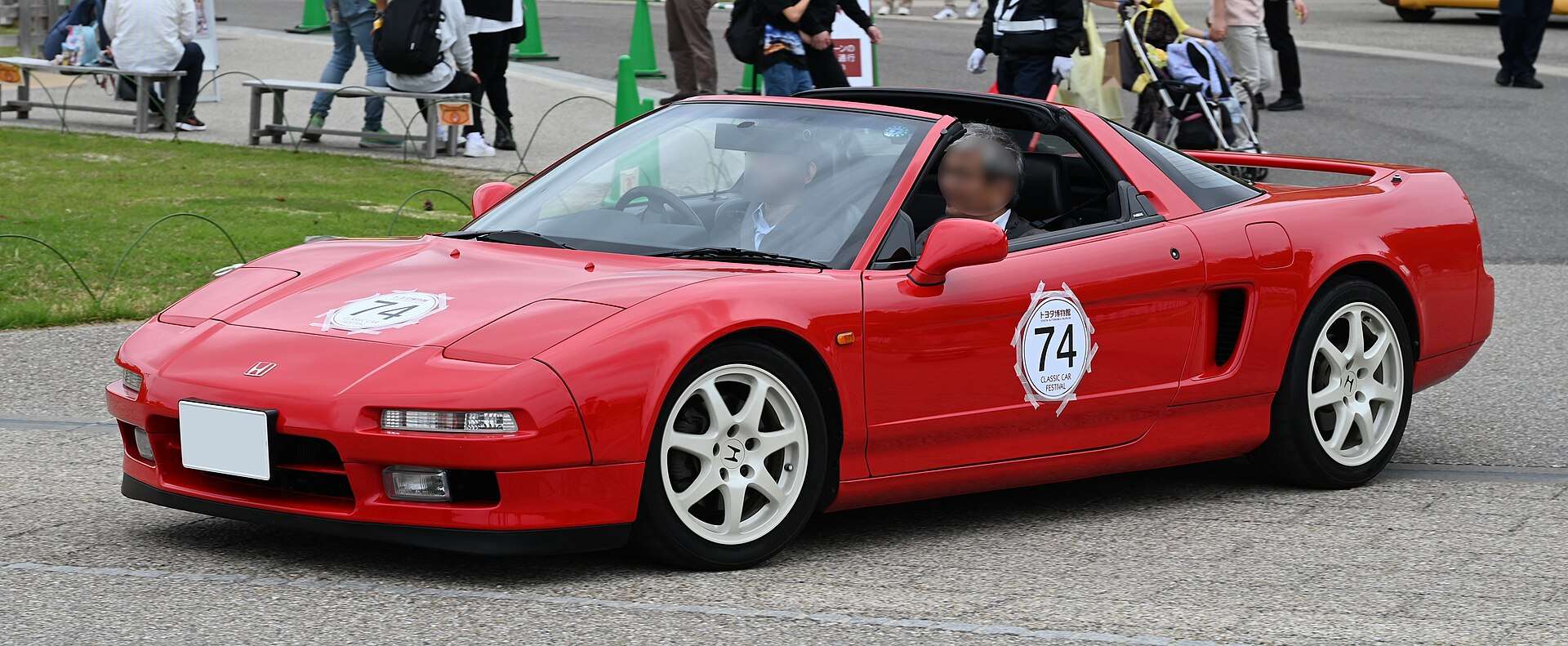
- 1991–1994: Coupe only, black roof panel, pop-up headlights, 3.0-liter engine, five-speed manual or four-speed automatic. Manual cars have unassisted steering.
- 1995: NSX-T introduced in North America in March 1995 with a removable roof panel. Drive-by-wire throttle, OBD-II and SportShift arrive. Coupe roofs change to body color. The targa structure added about 40 kg.
- 1997: Manual cars get the 3.2-liter C32B and six-speed transmission. The NA2 chassis code applies to these cars.
- 1999: Alex Zanardi Edition, 51 cars for the U.S., each with a numbered plaque.
- 2002: Facelift with fixed xenon HID headlights replacing the pop-ups, a drag coefficient of 0.30, blue-faced gauges, stiffer springs and a thicker rear anti-roll bar. In the U.S., the NSX-T had become the dominant body style, and fixed-roof coupes from the later years are scarce.
- 2005: Final cars built at Suzuka before production ended in November.
Factory options on the first-generation Acura NSX were limited by design. Most of what matters to a collector is fixed at the order: transmission, body style, color and model year. As a result, originality is easier to verify than on cars with long option sheets, and it makes a missing original component more conspicuous.
Identifying Details
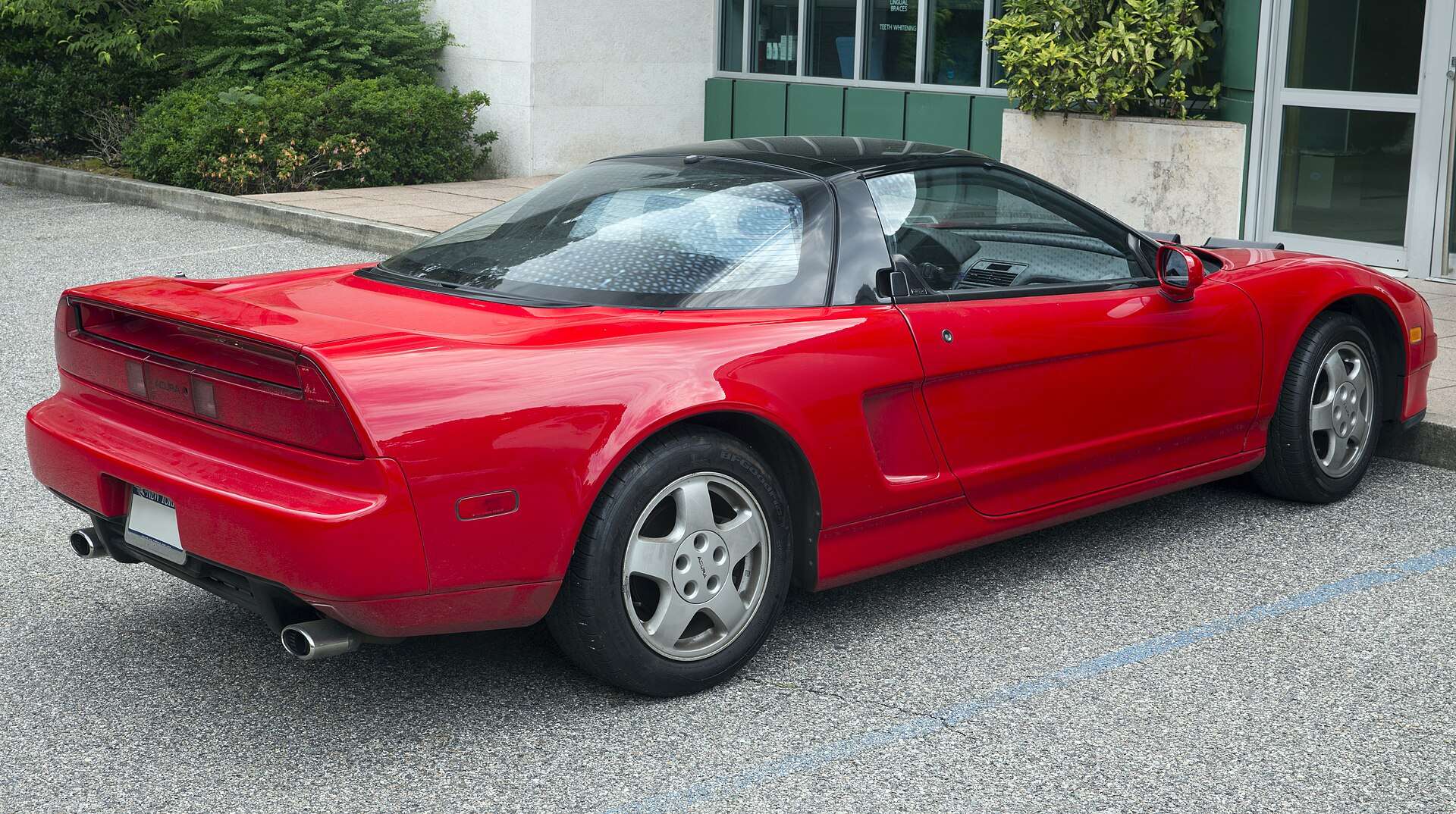
- VIN: U.S. cars carry VINs beginning JH4NA1 (3.0-liter cars) or JH4NA2 (3.2-liter six-speed cars). A six-speed car with an NA1 VIN or a 3.0-liter engine in an NA2 car needs an explanation.
- Engine code: Confirm C30A or C32B matches the VIN and transmission. Automatic cars should always have the C30A.
- Roof: 1991–1994 coupes have a black roof panel. A body-color roof on an early coupe usually indicates a respray.
- Headlights: Pop-ups through 2001, fixed xenon units from 2002. Conversions exist in both directions, so check the VIN year.
- Zanardi Edition: New Formula Red, NSX-T body, six-speed, numbered plaque, and a documented VIN. The color and plaque alone are not proof.
- Japanese-market specials: Type R, Type S and NSX-R cars in the U.S. are private imports. Verify the frame number, export and import paperwork, and compliance history rather than relying on badges or white paint.
First-Generation Acura NSX Common Weaknesses
The NSX has a reputation for Honda reliability, and the drivetrain has earned it. Still, the weak points are specific and well documented. For the most part, they are a matter of paperwork.
- Transmission snap ring: Some 1991 and 1992 five-speed cars had faulty countershaft snap rings that could cause major gearbox failure. Ask for proof the repair was done.
- ABS control unit: Early cars had documented ABS module problems. Check for warning lights and repair records.
- Timing belt: Due every 90,000 miles. Low-mileage cars that have sat for years should have a belt changed on age as well, along with the water pump.
- Coolant reservoir: Known to leak on early cars. Look for residue in the engine bay.
- Climate-control electronics: Aging capacitors in the climate-control unit are a known failure, showing up as dead or dim displays and erratic temperature control.
- Aluminum body repair: The body resists rust but is expensive to repair, and many shops decline aluminum work. A magnet will not find filler. Use a paint-depth gauge and inspect panel gaps in good light.
- Modifications: Aftermarket wheels, exhausts, lowered suspension and engine work are common. Reversible changes are fixable; a car that has lost its original parts is harder to put back.
First-Generation Acura NSX Values
The market is split by generation and specification. The benchmarks below come from classic.com market data as of late September 2026 and should be read as ranges, not appraisals.
| Segment | Typical market value | Recent reference sale |
|---|---|---|
| NA1 coupe (1991–1994) | About $84,000 benchmark; 1991 cars roughly $68,000–$160,000 | 1991, 32,000 miles: $103,469 (Sept. 2026) |
| NSX-T, 3.0 and early 3.2 (1995–1998) | About $98,000 benchmark | 1997 NSX-T, 77,000 miles: $129,000 (Sept. 2026) |
| NA2 pre-facelift (1998–2001) | About $131,000 benchmark | 2001 NSX-T, 6,000 miles: $200,000 (Sept. 2026) |
| 2002–2005 facelift | About $167,000 benchmark | Few public sales; low supply |
| Zanardi Edition (1999) | About $373,000 benchmark | 23,000 miles: $628,000 (Sept. 2026) |
In addition, mileage and originality move prices more than model year within a segment. For example, recent 1991 results illustrate it: an 82,000-mile original car sold for $75,500 in August 2026, while a 19,000-mile car brought $160,000 in May. By contrast, automatic cars and modified cars generally trade below these benchmarks. Japanese-market lightweights sit in a different tier, with U.K. Hagerty guidance placing a 3.0-liter NSX-R at £250,000–£300,000 and a 3.2-liter NSX-R at £400,000–£500,000.
The same pattern shows up across the Japanese collector market. An unmodified 1993 Supra Turbo recently made the case that buyers now pay for restraint, and our guide to the best JDM cars to invest in covers the wider segment.
What Separates a Good First-Generation Acura NSX From an Average One
Because Honda built enough cars to give buyers options, the spread between a good car and an average one is wide, and it is mostly about documentation.
- Original paint and no aluminum repair history. This is the single largest value factor. A paint-meter reading and clean panel gaps are worth more than a fresh detail.
- A complete service history that shows the timing belt and water pump on schedule, and on early five-speed cars, the snap-ring repair.
- Factory specification. Original wheels, exhaust, suspension and radio. A car that was modified and then returned to stock should come with the removed parts or receipts. Compare the modified 1991 NSX headed to Saratoga with an unmodified car and the gap is clear.
- Manual transmission. Automatic cars are a real part of NSX history but trade at a discount and never received the 3.2-liter engine.
- The right early details. On a 1991–1994 coupe, the black roof, unassisted steering on manual cars and pop-up headlights are what collectors want to see.
- Clean title and ownership chain. Especially important on Zanardi Editions and imported Japanese-market cars, where badges and paint are easy to copy.
In short, an average first-generation Acura NSX is a sound, enjoyable car with an incomplete story. A good one, on the other hand, can prove its story. Therefore, at current prices, that proof is where most of the premium goes.
Related Reading
- Acura’s Zanardi Edition NSX Was Always a Tribute. The Market Is Only Now Pricing It Like One
- 261 Miles, No Reserve: The Last NSX Type S and the Case for Finality Over Rarity
- Today in Collector Car History: Honda Became a Company 78 Years Ago
- Why the Mitsubishi 3000GT VR-4 Is Finally Getting Its Due
- 1986–1991 BMW M3 (E30): Collector Spec Sheet
- 1990–1995 Chevrolet Corvette ZR-1 (C4): Collector Spec Sheet
Sources: Honda NSX (first generation) production and specification data; Magneto market guide; Hagerty buyer’s guide; classic.com market data.
The collector car market, every weekday morning.
Auction results, price moves and what’s crossing the block, read in four minutes. Free, from Modern Car Collector.
No spam, unsubscribe in one click. Or read more about the Brief.


 Elizabeth Puckett