

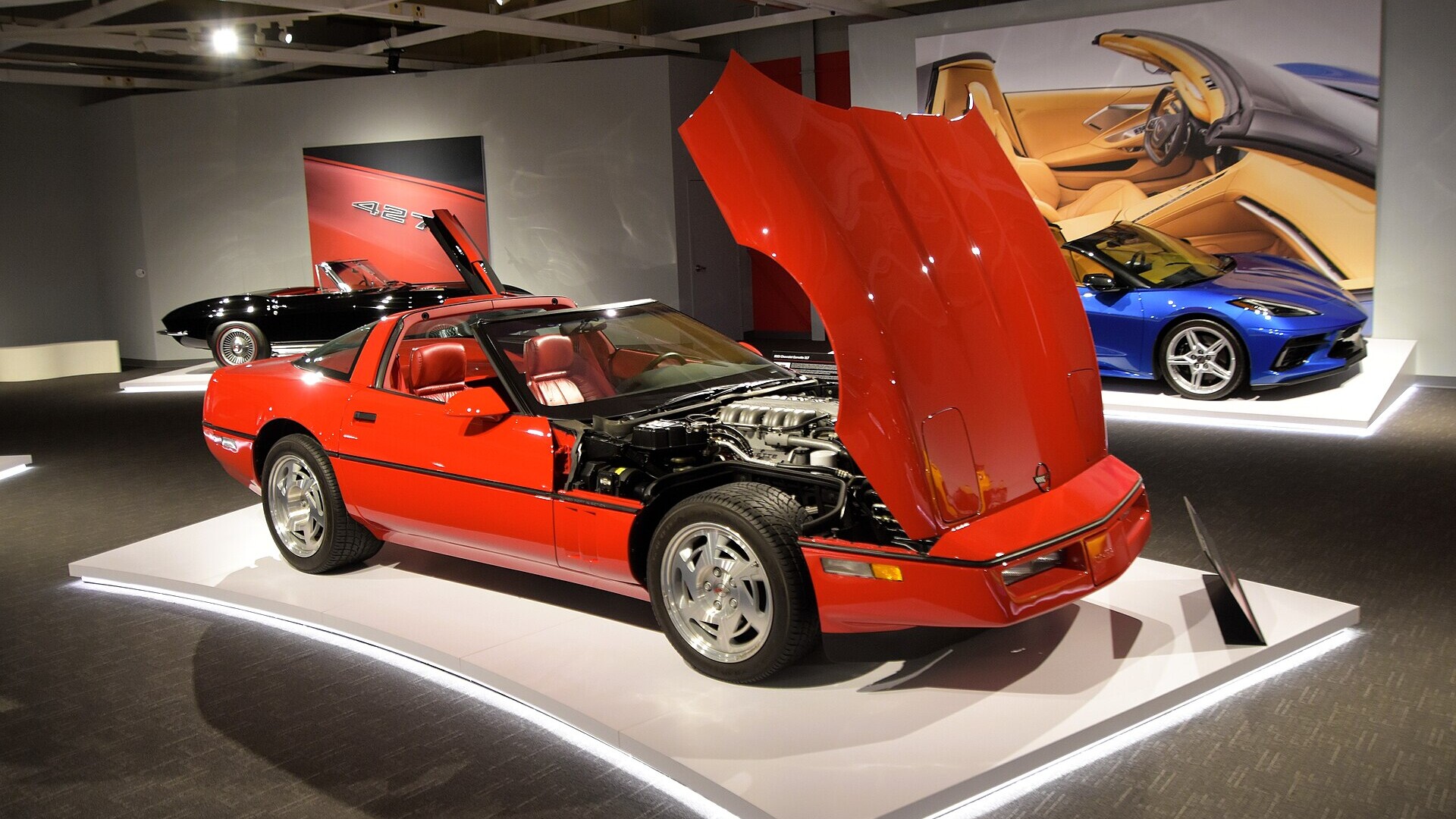
The C4 Corvette ZR-1 is a spec-sheet car in the most literal sense. Almost everything that makes it collectible sits in a few lines of data: a 32-valve, four-cam LT5 V8 designed with Lotus and assembled by Mercury Marine, a body widened from the doors back, and a production total of 6,939 cars over six model years. What the market still has not settled is how much to pay for those lines. That is why, for this car more than most, condition and originality move value further than model year does.
This C4 Corvette ZR-1 collector spec sheet gathers the verified numbers, the identification checks, the known weak points and the current market range in one place, with market interpretation labeled as such.
At a Glance
| Item | Specification |
|---|---|
| Model years | 1990–1995 (RPO ZR1, coupe only) |
| Total production | 6,939 |
| Engine | LT5 5.7-liter (349 cu in) DOHC 32-valve V8, all-aluminum |
| Output | 375 hp / 370 lb-ft (1990–92); 405 hp / 385 lb-ft (1993–95) |
| Transmission | ZF six-speed manual only |
| Assembly | Engines built by Mercury Marine, Stillwater, Oklahoma; cars built at Bowling Green, Kentucky |
| Price new (1990) | $58,995 ($31,979 base Corvette plus the $27,016 ZR1 option) |
C4 Corvette ZR-1 Production Totals
Production figures below are from the Corvette Action Center’s ZR-1 production records. Two early sellout years account for nearly three quarters of all cars built.
| Model year | Built |
|---|---|
| 1990 | 3,049 |
| 1991 | 2,044 |
| 1992 | 502 |
| 1993 | 448 |
| 1994 | 448 |
| 1995 | 448 |
| Total | 6,939 |
The same records put Bright Red (2,324 cars) and Black (1,813) well ahead of every other color, followed by Arctic White (619), Dark Red Metallic (325), Torch Red (316) and Competition Yellow (189). A small number went to Canada, including 163 in 1990 and 151 in 1991.
The steep drop after 1991 matters for collectors. Once the 1991 refresh gave every C4 the ZR-1’s convex tail and square taillights, the $27,000 visual premium largely disappeared, and demand fell with it. The last three years are each three-digit production runs. According to the National Corvette Museum, LT5 production ended when GM announced the ZR-1’s discontinuation in November 1993.
Engine and Drivetrain
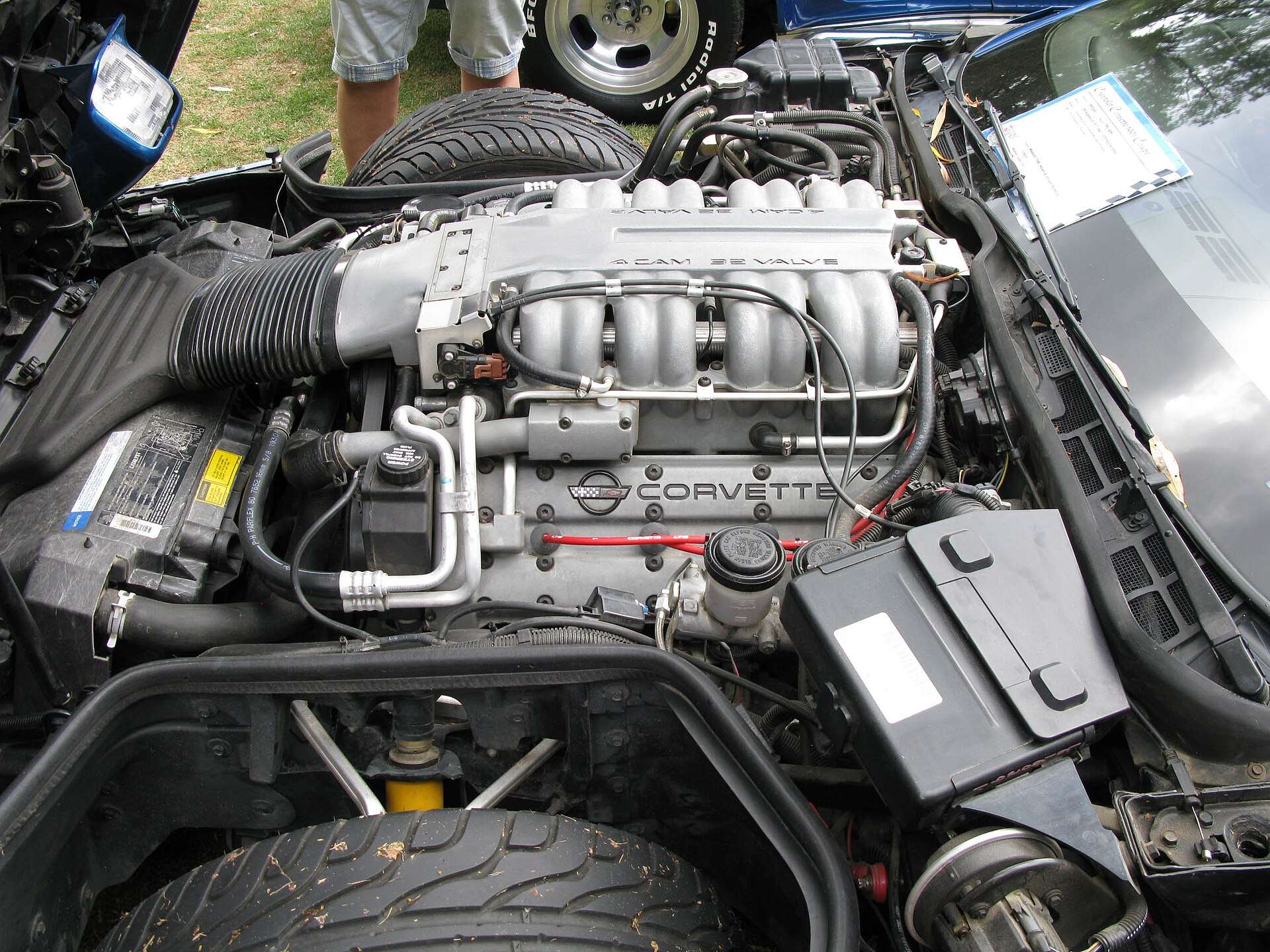
The LT5 shares only its general layout and bore spacing with Chevrolet’s pushrod small-block. It was developed by GM with Lotus Engineering, and GM contracted Mercury Marine’s Stillwater, Oklahoma, plant to build it, drawing on that shop’s experience machining aluminum for high-performance marine engines. The National Corvette Museum notes that Mercury’s technicians hand-assembled roughly 18 engines a day.
- Displacement: 349 cu in (5,727 cc), 99 mm bore x 93 mm stroke
- Compression: 11.0:1
- Valvetrain: dual overhead cams per bank, four valves per cylinder, hydraulic lifters
- Redline: 7,200 rpm
- Output, 1990–92: 375 hp at 6,000 rpm, 370 lb-ft at 4,800 rpm
- Output, 1993–95: 405 hp at 5,800 rpm, 385 lb-ft at 4,800 rpm
- Transmission: ZF six-speed manual with CAGS (Computer Aided Gear Selection) “skip-shift”
- Suspension: FX3 electronically adjustable Selective Ride Control
- Tires: 315/35ZR17 rears on 11-inch-wide wheels
The ZR-1 also carried a “valet” power key. In restricted mode it limited the LT5 to roughly 200 horsepower by keeping the secondary intake ports closed; full mode released all of it.
The engine’s credibility was established early. On March 1–2, 1990, a near-stock ZR-1 run by Morrison Motorsports averaged 175.885 mph for 24 hours at Fort Stockton, Texas, setting world endurance records.
Special Options and Year-by-Year Changes
- 1990: Launch year and the largest production run. The only year the convex rear fascia and square taillights were exclusive to the ZR-1, since the rest of the line still wore the earlier tail.
- 1991: The whole C4 range was restyled with the ZR-1-style rear, reducing the visual distinction to the wider rear body, wheels and badging.
- 1993: LT5 output rose to 405 hp and 385 lb-ft. The Z25 40th Anniversary package in Ruby Red was offered across the Corvette line; about 245 of the 448 1993 ZR-1s are commonly cited as anniversary cars.
- 1994–1995: Production held at 448 per year, built from engines completed before LT5 assembly ended in late 1993.
Because the ZR-1 option already bundled the LT5, ZF gearbox, FX3 suspension and wider body, originality checks focus less on option boxes and more on whether the car still carries its factory-specified hardware.
Identifying Details
- VIN: ZR-1s use the prefix 1G1YZ, with J in the eighth position denoting the LT5 and 5 in the eleventh position for Bowling Green assembly. The tenth character gives the model year (L=1990 through S=1995).
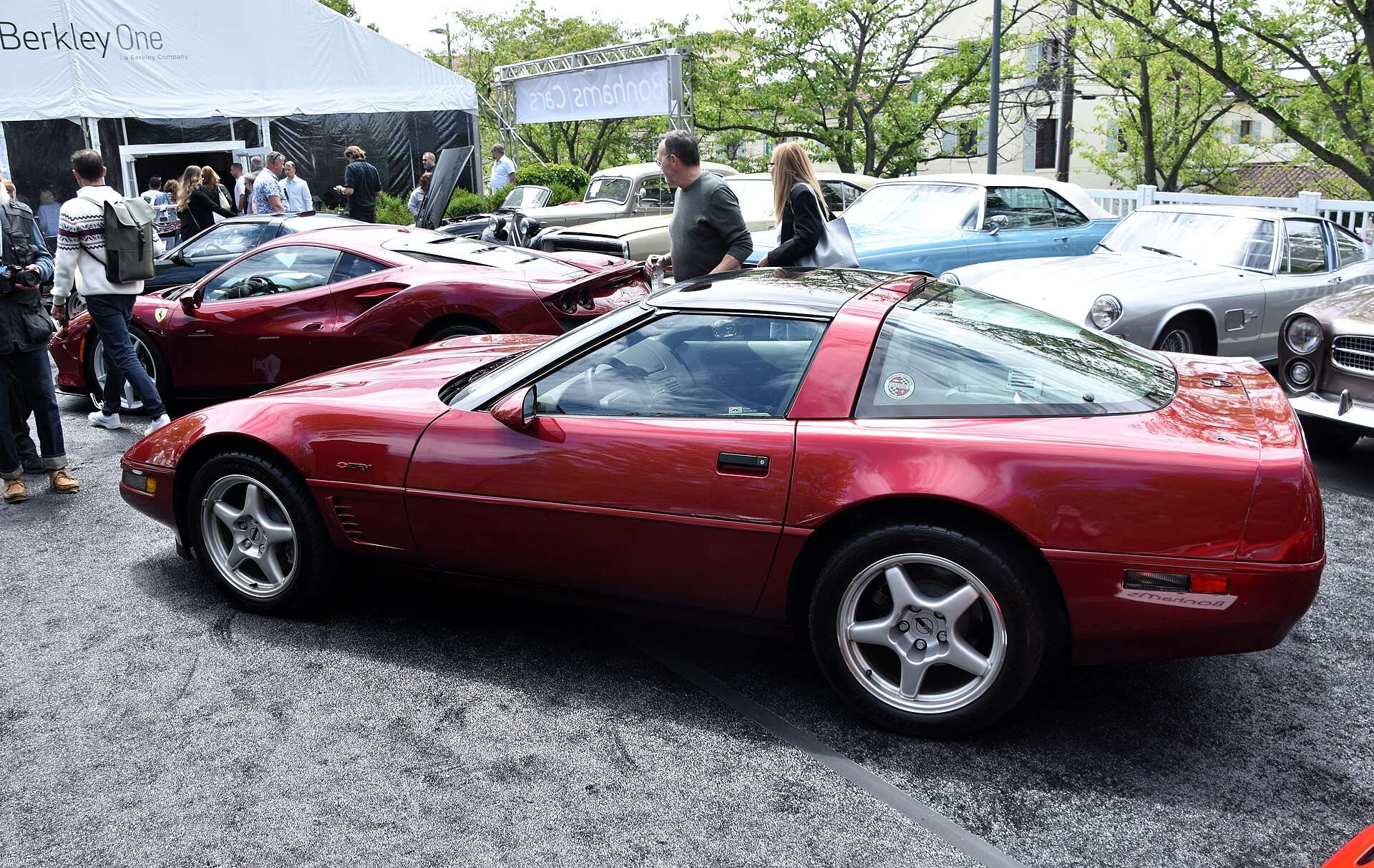
- Body: Wider rear quarter panels from the doors back, ZR-1-specific door shells and a wider rear bumper cover than a standard coupe.
- Badging: ZR-1 emblems, including the one below the right rear taillight.
- Wheels and tires: 17-inch wheels with 11-inch-wide rears carrying 315/35ZR17 tires.
- Controls: The power key switch on the console, and the ZF six-speed; no automatic was offered.
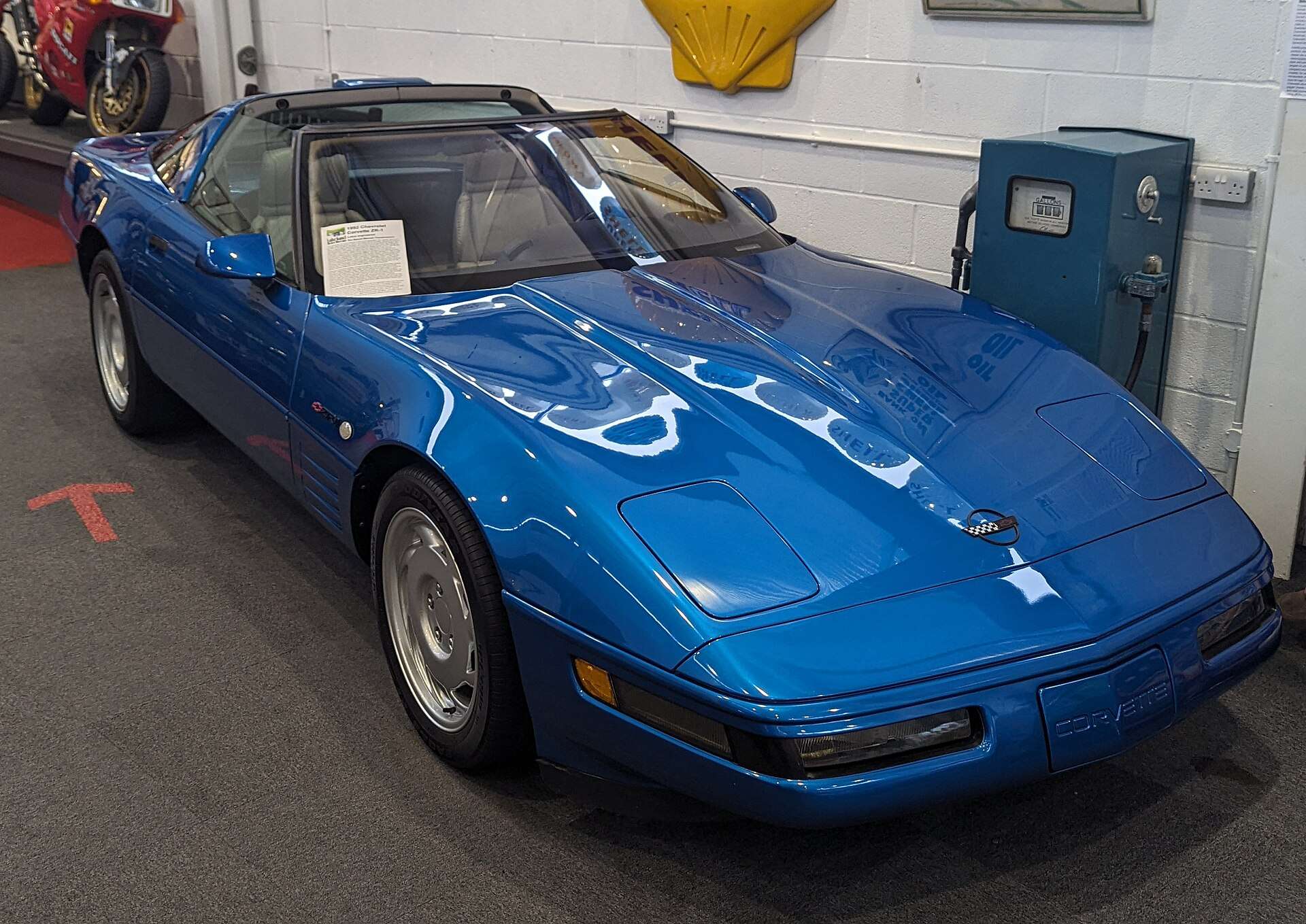
Because 1991-and-later standard C4s share the ZR-1 tail, clone and “tribute” conversions exist. Confirm the VIN before anything else, then confirm that the engine is an LT5 and that the paperwork matches the car.
C4 Corvette ZR-1 Common Weaknesses
Owner-community and technical sources broadly agree that the LT5 itself is durable when maintained, and that most problems today come from age and deferred maintenance rather than design flaws.
- Secondary port system: The LT5’s secondary intake ports are vacuum-actuated. If the system or the power key circuit is faulty, the car will feel flat at high rpm. A test drive should confirm full power in the full-power key position.
- Age-related oil leaks: Cam cover gaskets, cylinder head sight plugs, PCV components and other seals. The owner’s manual allows for some oil use between changes, so a leak is not automatically an engine problem.
- ZF six-speed: Check for clean, quiet shifts; rebuilds are costly. Note whether the CAGS skip-shift has been defeated, since that is an originality question on a collector car.
- FX3 suspension: Electronically adjustable shocks and their actuators age like any other 30-year-old electronics.
- General C4 aging: Suspension bushings, differential pinion seals, air conditioning and cooling-system components.
- Stored low-mile cars: Very low mileage often means old tires, dried seals and fuel-system components that need recommissioning before the car is driven hard.
- LT5-specific service: Parts and experienced technicians are scarcer than for a standard small-block, which makes documentation of past work valuable.
Current Value Range
As of September 2026, Classic.com lists a market benchmark of $37,559 for the C4 Corvette ZR-1 and an average sale price of $40,269. Its lowest recorded sale was $12,100 for a 1990 car in April 2024, while asking prices for exceptionally low-mileage cars reach $75,000. At the top, Hagerty reported a 25-mile 1990 ZR-1 selling for $74,025 on Bring a Trailer, about a 50 percent premium to typical values, and noted that the car’s condition, not broad appreciation, drove that result.
MCC interpretation: Based on those data points, usable driver-grade ZR-1s trade in the roughly $20,000–$30,000 range, well-kept examples with documentation around $35,000–$45,000, and near-new, low-mileage cars from about $55,000 to $75,000. These are market observations, not an investment forecast. Use the MCC car valuation guide as a starting point for a specific car.
What Separates a Good Example From an Average One
- Mileage and preservation over model year. The 1994 and 1995 cars are the rarest at 448 each, but the strongest public results have gone to extremely low-mileage cars, including first-year 1990s. In this market, preservation has been worth more than production scarcity.
- Original drivetrain. A matching LT5, the original ZF six-speed and working FX3 are expected. Engine swaps, performance modifications or disabled systems reduce collector appeal even when they improve drivability.
- Service records from known LT5 specialists. Documented work on the secondary system, cooling and seals is worth more than a claim that the car “runs perfect.”
- Factory paint and interior. Original finishes, unmodified interiors and intact factory badging separate a preserved car from a refurbished one.
- Complete paperwork. Window sticker, owner’s manual, both keys and registry history support provenance and help rule out clones.
- Specification. 1993–95 cars carry the 405-hp engine, and a documented 1993 40th Anniversary car adds a clear identity. Color matters less than condition, though the rarer colors can attract specific buyers.
C4 Corvette ZR-1: The Collector Takeaway
The C4 Corvette ZR-1 is proof that engineering significance and production scarcity do not automatically produce collector prices. It remains priced like an attainable 1990s performance car, which means the gap between a tired driver and a preserved, documented example is wide. Buyers who focus on originality and records rather than model year tend to get the most car for the money.
For more on the Corvette line and the wider market, see Is the C5 Corvette a Good Investment?, Is the 2026 Chevrolet Corvette ZR1X a Future Collector Car?, Best Collector Cars Under $50,000, The Most Undervalued Collector Cars in Today’s Market and why one Grand Sport Corvette’s value comes from more than rarity.
Sources: Corvette Action Center ZR-1 production and LT5 specification records; National Corvette Museum; Corvette Report; Classic.com market data; Hagerty.
The collector car market, every weekday morning.
Auction results, price moves and what’s crossing the block, read in four minutes. Free, from Modern Car Collector.
No spam, unsubscribe in one click. Or read more about the Brief.
Related Posts:
- Depreciation and Market Comparison of the Pontiac…
- Lotus Is Bringing Back the V8. The Real News Is Why.
- The Complete Guide to the Yenko Camaro
- Record Ferraris, Rare Icons and 15,000 RPM: The Week…

- This 409-Powered 'Lotus Seven' Isn't a Lotus at All…
- First-Generation Acura NSX (1991–2005): Collector Spec Sheet
 Eve Nowell