

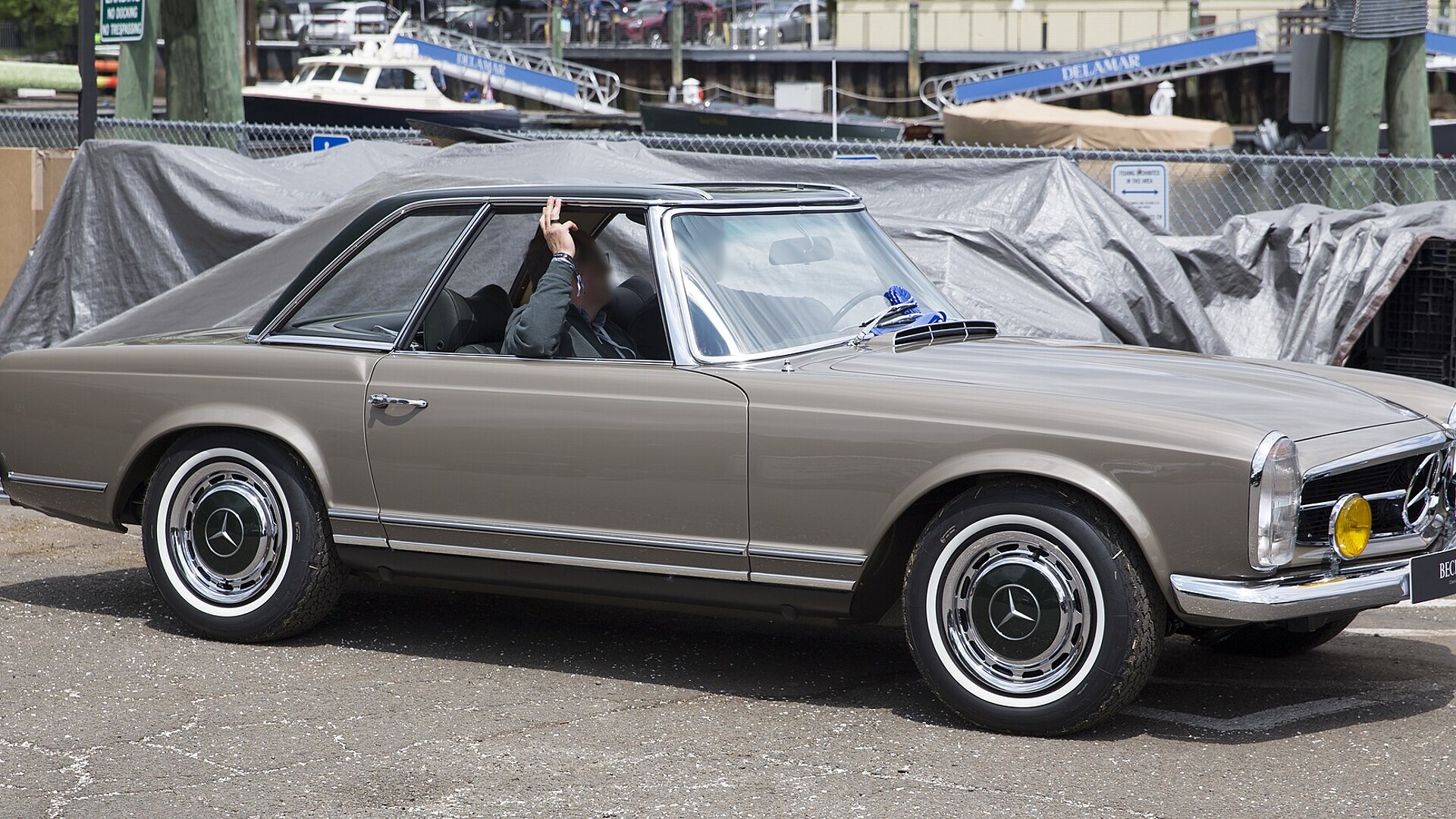
Ask a Mercedes-Benz 280 SL seller whether the car is “matching numbers” and the answer will almost always be yes, backed by an engine stamp and a photocopied data card. That answer is incomplete. On the W113 “Pagoda,” the number that tells you whether a car is still the car that left the factory is not the engine number. It is the body number. Mercedes-Benz repeated it across the hood, the hardtop, the transmission support and a series of trim pieces, and the Pagoda body number is the check that most quickly separates an intact car from a well-presented assembly of parts.
That matters because the Pagoda is not a rare car by collector standards. Mercedes-Benz built 48,912 of them between 1963 and 1971: 19,831 230 SLs, 5,196 250 SLs and 23,885 280 SLs. With that many survivors, originality is one of the few things that makes one example meaningfully different from the next, and the body number is how you measure it.
Why the Body Number Outranks the Engine Number
An engine number proves one thing: that a particular engine is, or claims to be, the one the factory installed. It says nothing about whether the front clip came from a donor car after an accident, whether the hood belonged to another Pagoda, or whether the hardtop on the car was bought separately at a swap meet. The body number does.
According to specialist buyer’s guides from Motoring Investments and Classic & Sports Car, the body number appears on the VIN plate on the inner wing and is repeated in several places:
- The top left corner of the hood, where the factory stamped the last three or four digits
- The base of the hardtop
- The transmission (gearbox) support
- The boot box lid in the trunk
- Interior pieces, including the seat backrest boards, carpet, glove box and inner door panels, which carry the last three digits
- The factory data card, where the 280 SL body number sits at position 5
Motoring Investments’ guidance is blunt: on an individual car, the numbers should all match. When the hood number doesn’t, the hood came from a different car, and a buyer has to ask why it was replaced. That is the core difference from a model like the Porsche 911, where the engine number carries most of the originality weight. On a Pagoda, originality is spread across the body, and it can be checked in a dozen places instead of one.
The Hardtop Is the Weak Link
This is the part many buyers miss: the Pagoda hardtop is the only numbered body component designed to be lifted off by two people and stored in a garage. Hardtops outlive owners, get sold separately, and get paired with whichever car needs one. Classic & Sports Car notes that each hardtop was numbered and matched to its car at the factory, and that adding a missing hard or soft top adds £5,000 or more to a car’s value.
That creates an obvious incentive. A car sold with “its” hardtop may actually be sold with a hardtop. Both are useful, but only one is original, and the difference shows up when the car is judged, appraised or resold to a buyer who checks.
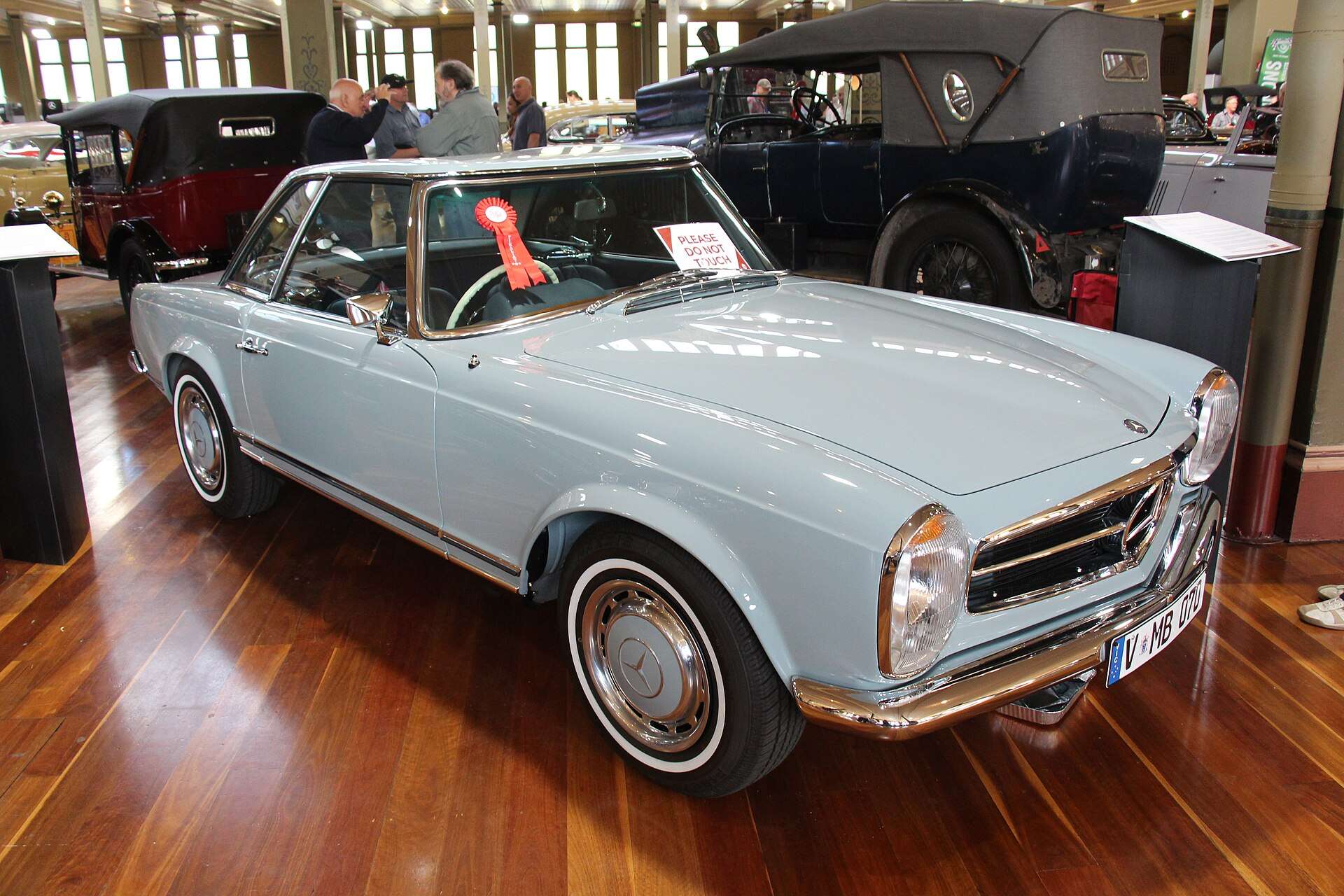
Paint adds a second layer. The W113 data card records paint in two fields, as explained by Palm Beach Classics: UT (Unterteil) for the body color and OT (Oberteil) for the hardtop and hubcap color. If a car was ordered with a contrasting hardtop, the card says so. If a car wears a contrasting top the card doesn’t list, the top was repainted or replaced, and the buyer should know which. For more on why factory paint carries so much weight, see our look at an original-paint 1970 Pontiac GTO Judge.
What the Data Card Can Prove
The data card, or Datenkarte, is the Pagoda’s equivalent of a Mopar broadcast sheet. New cars were delivered with two or more copies, usually tucked into the owner’s manual pouch. Beyond the chassis, body and engine numbers, a W113 card records the transmission number, front and rear axle numbers, steering box number, paint and upholstery codes, tire size and brand, and the key codes for the ignition, trunk and doors.
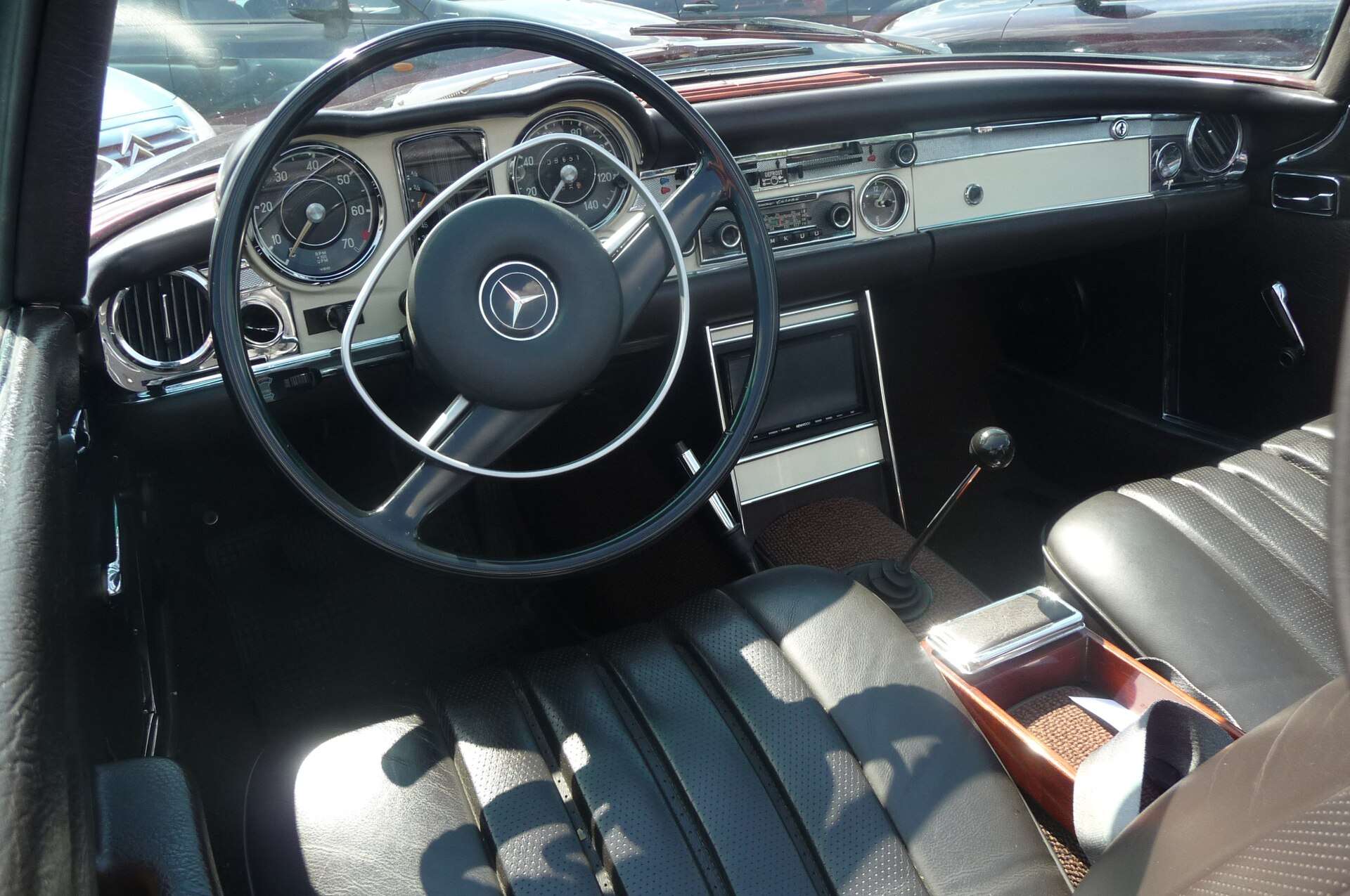
The upholstery code is a quick test. Its first digit identifies the material: 1 for MB-Tex vinyl, 2 for leather (cloth was not offered on the W113). A car presented with “original leather” whose card shows a code beginning with 1 has been retrimmed, however well. Key codes are another underused check: locks that match the card suggest the car hasn’t had its ignition, doors or trunk replaced after theft or damage.
One caution. A photocopied data card is a claim, not proof. Availability of replacement copies has changed over the years, and specialists report that the Mercedes-Benz Classic Center in Stuttgart no longer supplies them directly. Treat any card in the file as a document to be checked against the car, not a certificate that settles the question.
The Engine Still Matters, With One Pagoda-Specific Nuance
The chassis number decodes cleanly. The first six digits identify the model: 113.042 for the 230 SL, 113.043 for the 250 SL and 113.044 for the 280 SL. The seventh digit is 1 for left-hand drive or 2 for right-hand drive, and the eighth is 0 for a manual or 2 for an automatic. The final six digits are the serial. The engine number follows the same logic, with engine type 127.981, 129.982 or 130.983 followed by the same two drive and transmission digits. An engine number whose middle digits don’t match the chassis number’s belongs to a different configuration of car.
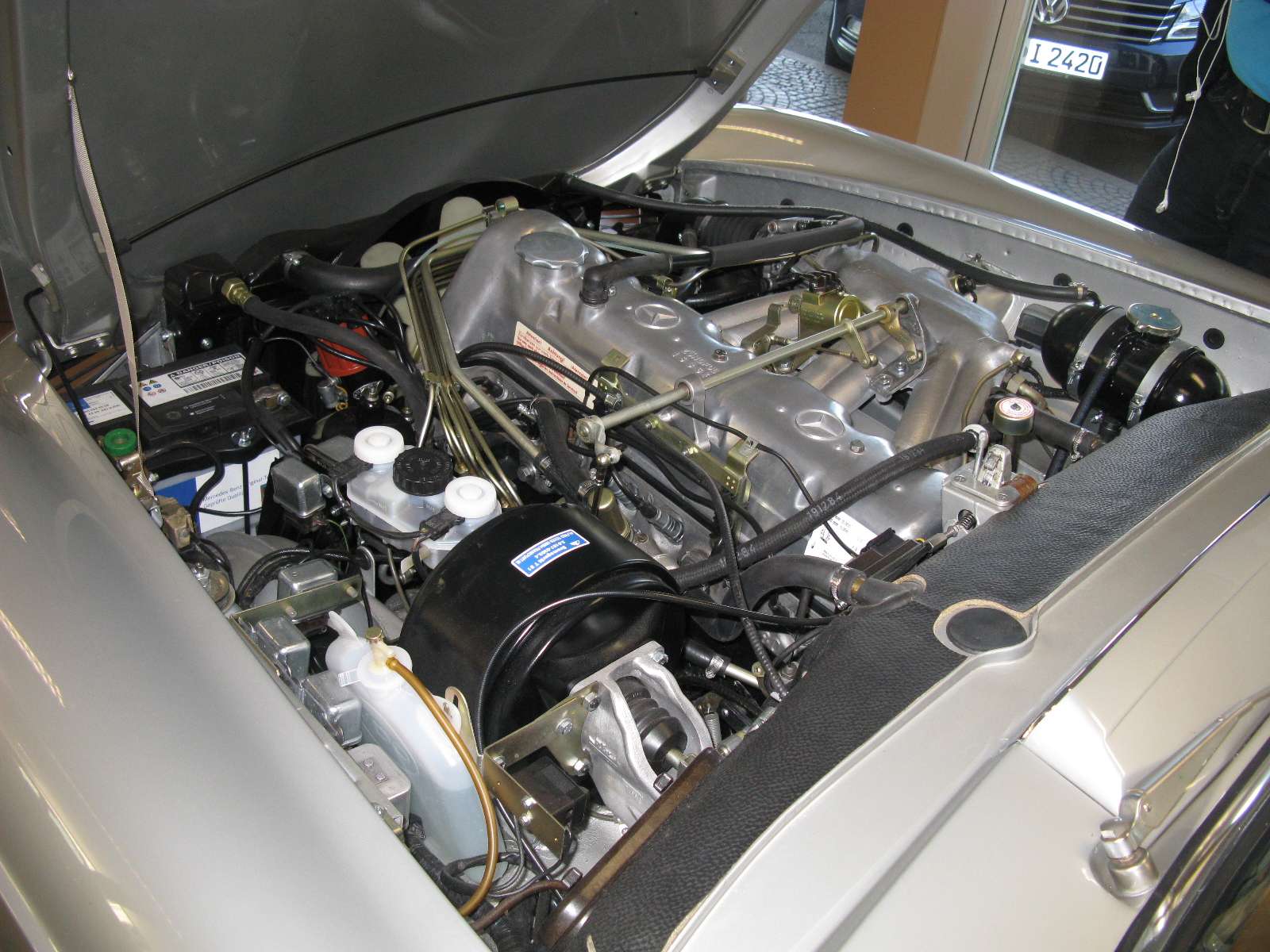
The nuance is the factory exchange engine. Per Palm Beach Classics, the number is stamped on a flat machined pad below the spark plugs toward the rear of the block on the driver’s side, and factory replacement units were supplied without a stamped number. Some carry a small riveted plate marked “Original Tauschaggregat,” and some had the original number applied by the dealer. A Tauschaggregat is period-correct Mercedes-Benz hardware installed under factory service, which is a different story from a random junkyard swap, but it is not the engine the car was built with. A seller who presents a dealer-applied number as a factory stamp is either uninformed or not being straight with you.
What Buyers Should Verify Before Purchase
- Decode the chassis number on the type plate and on the stamping in the right longitudinal frame member. Confirm the model code (042, 043 or 044), drive side and transmission digit match the car in front of you.
- Read the body number from the VIN plate, then find it on the hood’s top left corner, the hardtop base, the transmission support and the boot box lid. Photograph each one.
- Check the last three digits on the interior pieces: seat backrest boards, carpet, glove box and inner door panels. Missing numbers usually mean replaced trim, not fraud, but they should be disclosed.
- Match the engine number to the data card and confirm its middle digits match the chassis number. Look for a Tauschaggregat plate or signs of a re-stamped pad.
- Compare the data card to the car: paint codes (UT and OT), upholstery code, transmission number, axle numbers, steering box and key codes. Ask where the card came from and whether an original exists.
- Inspect for body replacement the numbers can’t reveal. Factory spot welds run along the tops of the front fenders inside the engine bay; plug welds, MIG welds or rivets there point to replaced panels. Look for rust or repair under new sill covers.
- Get an independent inspection from a W113 specialist before money changes hands, and have your appraiser document every number found and every number missing.
How It Affects Value
A car whose Pagoda body number chain is intact, with its own hardtop and a data card that agrees with the paint, trim and drivetrain, is a more defensible asset than one with gaps. Classic & Sports Car‘s current U.K. guide puts average cars at £40,000 to £70,000 and show-quality or fully rebuilt examples at £100,000 to £130,000 and up. Originality isn’t the only thing that separates those bands; condition, body integrity and specification (the rare ZF five-speed manual adds value, for example) all play a part. But documented originality is what lets a seller defend the top of the range, and what lets a buyer know the car will still be worth defending when it’s time to sell.
The lesson also transfers. Whether it’s a Corvette’s matching-numbers stamps or a Pagoda’s hood, the question is the same: does the paperwork describe this car, or a car? Before buying, try our guide to what your car is worth to put the answer in market terms.
The collector car market, every weekday morning.
Auction results, price moves and what’s crossing the block, read in four minutes. Free, from Modern Car Collector.
No spam, unsubscribe in one click. Or read more about the Brief.



 Elizabeth Puckett
  Kyle Matthews
 .jpg)
.jpg)
.jpg)