
On September 29, 1966, the 1967 Chevrolet Camaro went on sale at Chevrolet dealers across the country, 17 days after the company had shown it to the press in Detroit. Sixty years later, the first-year Camaro is one of the most familiar shapes at any American auction. It is also one of the easiest to get wrong. The car that made the Camaro a success is rarely the car that makes it collectible today.
That is the thread worth pulling on this anniversary. Chevrolet built the Camaro to sell in huge numbers, and it did. The value today sits in a thin layer of low-production, well-documented examples on top of that volume, and the documentation matters as much as the equipment.
How the 1967 Chevrolet Camaro Reached Dealers on September 29, 1966
Chevrolet was late to the pony-car fight. Ford’s Mustang had been on sale since April 1964 and had already sold more than a million units. Chevrolet said the name came from old French slang for “friend” or “comrade.” The car rode on the new F-body platform, which it shared with the upcoming Pontiac Firebird. Engineers also developed it alongside the next-generation Chevy II Nova.
According to This Day in Automotive History, production began in August 1966. Chevrolet previewed the car for the press in Detroit on September 12, and it reached showrooms for the 1967 model year on September 29. When the press asked what a “Camaro” was, the answer attributed to Chevrolet general manager Pete Estes has followed the car ever since: “a small, vicious animal that eats Mustangs.”
The Original Significance: A Volume Car With a Catalog of Options
Chevrolet sold the 1967 Chevrolet Camaro the Mustang way: a modest base car and a long option sheet. The base six-cylinder sport coupe started at about $2,466, according to Muscle Car Facts. From there, a buyer could choose among two body styles, six- and eight-cylinder engines from a 230-cubic-inch six up to a 396 big-block, and three packages that matter enormously today:
- Rally Sport (RS): an appearance package best known for its hideaway headlights. Roughly 64,842 1967 buyers chose it.
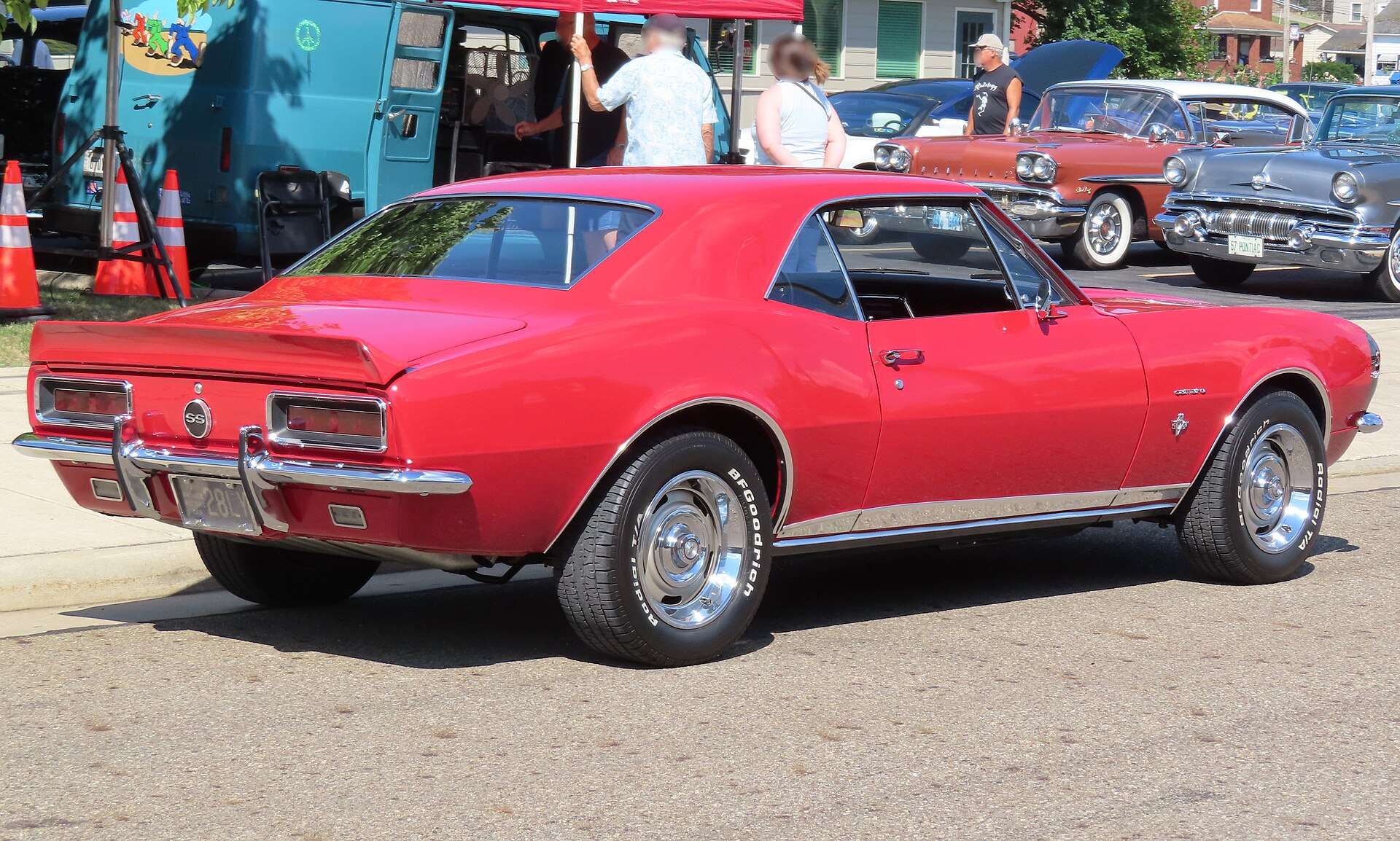
- Super Sport (SS): the 350 or 396 V8 with SS trim, hood detailing and badging. Chevrolet built about 34,411 for 1967.
- Z/28: a homologation-driven Special Performance Package built around a 302-cubic-inch small-block for SCCA Trans-Am racing. Chevrolet built only 602 in 1967.
Total 1967 Chevrolet Camaro production came to about 220,906 cars. The Z/28, the version collectors now value most among 1967s, made up roughly a quarter of one percent of that total. Chevrolet barely promoted it when new. A Camaro RS/SS convertible also paced the 1967 Indianapolis 500, which gave Chevrolet a national stage for the new car in its first spring on sale.
The 1967 Chevrolet Camaro Today: Current Collector Status
Sixty years on, the first-generation Camaro works on two levels. At one level, it is a high-volume, well-supported classic with plenty of parts and restoration knowledge. At the other, a small group of factory and dealer-built performance variants trade in a completely different market.
The clearest proof came in January 2026, when the 1969 Yenko Camaro prototype, the first pilot car built for that year’s COPO 9561 program, sold for $1,815,000 at Mecum’s Kissimmee auction, according to Classic Industries. That made it the most expensive Camaro ever sold at auction. MCC covered the lead-up in Three Legendary Yenko Camaros Headline Mecum Kissimmee 2026, and you can trace the history of the dealer program in The Complete Guide to the Yenko Camaro.
Value Context and Comparables
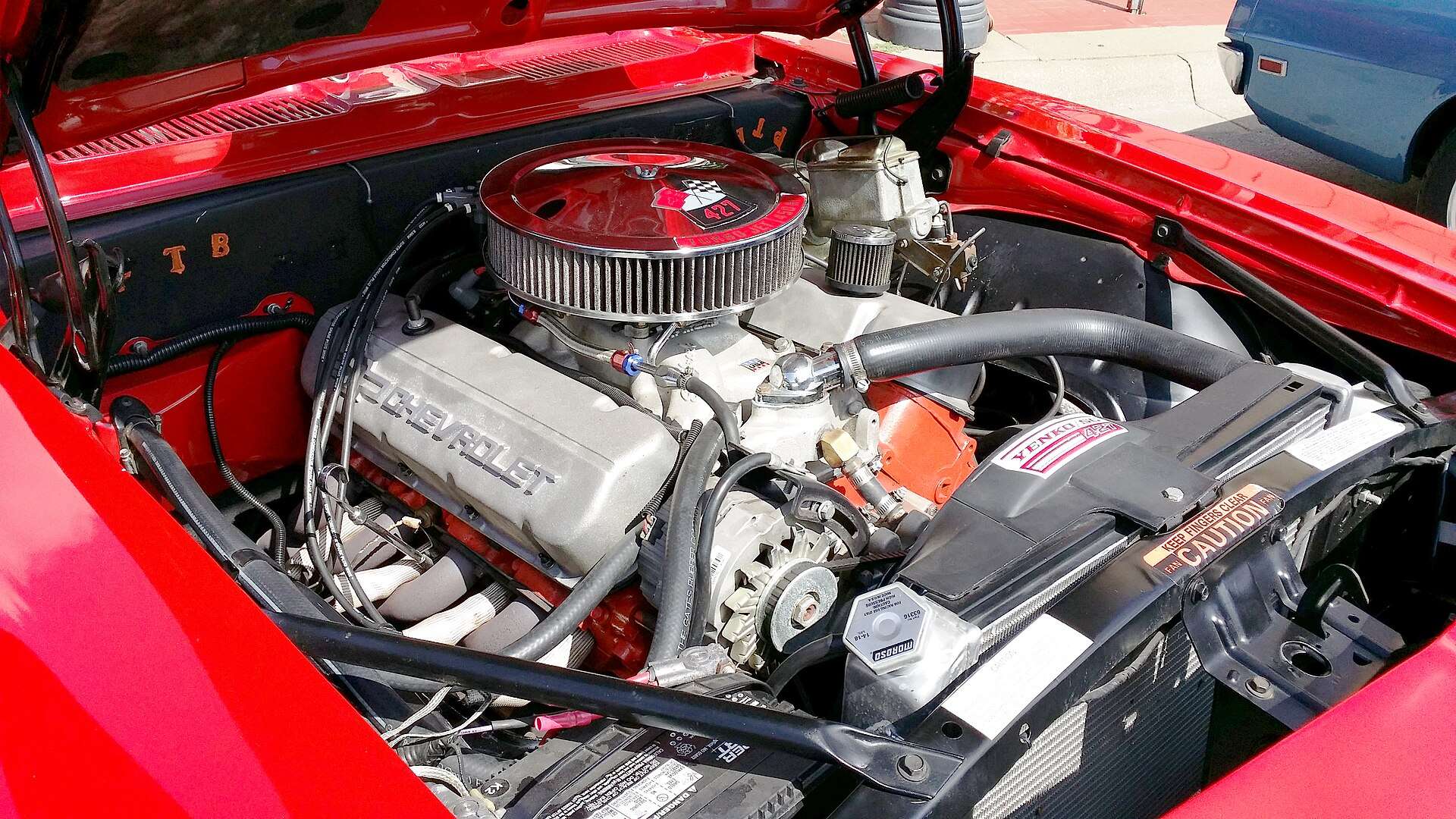
For the 1967 Chevrolet Camaro specifically, CLASSIC.COM market benchmarks as of late September 2026 put a standard 1967 Camaro at about $51,000, a 1967 SS at about $69,500 and a 1967 Z/28 at about $103,000. The Z/28 benchmark shows how much of the premium rests on the smallest production group.
Recent Z/28 results tell the same story. CLASSIC.COM records a 1967 RS Z/28 with cowl induction selling for $126,500 at Mecum in May 2026, and a Trans-Am race car bringing $218,000 on Bring a Trailer in June 2026. The spread between those results comes from racing history and documentation, not the badge on the grille.
It is worth reading those numbers alongside the modern end of the family. In Manufactured Scarcity: What a $125,400 Camaro ZL1 Collector’s Edition Actually Proves, MCC looked at a limited-run modern Camaro bringing money in the same range as a strong 1967 Z/28. The comparison is instructive: Chevrolet planned one car’s scarcity as a marketing exercise. The other’s came from racing rules and very low demand when new.
What Collectors Should Know
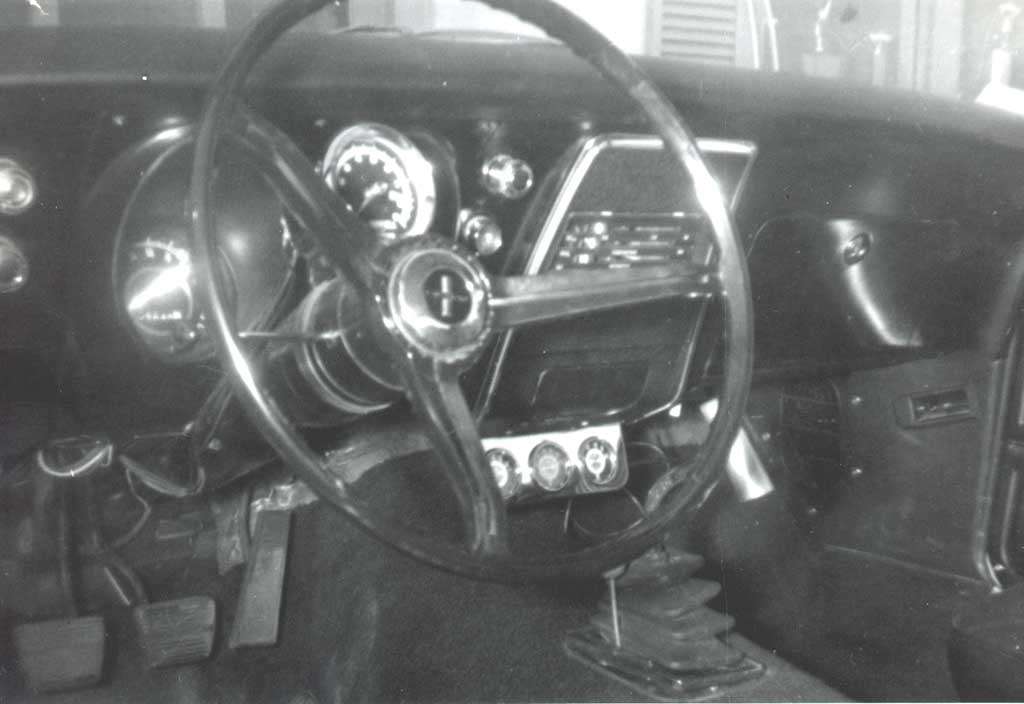
The central lesson of the 1967 Chevrolet Camaro is that its VIN tells you far less than buyers assume. A 1967 Camaro VIN identifies the division, six or V8, body style, model year and assembly plant (Norwood, Ohio, or Van Nuys, California). It does not identify an RS, SS or Z/28. Buyers have to prove those packages another way.
A Pre-Purchase Checklist for a 1967 Camaro
- Start with the VIN and cowl tag. Confirm that the VIN’s series code and body style agree with the cowl tag and the car. A six-cylinder VIN on a car presented as an SS or Z/28 ends the conversation.
- Ask for original paperwork. Build sheets, dealer invoices, window stickers and Protect-O-Plates are what separate a documented Z/28 or SS from a well-built tribute. Expect to pay a clear premium for paper that ties the car to its original equipment.
- Check the drivetrain codes. Engine-pad stampings, partial VIN stampings and date codes on the block, heads, transmission and rear axle should agree with the car’s claimed build. As MCC explained in Matching Numbers on a C2 Corvette, “matching numbers” is a claim to verify, not a description to accept.
- Price the car you are actually buying. A clean, honest standard V8 coupe is a good car to own. It is not a Z/28. Stripes alone do not justify Z/28 money.
- Weigh racing history carefully. Period competition history can add real value to a Z/28, but only when it is documented. Race cars also tend to have replaced components, so originality and provenance need to be judged separately.
MCC’s auction coverage shows the Camaro remains a steady presence at big sales. MCC’s report on Mecum Nashville 2026 results is a good read for how muscle and pony cars are moving through the auction market this fall.
The Takeaway
Chevrolet designed the Camaro that went on sale 60 years ago today to sell in volume, and it succeeded. Its collector market still reflects that. Most first-year cars are affordable, well-supported classics. The serious money sits with a few hundred factory performance cars and dealer specials, and in nearly every case it follows the paperwork. For collectors, the most important option on a 1967 Camaro may be the one Chevrolet never listed: proof of what the car was when it left the factory.
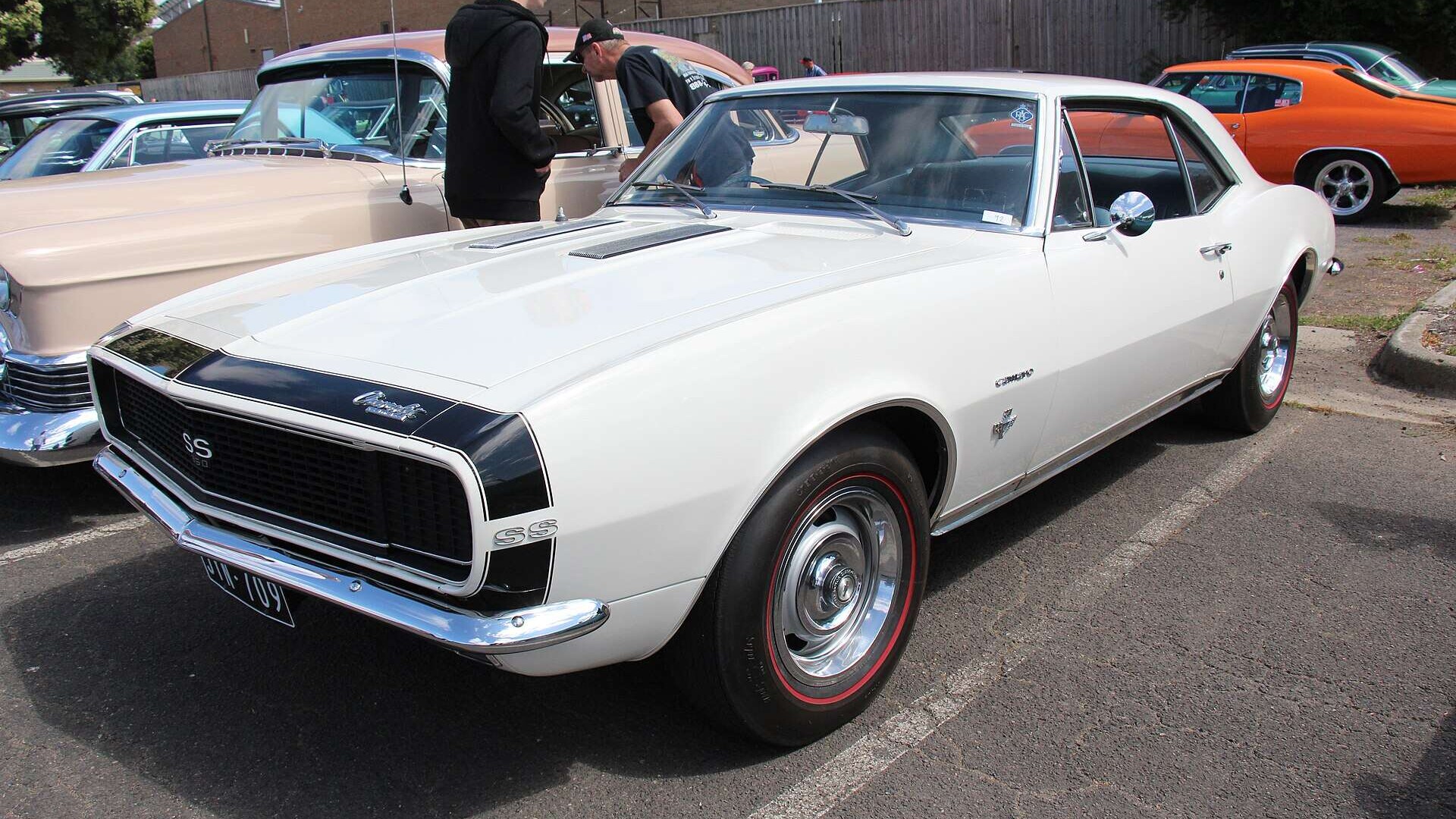
Featured image: 1967 Chevrolet Camaro RS/SS in Ermine White. Photo: Sicnag / Wikimedia Commons, CC BY 2.0.
The collector car market, every weekday morning.
Auction results, price moves and what’s crossing the block, read in four minutes. Free, from Modern Car Collector.
No spam, unsubscribe in one click. Or read more about the Brief.


 Kyle Matthews
  Elizabeth Puckett