

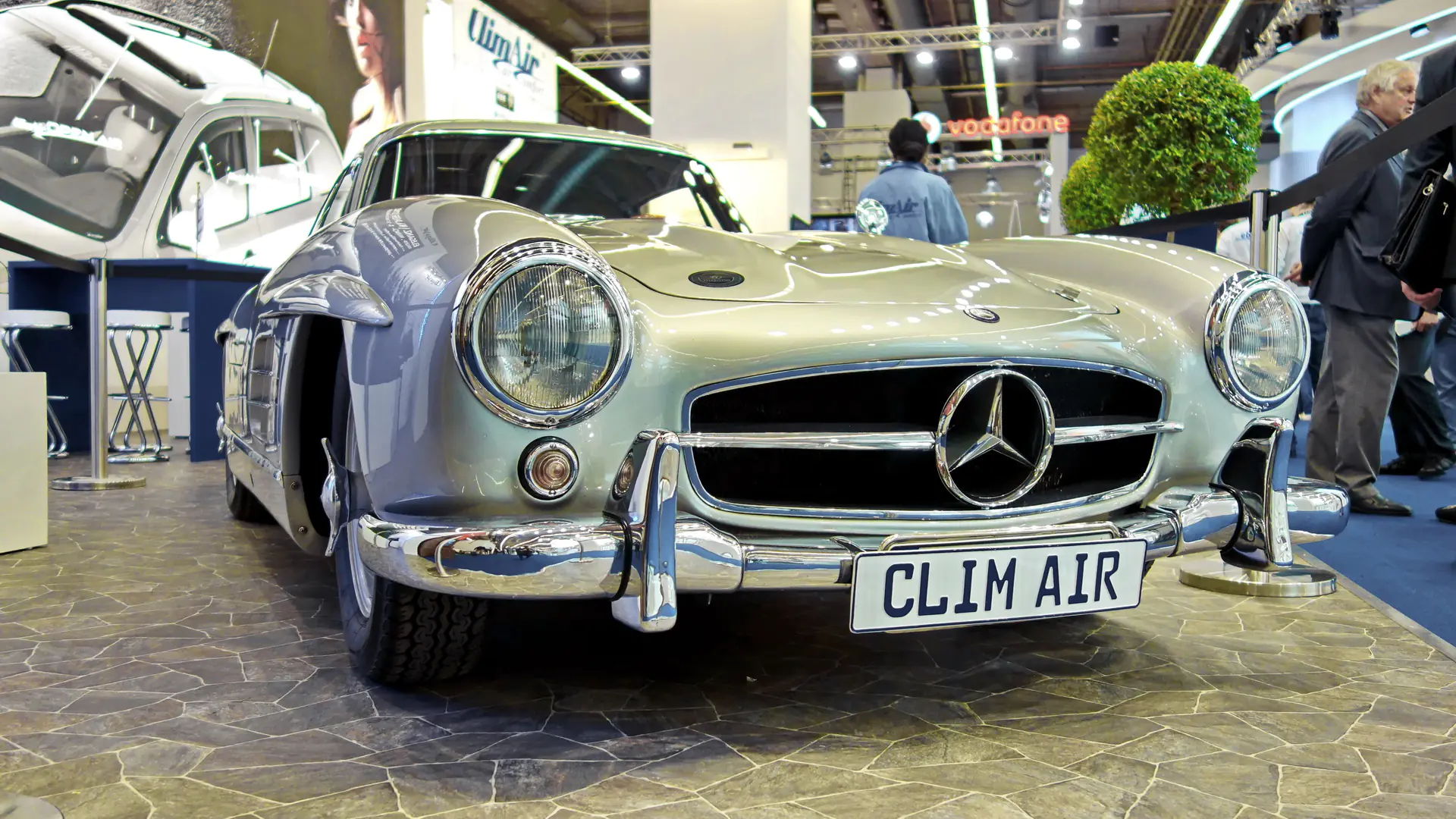
On a Mercedes-Benz 300 SL Gullwing, the single most expensive word is “alloy.” About 29 Gullwings were built with lightweight aluminum bodies, and the difference between one of them and an otherwise similar steel-bodied coupe is measured in millions of dollars. That makes the factory data card, and the numbers it must agree with, the document that decides whether a car is worth $1.5 million or $7 million. This is the originality detail every buyer of a Gullwing needs to understand before the first call to the seller.
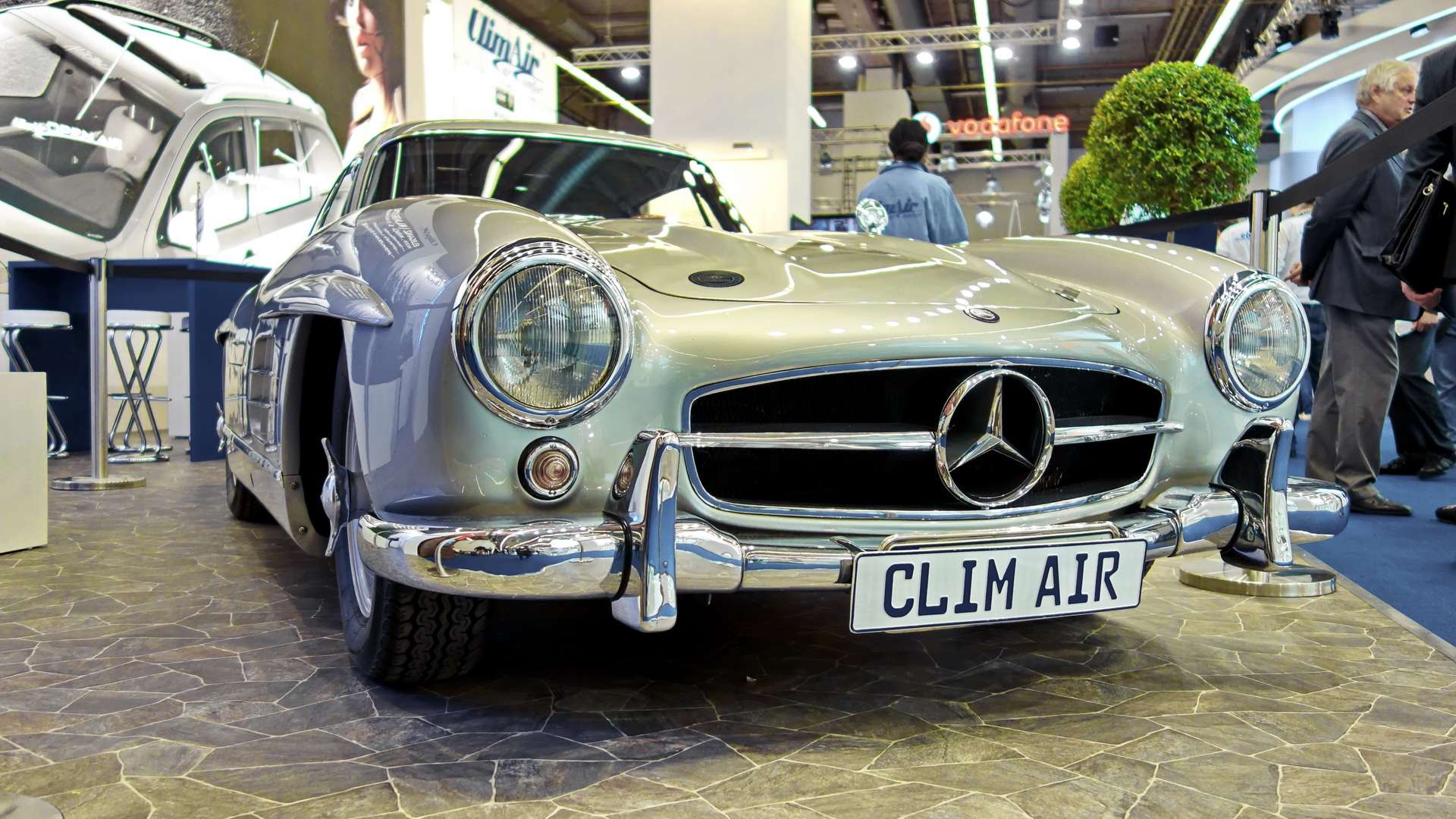
What “alloy” actually means
According to RM Sotheby’s, the alloy cars were a special-order variant, the Leichtmetallausführung or “light metal version,” and only 29 were produced over roughly a year. The package was a bundle, not just a body material: the more powerful NSL engine, sports suspension, lighter Rudge knock-off wheels and a Plexiglas rear window and side screens. RM says the option added about $1,307 to the base 300 SL price when new.
That bundle matters because pieces of it can be separated from the car. Rudge wheels were available on steel cars, and the NSL engine and sport suspension were also specified on some steel-bodied Gullwings. So a car with alloy-style hardware is not an alloy car, and the market knows it.
The price gap the body creates
| Car | Result or estimate | What it shows |
|---|---|---|
| 1955 steel Gullwing, chassis 198.040.5500654, Gooding Amelia Island 2025, Lot 11 | Sold $1,501,000 (estimate $1.3–1.5 million) | A conventional steel-body coupe that, per the catalog, retains its original engine per a copy of the factory build record. Gooding & Company. |
| 1955 steel Gullwing with NSL engine, sport suspension and Rudge wheels, chassis 198.040.5500517, Gooding Pebble Beach 2026, Lot 52 | Estimate $2.5–3 million | A steel car carrying alloy-car hardware, with a body-on restoration from 1994. We did not find a published result as of October 8. Motorious. |
| 1956 alloy-body Gullwing, body 198.043.5500026, RM Sotheby’s, The Junkyard: The Rudi Klein Collection, Lot 290 | Sold $9,355,000 | The 26th of 29 alloy-bodied cars, with a data card recording the alloy body, NSL engine, sport suspension and Rudge wheels. RM Sotheby’s. |
Motorious, reporting on the Pebble Beach car, cites Hagerty’s #3 “good” value for a standard 1955 Gullwing at $1.35 million, adding $100,000 for Rudge wheels and $20,000 for fitted luggage, and notes comparable sales of $1.416 million in 2020 for a similarly equipped NSL-and-Rudge car and $1.49 million in 2025 for a restored conventional coupe, against $6.8 million for a 29-car aluminum-bodied example. Those are the article’s figures and we have not independently verified each sale. The pattern is the point: the hardware adds six figures, and the body adds seven.
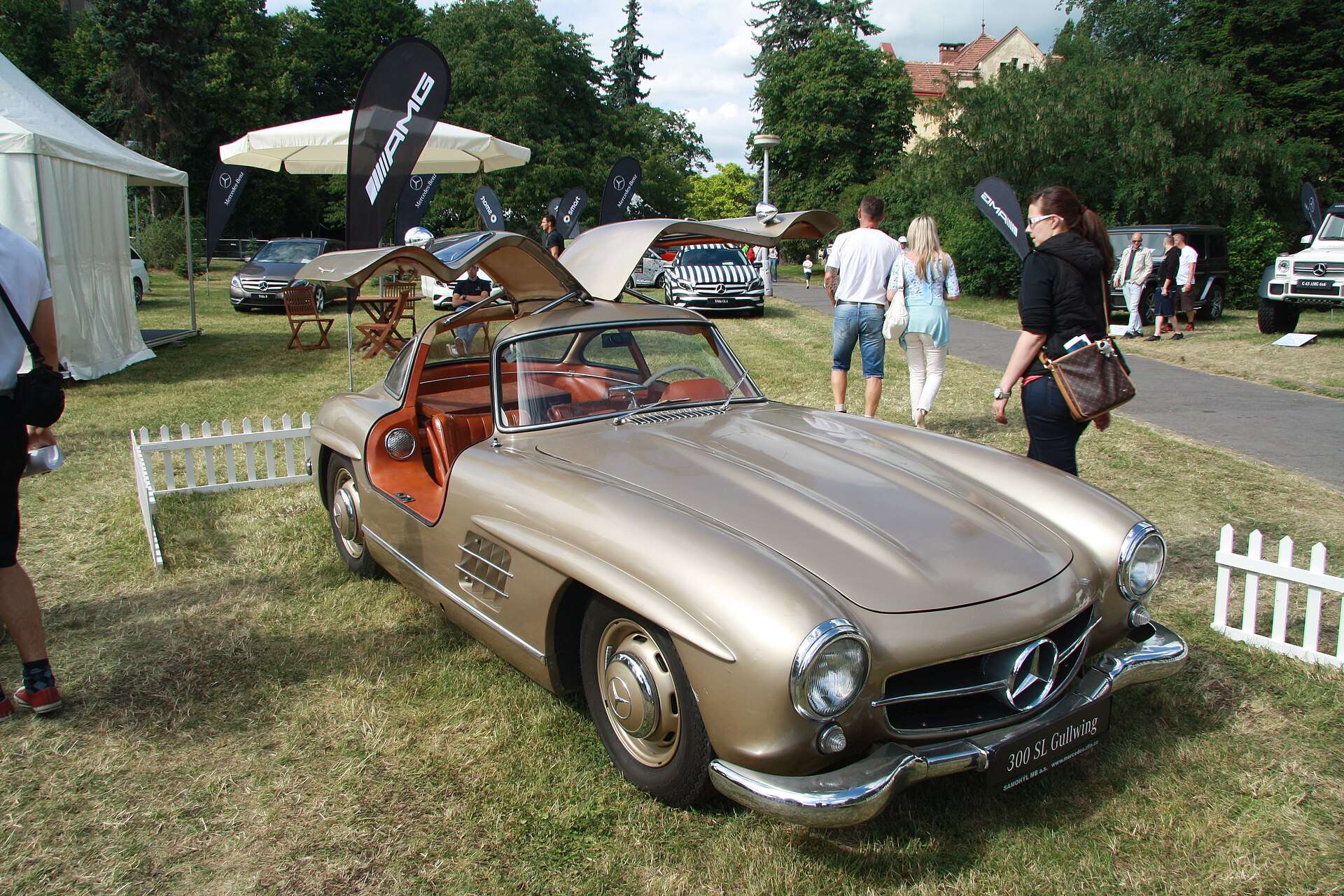
The data card is the document that decides it
RM Sotheby’s describes the alloy car’s data card as recording the alloy body, the NSL engine, the sports suspension, the Rudge wheels, a windshield washer system, special-order paint and a 3.42:1 rear axle ratio. The seller there states that the engine, gearbox, rear axle, steering box and front spindles all carry numbers that match the card, that the four road wheels carry matching date codes, and that body number 26 is stamped on both doors, the dashboard edge and the interior roof panel. The full body number is listed as 198.043.5500026.
Two details in those catalog entries show how a buyer should read this kind of file. First, the chassis prefix: the alloy car carries 198.043, while the steel cars in the Gooding and Motorious entries carry 198.040. That is a quick first screen, though it is not proof. Second, the catalog itself contains an internal discrepancy that a careful buyer would notice: its general description of the Alloy model gives a 4.11:1 rear axle, while the data card in the same lot’s history records 3.42:1. The point is not that the car is wrong; it is that even a $9 million lot carries a loose end that has to be reconciled in writing.
What buyers should verify before purchase
- Get the factory data card. Ask for a copy, and have Mercedes-Benz Classic or an established Gullwing specialist confirm that the card and the chassis agree. The card should list the alloy body and the NSL engine if the car is sold as alloy.
- Read the chassis and body number. Confirm the full number, including the 198.043 prefix on alloy cars versus 198.040 on steel cars, and check the body number stamped on the doors, the dashboard edge and the interior roof panel against the car.
- Match the drivetrain numbers. Compare the engine, gearbox, rear axle, steering box and front spindle numbers against the data card, and confirm whether the engine is the original engine and whether it is an NSL unit.
- Reconcile the axle ratio and equipment. The rear axle ratio, wheels, suspension and paint on the car should agree with the card. Any difference needs a written explanation.
- Check the wheels. Rudge wheels should carry consistent date codes across all four road wheels, and the spare should be accounted for.
- Verify the body material. Have a specialist confirm the body is aluminum with non-destructive methods, and review restoration records for panel replacement or re-skinning.
- Follow the paper trail. Examine the ownership and restoration history for gaps, and treat unverified early history as unverified; RM’s own entry flags an unconfirmed early chain for its alloy car.
- Confirm the title description. Check that the title or registration uses the same chassis number and model year as the car and the card; the Pebble Beach steel car is described by Motorious as a 1955 but catalogued by the auction house as a 1956 under a shortened chassis number, which is exactly the kind of inconsistency to resolve on paper.
Our read
This section is interpretation. A steel Gullwing with correct alloy-car hardware is a legitimate, valuable car, and an honest seller will say so. The danger is the gap between that car and a true alloy car, which is large enough to tempt a “re-creation” or an inflated claim. The data card, the body number and the drivetrain numbers are the three independent checks that make such a claim hard to fake, and a buyer who skips any one of them is relying on the seller’s word for several million dollars of value.
Same drill, different badge: see how a Heritage Certificate settles originality on a Jaguar E-Type, why engine number 44 matters on Lewis Hamilton’s F40, and how a hybrid engine shapes a Murphy Duesenberg’s estimate. For the broader picture of scarcity, read six of the rarest classic cars ever made and the ten most expensive classic cars ever sold at auction. Today’s other Ferrari coverage includes the 1965 330 GT 2+2 Lot of the Day.
Would you pay Gullwing-steel money for a car wearing alloy-car hardware, or does only a card-backed aluminum body count as the real thing?
Sources
- RM Sotheby’s, 1956 Mercedes-Benz 300 SL “Alloy” Gullwing, Lot 290, The Junkyard: The Rudi Klein Collection
- Motorious, “Rare 1955 Mercedes 300 SL Gullwing Heads to Auction”
- Gooding & Company, 1955 Mercedes-Benz 300 SL Gullwing, Amelia Island 2025, Lot 11
Figures are current as of October 8, 2026. Verification steps are general guidance; engage a qualified Gullwing specialist before buying. This is analysis, not investment advice.
The collector car market, every weekday morning.
Auction results, price moves and what’s crossing the block, read in four minutes. Free, from Modern Car Collector.
No spam, unsubscribe in one click. Or read more about the Brief.
Related Posts:
- The 10 Most Expensive Mopars Ever Sold at Auction
- The 10 Most Expensive Classic Cars Ever Sold at Auction
- The 10 Most Expensive Ford Mustangs Ever Sold at Auction
- The 10 Most Expensive Chevrolet Corvettes Ever Sold…
- The 10 Most Expensive Chevrolet Camaros Ever Sold at Auction
- The 10 Most Expensive Ford Broncos Ever Sold at Auction
 Eve Nowell
  John Lloyd