

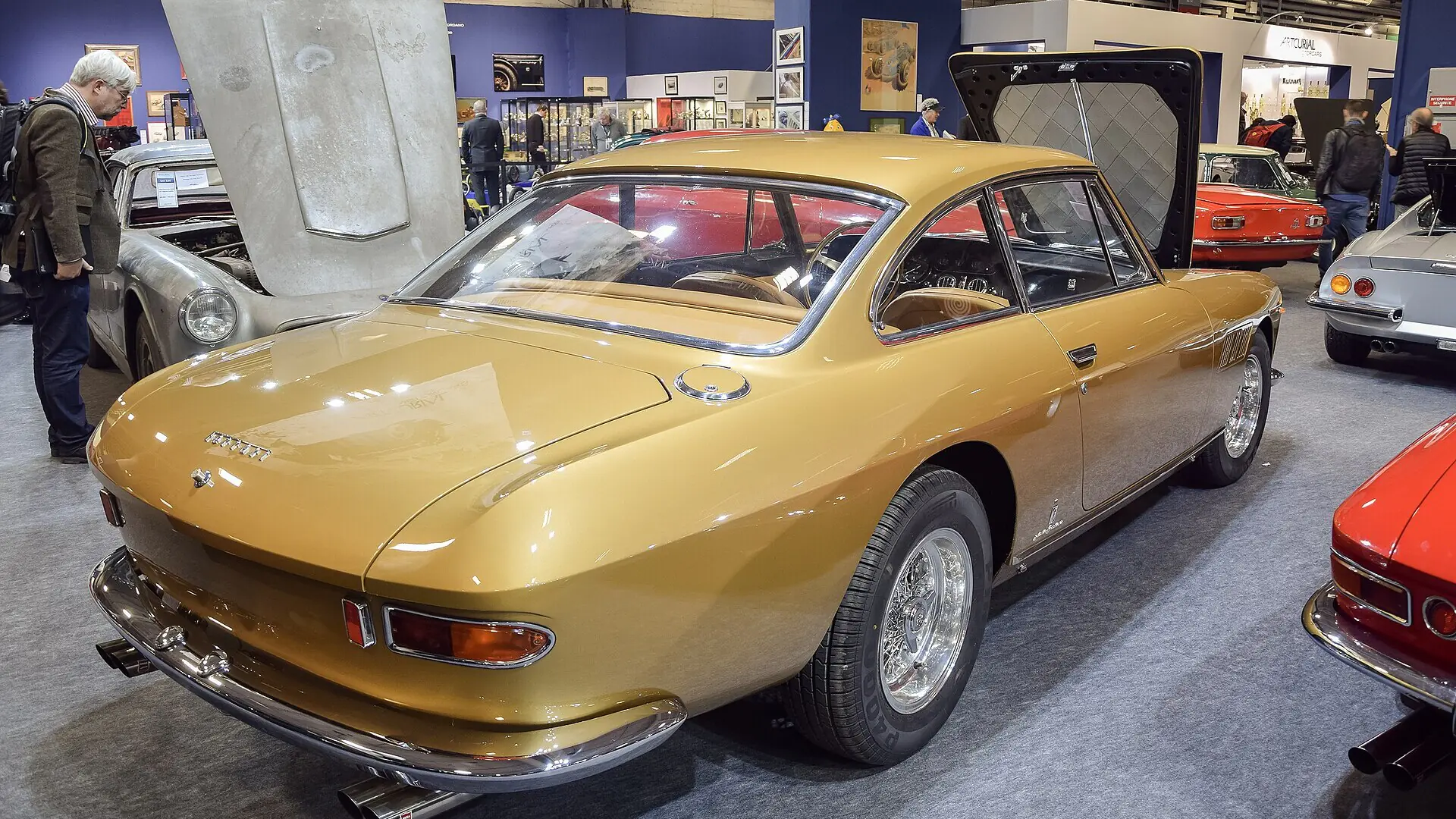
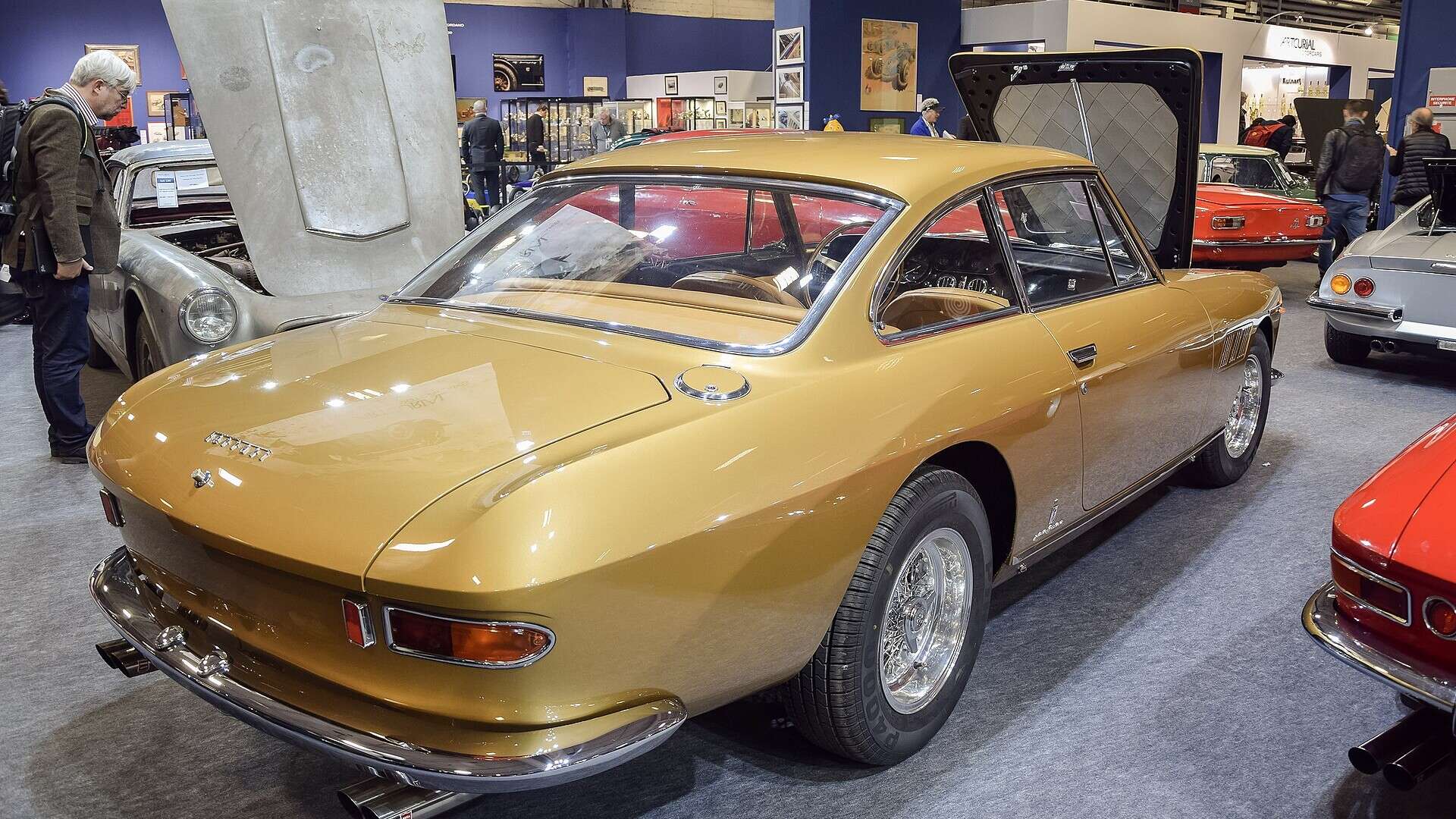
A left-hand-drive 1965 Ferrari 330 GT 2+2 that has spent 26 years with one owner is live on Bring a Trailer, with the auction scheduled to end on October 16. On the morning of October 8 the bid stood at $175,000 with 15 comments. By October 12 it will sit in the final days of bidding, which is where a car like this usually gets decided. The central question is not whether it is handsome, because it plainly is. It is how far a restored but not obviously matching-documented Series I can travel toward the $335,000 that RM Sotheby’s achieved for a very different 330 GT in August.
The lot at a glance
| Item | Detail |
|---|---|
| Car | 1965 Ferrari 330 GT 2+2, Series I (quad headlights), left-hand drive |
| Chassis | 330GT 6387 |
| Build and delivery | Completed October 7, 1964; delivered new via Luigi Chinetti Motors, Greenwich, Connecticut |
| Engine and gearbox | 4.0-liter Colombo Tipo 209 V12, triple Weber 40DCZ6 carburetors; four-speed manual with overdrive |
| Finish | Red over black leather; 15-inch Borrani wire wheels; ANSA quad-exit exhaust |
| Mileage | 80,000 shown; about 8,600 added under the seller’s ownership |
| Seller | Private party, Rancho Santa Margarita, California; owner since 2000 |
| Restoration | 2016–2018 by ItalTech GT (Downey, California); body and paint by Bell’s Autosport (Huntington Beach) |
| Awards | Gold Awards at the 2018 and 2019 Concorso Italiano; the listing also shows a 2019 judging sheet of 96.5 points |
| Bid (Oct. 8) | $175,000, 15 comments, not listed as no reserve |
| Ends | October 16, 2026 |
All lot facts above are from the seller’s Bring a Trailer listing and are seller-reported unless noted. Bid figures are as of the morning of October 8 and will change.
Specifications and why the Series I matters
The 330 GT 2+2 debuted at the Brussels Motor Show in early 1964 as the successor to the 330 America, riding a wheelbase about two inches longer than the 250 GT/E it replaced. It carried the 4.0-liter Tipo 209 Colombo V12, rated at 300 PS. According to Wikipedia’s Ferrari 330 entry, the Series I of 1964 is the quad-headlight car with a four-speed gearbox and overdrive; the Series II of 1965 moved to a five-speed gearbox, dual headlights and alloy wheels. Published production totals do not fully reconcile (the same page gives 1,099 overall against a series split of 625 Series I, including about 125 interim cars, and 455 Series II), so treat any single count as approximate.
That history explains why chassis 6387, completed in October 1964, is a true Series I and not an Interim car. It is the more purist, earlier configuration, with the quad-lamp face that collectors tend to prefer visually, but without the later five-speed. In the market, those two facts pull against each other.
Condition and provenance
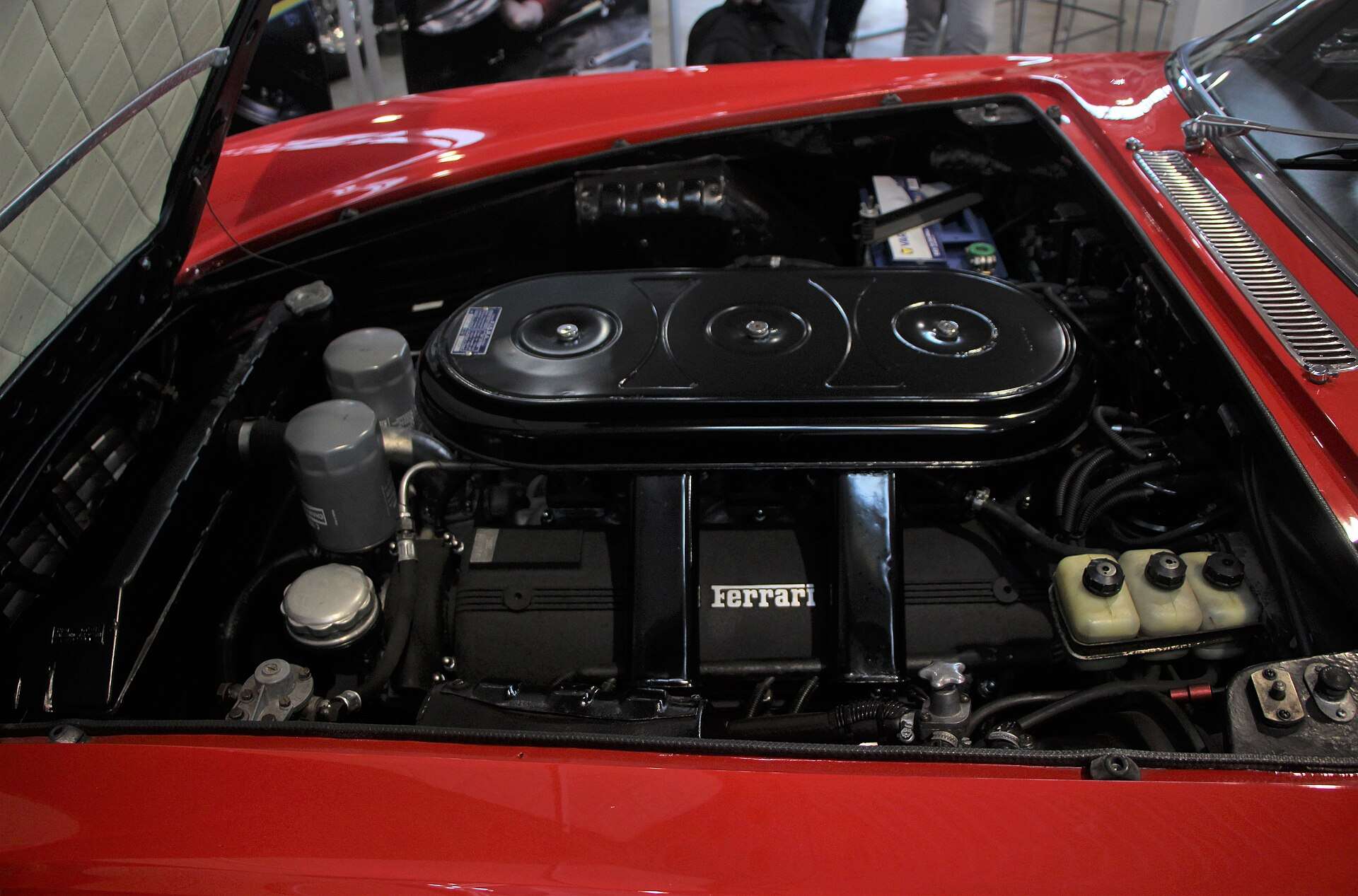
The provenance is clean in the way that matters for an American-delivery Ferrari: a new-car delivery through Luigi Chinetti Motors, the marque’s dominant US importer, and long single-owner stewardship since 2000. The restoration was completed in 2016–2018, now eight to ten years old, and judged well enough at Concorso Italiano to earn two Gold Awards. The service in 2026 covered resealing the engine, replacing the timing chain, clutch disc and pressure plate, rebuilding the carburetors and brake boosters, and a fluid service. Equipment listed includes tools, factory literature, records, the awards and judging sheets, and a clean California title in the seller’s name.
Two points deserve a question to the seller. The 2026 service included installing an electronic ignition system, which is not a factory fitment on a car of this era; it is typically a reversible upgrade, but it is a change from original. And the excerpts we reviewed did not state whether the engine number matches the factory records, which is the detail that separates the top tier of 330 GTs from the rest. We could not confirm it, so we treat it as open.
Comparable sales
| Sale | Result | How it differs |
|---|---|---|
| RM Sotheby’s Monterey, August 2026, Lot 236, 1965 330 GT 2+2 Series I “Interim,” chassis 7455 GT | $335,000 | Numbers-matching chassis and engine; five-speed; one of roughly 124 Interim cars; early-2010s restoration by Pebble Beach-caliber painters and trimmers; service file of nearly $155,000 over 11 years. |
| BaT, 1965 330 GT 2+2 Series I, chassis 6387 (this lot) | $175,000 bid, Oct. 8 | Four-speed Series I; 2016–2018 restoration; electronic ignition; engine-number match not confirmed in the excerpts reviewed. |
The Monterey sale is the only directly comparable 2026 result we could verify in the time available, and it is a single data point, so we use it to frame the range and not to predict a price. Source: RM Sotheby’s lot page.
The factor most likely to set the final price
Our read, and it is an interpretation: the decisive variable is documented originality of the drivetrain. A 330 GT with a restoration this recent and awards from a respected concours can find a buyer at a fair price. But the RM Sotheby’s result shows what the market pays when the car arrives with a verified numbers-matching engine, a documented ownership and service trail, and a restoration by recognized names. The reserve here has not been disclosed in the listing. If bidders are satisfied that the V12 and gearbox are original to the car, the car can drift toward the Monterey figure. If the numbers cannot be confirmed, we would expect it to settle well below it, because the bidder is then paying for a handsome, recently restored driver in place of a matching-numbers collectible.
What bidders should do before the close
- Ask the seller to photograph the engine number and chassis plate, and compare them with the factory records or a Ferrari marque specialist’s report.
- Ask whether the original distributor and points components were retained after the 2026 electronic ignition installation.
- Confirm the nature of the “electronic overdrive” and whether the gearbox is the original four-speed unit.
- Request the restoration invoices and the photographs of the 2016–2018 work to see how much of the structure was repaired or replaced.
- Check the comment thread for expert observations; this lot had 15 comments as of October 8.
- Budget for the stated service and expect more: a 60-year-old V12 with three carburetor banks is a car that rewards a specialist.
For wider context on Ferrari prices and the originality questions that follow them, see the ten most expensive classic cars ever sold at auction, our analysis of Michael Jordan’s Ferrari 550 Maranello result, why engine number 44 matters on Lewis Hamilton’s F40 and how a Jaguar E-Type’s Heritage Certificate settles the same question for a British contemporary. Today’s modern-Ferrari moves are covered in our look at the F355 spec sheet.
If the engine number checks out, should this car chase the Monterey result, or does a four-speed Series I always trade a tier below?
Sources
- Bring a Trailer listing, 1965 Ferrari 330 GT 2+2 Series I, reviewed October 8, 2026
- RM Sotheby’s, The Monterey Auction 2026, Lot 236
- Wikipedia, Ferrari 330 (model history and production figures)
Bid levels are as of October 8, 2026 and will change. This is analysis, not investment advice.
The collector car market, every weekday morning.
Auction results, price moves and what’s crossing the block, read in four minutes. Free, from Modern Car Collector.
No spam, unsubscribe in one click. Or read more about the Brief.
Related Posts:
- Record Ferraris, Rare Icons and 15,000 RPM: The Week…

- The Collector Car Market Paid Up for Certainty This…

- No Reserve: Tailor Made 2026 Ferrari Purosangue For…

- Everything Modern Car Collector Covered Last Week
- 18 Steve McQueen Cars and Motorcycles That Have Sold…
- This No-Reserve Ferrari 458 Speciale A Is Priced for…
 Eve Nowell