

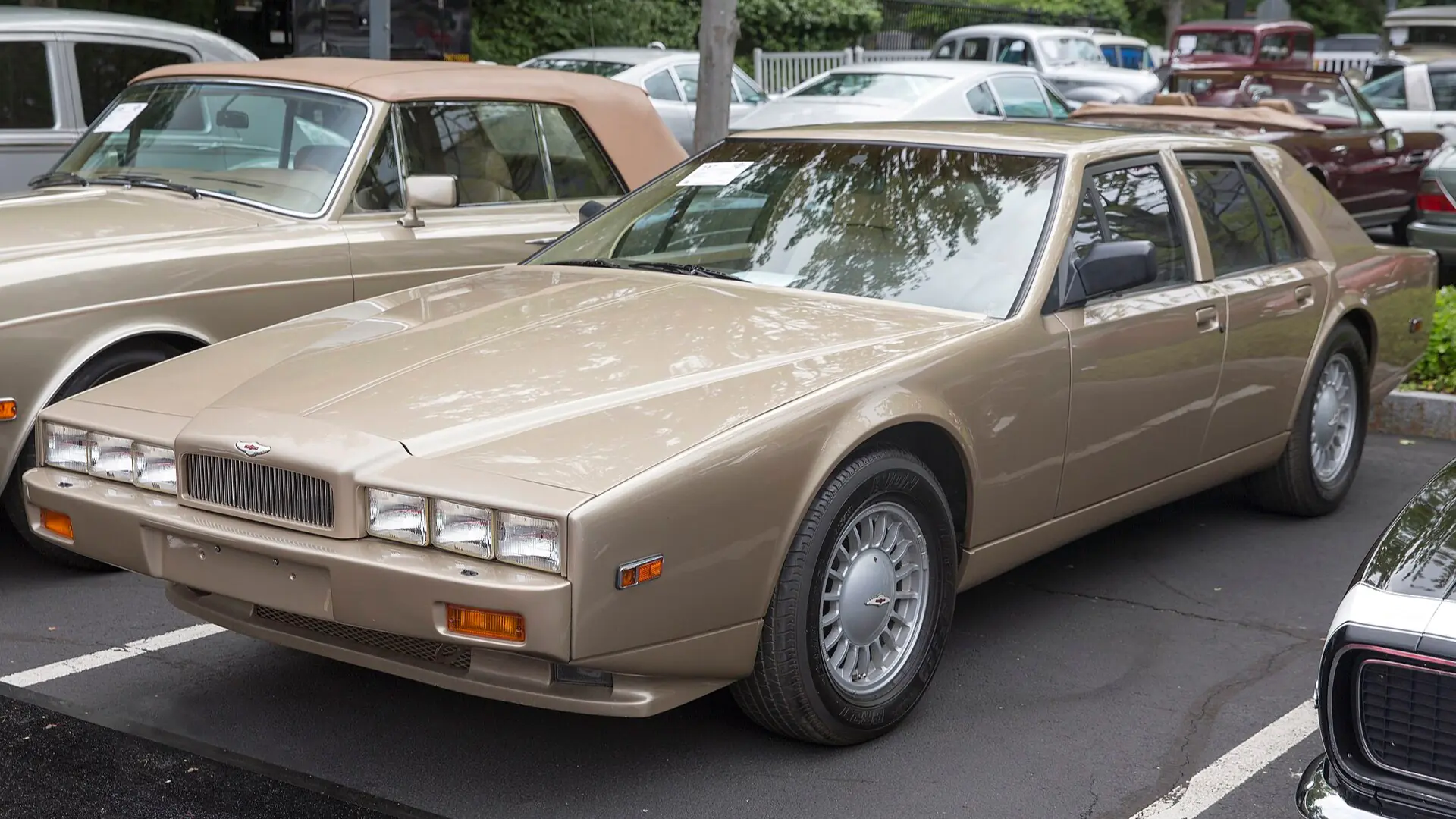
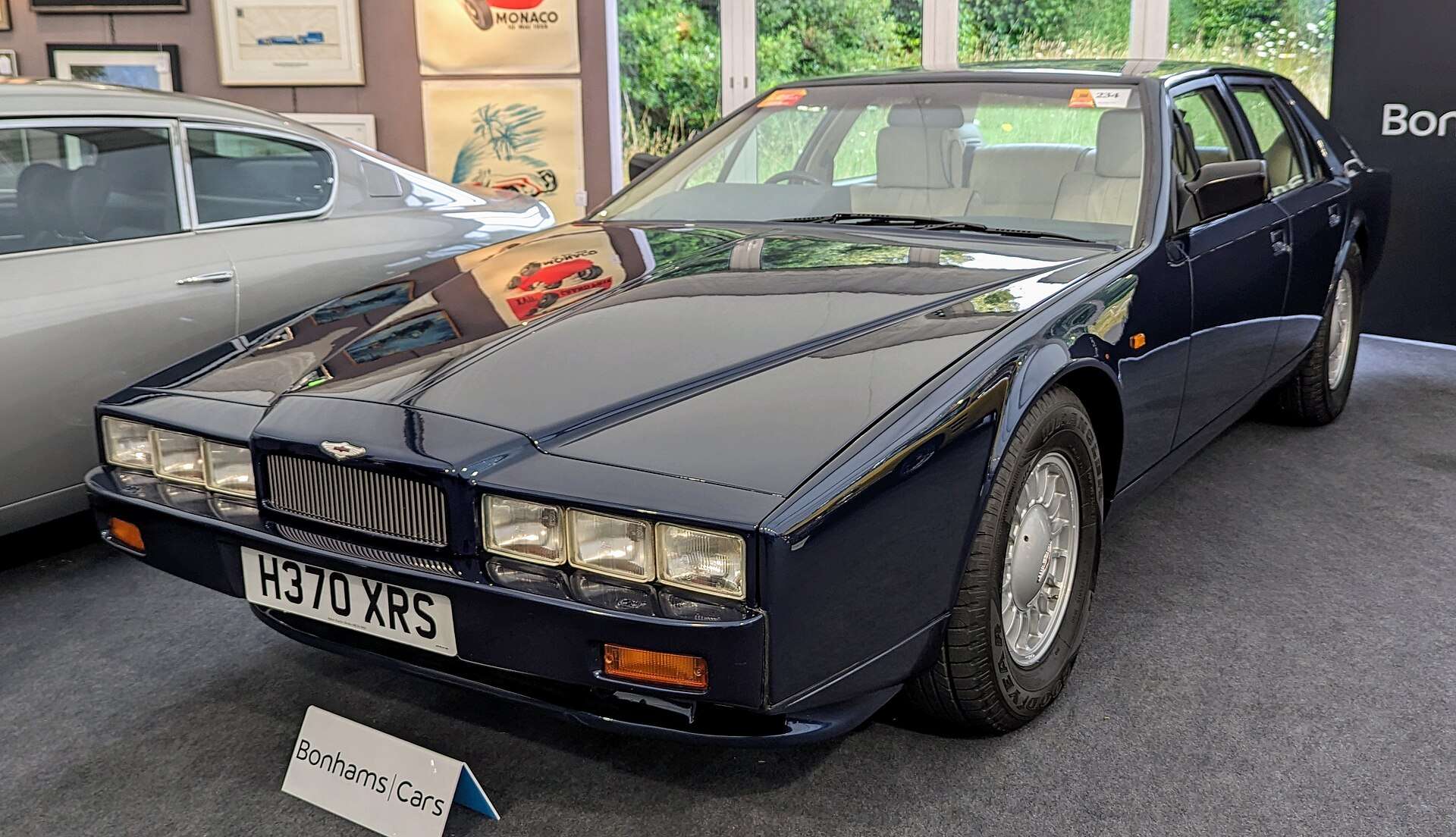
A Series 4 Aston Martin Lagonda that drew a $105,000 final bid on Bring a Trailer in July 2023 without selling is back on the platform, and on Friday morning it stood at $33,333 with 11 bids and about six and a half hours left. It is the same car: chassis SCFDL01S5KTL13587, Royal Blue over Magnolia leather, offered by the same seller both times. What the two listings share is the thing the market is now pricing: a digital odometer that does not work, and a title that reads “Exempt.”
That makes this lot a cleaner test than most of what crosses the block. Series 4 Lagondas with a known story have been trading between roughly $80,000 and $150,000 for four years. This one asks what a wedge-shaped, hand-built, electronically ambitious sedan is worth when nobody can say how far it has gone.
The lot at a glance
| Detail | Listing |
|---|---|
| Car | 1989 Aston Martin Lagonda Series 4, left-hand drive, US-market title (Florida) |
| Platform and lot | Bring a Trailer, lot 270,215 |
| Auction end | Friday, October 23, 3:05 p.m. Eastern, as displayed on the listing |
| Current bid (active auction, not a sale price) | $33,333 with 11 bids, checked the morning of October 23 with about 6½ hours remaining |
| Reserve | Not designated No Reserve; the page does not say whether any reserve has been met |
| Engine and drivetrain | 5.3-liter DOHC V8 with Bosch fuel injection, Chrysler TorqueFlite three-speed automatic, limited-slip differential, four-wheel disc brakes |
| Color | Royal Blue over Magnolia leather with burl-wood veneer and a fixed rear sunroof |
| Mileage | Unknown. Digital odometer inoperable; Florida title lists odometer status as “Exempt” |
| Earlier BaT history | Same chassis, same seller: closed July 1, 2023 at a high bid of $105,000, not sold |
Why the Series 4 is the one collectors chase
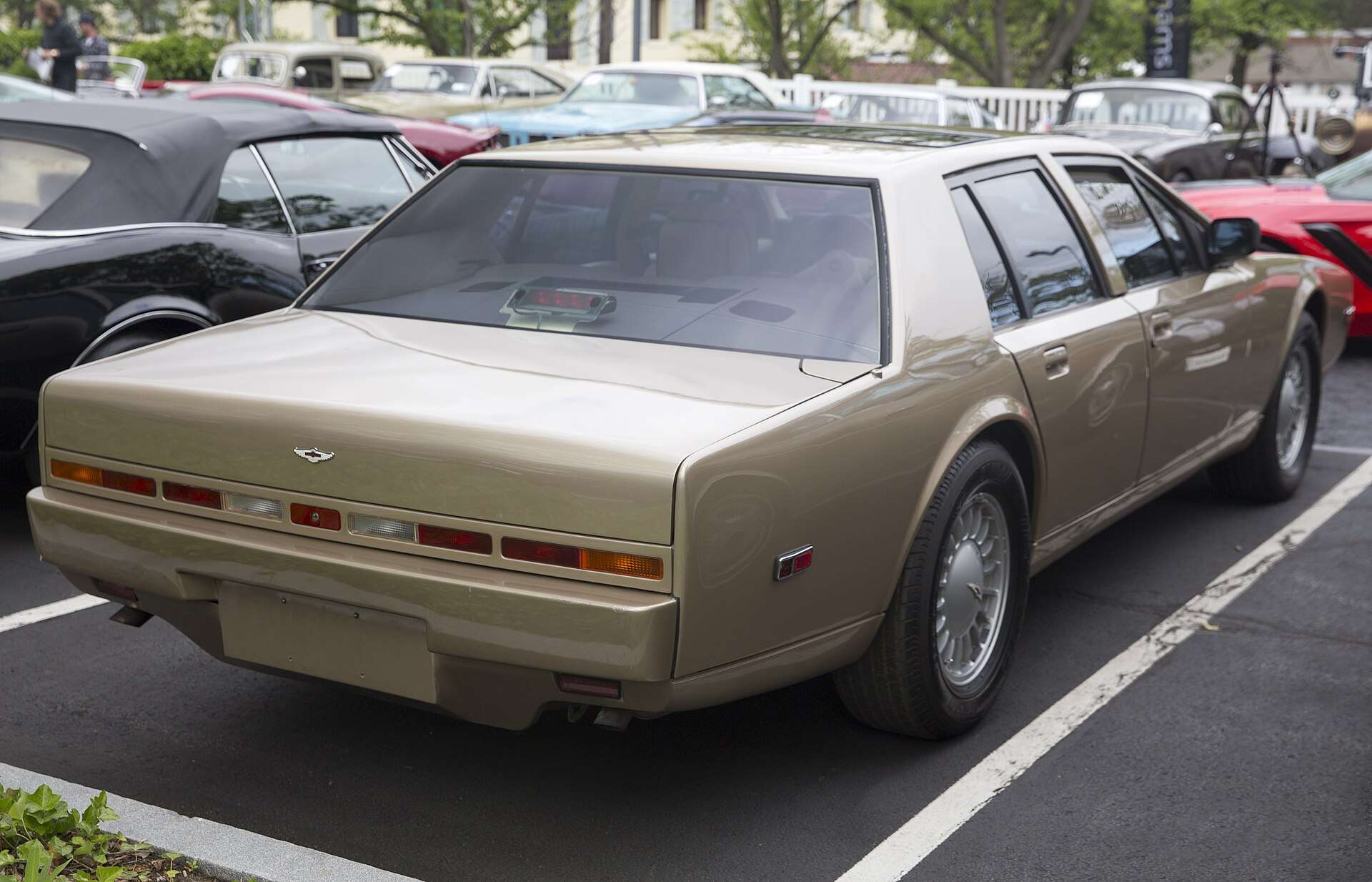
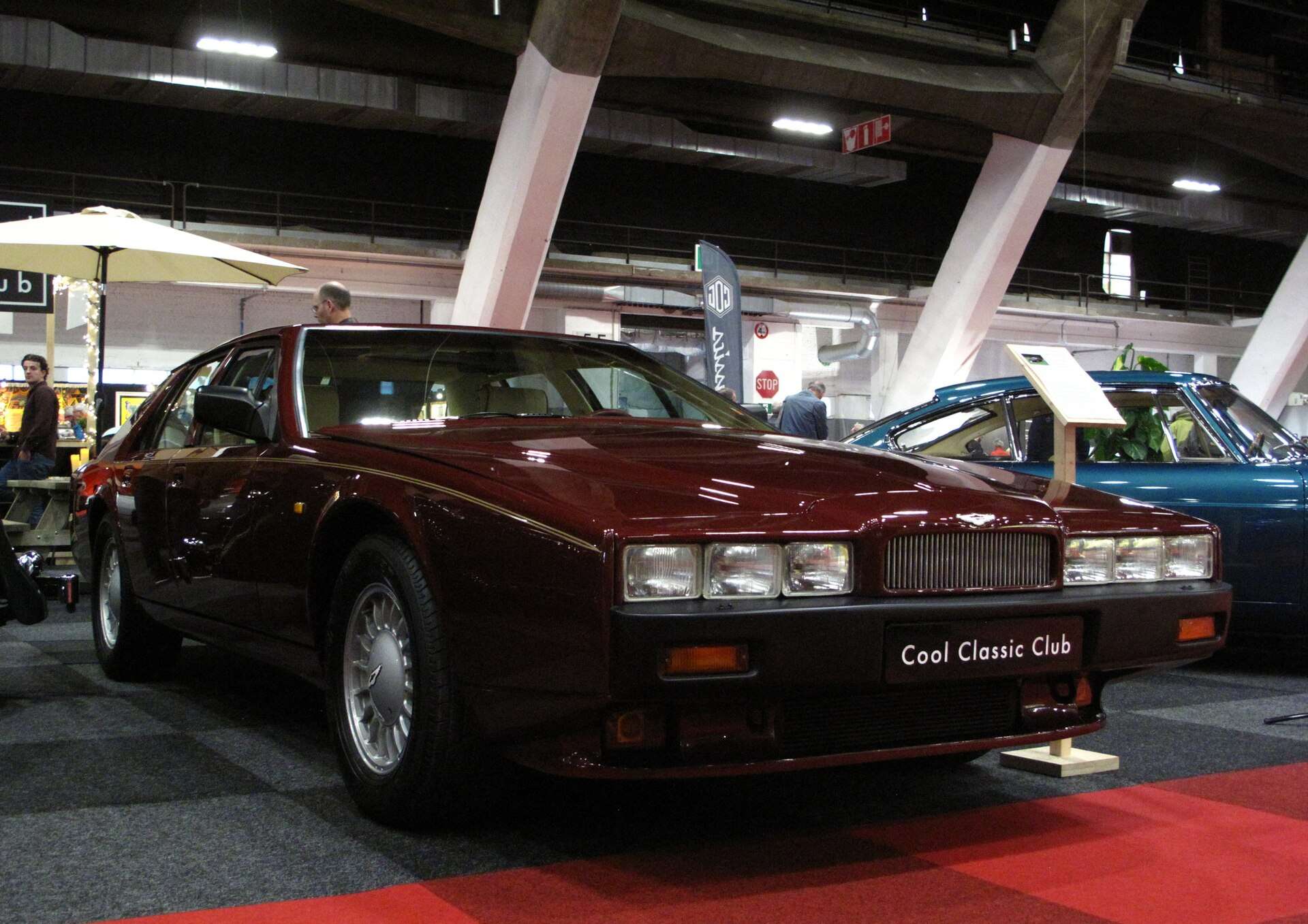
William Towns drew the Lagonda as a rule-breaker. The long-wheelbase Series 1 of 1974 was a stretched DBS, built in a handful of cars, and the folded-paper wedge that followed replaced it with something that looked unlike any sedan on sale. Series 4, built from 1987, is the facelift Towns himself reworked: rounded edges, a body-color grille surround, six fixed headlights in place of the earlier pop-ups, and 16-inch wheels. It is also the last chapter of a model of which only about 645 were built in total, according to the Car Collector International buyer’s guide, and published Series 4 production figures run from 98 to 105 cars.
That scarcity has not made the car easy. The Lagonda arrived with a computer-managed digital dashboard that the guide describes as unreliable in every iteration, with repair costs from $15,000 to more than $60,000. Collectors who love the car tend to love it as a statement of 1980s ambition, and they price the electronics as a risk they are choosing to carry.
What is documented, and what is not
The listing says the car was first delivered in Monaco, later lived in Japan and the United Kingdom, and was refurbished by Nicholas Mee & Company around 2016 before coming to the United States in 2017. The current seller has owned it for about six years. Recorded work since then is modest and specific: a transmission pan and gasket in June 2022, front wheel bearings and tie rods in December 2022 (the outer tie rods reportedly sourced from a Volvo 240, a small but telling note about parts supply), and an alternator rebuild, oil-leak repair and oil change ahead of this sale. The 2023 listing carried the same ownership story and the same inoperable odometer, which Nicholas Mee & Company reportedly found in 2016.
What is missing matters as much. There is no Carfax report for the VIN, and total mileage is unknown. A commenter on the current listing noted that a plastic gauge overlay visible in the 2023 listing appears to be absent now; that is an observation from the comments, not a finding from the seller.
Condition and originality
The seller is candid about wear, which is useful. The listing notes aged weather seals, swirl marks and stone chips in the paint, worn seating leather, and a cracked, partially delaminated veneer panel on the right-front door. In a hand-built car whose trim is hard to replace, none of those items is free: the buyer’s guide puts series-specific trim, veneer and carpet sourcing at $8,000 to $25,000 or more. The seller has said in the comments that nothing apart from the odometer is inoperable. That claim is the seller’s, and a prepurchase inspection of the digital instruments is the obvious way to test it.
Comparable sales
The useful comparison is not Lagonda against Lagonda in general, because earlier cars trade in a different bracket. It is Series 4 against Series 4. In BaT’s Lagonda results, the strongest recent results have been $120,000 and up, and the lowest, a 1988 car, found $79,500.
| Date | Car | Venue | Result |
|---|---|---|---|
| Mar 2022 | 1989 Lagonda | BaT | Sold, $151,500 |
| Jul 2023 | 1989 Lagonda (this chassis) | BaT | Bid to $105,000, not sold |
| Nov 2023 | 36k-mile 1989 Lagonda | BaT | Sold, $123,000 |
| Feb 2024 | 1989 Lagonda | BaT | Sold, $136,000 |
| Apr and Jul 2024 | 1988 Lagonda | BaT | Bid to $83,500, not sold; later sold $79,500 |
| Oct 2024 | Ex–Malcolm Forbes 1989 Lagonda | BaT | Sold, $134,000 |
| Jan 2026 | 1989 Lagonda, under 20,180 km, original Cumberland Grey | Artcurial | Sold, €143,040 against a €120,000–€160,000 estimate (as reported; fee treatment not stated) |
Two further data points frame the bottom of the market. A 1984 Lagonda sold on BaT for $55,000 in June 2026 and a 1986 car for $56,500 in May 2026, both earlier-series cars. The Series 4 bid sits under both. Among the Series 4 sales in those results, none cleared for less than $79,500, and none has sold on the platform since October 2024, so the current market for the model is thinly evidenced.
Concerns a bidder has to price
Mileage is the first. A reading would let a buyer judge the electronics, suspension and engine against a known baseline; without one, bidders are guessing at condition from photographs and a service file. The Florida “Exempt” designation reflects the car’s age, not a verified odometer. The second is the digital dash itself, which the guide warns can be intermittent and expensive. The third is the hand-built aluminum folded body, where the guide cites corrosion or accident repair as a $20,000 to $80,000 problem. The fourth is the reserve: the listing carries no No Reserve label, and the page does not say whether one has been met, so a high bid does not guarantee a sale. That is the same dynamic that left the 2023 auction unsold.
The factor most likely to set the final value
This is market interpretation, not fact. The decisive variable is most likely the unverifiable mileage, because it is the one input that colors every other discount: the electronics, the wear, the body. In 2023 the same car, with the same missing odometer, drew $105,000 and did not sell. If it finishes near today’s bid, the market will have told us that the Series 4 shape alone, without a known history, commands a fraction of what a documented car earns. If bidding in the final hours moves it back toward 2023 levels, the better reading is that buyers were pricing the rarity all along and treating the odometer as a repair item. One result will not settle that, and a reserve that has not been confirmed makes any single outcome harder to read.
For collectors, the lesson is the same as it was with the 554-mile Ford GT Heritage Edition, from the other end of the mileage scale: a number on the odometer is a piece of provenance, and when it is missing, the whole file has to do more work. It also echoes the argument in our Maserati Mistral lot of the day, where history, not rarity, explained a wide price spread. Buyers who want a deeper look at Aston Martin context from the other end of the price scale should read our guide to the DB4 Vantage Convertible, and anyone following the one-off Lagonda conversion at Broad Arrow’s Zürich sale should see our Zürich lot of the day for the wider catalogue; that car is a Series 3 shooting brake and a different proposition.
Bids and estimates in this article are not sale prices. The auction was active when this was written; check the listing for the final result.
The collector car market, every weekday morning.
Auction results, price moves and what’s crossing the block, read in four minutes. Free, from Modern Car Collector.
No spam, unsubscribe in one click. Or read more about the Brief.




 Shawn Henry
 Eve Nowell