

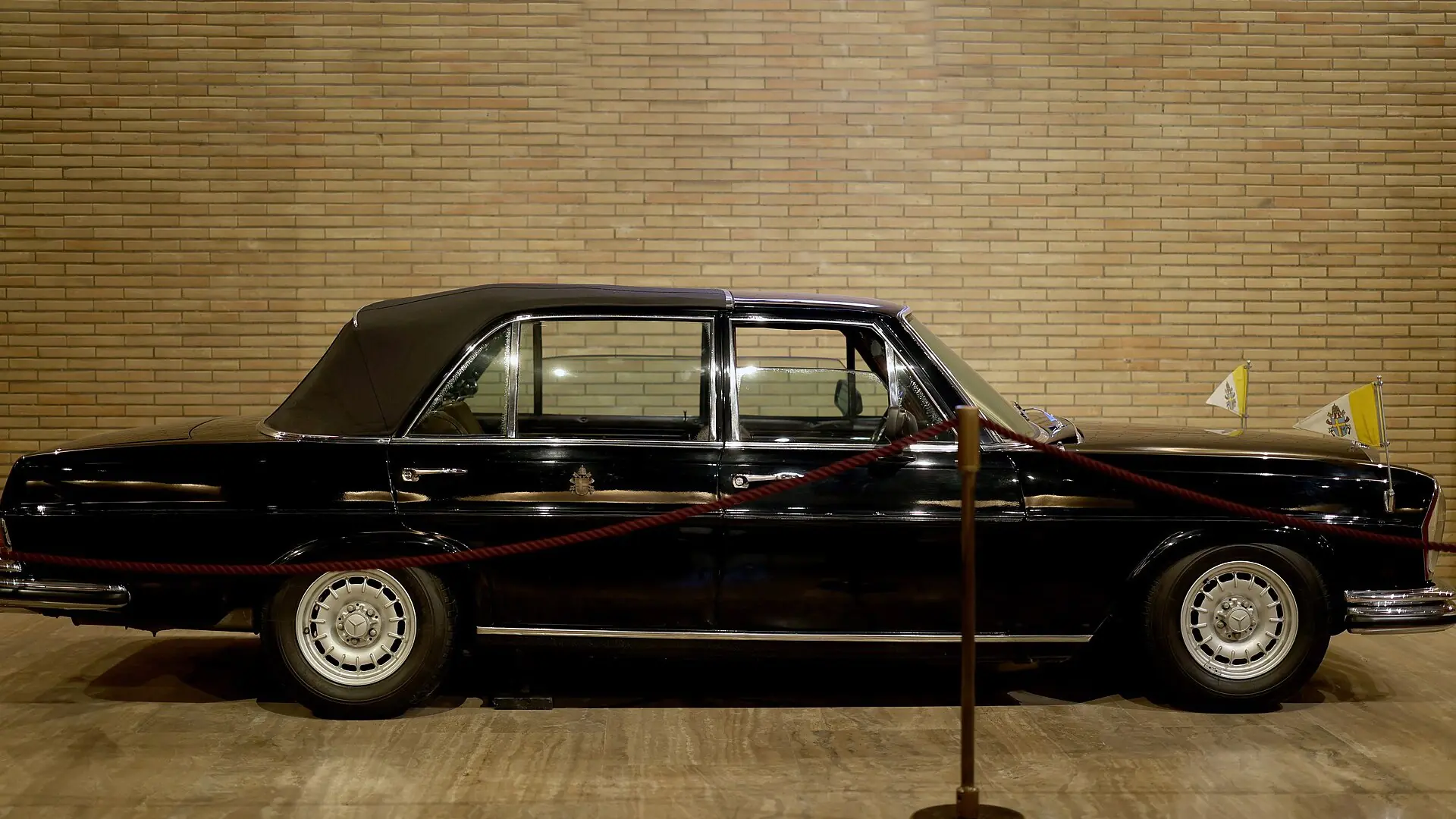
Most car collections exist because someone wanted the cars. The group that opens to the public today inside the Vatican Museums exists for a different reason: a century of ceremony, diplomacy and, eventually, security engineering. A Century of the Popemobile opens on October 29, 2026, in a glass pavilion in the Museums’ Giardino Quadrato (Square Garden), near the Carriage Pavilion. Admission is included with the regular Museums ticket, according to the Vatican Museums.
The show is curated by Sandro Barbagallo, curator of the Historical Collections of the Vatican Museums, and centers on Mercedes-Benz. The Associated Press, reporting from the October 28 preview, counts eight Mercedes-Benz popemobiles used by popes since 1930. The Vatican Museums’ own page also mentions a modern S-Class. These are museum and manufacturer-held cars, not lots: we found no auction estimate, sale result or published market valuation for them, so we offer none. For this collection, price is not the story.
What makes the group significant
Each car answers a different problem, and that is what makes the set worth studying. The earliest was about status and protocol. The 1960s cars were about reach and ceremony. The 1980 car was about being seen by a crowd. The later ones, including the electric popemobile presented to Pope Francis (which we covered when it debuted), were about safety and, more recently, ecology. Barbagallo told the AP that the 1930 car marked the shift from a series-production vehicle to a unique one built for papal use.
That progression is the collector’s lesson. In this group, the factory modifications are the provenance. A raised roof, a widened door or a single throne-like seat is not an alteration that lowers originality; it is the reason the car matters.
1930: The Nürburg 460 that started it
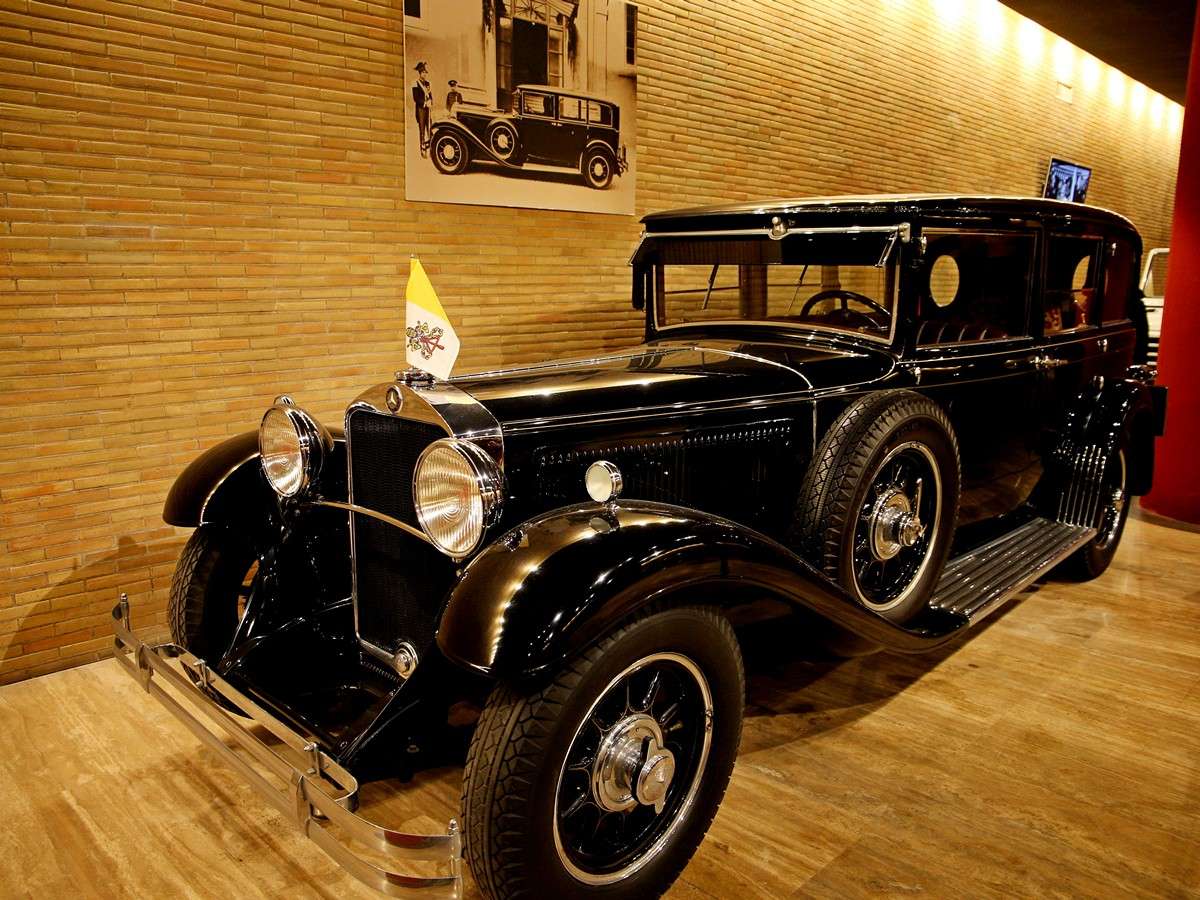
The oldest car in the exhibition is the Mercedes-Benz Nürburg 460 given to Pope Pius XI. The Vatican Museums’ collection page describes a long-wheelbase limousine designed by Ferdinand Porsche, introduced at the 1928 Paris Salon, with 80 hp and a top speed of 110 km/h. For protocol reasons, the rear compartment has a single seat in crimson brocade, a nod to the papal throne. The AP describes the armchair as silk brocade with fine wood and metal finishes.
A caution on dates: the exhibition page gives May 23, 1930 as the date the car was offered to Pius XI, while the Museums’ separate collection page says Mercedes-Benz donated it on November 14, 1930 to mark the Conciliation between the Church and the Italian State. Sources agree on the year and the donor, so we use 1930 and note the discrepancy rather than choose between the two dates.
1960 and 1965: Reach before armor
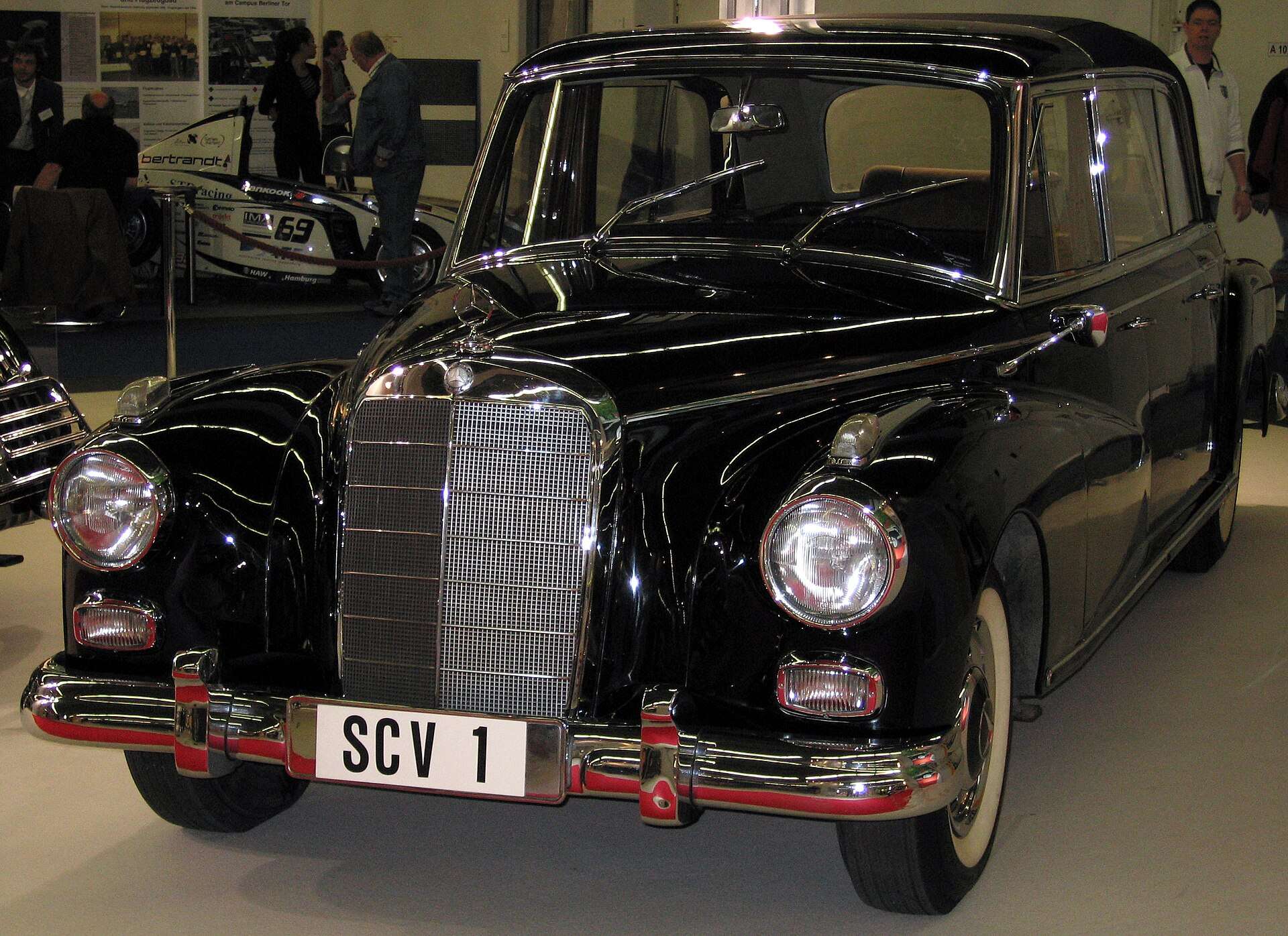
The 1960 Mercedes-Benz 300 d Landaulet was presented to Pope John XXIII, per the AP and Mercedes-Benz. It is the same W 189 model used by German Chancellor Konrad Adenauer, which is why the type is still called the Adenauer Mercedes. Its removable rear side windows let the pope reach out to people along the route. The Vatican’s exhibition page notes that the car is a special Vatican version.
The 1965 Mercedes-Benz 600 Pullman Landaulet is the bigger collector story. A Daimler-Benz delegation led by Hermann Josef Abs delivered a four-door 600 Landaulet to Pope Paul VI at Castel Gandolfo in September 1965, according to Mercedes-Benz. The factory widened the rear doors by 256 mm, raised the roof by 70 mm, fitted an intercom to the driver and installed a single adjustable seat for the pope. Mercedes-Benz records that the car carried the Vatican plate SCV 1, was used by three popes over two decades, returned to Stuttgart in 1985, and is now on display in the Mercedes-Benz Museum. The Vatican’s exhibition page lists a 600 Pullman Landaulet; we could not confirm which individual car is in the Square Garden.
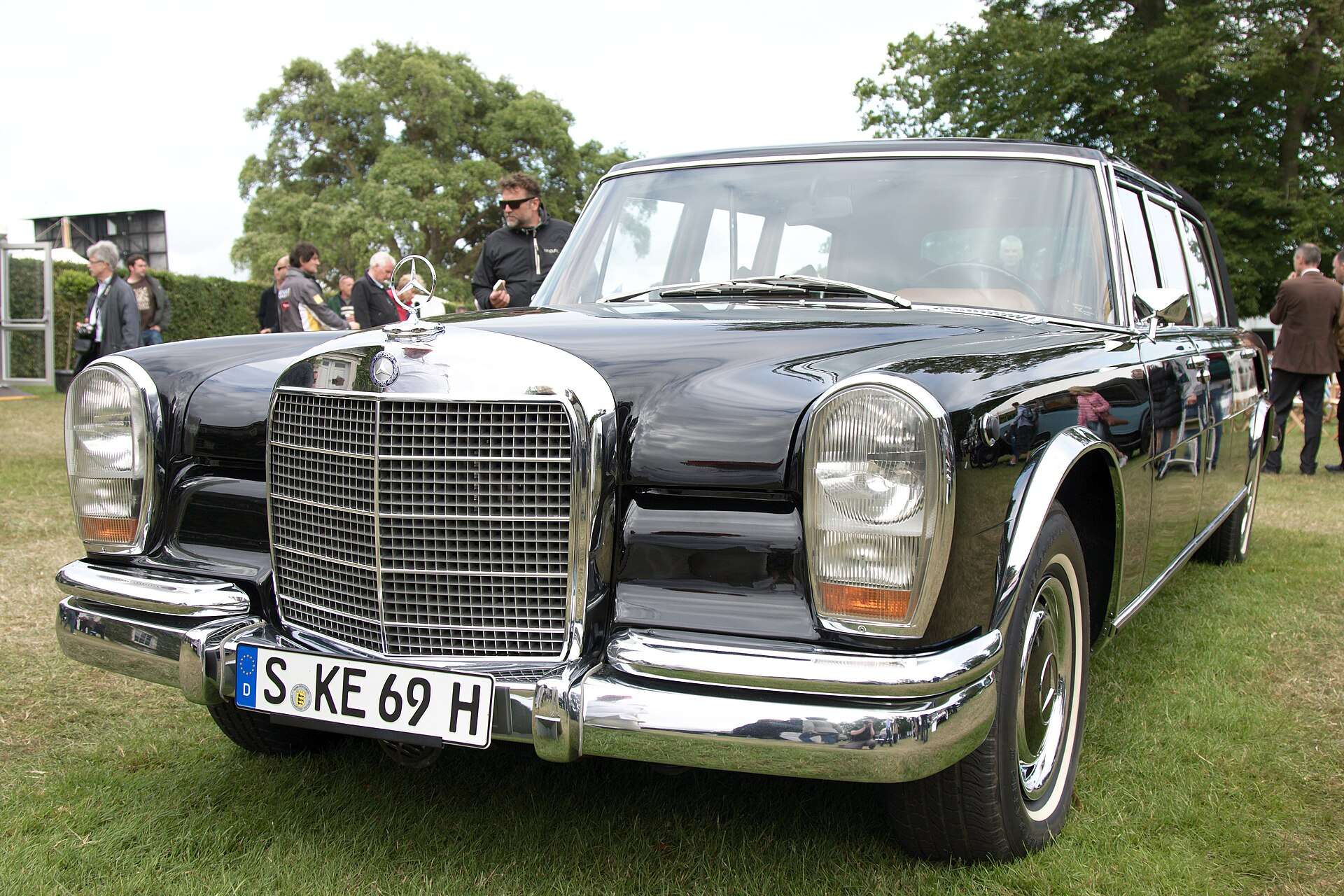
The production figures explain the interest. Mercedes-Benz’s archive lists 2,677 examples of the 600 built through 1981, of which 429 were Pullman limousines and just 59 were Landaulets. The 600 used a 6.3-liter fuel-injected V8 rated at 250 hp. Those numbers sit behind any popemobile story, and they are one reason the 600 Pullman remains a rare, expensive proposition when one appears for sale; our earlier report on a restored 600 Pullman that struggled to find a buyer is a reminder that rarity alone does not set a price.
1980: The G-Class that invented the format
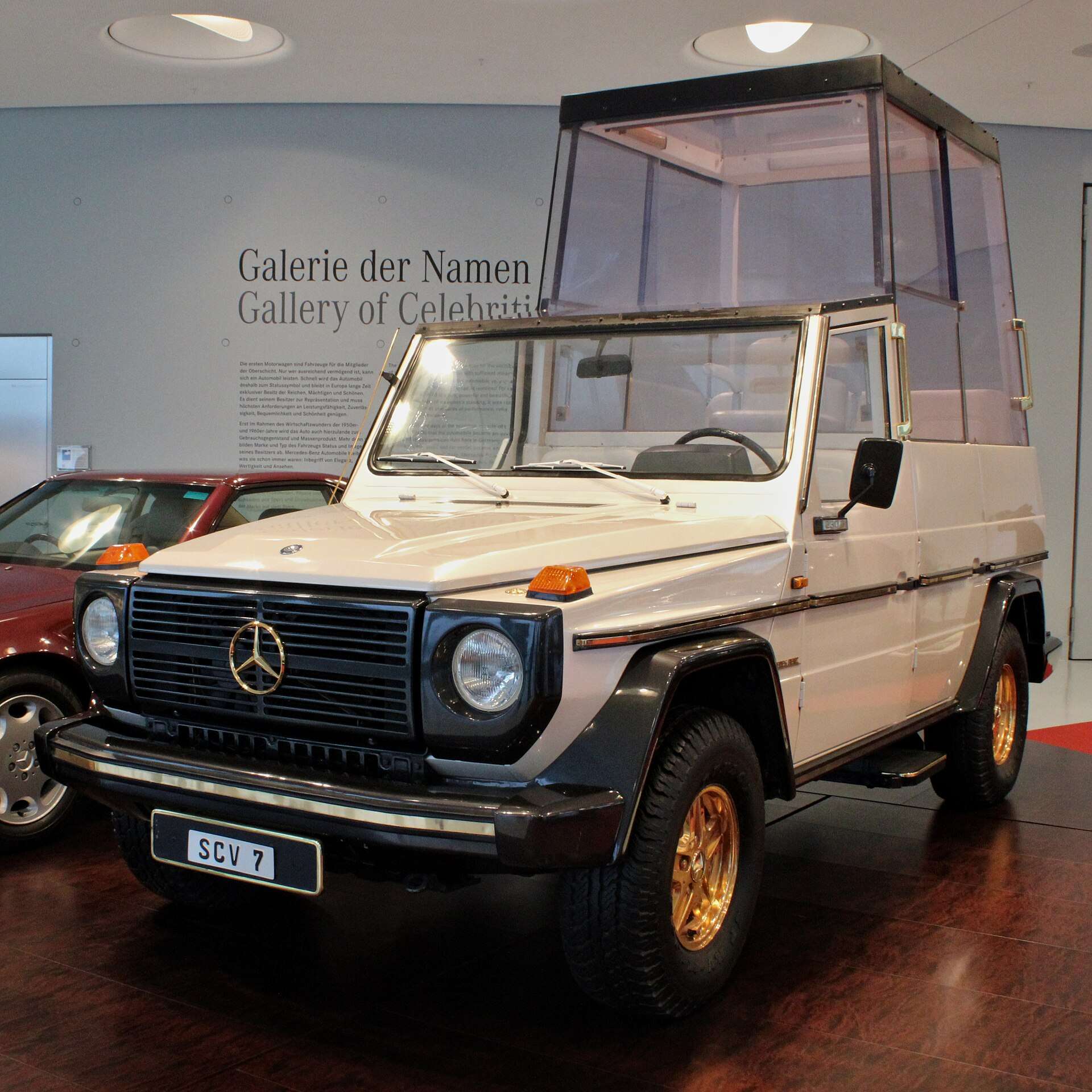
The 1980 Mercedes-Benz 230 G is the one most people picture when they hear the word. Developed for John Paul II’s visit to Germany, it carried the pope on a rear bench raised 40 cm under a transparent dome, which made the vehicle about 2.8 meters tall so that crowds could see him whether he sat or stood. According to Carscoops, the build also included a powerful air-conditioning unit to stop the dome fogging, and bulletproof glazing was added after the 1981 assassination attempt. Mercedes-Benz describes it as the first papal vehicle with a transparent superstructure.
The 230 G is the best illustration of the collection’s central idea. The car is a standard four-cylinder utility vehicle underneath, and everything that matters sits on top of it. Carscoops reports a second near-identical vehicle built in 1982 on the 230 GE, distinguished by its SCV 6 plate against SCV 7 on the original, and that the original has been in the Mercedes-Benz Classic collection since 2004. Which of the two appears in Rome should be checked against the Museums’ catalog.
A collection built by relationship
Compared with the collections we have profiled recently, the contrast is useful. The Nethercutt Collection was built in a restoration shop, the Prince of Monaco collection grew out of a ruler’s garage, and the Simeone Foundation is organized around preservation over polish. The popemobiles were assembled by a gift relationship between one manufacturer and one institution, in the same spirit that makes state and presidential limousines historically interesting: use by a head of state changes what a car is.
The human detail may be the best one. EWTN News reports that a Mercedes-Benz executive described a strict rule that no one, including mechanics and the CEO, may sit in the pope’s seat. That is provenance protected as practice. Pope Leo XIV met Mercedes-Benz executives on the day of the preview and described the popemobile as having evolved from transportation into an instrument of encounter, the AP reports.
What we could not verify
The Vatican Museums name seven distinct models for the eight historic cars, so one remains unidentified in the sources available to us. EWTN News also describes the exhibit as including the vehicle from the 1981 shooting of John Paul II, captioned as a Fiat Nuova Campagnola; that car is not named on the Vatican Museums’ page, and we have not confirmed it. Not every papal car was a Mercedes either: the term “popemobile” itself is usually traced to a custom Lincoln Continental used by Paul VI in New York in 1965. Visitors should check the Museums’ schedule before traveling.
Sources: Vatican Museums, A Century of the Popemobile; Vatican Museums, Mercedes-Benz 460 Nürburg limousine; Associated Press via KSL; EWTN News; Mercedes-Benz Group; Motor1 Germany; Carscoops.
The collector car market, every weekday morning.
Auction results, price moves and what’s crossing the block, read in four minutes. Free, from Modern Car Collector.
No spam, unsubscribe in one click. Or read more about the Brief.
Related Posts:
- Gooding Christie’s Offers the Billy Joel Motorcycle…
- Mercedes-Benz Unveils First All-Electric Popemobile…

- Record Ferraris, Rare Icons and 15,000 RPM: The Week…

- Glass & Headlight Care for Collector Cars

- 190E Evo II vs. Sierra RS500 vs. M3 Sport Evolution:…
- The Corvette Museum Is Opening Its Vault, and Its…
 Eve Nowell