

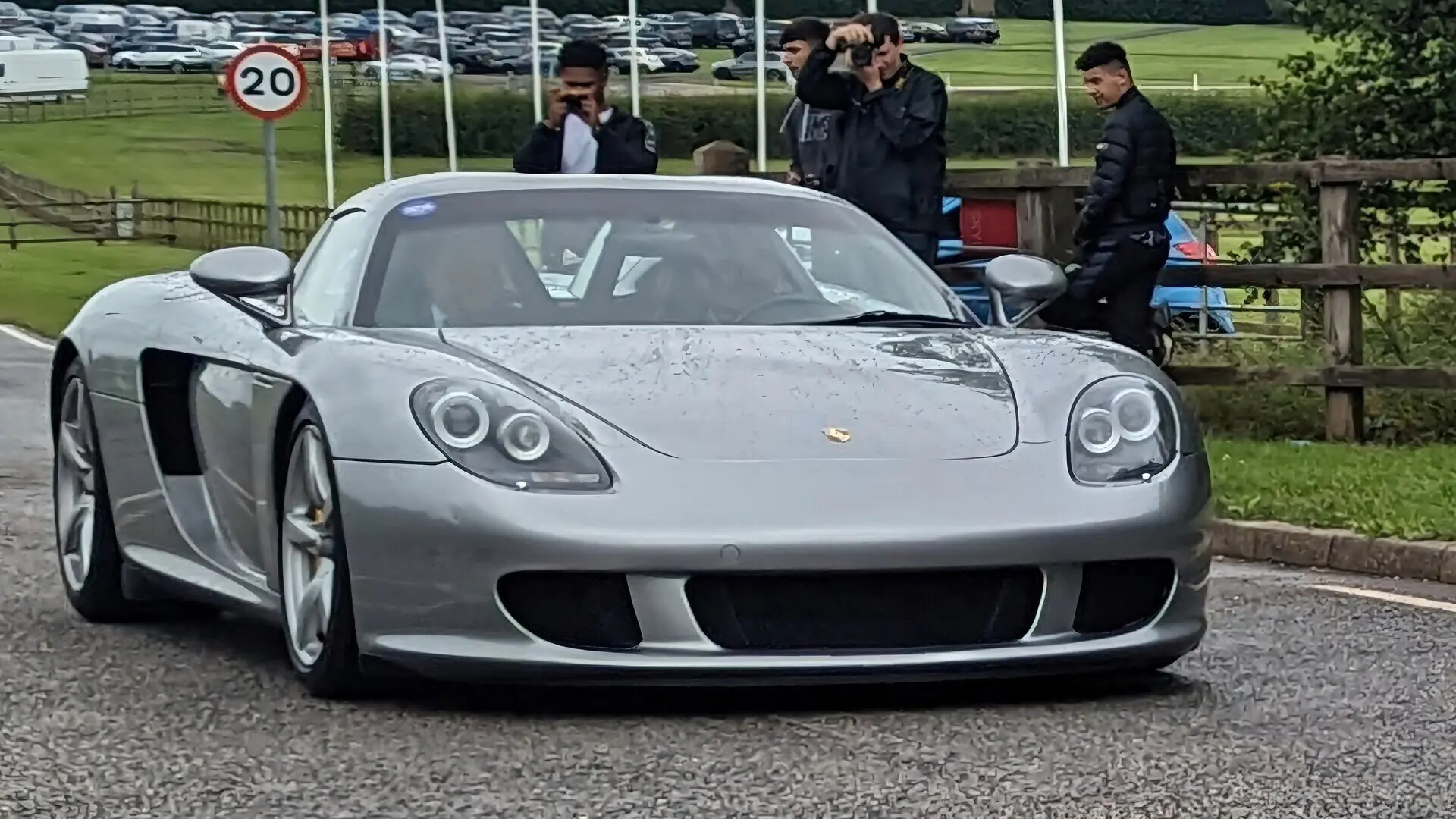
Ask which modern hypercars have become serious money and the answer is easy: the Carrera GT, the Enzo, the Daytona SP3. Ask which have not, and the list is far more instructive. The 2026 market for modern exotics is not a rising tide. It is a sorting mechanism, and the rule it applies has very little to do with how many cars were built.
That distinction matters because the loudest headlines treat the category as one trade. It is not. Hagerty’s October analysis of the segment calls the year “mixed,” even within a single brand, and the data supports the word. Collectors weighing a seven-figure purchase should read that as a warning against buying the category and an argument for buying the reason.
What the winners actually share
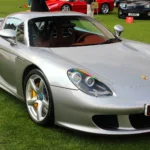
Start with the cars that moved. Hagerty puts the Porsche Carrera GT at roughly $400,000 when new and about $3 million today. In our own reading of the sales, ordinary, well-documented Carrera GTs have repriced to roughly $3 million to $3.7 million, and the color-driven records above that are single events, not comparables. The Ferrari Enzo tells a similar story at a higher altitude: Hagerty notes several eight-figure sales this year, while our tracking shows results of $4.1 million to $4.5 million in 2023 and 2024 giving way to $9.3 million to $17.875 million in 2026. The Bugatti Veyron is up 28 percent since January by Hagerty’s count, a move consistent with what we saw when the Zurich Veyron sales re-rated the Legends series.
Look at what these cars are. The Carrera GT is a naturally aspirated V10 with a carbon-fiber monocoque and a manual gearbox, built before the industry decided that every halo car would be electrified. The Enzo is the last Ferrari flagship to arrive without hybrid assistance. The Veyron is the car that made 1,000 horsepower a production-car number. Each one closed a chapter. None of them is merely limited.
The Ford GT makes the point inside a single nameplate. Hagerty reports 2005–06 cars up 42 percent this year, while the 2017–22 generation is flat. Same badge, same supplier of nostalgia, entirely different verdicts. The first car was an act of homage that arrived at the end of an engineering tradition. The second is a very good modern supercar, and the market treats those as a separate asset class with a separate price curve.
Rarity that was sold once cannot be sold twice
Now the other column. The Lamborghini Sián FKP 37, limited to 82 cars, and the Countach LPI 800-4, limited to 112, were both Aventador-based hybrid V-12s that ended production in 2022. According to Hagerty, neither is selling above its original MSRP. The Aventador itself, and other modern V-12 Lamborghinis, are. The McLaren Speedtail, 106 cars at about $2.5 million new, has produced unremarkable sales since 2022, and Hagerty notes that a McLaren F1 can cost roughly ten times as much.
This is the overlooked detail. These cars were sold out before they were delivered, which means their scarcity was monetized once, at the dealership, by the manufacturer. A buyer who pays full launch price for a numbered edition has already paid the rarity premium. To profit at auction, the next owner needs a second premium, and that requires a reason beyond the build count. We examined exactly this problem in our look at what happens after the Sián waitlist sells out.
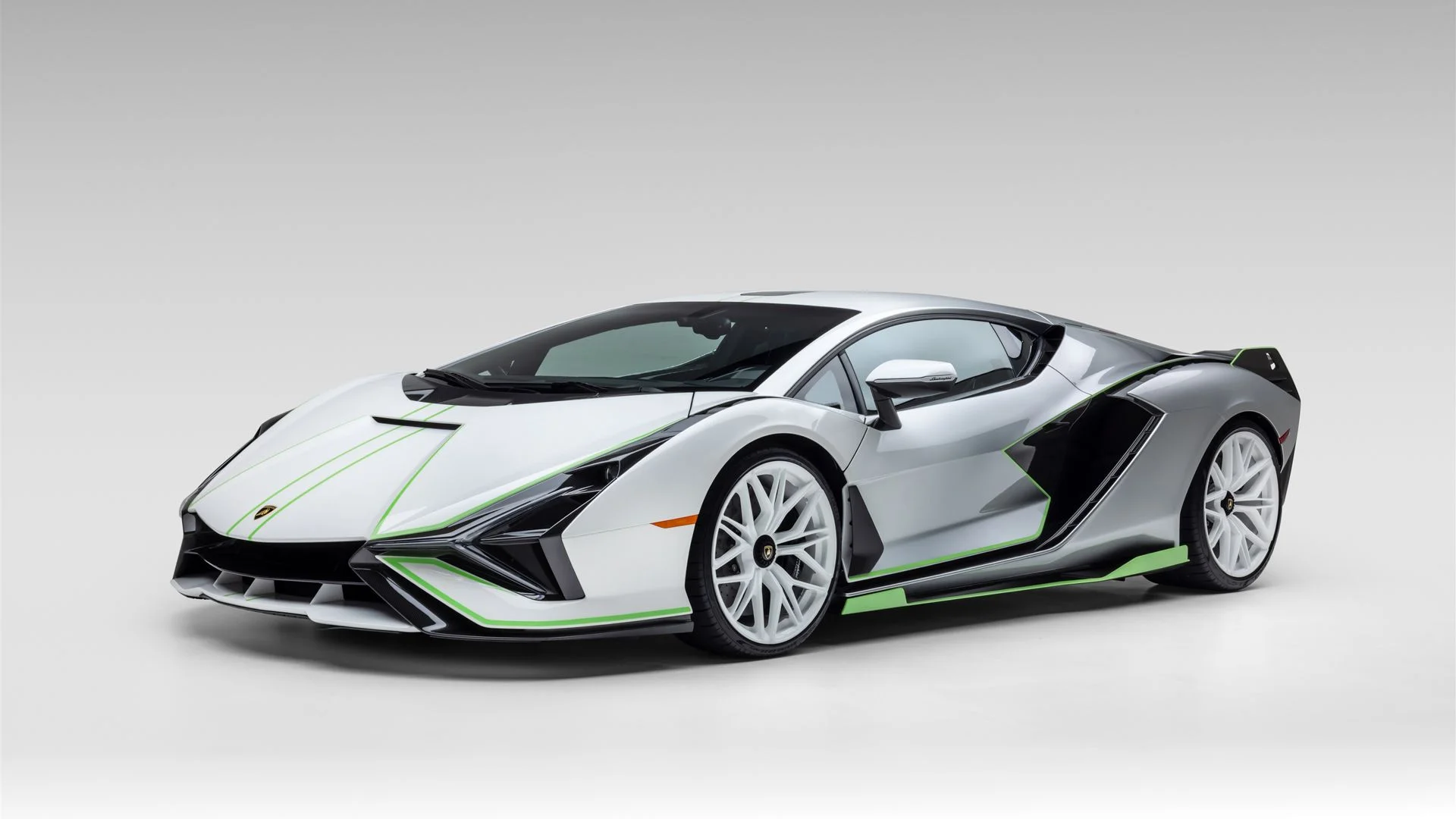
There is a second force at work, and a reader in the comments of the Hagerty piece put it neatly: the Countach LPI is overshadowed by newer products from the same maker. A tribute to an icon invites a comparison with the icon, and the original Countach is not a car the revival can beat. When a model’s best argument is that it remembers something greater, buyers eventually go and buy the something greater.
Ferrari is the exception that needs an explanation
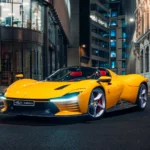
Many of this year’s biggest exotic gainers are Ferraris, and the Icona cars are the clearest case. A standard Daytona SP3 went from about $6.65 million to $17.825 million at public auction in ten months, as we detailed in our analysis of that move. The Monza SP2 nearly doubled in a quarter, from $2.54 million in December to a $4.955 million record at Amelia Island, though one sale did most of the work.
Hagerty floats the possibility that Ferrari’s allocation system for new cars is lifting older ones, since access to the next special series tends to favor existing clients, and a reader argued that prior ownership is effectively an invitation. It is a plausible mechanism and an unproven one. We would add a caution: allocation explains why a buyer wants a Ferrari in the garage, but it cannot by itself explain why a specific car clears $17 million. For that you still need the underlying thing, which here is a naturally aspirated V-12 in a year when almost no one else is building one.
The sorting reaches attainable cars, too
The same logic is visible well below hypercar money. Hagerty’s October price-guide update showed the 997.2 generation of the Porsche 911 GT3 gaining an average of 64 percent in a quarter, and as we wrote in our look at that jump, the number is real while its durability is the open question. The 997.2 GT3 is the last of the naturally aspirated, hydraulic-assist, manual-gearbox generation that the buying public increasingly describes as the end of something. The pattern is identical at a tenth of the price. For context on where the broader segment stands, see our recent market brief on Hagerty’s Supercar Index.
What serious buyers should take from this
Three questions separate the cars that held from the cars that stalled. What did this car end, or what did it begin? Does the base model trade above its original price, or has the limited derivative simply failed to outrun the car it was built from? And how deep is the field of comparable sales? Hagerty acknowledges that sample sizes are small, even among this year’s winners, and that caveat deserves more weight than the percentages. A Valkyrie, with 275 built and a Spider that reached $4.735 million at RM Sotheby’s in August, has behaved steadily rather than spectacularly, which is its own kind of information.
The memorable lesson of 2026 is that scarcity is a quantity and significance is a reason, and collectors pay only for the second. If the production number were erased from the data above, the winners would still be the Carrera GT, the Enzo, and the Veyron. That is the best test of whether a modern exotic is a landmark or merely a limited edition, and it is a test worth applying before the check is written, not after.
Market figures attributed to Hagerty are drawn from its October 14, 2026 analysis, “Not All Modern Exotic Cars Are Hot Right Now”. Auction figures for the Carrera GT, Enzo, Daytona SP3 and Monza SP2 are from our linked analyses.
The collector car market, every weekday morning.
Auction results, price moves and what’s crossing the block, read in four minutes. Free, from Modern Car Collector.
No spam, unsubscribe in one click. Or read more about the Brief.
 Kyle Matthews