
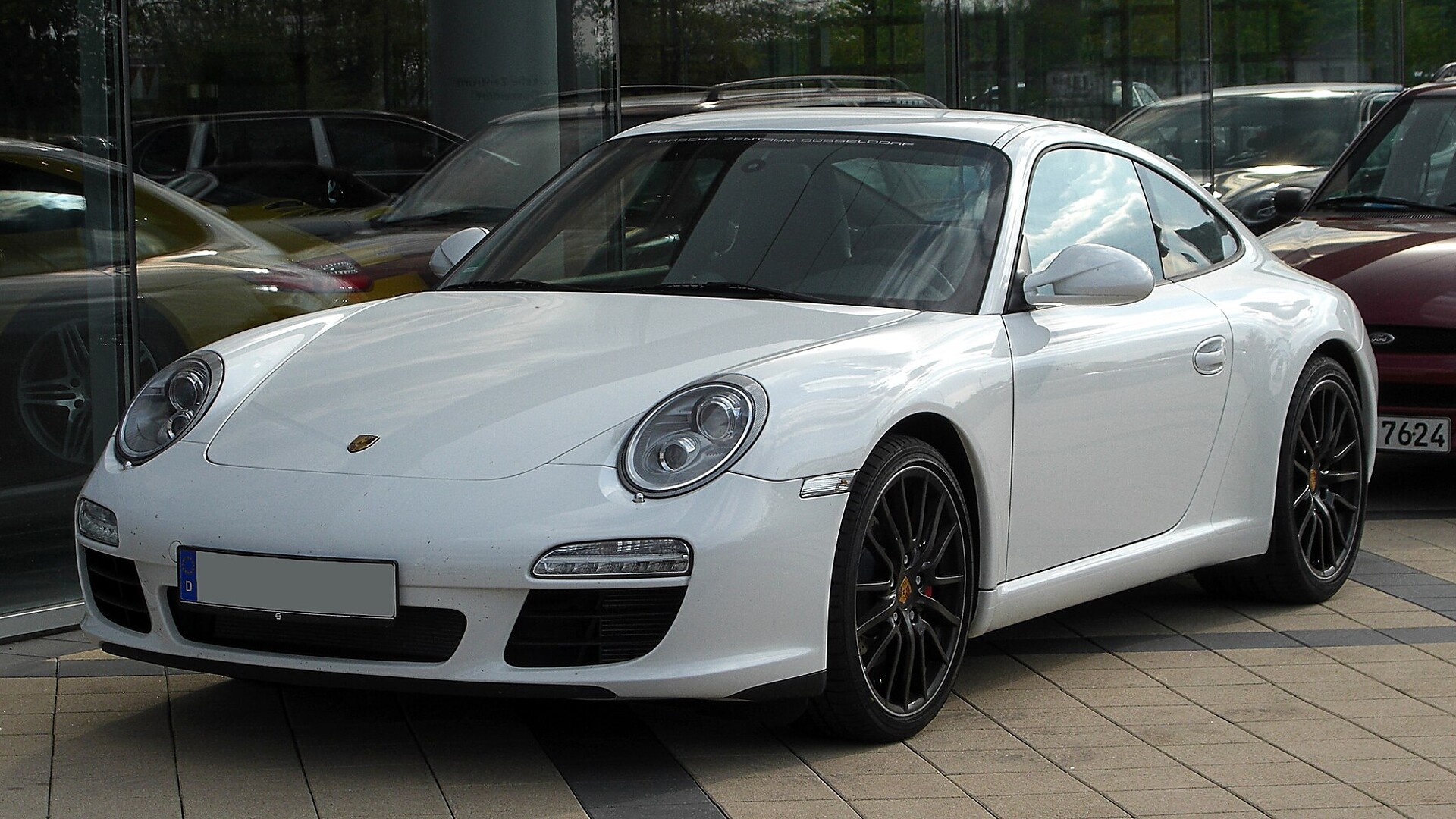
On September 29, Porsche announced a new generation of the Porsche Classic Communication Management Plus, the factory retrofit infotainment unit known as PCCM Plus. It comes in two model-specific versions: one for the 997.2-generation 911 and the 987.2 Boxster and Cayman (model years 2009 to 2013), the other for the 991.1 911 and the 981 Boxster and Cayman (2012 to 2016). Porsche puts the eligible population at more than 300,000 cars, and it describes every one of them with the same two words: future classics.
Those two words are the story. The feature list — wireless Apple CarPlay and Android Auto, over-the-air map updates, a 4G nano-SIM slot — reads like a smartphone spec sheet. What it actually represents is a manufacturer drawing a boundary around a generation of its own cars and deciding they are worth keeping whole. Porsche made the same decision years ago about air-cooled 911s, when it began supplying reproduction parts to keep them on the road. It is now making that decision about cars many of their owners still drive to work.
The screen is the first thing to age
Every generation of collector car has a component that dates it before anything else does. For a 1970s car, it was rust and emissions plumbing. For the Porsches of 2009 to 2016, it is the center stack.
Mechanically, these cars are aging well. The 997.2 introduced the direct-injection 9A1 flat-six, which did away with the intermediate-shaft bearing that had worried owners of the earlier water-cooled engines. The 997 and 987 were the last 911 and Boxster/Cayman generations with hydraulic power steering, a detail that has become a genuine buying criterion among enthusiasts. And in our view the 981 is the most complete mid-engine chassis Porsche had built up to that point.
The infotainment is a different matter. The 997.2 and 987.2 left the factory with PCM 3.0; the 991.1 and 981 with PCM 3.1. Both were designed before smartphone projection became the expectation, and both now look their age in a way the bodywork does not. Styling ages in decades. Screens age in dog years.
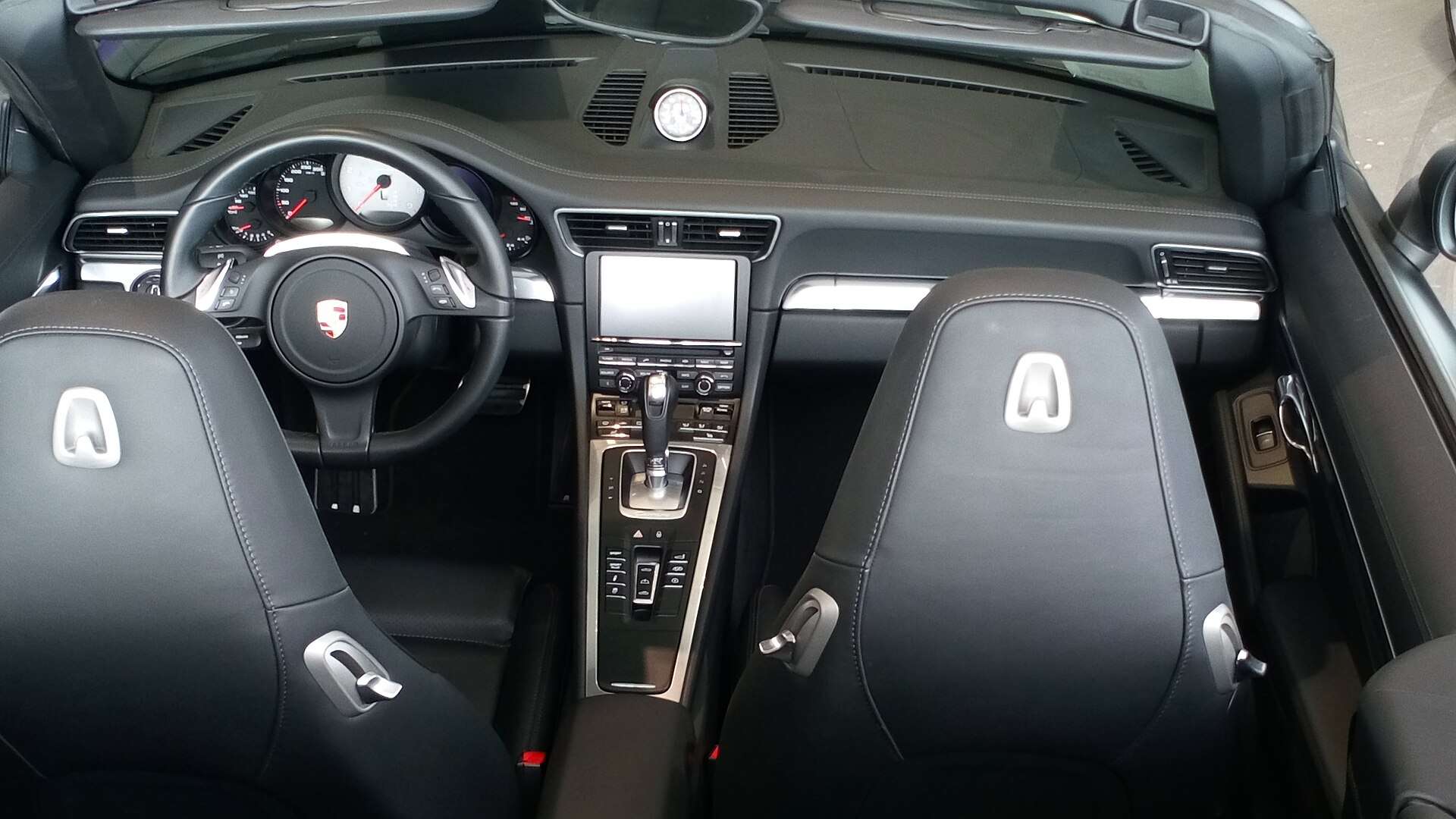
That gap has consequences for collectors, because owners fill it themselves. The typical fix is an aftermarket head unit with an adapted fascia, spliced wiring and, too often, lost steering-wheel functions or dead instrument-cluster displays. None of it shows up on an auction condition report, but it is a quiet erosion of originality that happens one car at a time — and it tends to happen to precisely the well-used, well-loved examples that make up most of the market.
What Porsche actually built
The details of the new unit matter less for what they add than for how thoroughly they plug into the existing car. According to Porsche:
- A seven-inch high-resolution touchscreen, with operation through the multifunction steering wheel where that was fitted as standard.
- Navigation instructions and music tracks shown in the instrument cluster, with personal vehicle settings still supported.
- Wireless Apple CarPlay and Android Auto via Bluetooth and Wi-Fi, and YouTube playback while stationary where local law permits.
- Oil temperature and oil pressure on the trip screen, speed limits drawn from map data, satellite-image navigation and a Scenic Roads function that routes along winding roads.
- On the Boxster and Cayman, a visual display of park-assist distance to supplement what was previously an audible-only system.
- DAB (Europe only) or HD Radio (North America only), dual FM/AM tuners, Bluetooth streaming with track metadata, connections for existing sound systems, internal and external microphones, a 4G nano-SIM slot and over-the-air map updates.
- An on-screen vehicle graphic that can be set to the car’s actual Porsche exterior color.
Porsche notes that function availability depends on the specific model and specification, that some services require an active internet connection, and that it recommends installation at a Porsche Centre. The announcement did not include pricing; buyers should confirm cost and fitment with their local Porsche Centre.
The last feature on that list sounds like a gimmick. It isn’t. A retrofit that paints the on-screen car in Guards Red or GT Silver is Porsche telling you the unit was designed to belong to one specific car rather than to any car. That is the difference between an upgrade and a replacement.
Authorship is what the market pays for
The collector market has never objected to modification as such. It objects to modification without authorship. A Singer commission carries a premium because of who did the work and how it is documented. A period Gemballa can outsell a genuine Carrera GT for the same reason. A generic head unit bought online has no authorship at all, and the market prices it accordingly: as something the next owner will have to undo.
PCCM Plus sits at the opposite end of that spectrum. It is developed by the manufacturer, sold under the Porsche Classic name and — if installed as Porsche recommends — fitted at a Porsche Centre that generates an invoice and a service-record entry. That paper trail is what a pre-purchase inspector looks for. For a driver-grade Carrera, Boxster or Cayman, a documented factory retrofit should read to the next buyer as maintenance rather than modification.
Where the originality line should fall
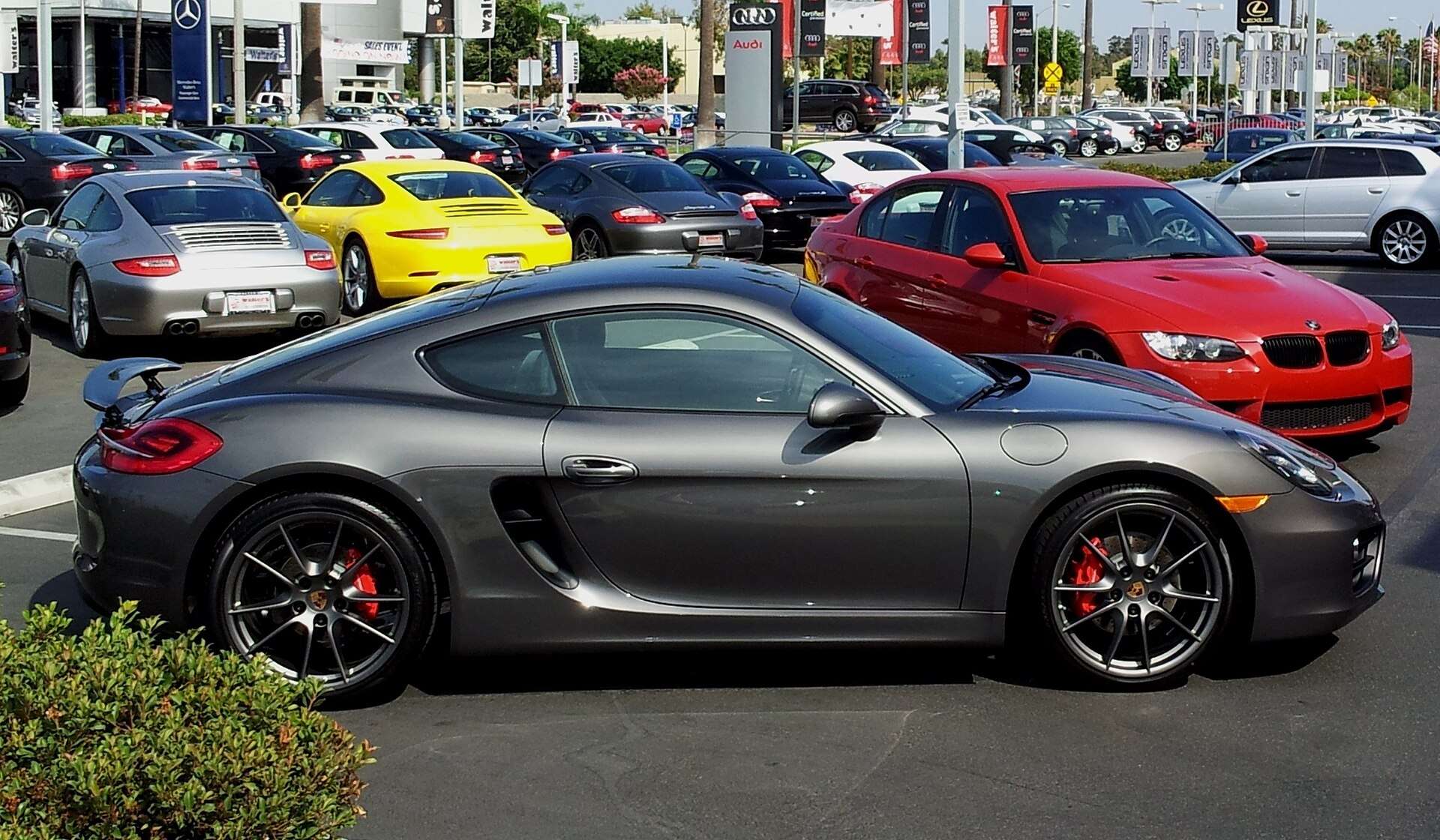
That does not mean every eligible car should get one. The population of 300,000 cars will not be valued as a single group, and neither should the decision to retrofit.
For the large majority — higher-mileage Carreras, Boxsters and Caymans bought to be driven — the retrofit is likely neutral to positive. Buyers of driver-quality cars pay for usability, and a car that integrates a phone properly is simply more pleasant to live with.
For the small minority whose value rests on being exactly as delivered, the calculus flips. Low-mileage examples, Paint to Sample and heavily optioned cars, and the limited-series and GT models of the period — the 997 GT3 RS 4.0 and Sport Classic, the 981 Cayman GT4 and Boxster Spyder, the 991-based 911 R — are bought as time capsules. For those cars, the original configuration is the asset, whether it included PCM or not. The same logic that governs the 911 engine number applies here: the market rewards a car that can prove it is still what the factory built.
What serious buyers should verify
- The original PCM unit. Ask whether it was retained, and make sure it transfers with the car. It is now a period-correct component, and its presence is what makes the retrofit reversible in practice.
- The installation record. Look for a Porsche Centre invoice listing the PCCM Plus part number and date of fitment. An undocumented installation deserves the same scrutiny as any undocumented work.
- Integration, not just function. Test the steering-wheel controls, the instrument-cluster displays and stored personal settings. These are the functions a poor installation typically breaks.
- Trim and wiring. Ask whether any fascia, bezel or harness was altered. The point of a factory retrofit is that nothing should need to be.
- Build documentation. The car’s original equipment record will show what it left the factory with. A retrofit should be explained in the file, not discovered by the buyer.
What this tells us about the market
The broader signal is timing. Manufacturers have historically recognized a car as heritage only after collectors had already done so, often decades later. Porsche is now applying the Porsche Classic label to cars that are between ten and seventeen years old, many of them still in daily use. That is consistent with what we have seen at auction, where collectors have moved decisively toward the 2000s — the Carrera GT’s 2026 run is the headline example — and with Porsche’s own willingness to treat its history as a product, as it did with the new take on the 550 Spyder.
It also changes how we should think about which modern cars become collectible. We have argued before, in assessing cars such as the Alpine A110, that factory support is one of the quiet preconditions for a car to gain collector status: a car that cannot be kept usable tends to be scrapped, modified or forgotten. By keeping the 997.2, 991.1, 987.2 and 981 functional on its own terms, Porsche is protecting the survival rate of well-kept examples — and survival, not scarcity, is what builds a durable collector market.
The PCCM Plus will be marketed as convenience. Collectors should read it as preservation. Twenty years from now, originality for these cars will not be judged by whether the screen in the dash is the one from 2011. It will be judged by whether the car can be put back to 2011 — and whether anyone kept the original unit.
Source: Porsche AG press release, “Modern retrofit infotainment system for 911, Boxster & Cayman,” September 29, 2026. Featured image: Porsche 911 Carrera S (997.2), M 93 / Wikimedia Commons, CC BY-SA 3.0 DE.
The collector car market, every weekday morning.
Auction results, price moves and what’s crossing the block, read in four minutes. Free, from Modern Car Collector.
No spam, unsubscribe in one click. Or read more about the Brief.

 Shawn Henry