

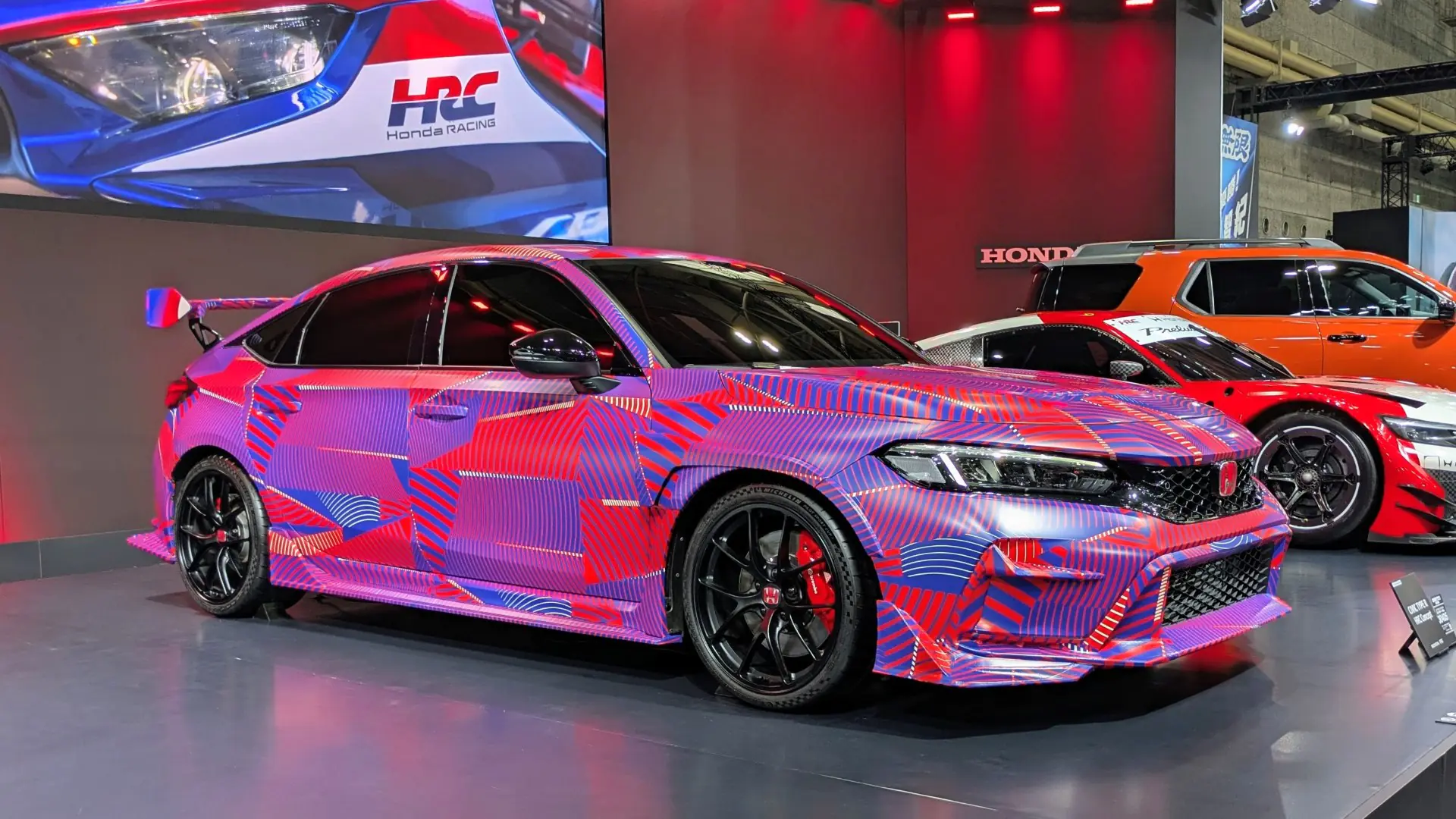
Honda’s confirmation arrived in a single sentence. On October 30, in a release previewing its Honda Racing Corporation display at the 2026 SEMA Show, the company said the Civic Type R HRC is “in development for the U.S. market.” There was no horsepower figure, no price, no production number and no on-sale date. For collectors, that restraint is the story: the car is real enough to be committed to America, but not yet defined enough to be a collectible.
Our read is narrow and deliberate. The Civic Type R HRC is the first credible sign that the FL5 generation will get a true final chapter in the United States. Whether that chapter becomes a sought-after limited run or simply a pricier trim level depends on one decision Honda has not announced: how many it will build.
What Honda has actually confirmed
The Civic Type R HRC Concept debuted at the Tokyo Auto Salon in January 2026 and makes its North American debut at SEMA in Las Vegas on November 3–6. Honda says the model is being developed with HRC technologies and input from HRC’s racing drivers. Beyond that, the official record is thin. The visible changes on the show car, as reported by Autoblog and Motor1, include a splitter-integrated front bumper, canards, fender outlets, a larger rear diffuser, a bigger wing with longer end plates and upgraded cooling. Motor1 also reports that a new HRC Performance Parts line launches at SEMA and goes on sale through Honda dealerships in March 2027.
| Item | Status | What is known |
|---|---|---|
| U.S. development | Confirmed by Honda | “In development for the U.S. market,” announced October 30, 2026 |
| Debut | Confirmed by Honda | Tokyo Auto Salon (January 2026); North American debut at SEMA, November 3–6 |
| Power | Reported, not official | Japanese coverage suggests roughly 335 hp (about 340 PS) versus 315 hp for the current U.S. car |
| Chassis and parts | Reported, not official | Revised suspension tuning, larger brakes, forged wheels and added carbon fiber, with a weight saving of roughly 50 pounds |
| Price | Conflicting reports | About 7 million yen (roughly $45,600) per one Japanese report; about 10 million yen (roughly $65,000) per an earlier one |
| Production number | Not disclosed | No cap, serialization or allocation announced |
| U.S. price and timing | Not disclosed | Honda has given no figures or date |
The racing link is real, and it matters
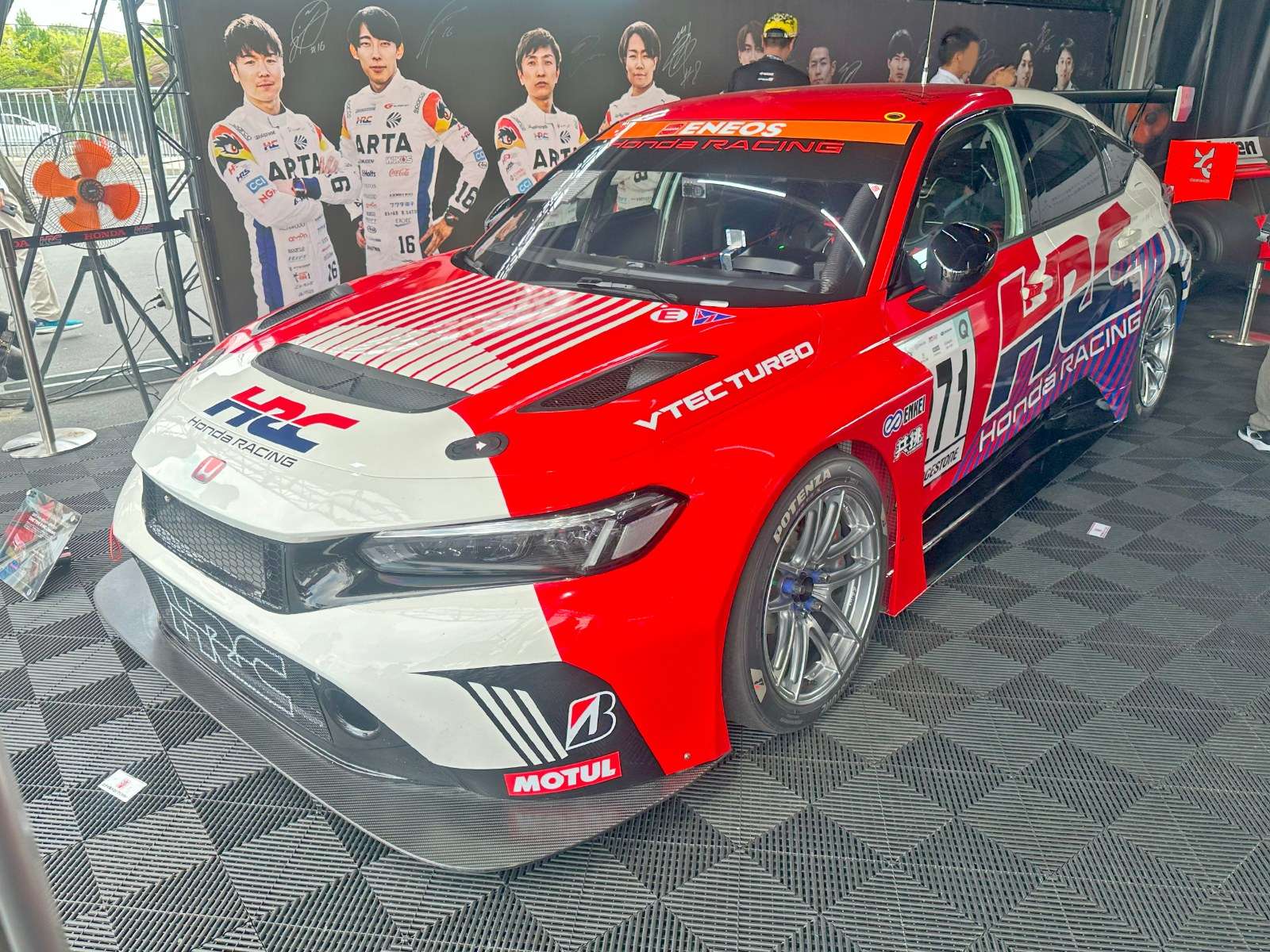
The HRC name is not decoration. A Civic Type R carrying the HRC-K20C racing engine set a class record in Japan’s Super Taikyu endurance series in 2025, with Takuma Sato advising on development, according to Autoblog. The No. 271 race car pictured below is that program’s public face. Honda has not said whether the road car will use any of that engine hardware, so treat the connection as lineage, not specification.
Why a Type R halo matters to collectors
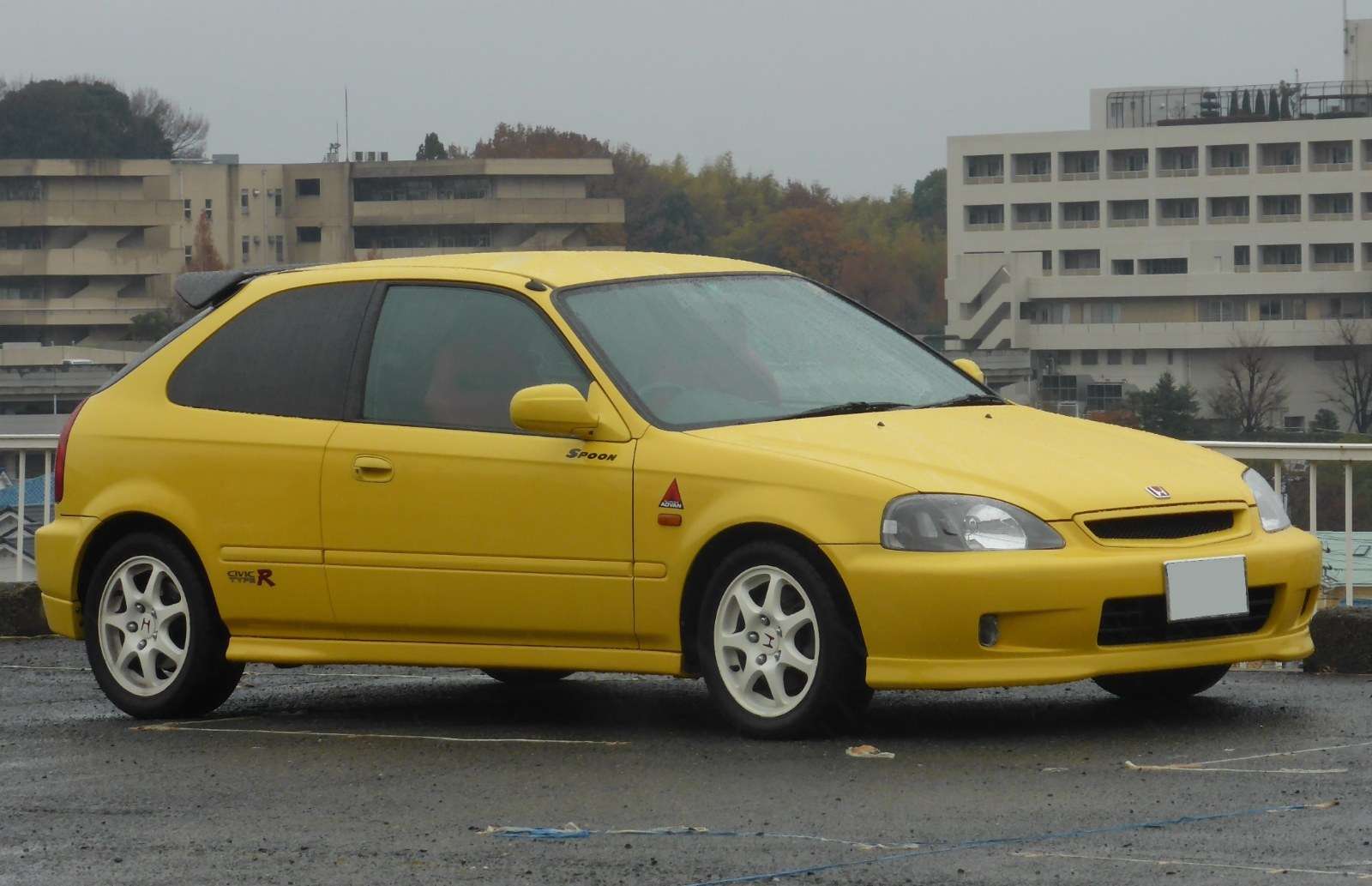
Honda introduced the Type R badge on the 1992 NSX-R, extended it to the Integra in 1995 and gave it to the Civic with the Japan-only EK9 in 1997. Each of those cars is now judged by documentation and originality, as our Integra Type R originality check shows. Honda’s decision to reissue genuine parts for classic sports models suggests the company understands its own back catalog. A factory-backed, racing-derived Civic Type R fits that pattern. It does not yet fit the pattern of the cars that earned their reputations through scarcity.
The platform underneath
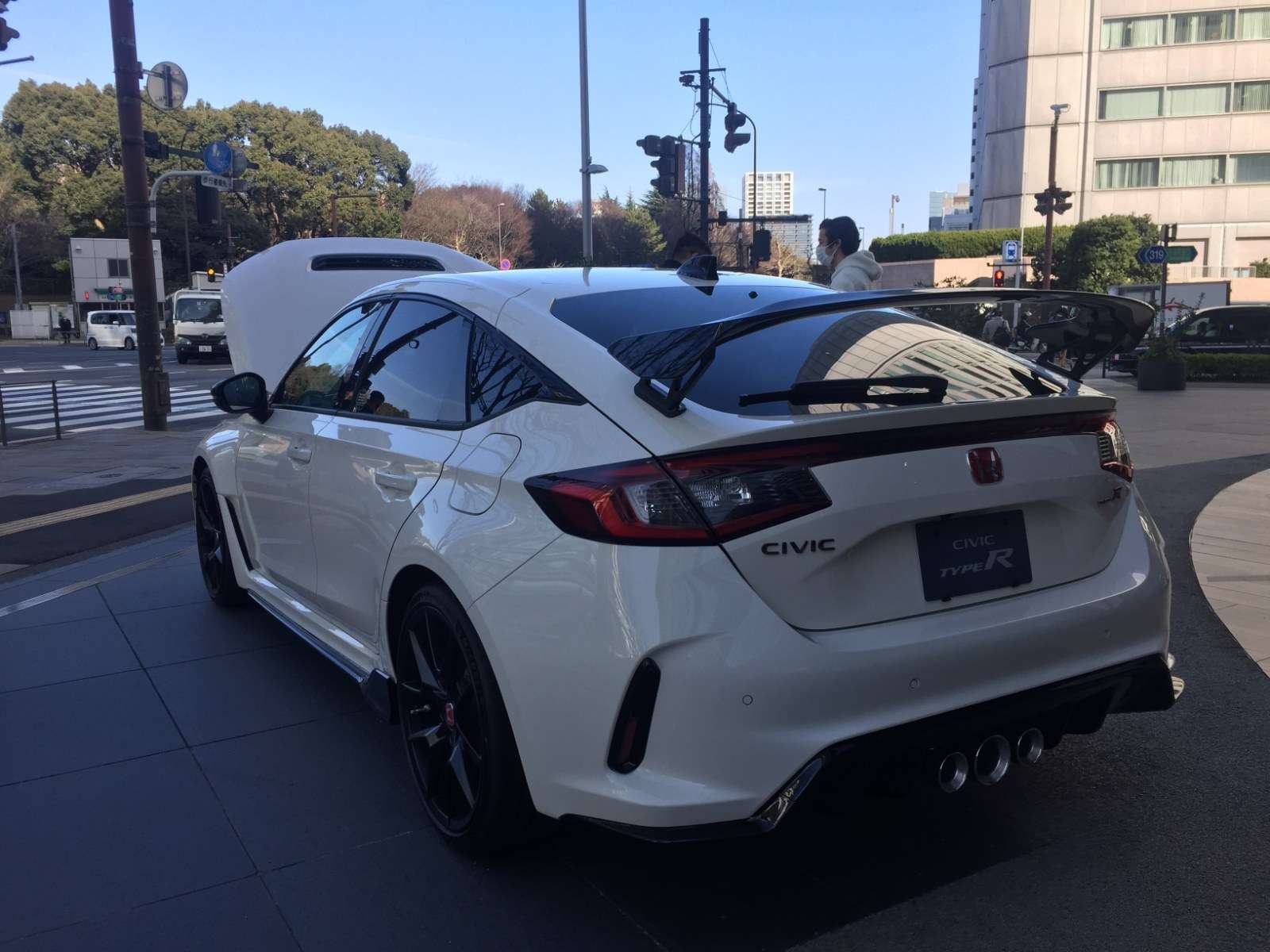
The HRC model is built on the FL5 Civic Type R: a 2.0-liter turbocharged four-cylinder making 315 hp in U.S. trim, a six-speed manual and front-wheel drive. Honda claimed a front-drive Nürburgring lap of 7:44.881 when the car launched in 2023. Honda’s U.S. line continues through the 2026 model year with a facelift and an unchanged powertrain, per Autoblog’s report of an American Honda statement. In Europe the story is already ending: PistonHeads reports that FL5 sales stop there in 2026, with a 40-car Ultimate Edition, numbered 1 to 40, as the send-off. The U.S. has not received an equivalent announcement, which is part of why the HRC matters.
The competitive set
Run-out front-drive and all-wheel-drive hot hatches have a clear template. Renault’s Mégane R.S. Ultime was capped at 1,976 units, with a 1.8-liter turbo making 300 hp, according to Motor1. Toyota’s two-seat GR Corolla Morizo Edition was built in small numbers, with CarAdvice listing 200 for the U.S. in its first 12 months before it was dropped from the U.S. and Japan. In both cases the cap was published, and the cap shaped the market’s view. For Honda’s modern-era rivals in the homologation tradition, see our Delta Integrale, Escort Cosworth and Celica GT-Four comparison; for another small-batch manual-transmission hot hatch, see our look at the Donkervoort P24 RS.
What would have to be true
Collectors should treat the following as open questions, not predictions. Honda has not answered any of them.
- A published production limit. A numbered or capped run changes the car from a trim into an edition.
- Factory build versus dealer parts. Honda’s HRC Performance Parts line goes on sale in March 2027. Whether the Civic Type R HRC is a factory-built car or a parts package will decide how documentation and provenance work.
- The manual gearbox and the power figure. The FL5’s six-speed manual is central to its appeal. Official power and weight numbers are still missing.
- The price premium. A modest step over the standard car points to a trim; a large one points to a halo. Reports to date conflict.
- Identification. Special-edition value depends on being able to verify a car. As with the Impreza 22B, a plaque alone proves little without chassis records.
The collector read
Today the Civic Type R HRC is a confirmed intention, a show car and a racing pedigree. That is meaningful: Honda does not usually commit a halo trim to a market without a plan, and the Type R badge has a long record of enthusiast loyalty. But the details that decide collector interest, such as volume, serialization, specification and price, belong to Honda and have not been released. We will update this story when they are. Until then, the useful lesson for buyers is the one the Mégane Ultime and the Morizo taught: the number on the build plate matters more than the badge on the bumper.
The collector car market, every weekday morning.
Auction results, price moves and what’s crossing the block, read in four minutes. Free, from Modern Car Collector.
No spam, unsubscribe in one click. Or read more about the Brief.
Related Posts:
- Record Ferraris, Rare Icons and 15,000 RPM: The Week…

- Today in Collector Car History: Honda Became a…
- Honda S2000 vs BMW Z4 M Roadster: The Rarer Car Is…
- Ayrton Senna’s Honda NSX Heads to RM London. The…
- First-Generation Acura NSX (1991–2005): Collector Spec Sheet
- Inside the Estate of John Harrah: A No-Reserve Reno…
 Shawn Henry
 Eve Nowell