

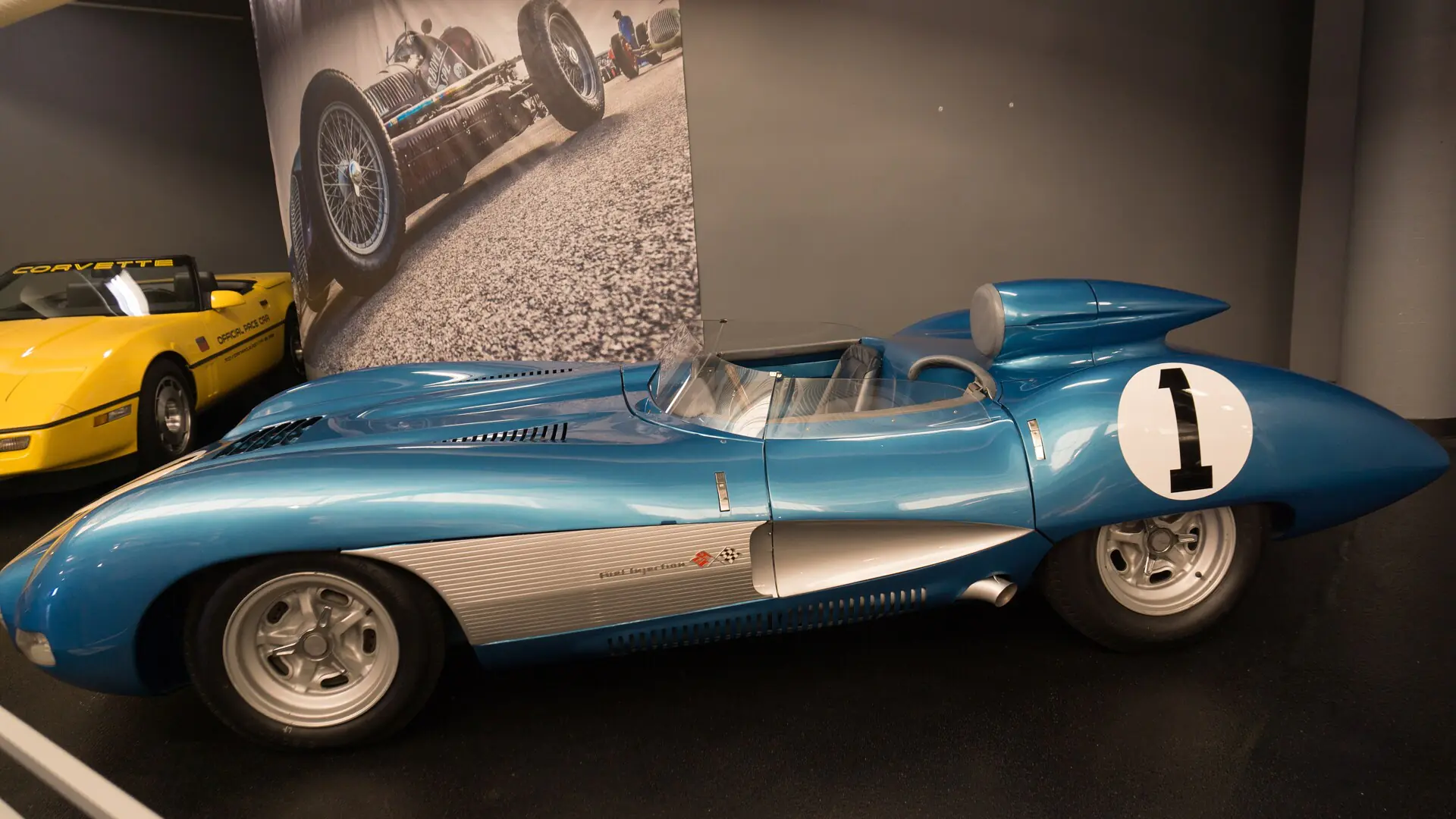
On January 13, 2027, the National Corvette Museum will begin guided tours of a building most visitors have never been able to see: its new 66,000-square-foot Collections Facility in Bowling Green, Kentucky. The museum says the purpose-built structure can hold more than 200 Corvettes, with preservation and restoration shops and space for artifact conservation. The headline number is capacity. The more interesting story is what the museum has chosen to protect, and how much of it is valuable precisely because it is not pristine.
That is the thesis worth keeping in mind: the National Corvette Museum collection is not a showroom of the best-looking Corvettes. It is an archive of the most documented ones, and a new vault is what keeps that documentation intact.
A collection that began with one donated car
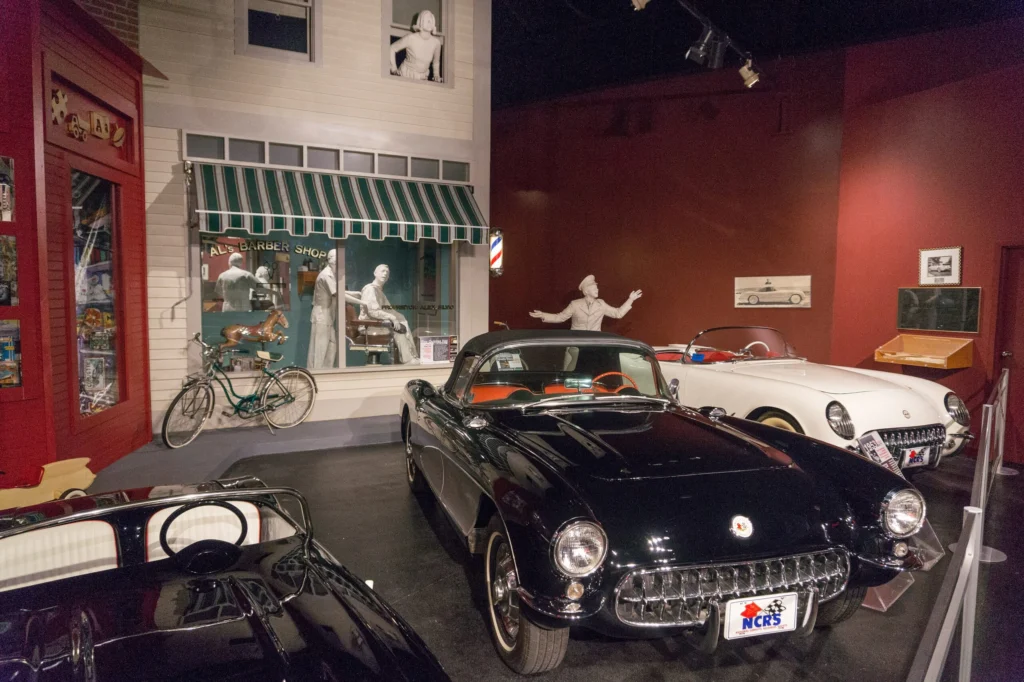
The museum’s own history starts with a single 1953 Corvette. At a 1988 National Corvette Restorers Society meeting in Cypress Gardens, Florida, members discussed creating a nonprofit Corvette library and archive. Corvette Hall of Fame member Ray Quinlan offered his 1953 Corvette, one of the first 300 built, to support the idea, and the gesture helped steer the plan toward a full museum. The car, finished in Polo White with a red interior, a Blue Flame six and a Powerglide automatic, was donated in 1993, and the museum calls it the first vehicle ever donated to it. When the museum opened in September 1994, the car was displayed front and center.
About three decades later, the museum’s preservation team gave that Corvette a partial restoration focused on paint, body and interior, and it is back on display. That pattern, targeted work rather than a total reset, runs through everything that follows.
What the museum actually holds
According to the museum’s October 2025 announcement of the project, the current collection includes more than 100 historically significant Corvettes and about 50,000 Corvette artifacts. Its description of the new building is deliberately broad: Corvettes from every generation, including significant cars rarely seen in public, plus production and performance models, design and racing history, and artifacts that show the people and engineering behind the car. The museum has not published a list of cars that will be on the tour, so no specific lineup should be assumed.
One named car shows the range. The museum describes a 1967 Corvette Sting Ray coupe once owned by astronaut Neil Armstrong as recently donated and unrestored, finished in Marina Blue with a 427-cubic-inch, 390-horsepower V8, and says Armstrong commuted to NASA in it before his Moon walk. Curatorial Affairs Director Robert Maxhimer called it “a prime example of the need for a new facility.” The ownership account is the museum’s; a collector evaluating any celebrity or astronaut-owned car would want the paperwork behind it, which is exactly what a conservation lab exists to protect.
A museum collection is also not always the museum’s property. When a sinkhole swallowed eight cars in 2014, reporting at the time identified some of them as on loan from General Motors and PPG Industries rather than owned outright. Loaned prototypes, factory-adjacent cars and donated one-owner survivors sit side by side, which is one reason the collection reads as a history of the Corvette rather than a list of expensive ones.
The sinkhole cars: damage as provenance
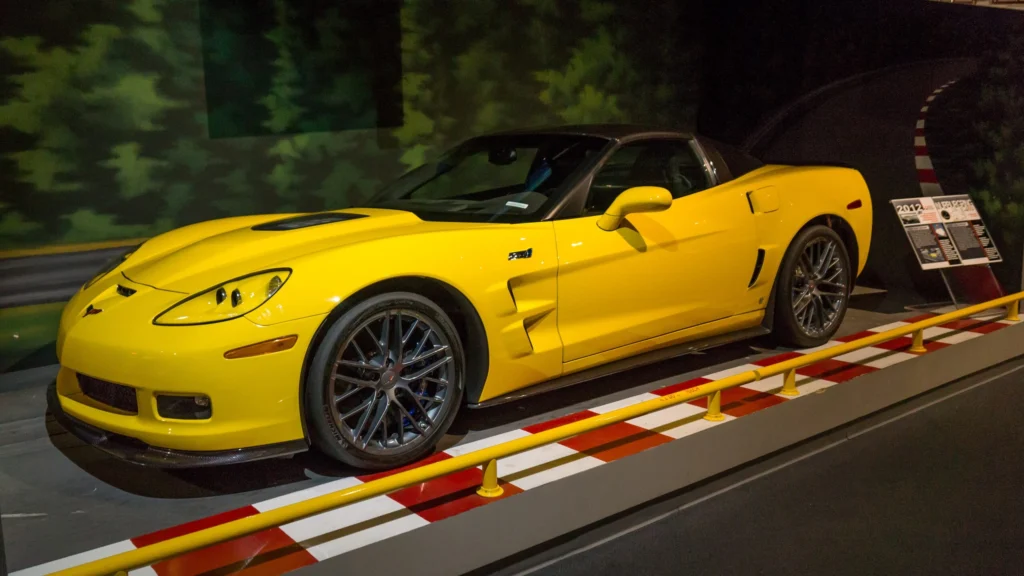
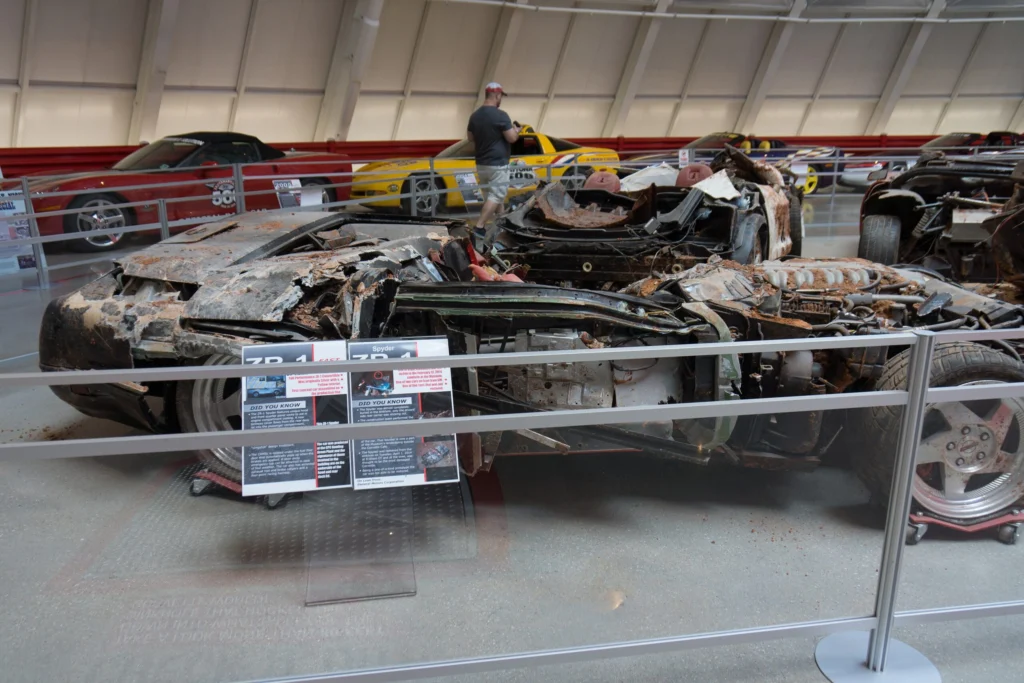
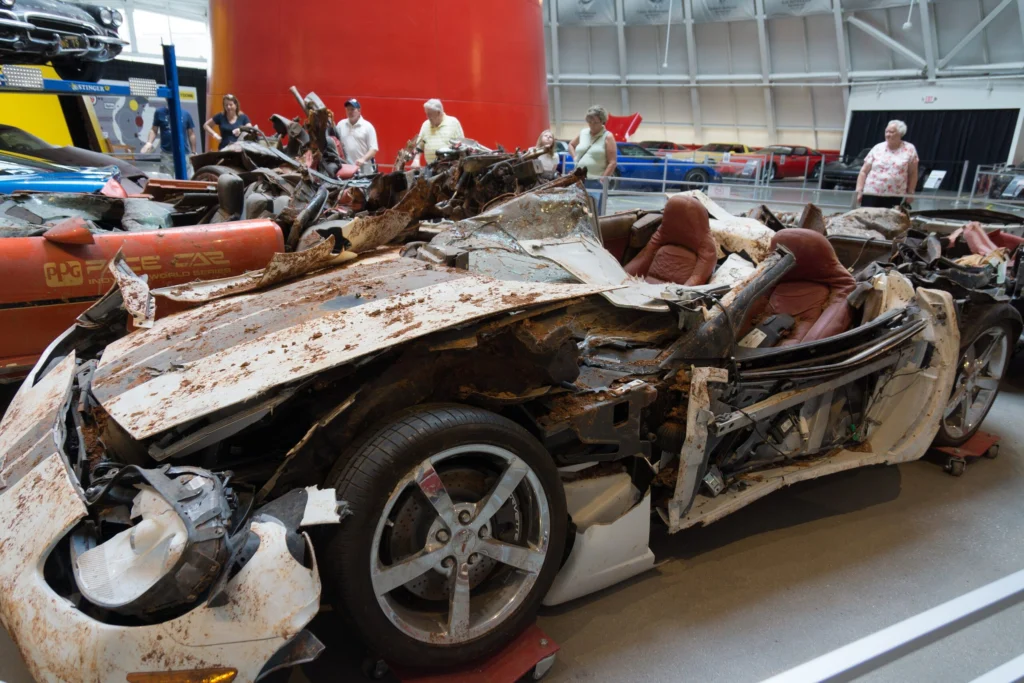
On February 12, 2014, at about 5:44 a.m., a sinkhole opened beneath the museum’s Skydome exhibit area and swallowed eight Corvettes. Crews lifted the first five out March 3–6 of that year. As listed by Corvette Blogger at the time, the cars were the One Millionth Corvette (1992), the 1.5 Millionth Corvette (2009), a Ruby Red 1993 40th Anniversary coupe, a 1962 Corvette donated by its original owner, the 1984 PPG Pace Car, a 1993 ZR-1 Spyder, a 2001 Mallett Hammer Z06 and a 2009 ZR1 known as the Blue Devil. Several were milestone cars, and several were irreplaceable in the way that matters to collectors: they could not be rebuilt as the same object.
The museum’s handling of the One Millionth Corvette is the clearest statement of its philosophy. According to the museum, the Arctic White 1992 convertible with red leather and an LT1 V8 was restored with frame and structural repairs, suspension rebuilding, panel replacement, refinishing and mechanical work, but with the goal of historical authenticity rather than a like-new finish, so some sinkhole damage remains visible. It has never been sold to a private owner. Other sinkhole cars have been shown in the condition in which they came out of the ground, and the museum later opened an exhibit that lets visitors virtually recover them.
For collectors, this is a rare institutional answer to an argument usually settled at auction: what counts as original, and when does repair erase the story? In the private market that debate moves value. Our coverage of a Corvette Grand Sport record result and of how the market priced one Grand Sport rather than a marque shows how heavily documented history is weighted at the top of the Corvette market. The museum applies similar logic without a price tag.
Why the building changes the collection
The museum says the project exists because its growing vehicle collection demands very high preservation standards, and because it wants to accept additional rare vehicles and historically significant materials for decades. The facility combines vehicle preservation, artifact conservation and long-term storage, and guided tours will pass through the working areas, so visitors see preservation in progress rather than only finished cars. The museum said $2.1 million in funding commitments had been secured when it announced the project, including $1 million from Mary and Ivan Schrodt for the Vehicle Collections Gallery. The total project cost was not published in the sources reviewed for this article.
Location matters too. The museum sits near the Bowling Green Assembly Plant, which has built every Corvette since 1981, and keeping a marque’s history close to its source is part of what makes a one-make collection credible. Museums that curate their holdings are a recurring theme in this hobby; we examined a different version in the Harrah collection and what its museum chose to keep, and the wider field in our guide to car museums in the United States.
What collectors should take from it
This is not a price story. None of these cars has a public valuation, and the museum’s cars are not for sale. The lesson is about evidence. The Quinlan car survived because someone gave it away with intent, the One Millionth survives as an object with its history visible, and the Armstrong car is being kept unrestored. Each decision treats condition as part of the record. Buyers of C4 cars such as the 1990–1995 ZR-1 can apply the same discipline: ask what documentation exists before asking what the restoration cost. And anyone weighing the newest halo Corvettes, as in our look at whether the 2026 Corvette ZR1X is a future collector car, is watching the same question at the start of a car’s life.
The memorable part is the inversion: in a museum judged by what it keeps, the cars with the worst cosmetics can be the most important objects in the building.
Visiting the Collections Facility
Guided tours begin January 13, 2027. Tickets go on sale online at the museum’s website by December 1, 2026, capacity is limited, and tickets are not sold at the door. Each tour ticket includes self-guided admission to the main museum, and both visits must happen on the same day. Tours involve extended standing and walking.
Sources: the National Corvette Museum’s Collections Facility page, its project announcement, the story of its first donated car and its One Millionth Corvette page; Corvette Blogger’s list of the eight sinkhole cars. Photographs show the existing museum, not the new Collections Facility.
The collector car market, every weekday morning.
Auction results, price moves and what’s crossing the block, read in four minutes. Free, from Modern Car Collector.
No spam, unsubscribe in one click. Or read more about the Brief.


 Shawn Henry
 Eve Nowell