

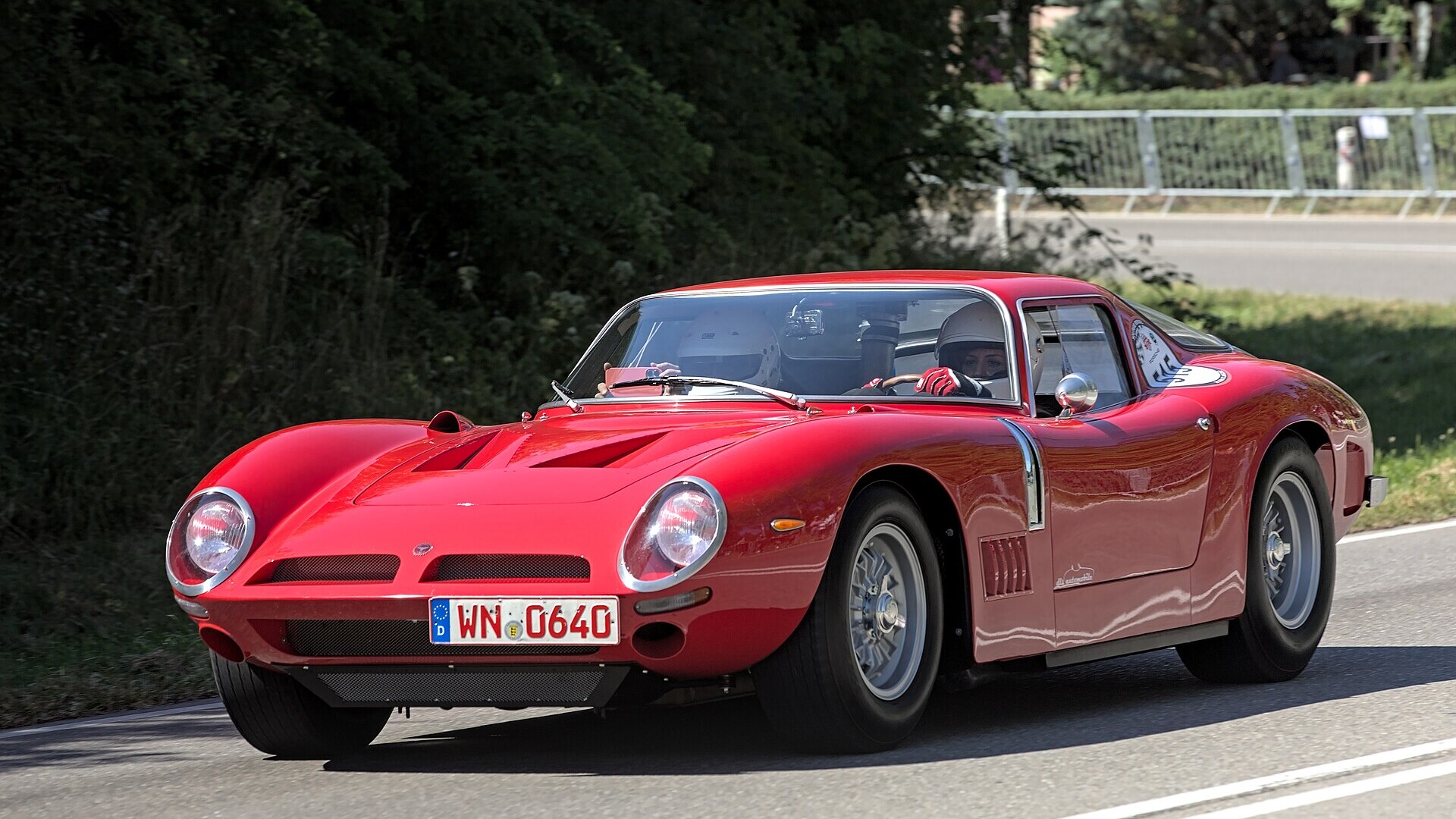
Broad Arrow Auctions will offer the 1967 Bizzarrini GT America 2+2 Prototype as Lot 158 at its inaugural Audrain Auction on Friday, October 2, at the International Tennis Hall of Fame in Newport, Rhode Island. The car is a one-off, shown at the 1968 Turin Motor Show, and the auction house says it has never been offered at public sale. Bidding registration is open now, and the estimate is $400,000 to $500,000.
What stands out is the number: a Bizzarrini prototype with Turin history is carrying an estimate well below recent prices for ordinary production 5300 GT Stradas. That gap is not a mistake. It shows how the market treats a car that left the factory unfinished and, in 2008, was given a new administrative chassis number. The bidding on Friday will show how much collectors trust that paper trail.
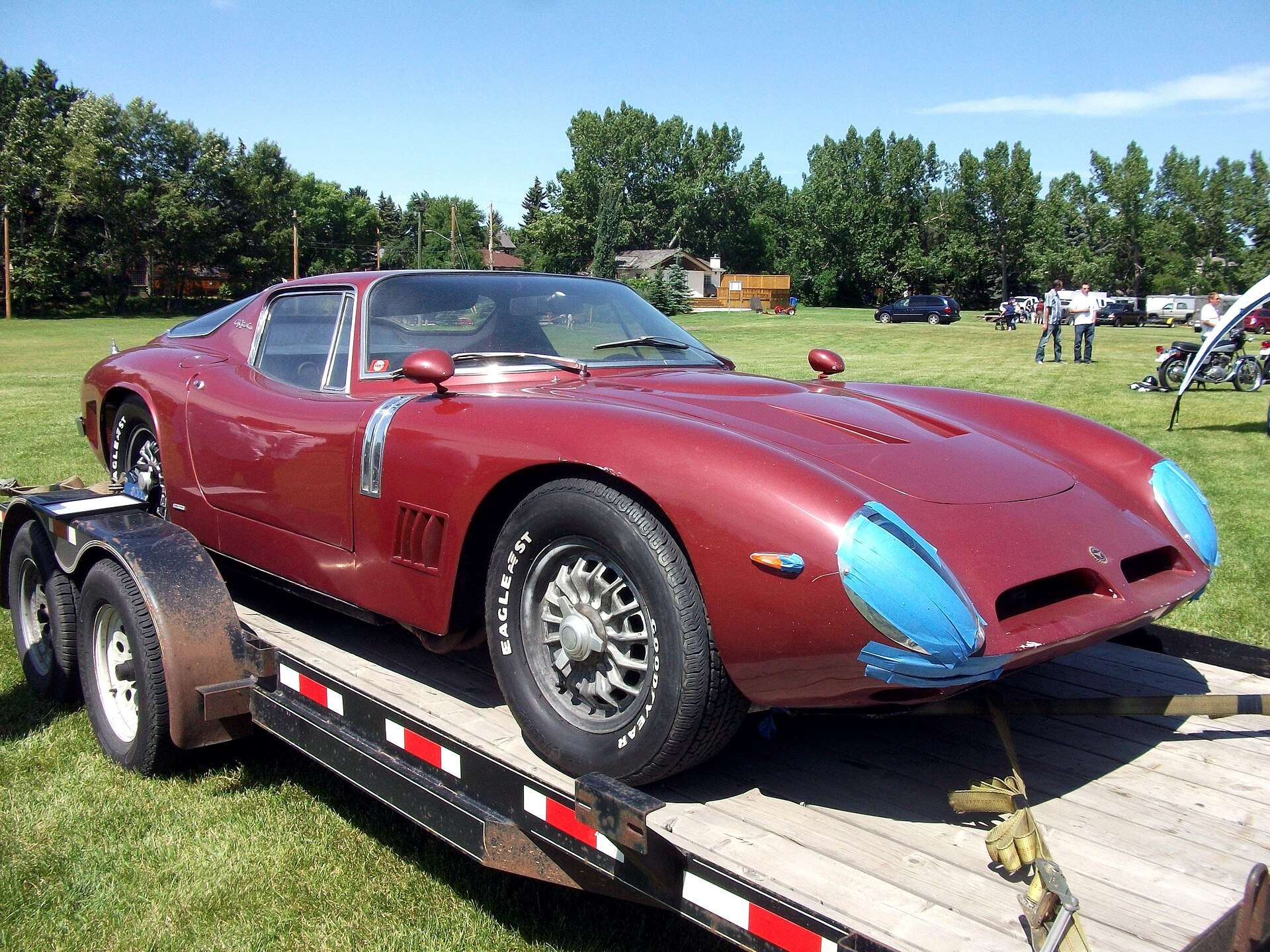
The lot at a glance
| Lot | 158, The Audrain Auction 2026 (Broad Arrow Auctions) |
| Sale date | Friday, October 2, 2026, Newport, Rhode Island |
| Estimate | $400,000 to $500,000 (the catalog does not list it as offered without reserve) |
| Chassis no. | IGM0593VT (stamped in 2008 as an administrative identity) |
| Engine no. | JE5010V0T9HD |
| Engine | 5,354 cc (327 cu in) Chevrolet Corvette V8, single four-barrel carburetor, about 355 hp |
| Transmission | Four-speed Borg-Warner manual |
| Chassis/suspension | Independent front, de Dion rear axle, four-wheel hydraulic disc brakes |
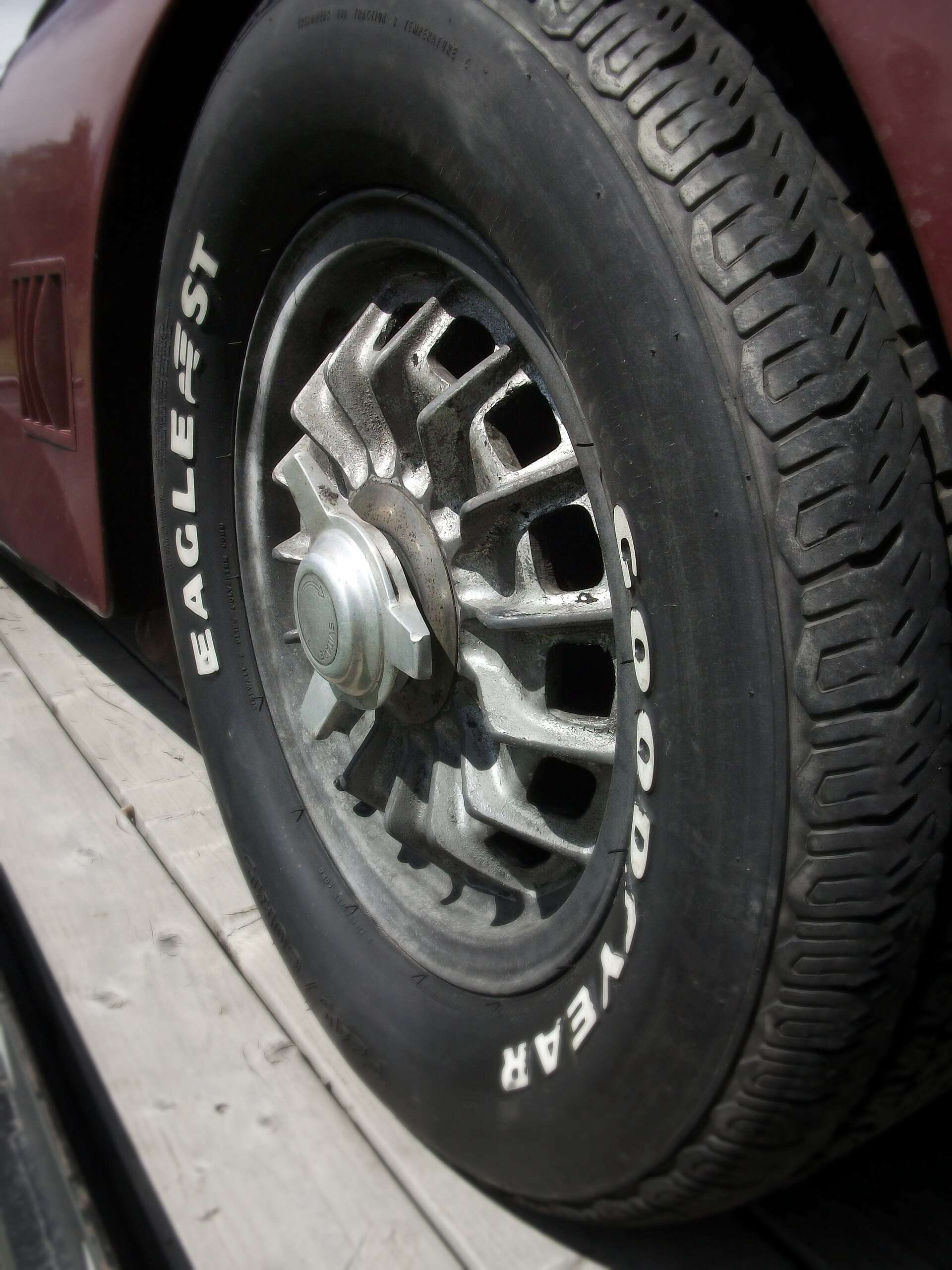
| Body | Aluminum coachwork, Champagne Metallic over brown leather, magnesium knock-off wheels |
| Literature | Covered in Bizzarrini: Facts & Figures by Jack Koobs de Hartog |
Specifications: more Strada than America
The name is a little misleading. The production GT America was Bizzarrini’s cheaper, U.S.-focused car. It had a fiberglass body and a simpler rear suspension with unequal-length A-arms instead of the Strada’s de Dion setup. Broad Arrow describes this prototype with aluminum coachwork and a de Dion rear axle, which matches the more desirable 5300 GT Strada. A 2021 history of the car credits the aluminum body to Drogo and later BBM of Modena. Those are the same small Modena shops behind many Italian competition bodies of the period.
The drivetrain is standard Bizzarrini: a Chevrolet small-block, a Borg-Warner four-speed and disc brakes all around. For collectors, that matters in two ways. A 327 Corvette V8 is easy to service and to source parts for, unlike any Italian V12 of the era. But Bizzarrini’s value has never come from the engine. It comes from the chassis, the body and the link to Le Mans. On a one-off, what counts is the body and structure that the Turin crowd saw.
Why a Bizzarrini 2+2 existed at all
Giotto Bizzarrini’s résumé explains the brand’s prices. He worked on the Ferrari 250 GTO and Testa Rossa, then engineered the Iso Grifo A3C. Entered by Iso Prototipi Bizzarrini, the A3C won the over-5.0-liter class at Le Mans in 1965 and finished ninth overall. The 5300 GT road cars grew out of that program, and only 133 were built between 1964 and 1968.
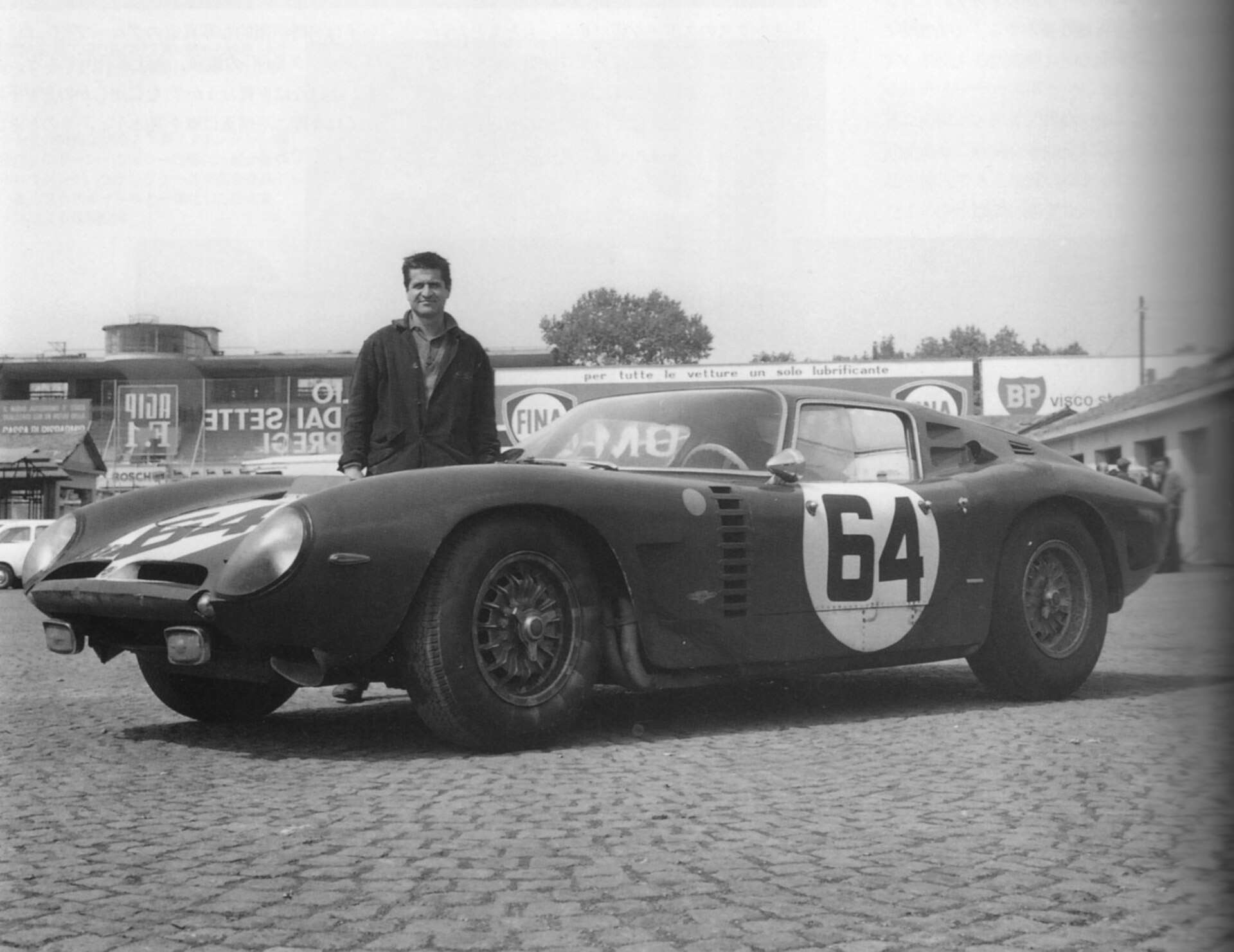
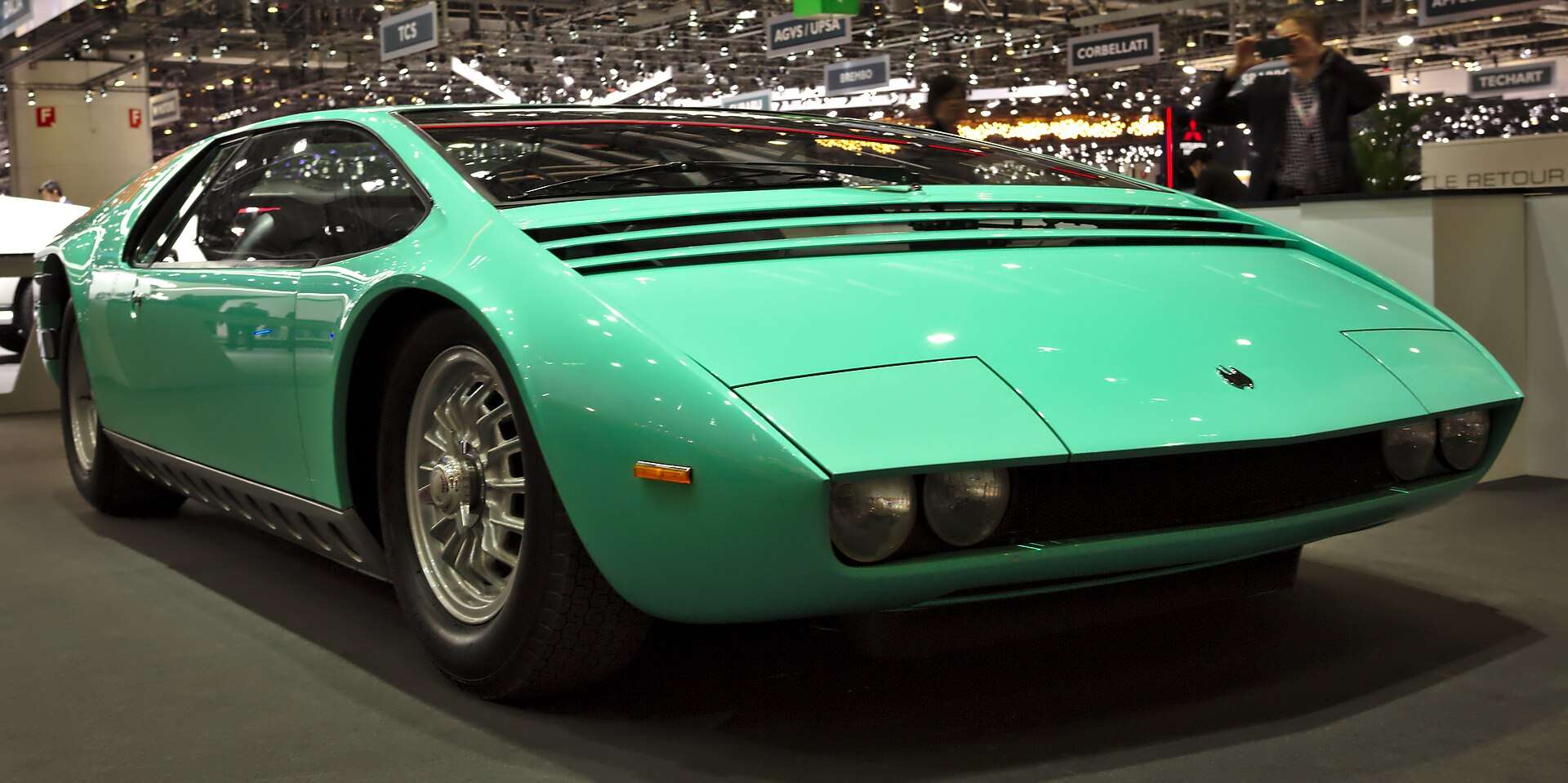
The 2+2 was one of the last things the company made before it went bankrupt. It was an effort to sell the GT America’s performance to buyers who wanted rear seats, which Ferrari was already doing with the 330 GT 2+2. Broad Arrow says the car was shown in Turin in 1968 next to the Giugiaro-designed Italdesign Bizzarrini Manta. One of the two cars looked back at the GT America, and the other looked ahead to wedge design. That makes the 2+2 an interesting historical marker, even though it never went into production.
Provenance: what is documented
The following ownership chain comes from the Broad Arrow catalog and Koobs de Hartog’s research, as summarized in a 2021 MyCarQuest history:
- 1968: Shown at the Turin Motor Show as a Bizzarrini factory prototype.
- 1970: Bought still incomplete by Mauro Chigiotti of Grosseto, Italy, after Bizzarrini’s bankruptcy. Chigiotti owned several other Bizzarrinis. The MyCarQuest account says the car had no radiator, carburetor, pedals, electrics, differential or shock absorbers at that point.
- Circa 1971: Moved to South Africa, where it was owned by Mr. and Mrs. Louw of Durbanville.
- 1982: Advertised for sale in Road & Track, reportedly with 4,500 km. Bought by Ian R. Elliott of Johannesburg.
- 1984: Sold to Gerhard Malherbe, and stayed in South Africa.
- 2008: Restored by Reali in Livorno, Italy. While still registered in South Africa, it was given the newly stamped chassis number IGM0593VT.
- May 2017: Imported to the United States.
Two points in this history will get the most attention from serious bidders. The first is the 1970 purchase. The car left the factory unfinished, so someone completed it later, and the catalog does not say who or when. The second is the 2008 chassis stamp. Broad Arrow is open about it, calling IGM0593VT an “administrative identity.” That is honest disclosure, not a warning sign. Still, it means the car’s identity rests on documents and continuous ownership, not on original factory numbers.
Condition: what we know and what we don’t
Verified: The last documented restoration was done in 2008 by Reali in Livorno. The car is finished in Champagne Metallic over brown leather, and the listing includes 78 photographs. Not stated: the current mileage, any mechanical work since 2008, whether the engine is original to the Turin car or to the 1970s completion, and whether the colors match the 1968 show car. A restoration from 2008 is now close to 20 years old. Buyers should ask for the Reali invoices, period photos from Turin, and any pictures showing the car’s condition when it arrived in South Africa.
Comparable sales
There is no direct comparable for a one-off Bizzarrini 2+2. The closest guides are recent 5300 GT results and current estimates:
| Car | Venue | Result |
|---|---|---|
| 1968 Bizzarrini 5300 GT Strada Alloy (1A3 0323) | RM Sotheby’s Monterey, 2023 | Sold, $915,250 |
| 1968 Bizzarrini 5300 GT Strada | Gooding & Co. Amelia Island, 2022 | Sold, $775,000 |
| 1967 Bizzarrini 5300 GT Strada Alloy (IA3 0264) | RM Sotheby’s Monaco, 2024 | Sold, €736,250 |
| 1968 Bizzarrini 5300 GT America | Bring a Trailer, December 2025 | Bid to $1,025,000, not sold |
| 1966 Bizzarrini 5300 GT Strada | Broad Arrow, Zoute, Oct. 9, 2026 (Lot 181) | Estimate €700,000 to €850,000 |
| 1968 Bizzarrini 5300 GT Strada | Broad Arrow, Zürich 2026 | Estimate CHF 700,000 to CHF 830,000 |
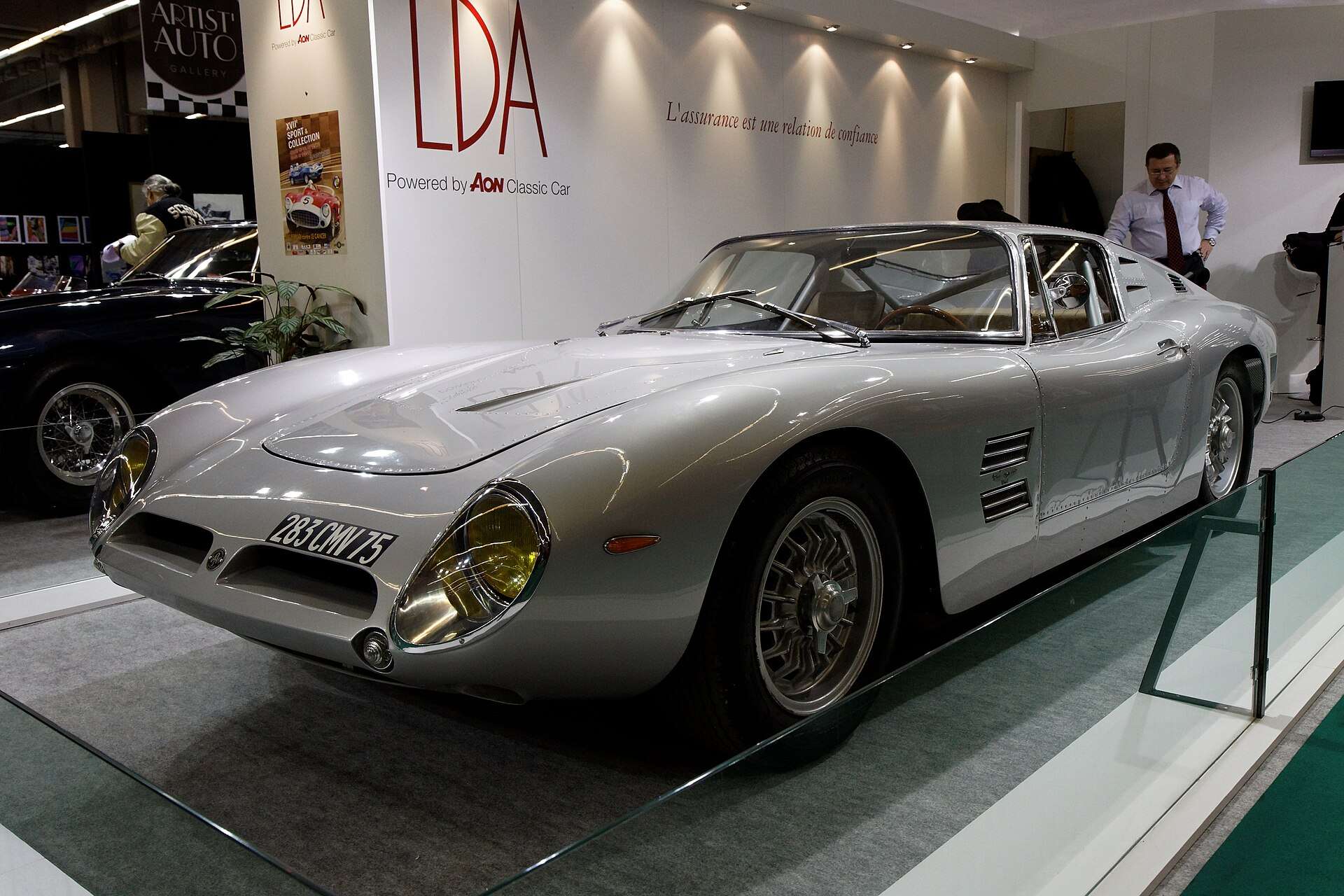
Market reading: Documented, well-restored Stradas are selling in the $750,000 to $950,000 range. This prototype is estimated at about half of that. A 2021 report said the car was advertised privately for around $550,000 in 2017, so the current estimate is below that asking price as well. We read this as a discount for three things: a four-seat body in a market that rewards two-seat competition cars, a completion history that is not fully explained, and a chassis number assigned in 2008. The estimate should not be read as a comment on the car’s quality.
The factor that will decide the price
The deciding factor is proof that this is the 1968 Turin show car, and not only a car that shares its history. The one-off story is where the extra value comes from. Bidders will be looking at how well the Koobs de Hartog records, the 1970 bankruptcy purchase, the 1982 Road & Track advertisement and the 2008 Reali restoration connect to one another. They will also want to see whether period photos show the same body and details as the car being sold.
If the file makes that connection clearly, this car could sell above its high estimate. It could even approach Strada prices, because there is only one and it has a clear place in Bizzarrini’s last chapter. If the documents leave gaps, bidders will value it as a rare but unusual four-seat Bizzarrini, and the result will likely land within the estimate. In both cases, the engine and the paint are not what will set the price.
What collectors should take away
- Facts: one-off, 1968 Turin show car, aluminum body, de Dion rear, 327 V8, restored in 2008, re-stamped chassis in 2008, first public sale, estimate $400,000 to $500,000.
- Interpretation: the estimate prices in some doubt about identity. The final result will show how much the market charges for that doubt on a documented Italian prototype.
- Before bidding: ask for the full Koobs de Hartog file, Turin period photos, records from the 1970s completion and the Reali restoration invoices.
For more on the brand, see our coverage of the Bizzarrini 5300 Aperta Lusso and why it isn’t a continuation car, the engineering behind the Aperta Lusso, and the $1 million Iso Grifo impounded at Villa d’Este. For more on Broad Arrow’s fall sales, including the 300 SL Gullwing at Audrain, read our Collector Car Market Brief.
The collector car market, every weekday morning.
Auction results, price moves and what’s crossing the block, read in four minutes. Free, from Modern Car Collector.
No spam, unsubscribe in one click. Or read more about the Brief.
Related Posts:
- Collector Car Market Brief: Sampras's BMW Z8, Two…

- Record Ferraris, Rare Icons and 15,000 RPM: The Week…

- Bizzarrini 5300 Aperta Lusso: The Engineering Behind…

- Five Built, Three That Count: How to Read the MCA…

- Dan Gurney's Eagle Chassis 103 Didn't Win at Spa.…
- Big-Block 1968 Chevelle SS Convertible With Air Ride…

 Kyle Matthews
  Elizabeth Puckett
  Shawn Henry