

A car that has not moved since the autumn of 1939 has its own kind of silence. The tyres have settled into flat spots, the brass has turned the colour of strong tea, and the seat last held a passenger before rationing began. When Bonhams offers the seven cars it calls the “Somerset Hoard” at its Golden Age of Motoring Sale in London on 30 October, that silence will do a lot of the selling.
It should not do the pricing. The find is real. Bonhams says the seven cars stayed together in Spiers family ownership, untouched and unused since the outbreak of the Second World War. But the veteran car market does not reward survival the way the post-war market does. Veteran cars are bought to be driven, above all on one road on one Sunday every November. In that world the most valuable document a car can carry is not a bill of sale or a barn-find photograph. It is a Veteran Car Club Dating Certificate. The hoard’s most important asset may turn out to be less what was in the barn than what is in the Somerset registration records.
What Bonhams is actually selling
The hoard runs as lots 205 to 211 in the motor car section of the sale, which starts at 17:00 GMT at New Bond Street:
- Lot 205: c.1905 Humber (Coventry) 8/10hp two-seat open tourer, registration YD 5598. £20,000–£30,000.
- Lot 206: c.1902 Progress 9hp two-seat open tourer, De Dion Bouton engine. £35,000–£45,000.
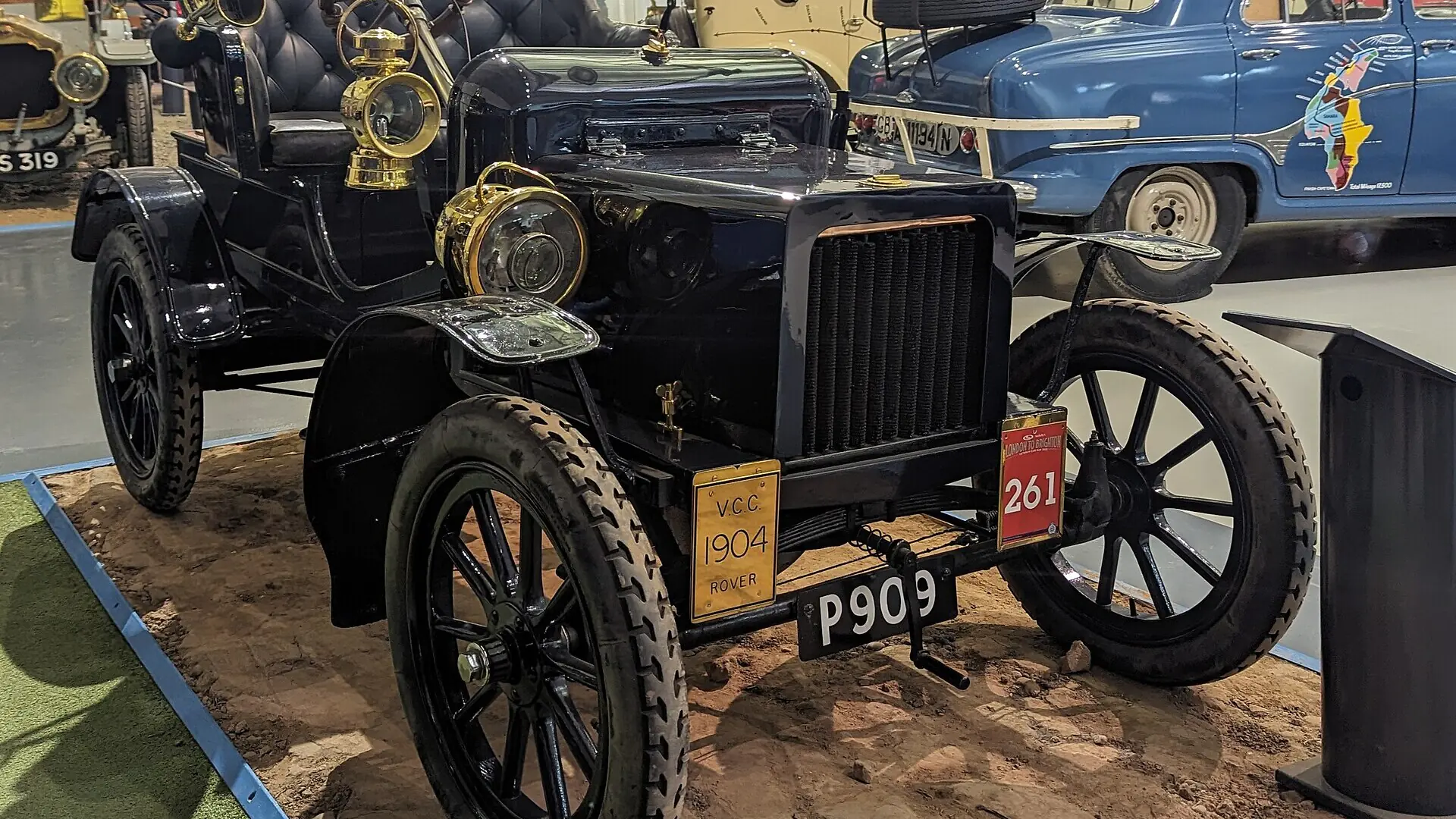
- Lot 207: c.1905 Rover 8hp two/four-seat open tourer, chassis no. 103. £25,000–£35,000.
- Lot 208: c.1903 Baker Electric two-seat runabout, registration Y 3907 (formerly Y 311). £35,000–£45,000.
- Lot 209: c.1903 Darracq 12hp twin-cylinder rear-entrance tonneau, registration A 3367. £55,000–£75,000.
- Lot 210: c.1903 Swift 6hp three-seater, coachwork by Hollick & Pratt. £35,000–£45,000.
- Lot 211: 1913 Belsize 10/12hp open tourer, registration K 923. £10,000–£15,000.
Together the seven are estimated at £215,000 to £290,000. Every lot description ends with the same warning. Each car comes from long-term dry storage, “will require extensive restoration before returning to the road,” has unknown mechanical condition, and is sold strictly as viewed.
That warning tells you what kind of sale this is. These are not preservation-class survivors ready for a concours class. They are seven restoration projects with unusually clear histories. Seven projects with unusually good paper trails. Pay for the trail.
The line drawn at 1 January 1905
The timing is deliberate. The sale is held two days before the London to Brighton Veteran Car Run, which leaves London at sunrise on Sunday 1 November. Entry rules are strict. A car must have been built before 1 January 1905 and must hold a valid VCC Dating Certificate or Veteran Passport. A great deal of the veteran market’s value sits on that one date.
Four of the seven are catalogued as c.1902 or c.1903: the Progress, the Baker, the Darracq and the Swift. Each looks like a possible Brighton car, but none is yet proven to be one. The lot descriptions do not mention existing dating paperwork, so each would presumably go before the VCC’s dating process like any newly surfaced car.
The Humber and the Rover are both catalogued as c.1905, and for them the word “circa” matters a great deal. According to Bonhams, the Rover 8hp was shown at the Crystal Palace show in February 1905. This car’s first known registration is “Y 418,” issued in October 1905 to Robert Granville of Glastonbury. The Humber’s identification plate shows it was supplied through Humber’s Liverpool depot. Its original registration appears to be lost, replaced by a Somerset issue of “YD 5598” in October 1932. If evidence showed that either car was built in 1904, it would become Run-eligible and far more buyers would want it. Without that evidence, it is an Edwardian car that looks like a veteran.
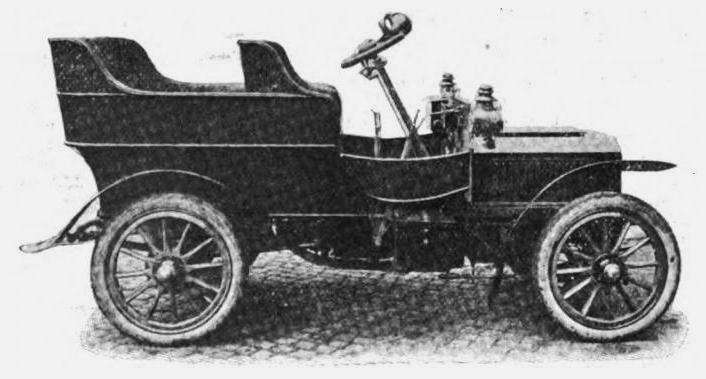
The Belsize shows what happens on the far side of that line. On paper it is arguably the best-documented car of the seven. It keeps its original maker’s plate, carburettor and registration plate, plus a supplier’s plate from a Bridgwater motor agent, and it was first registered on 28 June 1913 to an owner near Taunton. It is still the cheapest lot in the group by a wide margin. A small four-cylinder Edwardian tourer from a marque that was gone by 1926 has a very different buyer pool from a twin-cylinder car that could run to Brighton. Rare and complete is nice. Eligible is what moves the estimate.
Two Darracqs, one lesson
The clearest market signal in the sale comes from comparing two cars by the same maker.
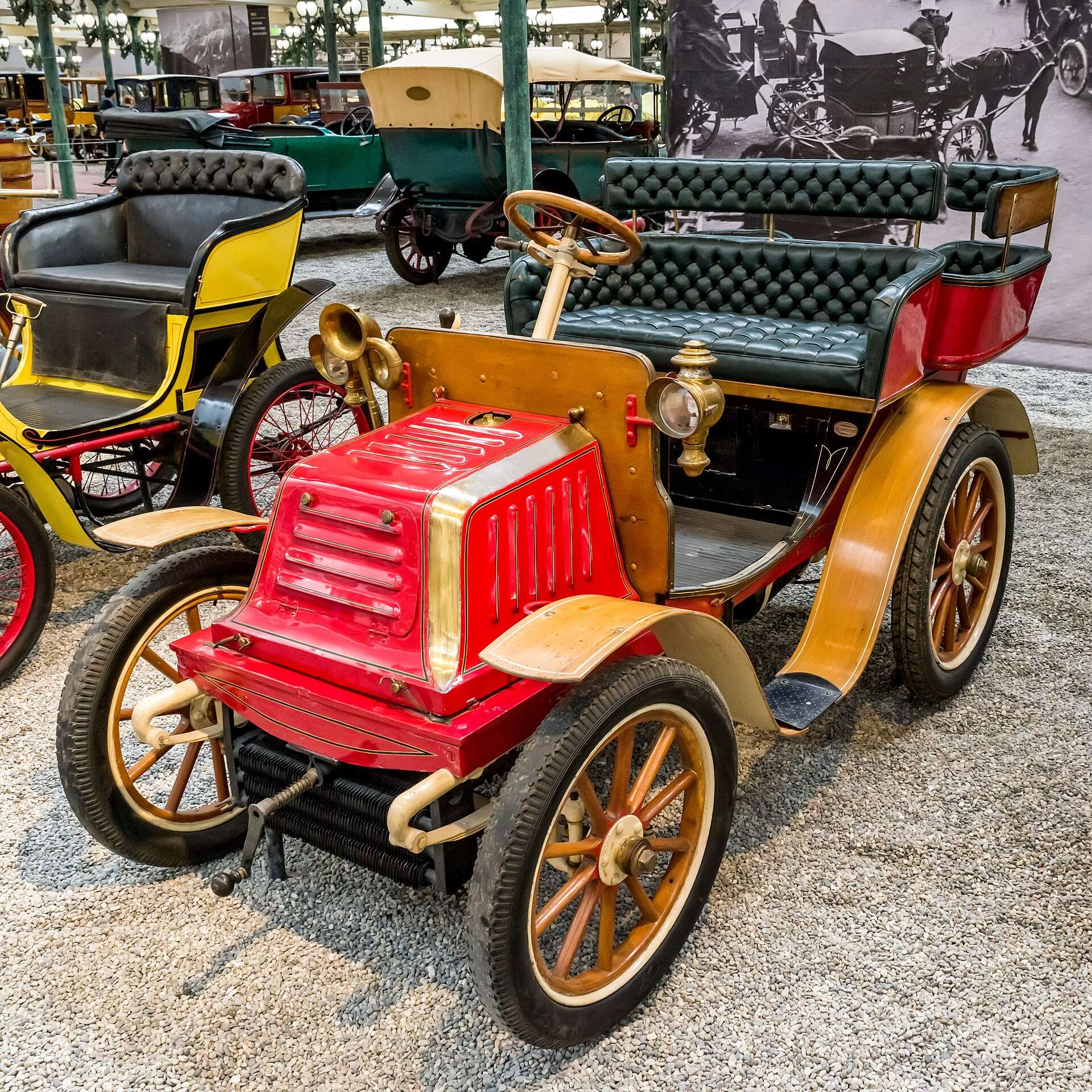
The hoard’s Darracq is a 12hp twin-cylinder rear-entrance tonneau. Bonhams describes it as a new model for the 1903 season, with trembler-coil ignition and flitch-plate chassis construction. It still carries “A 3367,” a registration in the London County Council’s “A” series. The estimate is £55,000–£75,000.
Five lots later comes lot 216, a 1904 Darracq 10hp twin-cylinder swing-seat tonneau. On paper it is the smaller car, yet it carries an estimate of £150,000–£200,000. According to the catalogue it was delivered new in the UK, has a known ownership history, was restored in the 1980s, has been in its current ownership since 2000, and has run to Brighton many times. Its file includes a 1985 letter to the VCC’s Dating Committee.
At the estimates, the gap is somewhere between £95,000 and £125,000. That gap is the market’s price for a proven, dated, running history. It also explains why this hoard behaves differently from the post-war discoveries we have covered, such as the hidden Swiss supercar hoard. In the post-war market, buyers pay for cars that were never used, which is why untouched originality on a modern supercar commands such a premium. In the veteran market, they pay for cars that can prove they still work. Decades of Brighton finishes would worry a Pebble Beach judge. In this market, they’re provenance.
The top of the sale makes the same point from another direction. A 1904 Rochet-Schneider 16/22hp four-cylinder side-entrance tonneau, lot 215, carries an estimate of £380,000–£530,000 on its own. That is more than all seven hoard cars combined. At the top of this market, buyers pay for engineering, capability and a record of use. A good discovery story does not change that.
The provenance is in the county archive
The overlooked part of this sale is how much of the hoard can be traced on paper.
Bonhams cites the Somerset registration records for the Baker. It was registered “Y 311” to Alfred Bruce of Burrington, near Bristol, on 18 January 1905. In June 1915 that number was reassigned to the Bristol Carriage and Wagon Works. The car was reissued “Y 3907” and then sold to an owner in Dalbeattie, in south-west Scotland. The Rover has its October 1905 Glastonbury registration. The Belsize has a dated first registration near Taunton. The Humber’s 1932 reissue suggests that it, at least, was still being used in the 1930s.
This matters beyond its romance. Under the DVLA’s V765 scheme, a historic vehicle can be re-registered under its original number. The keeper needs pre-1983 evidence linking the number to the car. That can be an original logbook or archive records authorised by the archivist, and the application must be approved by the relevant owners’ club. Without that evidence, a car may get an age-related number. If no dating evidence exists at all, it is likely to get a “Q” plate. In British veteran circles, a car wearing its original number is a more complete car. The Somerset records are exactly the kind of evidence the scheme asks for. For any buyer of these lots, that research is worth doing before the hammer falls, not after.
The Progress shows what happens when the paperwork runs out. Bonhams says no registration is known and no maker’s plates have been found. The only number is “1 78 1,” stamped on the front seat sill, and nobody is sure whether it reads 1781 or 78. The car’s identity rests on its features: “Progress” hub caps, three side levers, fully elliptic front springs and a De Dion Bouton engine. Progress was a short-lived Coventry make. A correctly identified survivor is worth having, but this is the lot where the buyer’s own research, and eventually the VCC’s judgement, carry the most weight.
Details worth keeping
Almost every car here will need restoring before it can do what veteran cars are for. Nobody’s leaving these as found, so the real argument is what survives the restoration. Each car has details that a careless restoration would lose.
The Rover keeps its original steel-cable steering, worked through fibre discs and Bowden cables from the wheel. That was an idiosyncratic solution even in 1905, and it is exactly the kind of part a restorer is tempted to “improve.” The Humber has its original radiator with an enamelled Humber badge, and its step plates are stamped “Humber Limited.” The Swift has its original British Motor Traction Co licence plate, numbered 1837, mounted on the back of the engine. That plate is a relic of the patent-licensing regime of the British industry’s first years. Bonhams cites the Swift Register as saying only a little over 200 Swift cars of all types survive worldwide.
The Baker needs its own paragraph. It was built in Cleveland, Ohio, by the Baker Motor Vehicle Company, which Walter C. Baker and F. Philip Dorn formed in 1899. Bonhams says Bakers reached Britain in early 1902 and were shown at the Agricultural Hall that April. This car still has its original electric motor with its plate attached, its original electric bell under the footboard, and its original headlamp. Contemporary claims gave the original battery a range of about 40 miles on good level roads. Restoring an early electric is a different discipline from restoring a De Dion-engined car, and fewer workshops do it. A buyer should find a restorer before bidding.
What serious buyers should weigh
For anyone bidding on 30 October, the hammer price is likely to be the smallest number in the project. What matters more:
- Dating evidence. For the Humber and Rover especially, any period evidence that points to a 1904 build is worth more than any cosmetic detail.
- Archive records. Registration ledgers that link a number to a chassis decide whether a car can go back on the road under its original identity.
- Completeness of original components. Maker’s plates, licence plates, steering gear and radiators are the parts that make a car itself and not a replica.
- Documentation before restoration. Bonhams offers condition photographs. A careful new owner will build on them and record every surface before any work begins, because this is the only chance to do it.
- The restorer. Veteran work is a small specialist field. Waiting lists and expertise matter more than labour rates.
Buyers should keep the same discipline we have urged for unverified barn finds in general. As with any barn find, the story is where the research starts. Bonhams’ catalogue is unusually candid about what is and is not known, and that candour is a credit to the sale.
The end of the hoard
One fact gets lost in the romance. The Spiers family kept these seven cars together for more than eight decades, and Bonhams is offering them as seven separate lots. After 30 October, the Somerset Hoard will probably stop existing as a group. It will become seven cars in seven garages, each heading toward its own restoration and, with luck, its own dating certificate.
What goes with each car is its paperwork: a Glastonbury registration, a Bristol ledger entry, a Liverpool depot plate. In a market where a car’s value depends on proving when it was built and that it can still run, that paperwork is the inheritance. The barn kept these cars safe for 85 years. The archive will decide what they become.
Which would you rather own: the Belsize with the cleanest paper trail, or the Humber, whose 1904 case is still unproven?
The collector car market, every weekday morning.
Auction results, price moves and what’s crossing the block, read in four minutes. Free, from Modern Car Collector.
No spam, unsubscribe in one click. Or read more about the Brief.


 Eve Nowell
  John Lloyd