

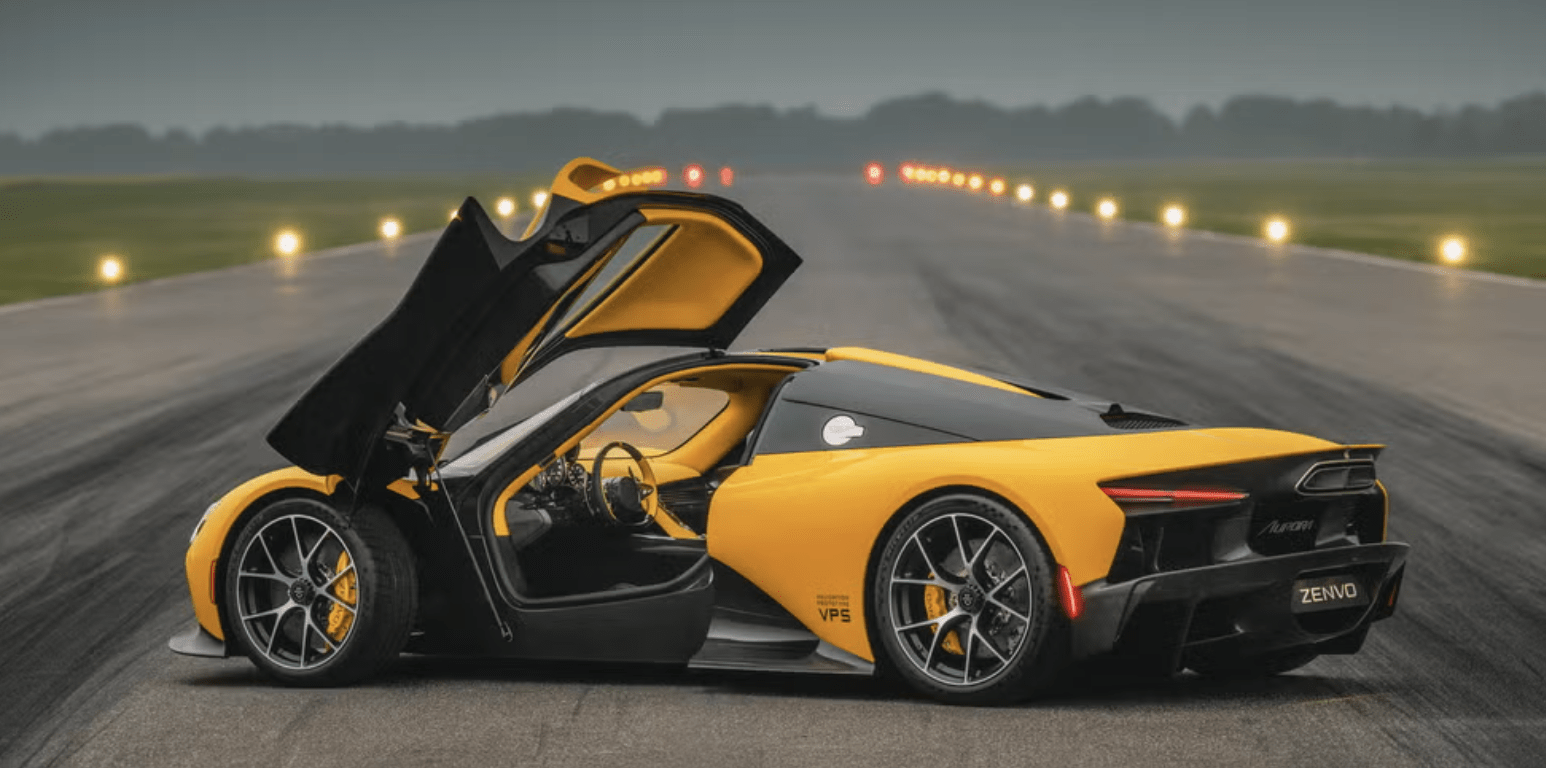
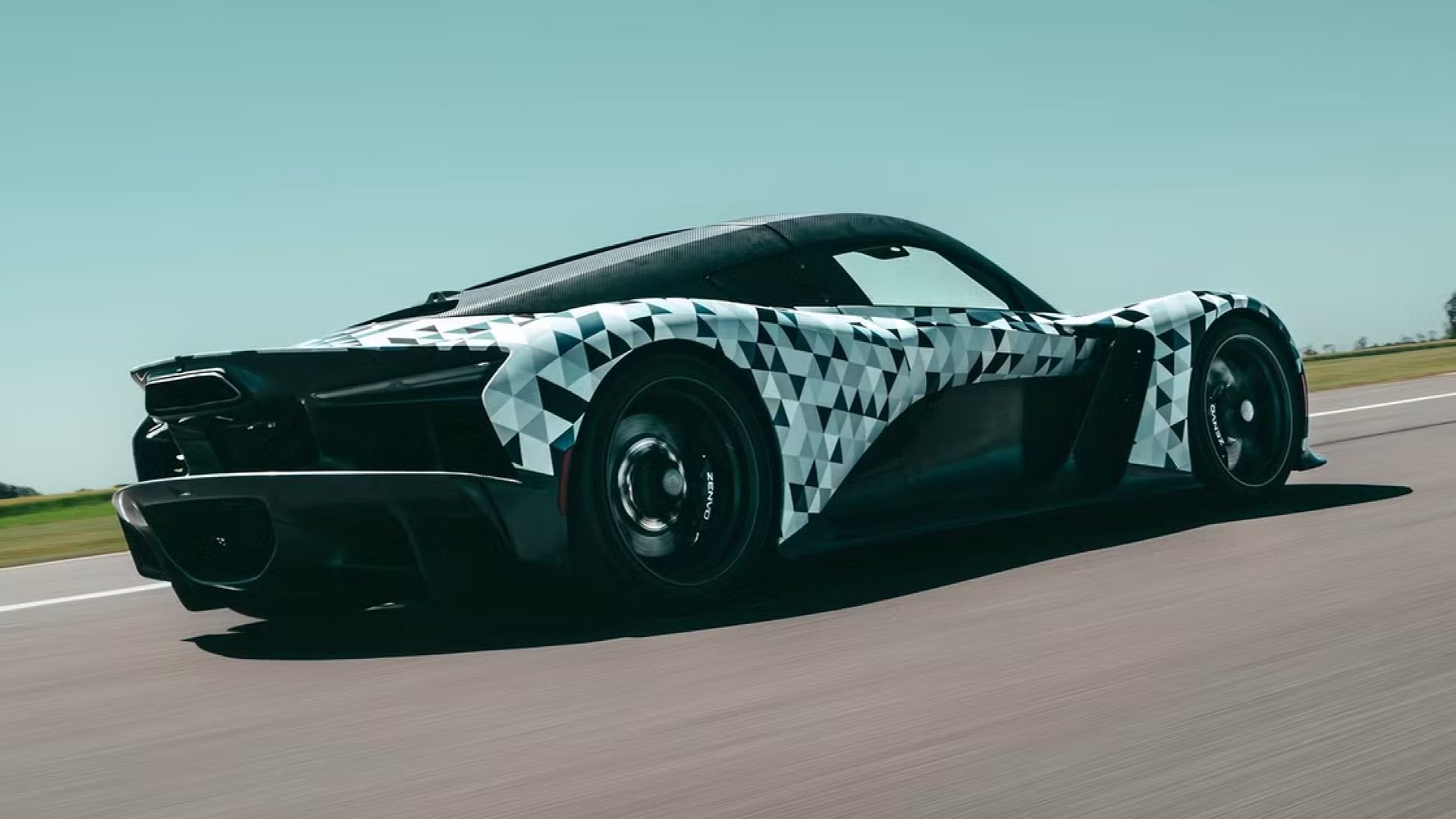
Danish hypercar outfit Zenvo has spent the better part of two decades making roughly five cars a year and being best known for a rear wing that tilts. That era is officially over. Ahead of this weekend’s Goodwood Festival of Speed, the company pulled the covers off the production-representative Aurora Tur — two validation prototypes bound for the Sussex hillclimb, plus a single Agil show car riding shotgun.
If you’re new to the naming: Aurora is the platform, and it splits into two bodies on the same bones. Tur is the grand tourer, Agil is the track weapon. The cars headed to England are what Zenvo calls VP units — validation prototypes — which is the polite industry term for “these are the ones we actually plan to build, and we’re now stress-testing whether the fit, finish, and homologation hold up.” That matters, because plenty of boutique hypercars die in exactly this gap between a pretty reveal and a car a customer can register. Zenvo says first deliveries are targeted for the second half of 2027.
Related Articles
- Pristine 3k-Mile 2009 Ford F-250 Harley-Davidson Edition Hits No-Reserve Bring a Trailer Auction
- GAA Classic Cars Set to Roll Out Boss 429s, Jimmy Buffett’s Nash, and a SpaceX-Inspired Build at July Auction
Now, the engine, because it’s the whole point. Zenvo built a bespoke 6.6-liter V12 with MAHLE Powertrain, named “Mjølner,” and it targets 1,250 bhp on its own while spinning to a 9,800-rpm redline. Here’s the technically interesting bit the spec-sheet skimmers miss: it’s a 90-degree hot-V layout, meaning the four turbochargers live inside the vee of the engine rather than hanging off the outer exhaust ports. Packaging the turbos in the valley shortens the exhaust path to the turbine, which sharpens throttle response and helps spool — Zenvo is chasing a naturally aspirated feel out of a quad-turbo motor, and the hot-V is how you get there. It’s the same architecture BMW and Mercedes-AMG use on their hot-V turbo engines, scaled up to twelve cylinders and a genuinely absurd output.
Bolt on the electric side and the Tur’s story gets more specific. The Tur runs three electric motors contributing another 600 bhp, for a targeted 1,850 bhp total, and — critically — those motors give it all-wheel drive with torque vectoring on the front axle. That’s the mechanical dividing line between the two Auroras: the Tur uses its front motors to claw traction and rotate the car, which is exactly what you want for high-speed stability and confidence on a wet B-road. The Agil ditches that hardware to save weight and stays lighter and more rear-biased. Same platform, opposite personalities.
The chassis is a new carbon monocoque Zenvo calls ZM1, developed with Managing Composites, and the Tur wears Michelin Pilot Sport Cup 2 tires over carbon-ceramic brakes, with a pushrod double-wishbone setup and adjustable ride height leaning toward comfort. In other words, it’s built like a race car and then softened just enough to survive a road.
One underappreciated engineering flex: Zenvo says the Mjølner V12 meets global emissions standards across the engine’s lifespan. Building a 1,250-bhp twelve-cylinder that passes emissions in the U.S., Europe, and beyond in 2027 is arguably harder than making the power itself. That’s why so many low-volume makers quietly go electric or lean on a borrowed powertrain — certifying your own bespoke V12 globally is a brutal, expensive undertaking, and it’s the real reason this thing took years.
Related Articles
- 1935 Packard Twelve Series 1208 Seven-Passenger Sedan: Grand American Luxury at Its Absolute Peak on Bring a Trailer
- 5 Coolest Collector Cars You Can Buy for Under $20k
A note of healthy skepticism on the numbers flying around: Zenvo itself hasn’t locked final performance figures, and the top-speed and acceleration claims circulating right now don’t fully agree with one another. Treat any specific mph figure as a target until the validation program says otherwise. Same goes for production volume — the company has only committed to “strictly limited,” without publishing a confirmed unit count, so anyone quoting you an exact allocation is guessing.
For prospective buyers, the practical takeaway is this: a hand-built Danish hypercar with a one-off V12 means parts, service, and support will route through Zenvo’s small dealer network, not your local shop. That’s the trade for owning something rarer than a Bugatti. If Zenvo hits its 2027 timeline with the power and emissions targets intact, it will have done something Pagani and Koenigsegg-tier — and something most startups only promise.
Images Via: Zenvo Automotive
The collector car market, every weekday morning.
Auction results, price moves and what’s crossing the block, read in four minutes. Free, from Modern Car Collector.
No spam, unsubscribe in one click. Or read more about the Brief.
Related Posts:
- Record Ferraris, Rare Icons and 15,000 RPM: The Week…

- Goodwood Road Racing Club Comes to America: What…

- Lightning McQueen Joins the 2026 Goodwood Festival of Speed

- Zenvo Aurora V12 Hypercar Debuts at Goodwood, Sets…
- The Collector Car Market Paid Up for Certainty This…

- Everything Modern Car Collector Covered Last Week
 EL Puckett
  Kyle Matthews