

For decades, the collector car market behaved like a slow-moving freight train: predictable, blue-chip, and dominated by a familiar cast of pre-war classics and a handful of golden-era Ferraris. That world has changed. As a younger generation of enthusiasts inherits both wealth and nostalgia, the cars that quicken pulses—and command premiums—are shifting. Market indices from Hagerty and auction data from houses such as RM Sotheby’s and Bring a Trailer point to a market that is broadening rather than contracting.
Predicting appreciation is never an exact science, and nothing here should be read as financial advice. Cars are, first and foremost, machines to be enjoyed. But certain segments combine the ingredients that historically precede a rise in value: cultural significance, finite supply, generational demand, and a reputation that has not yet been fully priced in. Below are five segments that look well positioned over the next five years.
1. Analog-Era Japanese Performance Cars

The single most powerful force reshaping the collector market is demographic. Buyers who grew up in the 1990s and early 2000s—weaned on arcade racers, the early Fast & Furious films, and import tuner culture—are now entering their peak earning years. Their dream cars are not Duesenbergs; they are the turbocharged and naturally aspirated icons of Japan’s performance heyday.
The A80 Toyota Supra, the R34-generation Nissan Skyline GT-R, the Mazda RX-7 (FD), the Honda NSX, and the Acura Integra Type R have already moved from used-car classifieds to serious auction lots. Yet many remain affordable relative to their European contemporaries, and unmolested, low-mileage examples are genuinely scarce after years of hard use and modification. As clean originals continue to thin out, the gap between a tired modified car and a preserved original is likely to widen further. Hagerty’s valuation tools have tracked steady upward movement across this category, and the trend shows little sign of reversing.
2. Early Modern Hypercars (The “Holy Trinity” Era)

The 2013–2015 wave of hybrid hypercars—the Ferrari LaFerrari, McLaren P1, and Porsche 918 Spyder, collectively dubbed the “Holy Trinity”—marked a genuine technological inflection point. They were the first time three of the world’s great makers simultaneously embraced electrification at the very top of their ranges, and they did so in deliberately limited numbers.
Production caps were the entire point: roughly 499 examples of the LaFerrari, 375 of the P1, and 918 of the 918 Spyder. That scarcity, combined with their status as historical milestones, has kept values firm and frequently rising on the secondary market. As the broader industry pivots toward fully electric performance, these analog-feeling hybrids increasingly look like the closing chapter of an era—the last hypercars conceived around a screaming combustion engine with electrification as an enhancement rather than a replacement. Bookmark-worthy results for these cars appear regularly across the major auction houses.
3. Air-Cooled and Early Water-Cooled Porsche 911s

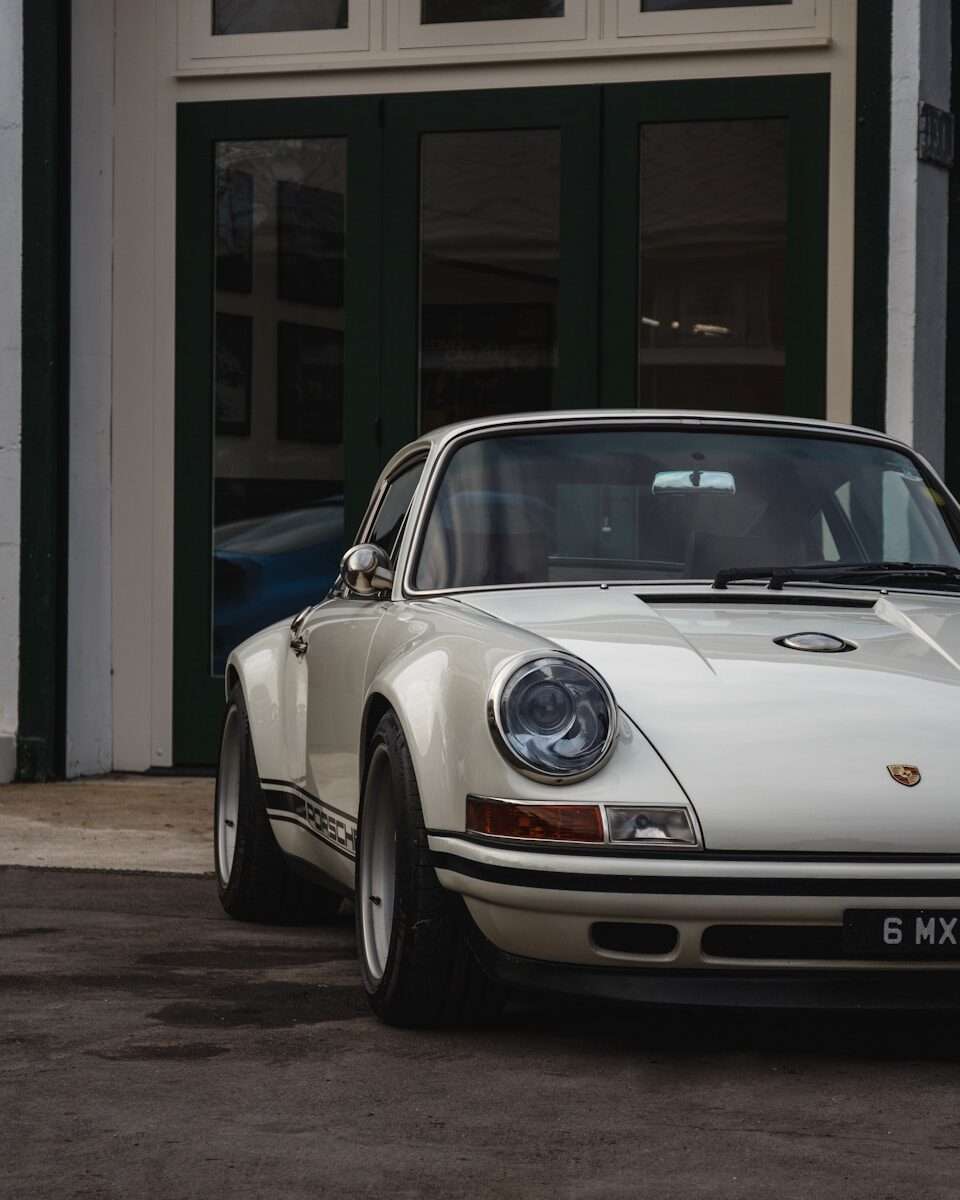
The Porsche 911 is arguably the most consistently appreciating model line in automotive history, and the story is far from over. Air-cooled cars built through 1998—particularly the final 993 generation—have long been blue-chip holdings. But the appreciation wave is steadily rolling forward into the water-cooled 996 and 997 generations.
The 996, once dismissed for its shared parts and “fried egg” headlights, is being reappraised as an accessible entry point into 911 ownership and a future classic in its own right—especially in GT3 and Turbo form. The 997 generation, widely regarded as one of the best-driving 911s ever built, pairs modern usability with classic proportions. Special editions, manual-transmission GT cars, and limited-run models continue to lead the charge. For owners and prospective buyers, the breadth of Porsche’s own heritage resources underscores how deliberately the brand cultivates collectibility.
4. Restomods and Continuation Builds

Perhaps the most interesting structural shift in the market is the legitimization of the restomod: a vintage car re-engineered with modern power, brakes, suspension, and comfort. Once viewed skeptically by purists, the best of these builds now command sums that rival—and occasionally exceed—period-correct originals.
Builders such as Singer (Porsche 911), Icon, and Ringbrothers have elevated the craft to something closer to bespoke manufacturing, while official continuation programs—Jaguar’s Lightweight E-Type and the Aston Martin DB4 GT among them—lend factory legitimacy to the idea of building “new” classics. The appeal is straightforward: the soul and shape of a beloved classic with the usability of a contemporary car. As demand grows for vehicles that can be driven hard and often, this segment looks poised to keep expanding, with the strongest names commanding waiting lists measured in years.
5. Youngtimer SUVs and Off-Road Icons

The final segment reflects a lifestyle-driven shift in taste. Rugged, characterful four-wheel-drives from the 1980s and 1990s—the original Land Rover Defender, the Mercedes-Benz G-Wagen, the Toyota Land Cruiser (FJ60 and 80 series), and the first-generation Ford Bronco—have moved from utilitarian workhorses to coveted collectibles.
Several forces are converging here. These trucks are increasingly rare in unrusted, original condition; they tap a powerful vein of adventure-oriented nostalgia; and their boxy, honest designs feel refreshingly authentic in an age of homogenized crossovers. The early Ford Bronco in particular has seen dramatic appreciation, and clean Land Cruisers now routinely command sums that would have seemed implausible a decade ago. As long as the appetite for vehicles that promise escape and capability persists, this segment has room to run.
The Bigger Picture
What unites these five segments is not a single trait but a shared logic. Each is anchored by genuine cultural resonance, constrained by finite supply, and propelled by a generation of buyers chasing the cars that defined their formative years. The collector market is no longer a monolith of pre-war classics and a narrow band of European exotica; it is a living, broadening landscape that reflects how enthusiasm itself is changing.
None of this guarantees returns. Markets correct, tastes evolve, and condition, provenance, and originality matter enormously to any individual car’s trajectory. The smartest approach remains the oldest one: buy the best example you can of something you genuinely love, maintain it properly, and let any appreciation be a bonus rather than the goal. On that front, the next five years look unusually interesting.
The collector car market, every weekday morning.
Auction results, price moves and what’s crossing the block, read in four minutes. Free, from Modern Car Collector.
No spam, unsubscribe in one click. Or read more about the Brief.


 Kyle Matthews
  Shawn Henry