
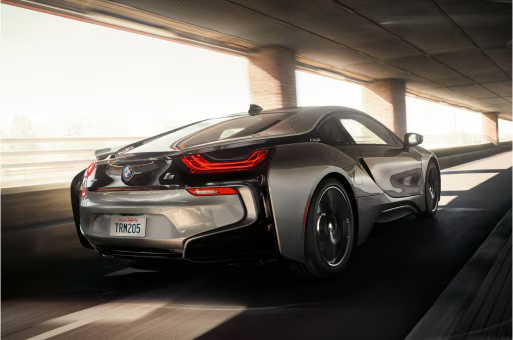
The BMW i8 once carried a price tag that matched its concept-car looks, but the carbon-fiber hybrid has now crossed a threshold few would have predicted at its launch. Used examples are changing hands for less than $50,000, making the i8 the most affordable route to a car with scissor-style doors and a carbon-fiber tub.
That figure marks a steep fall from where the i8 began. The model arrived in 2014 with a base price near $135,000, and even the final 2020 cars, built before BMW ended production, listed above $140,000. Depreciation has been unforgiving, and the result favors anyone shopping today.
Early 2014 to 2016 cars with 30,000 to 55,000 miles are landing in the low-to-high $40,000s, while 2017 to 2019 examples tend to sit just above $50,000. Buyers chasing the best balance of condition and value are pointed toward a 2017 or 2018 coupe with under 40,000 miles. The Roadster, introduced for 2019, carries a premium and rarely dips below $55,000.
At this price, the competition is serious. A C7 Corvette Z06, a Porsche Cayman, an older 911 or a Shelby GT500 all fall within reach, and several outperform the i8 outright. Its combined 357 horsepower delivers a 4.2-second sprint to 60 mph, but the car behaves more like a grand tourer than a track machine. Its calling card was always efficiency and presence, returning over 70 MPGe while turning heads in any parking lot.
Ownership demands caution. The lithium-ion battery on early cars is now more than a decade old, with replacement estimates running from $10,000 to over $15,000. Insurance costs more than on a comparable Corvette, independent repair shops are scarcer, and damaged carbon panels are costly to fix.
A specialist pre-purchase inspection is essential. For buyers who go in informed, the i8 offers exotic drama at a price that no longer matches its looks.
Source
Images Via: BMW
The collector car market, every weekday morning.
Auction results, price moves and what’s crossing the block, read in four minutes. Free, from Modern Car Collector.
No spam, unsubscribe in one click. Or read more about the Brief.





 Kyle Matthews