

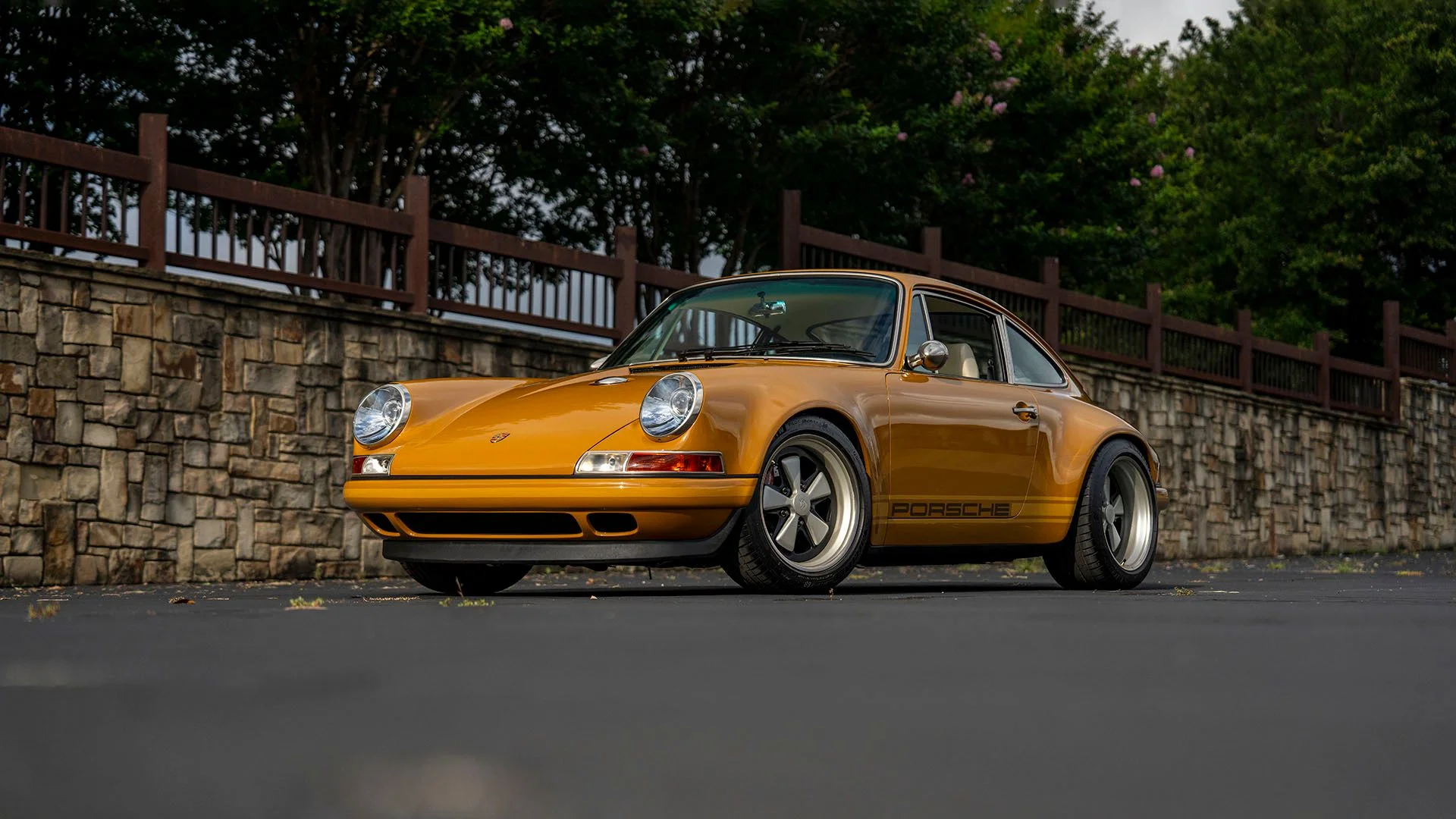
Broad Arrow has been climbing the auction-house ladder at an almost suspicious pace since it opened its doors in 2021, and its next move is the kind of thing that reshuffles Monterey Car Week’s pecking order. The Hagerty-owned house is now the official auction partner of The Quail, A Motorsports Gathering, and its inaugural sale under that banner runs August 13–14, 2026 at the Quail Golf Club in Carmel Valley, with the Friday session timed to the 23rd running of the event itself. Roughly 175 cars are expected.
Worth pausing on the corporate picture before we get to the metal, because it’s the more interesting story for anyone who thinks about this market seriously. Hagerty (NYSE: HGTY) is a publicly traded company that insures collector cars, publishes the valuation data much of the hobby leans on, and owns the auction house selling the cars. That’s an unusually vertically integrated stack for one business, and landing The Quail slot after four years at the Monterey Jet Center gives that stack a front-row seat at arguably the most curated event of the week. Keep that in mind when you read any valuation guidance: the house setting estimates is corporately related to the outfit publishing the price guide.
Now, the cars, and what the early consignment list actually tells you about where money is moving.
JDM has fully crashed the blue-chip party
The clearest market signal here is a 1996 Nissan NISMO 400R wearing an $800,000–$950,000 estimate. Sit with that number. NISMO built just 44 of these to celebrate the R33 GT-R’s Le Mans campaign, and the 400R swapped the standard RB26 for the stroked, 2.8-liter RBX-GT2 straight-six making 400 horsepower. A decade ago the idea of a nineties Nissan approaching seven figures would’ve gotten you laughed out of the room. This one, freshly imported after roughly thirty years in Japan, is priced like the modern classic it has become. If you want proof that the buyers who grew up on Gran Turismo now have real money, it’s this lot.
Related Articles
- Best Car Storage Bags and Bubbles for Protecting Your Collection Year-Round
- Win a First-Year 1967 Porsche 911S — and Modern Car Collector Readers Get More Entries to Win
That same modern-collectible energy runs through a 2005 Acura NSX in New Formula Red, one of 20 in that color with the six-speed manual, and a 2016 Dodge Viper GTC packing the 8.4-liter, 645-horsepower V10 with a proper manual, both offered without reserve. That “without reserve” tag matters and buyers should understand it: no-reserve means the car sells to the highest bid, full stop, with no secret floor price the seller can hide behind. Houses love it because it guarantees a sale and tends to whip up livelier bidding; sellers accept it when the market’s liquid enough that they trust the room. For a bidder, a no-reserve modern classic is where you can occasionally steal something, or get caught in a bidding-war fever and overpay. Know which one you’re doing.
Delivery-mileage supercars: art you’re afraid to drive
The headline modern piece is a single-owner 2020 Lamborghini Sián FKP 37 at $2.5–3 million, one of 63, with 284 miles on it. The Sián is historically notable as Lamborghini’s first hybrid, but the clever bit is how it hybridized: instead of a heavy lithium battery, it uses a supercapacitor paired with a 48-volt motor for a small electric boost, combining with the 6.5-liter V12 for 808 horsepower. Supercapacitors charge and discharge far faster than batteries and shrug off heat cycling better, which suits a car meant for short, violent bursts. The name, for the trivia drawer, honors Ferdinand Karl Piëch, born 1937.
Here’s the practical wrinkle nobody at the podium will dwell on: a 284-mile hypercar has been sitting, and cars like this hate sitting. Fluids degrade, seals dry, fuel goes stale, and exotic hybrid electronics don’t love long dormancy. Whoever buys it is paying a premium precisely for the mileage it doesn’t have, then inheriting a recommissioning question the moment they want to actually use it. That’s the paradox of the delivery-mileage market in one lot.
The same “wild modern” bin holds a 2023 Ford Bronco DR, one of 50 Baja racers Ford Performance had Multimatic build, with 19 miles and a livery nodding to the Big Oly Bronco that Parnelli Jones bludgeoned to back-to-back Baja 1000 wins in the early seventies. It’s a turn-key desert truck with no title for the street, which is its own ownership consideration.
The Porsche and Singer contingent
Air-cooled obsessives get a 1990 911 Reimagined by Singer, the “Los Angeles Commission,” at $1.1–1.3 million, with its Ed Pink–built 4.0-liter flat-six, and a genuinely special 1996 911 Turbo from the 993 generation in Paint to Sample Violet Blue, offered without reserve and recently gone through by RUF at Pfaffenhausen. Two teaching notes: Paint to Sample and Exclusive-department orders carry a documented premium because they’re factory-bespoke and hard to replicate, and RUF isn’t a tuner in the strip-mall sense but a recognized manufacturer in its own right, so that service history reads as provenance rather than modification.
Where the real money and history live
The seven-figure serious end leans on motorsport paper, because at this level provenance and event eligibility are the value. A 1954 Maserati A6GCS ($2.4–2.9 million) is a factory Works car raced by Luigi Musso, campaigned for decades at the Mille Miglia Storica and Monterey Historics, and documented by the Maserati authorities collectors actually trust. A 1981 Porsche 924 Carrera GTR ($600–800k) is a Brumos-run, Le Mans class-winning transaxle racer, one of 17. And a 1951 Porsche-Sauter 356 ($1.8–2.2 million) is being sold as a connective-tissue car between Porsche No. 1 and the America Roadster. The recurring phrase across these catalog entries, eligibility for the premier historic events, is doing quiet financial work: an invitation to the Mille Miglia or Monterey Historics is functionally part of the asset.
Related Articles
- Nearly New Hennessey Venom F5 Roadster Listed for $2.6 Million
- Delivery-Mile Bugatti Mistral Surfaces, Could Fetch Eight Figures
Anchoring the traditional blue chips is a matching-numbers 1955 Mercedes-Benz 300 SL Gullwing at $1.85–2.2 million. If you’re newer to this world, “matching numbers,” meaning the original engine, transmission, and major components the car left the factory with, is the single biggest swing factor on a car like this. A Gullwing with its original drivetrain can be worth a substantial multiple of an otherwise identical car running a replacement block, which is exactly why the catalog itemizes every original component down to the spindles.
A couple of practical reminders before anyone raises a paddle. Pre-sale estimates are guidance, not gospel, and the hammer price isn’t your final number, buyer’s premium gets stacked on top, so read the house’s terms before you fall in love. And with a chunk of this catalog offered without reserve, the first Quail sale under Broad Arrow’s stewardship should be a real-time readout on whether the modern-collectible surge still has legs, or whether 2026’s buyers have started getting picky. Either way, the consignment list is the most honest market report you’ll get all week.
Images Via: Nick Zabrecky/Courtesy of Broad Arrow Auctions.
The collector car market, every weekday morning.
Auction results, price moves and what’s crossing the block, read in four minutes. Free, from Modern Car Collector.
No spam, unsubscribe in one click. Or read more about the Brief.
Related Posts:
- Record Ferraris, Rare Icons and 15,000 RPM: The Week…

- The Collector Car Market Paid Up for Certainty This…

- Five Built, Three That Count: How to Read the MCA…

- LaFerrari Prices Are Moving: A 13,000 km Car Made…
- Weekly Roundup: Everything Modern Car Collector…
- Ferrari Daytona SP3 Value Jumped 168% in Ten Months.…

 Kyle Matthews
  Shawn Henry