

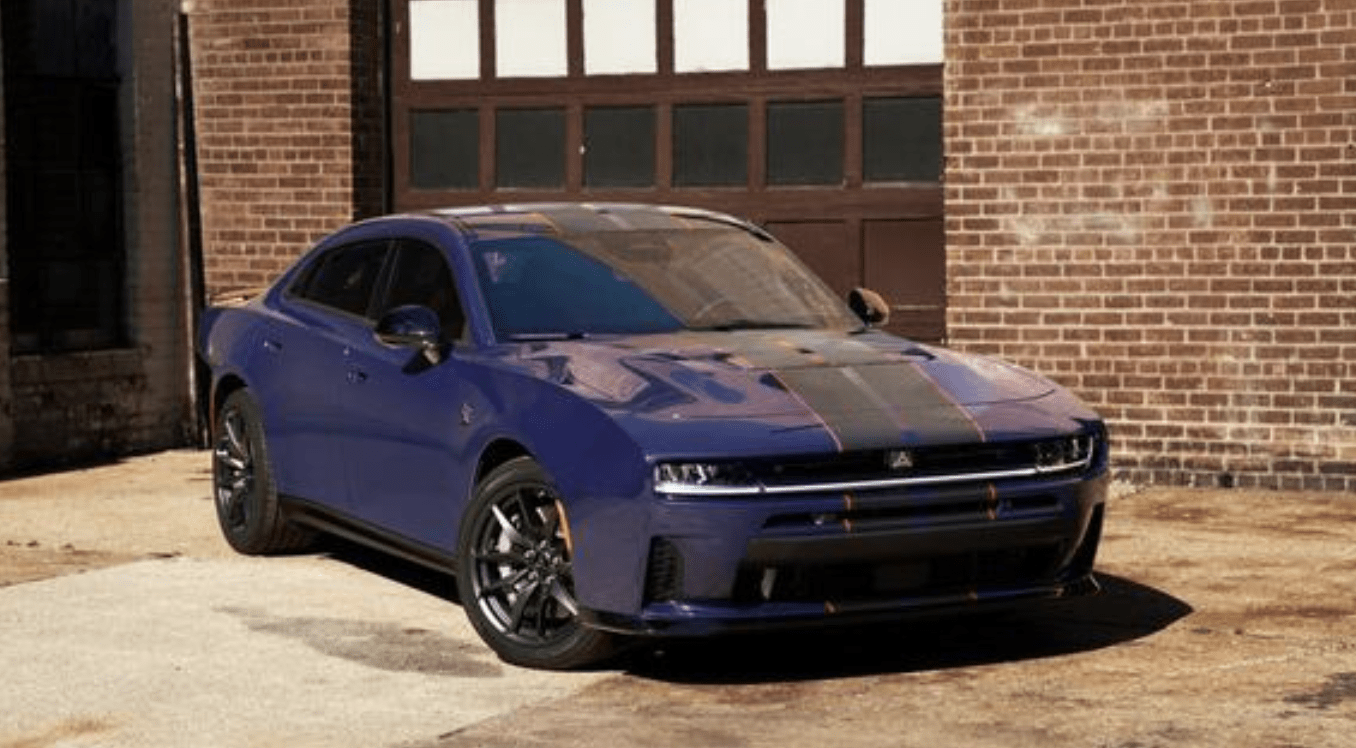
Dek: A new limited-run purple joins the 2027 Charger order sheet at the price of a nice set of floor mats — and it’s the first time Dodge has ever offered this particular shade. Here’s what collectors should actually know before they check the box.
Dodge marked the Charger’s 60th birthday on June 30 the way it usually celebrates anything — by reaching for a louder can of paint. The new shade is called Purple Haze, it’s a one-model-year exclusive on the 2027 Charger, and Dodge says it has never offered this exact color on the brand before. Orders are open now, and the line item lands at $795.
What makes it more than a spec-sheet curiosity is how it behaves in the light. Dodge describes a high-gloss clearcoat that brightens and shifts under direct sun, then sinks back into a deep, saturated purple in the shade. That kind of light-reactive finish isn’t unusual on six-figure exotics, but it’s still a notable thing to find on a factory order form for a mainstream muscle car. Purple Haze slots in alongside the Charger’s existing palette — Bludicrous, Green Machine, Redeye, Sub-Zero, White Knuckle and Diamond Black.
Why purple is anything but random for Dodge
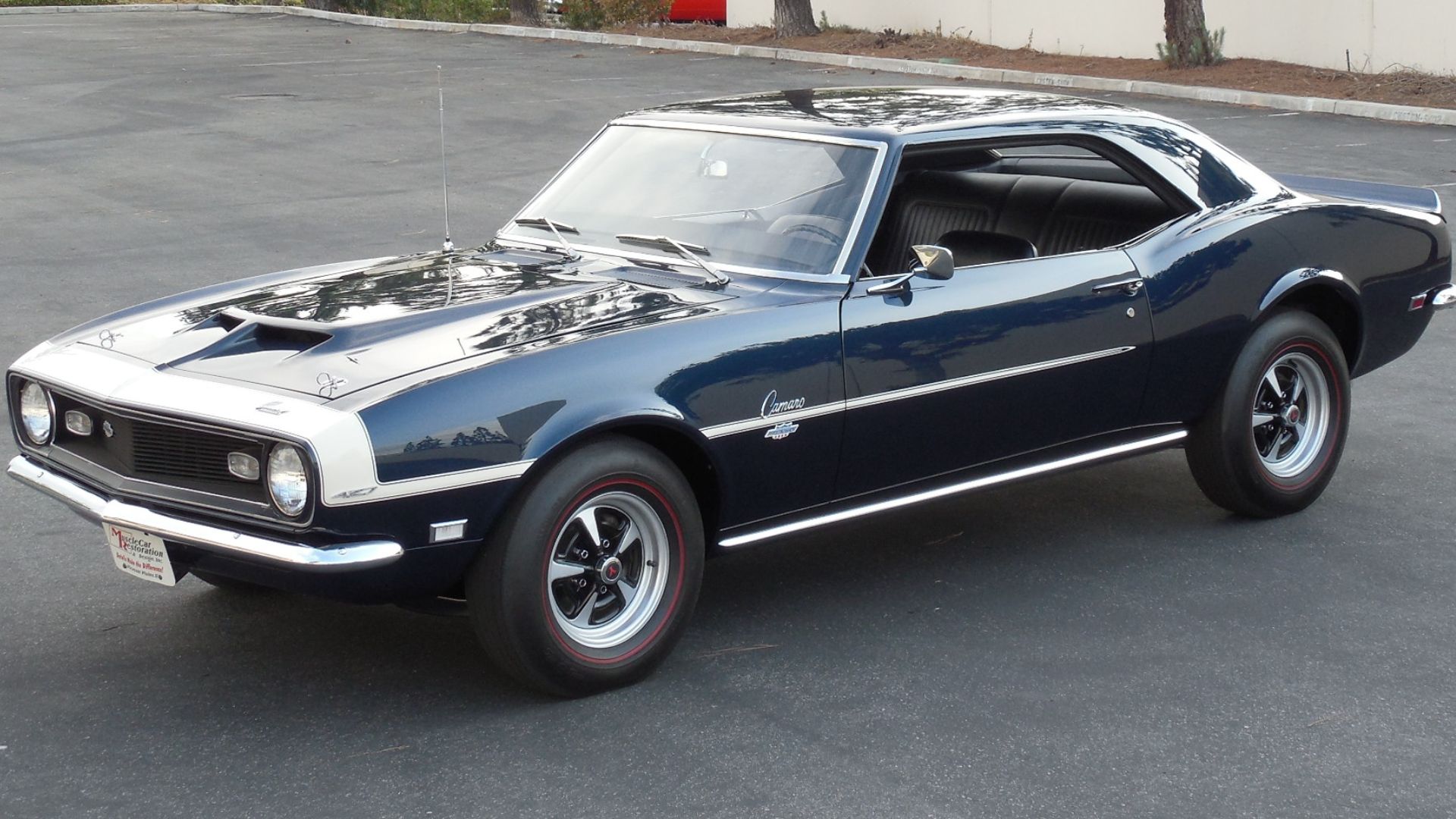
Dodge has been mining its “High Impact” color era since the cars were new. Those eye-watering hues date to 1969 and gave us names like Go Mango, Sublime and Top Banana — paint that turned a body shell into a personality. Purple specifically has deep roots here: Plum Crazy in the early 1970s became one of the most collectible factory colors of the muscle era, and the modern cars carried the torch with In-Violet and Hellraisin. Purple Haze is the next name on that list, which matters because, in this corner of the market, the color on the fender is part of the car’s identity and a real lever on resale.
Dodge backs that up with its own data point: in the full-size car segment, it says color choice carries nearly three times the weight it does across the industry, and on the Charger it ranks as a top-three reason people buy. CEO Matt McAlear framed Purple Haze as a “factory-exclusive statement” rather than just a coat of paint. Translation for buyers: this is being positioned as a halo color, not a throwaway option.
What you’re actually painting
Because Purple Haze is offered across the whole 2027 lineup, the $795 box sits on top of three very different cars. The gas-powered Charger R/T makes 420 horsepower from Dodge’s 3.0-liter twin-turbo “SIXPACK” straight-six; the Charger Scat Pack steps up to 550 horsepower with the high-output version of that engine; and the all-electric Charger Daytona Scat Pack tops the range at 670 horsepower, with all-wheel drive standard across the board and a choice of two-door coupe or four-door sedan. In other words, the same paint can wrap a combustion throwback or an EV, which is its own quietly interesting footnote for anyone tracking where this nameplate is headed.
Buyers who want to push the look further can pair the color with Fratzog dual stripes, a menu of Mopar stripe and graphics packages, and a Satin Black hood or hood patch on the SIXPACK cars. The public gets its first in-person look when a 550-horsepower Scat Pack in Purple Haze goes on display at the Carlisle Chrysler Nationals in Carlisle, Pennsylvania, July 10–12.
The collector and ownership math
History suggests a one-year-only factory color on a milestone car is exactly the kind of detail that shows up in auction listings a decade later. Plum Crazy cars still command attention precisely because the color is tied to a specific moment. If Dodge holds Purple Haze to the 2027 model year as stated, build totals will be finite, and the cars that get optioned thoughtfully — documented window sticker, sympathetic stripe choices, low miles — are the ones likely to be remembered kindly later.
There’s a less glamorous side worth flagging, though. Light-reactive, high-gloss finishes tend to be less forgiving in the real world: color-matching a panel after a parking-lot ding can be trickier and pricier than touching up a standard solid, and not every body shop will nail a finish that shifts with the light. It’s smart to ask your insurer whether a low-volume specialty color affects a repair or total-loss valuation, and to keep the original paint code handy. Treat the $795 as the cost of entry, not the full cost of keeping it looking the way it does on the order page.
The practical takeaway: at $795, Purple Haze is one of the cheaper ways to make a 60th-anniversary Charger feel special and potentially more collectible — just budget for the upkeep a trick finish demands, and keep the paperwork that proves what you ordered.
The collector car market, every weekday morning.
Auction results, price moves and what’s crossing the block, read in four minutes. Free, from Modern Car Collector.
No spam, unsubscribe in one click. Or read more about the Brief.



 Kyle Matthews