
On September 10, Rimac Group confirmed what had already been agreed in principle back in April: Porsche’s exit from Bugatti Rimac is finished. A consortium led by New York-based HOF Capital, with Abu Dhabi’s BlueFive Capital as its largest single investor, has closed on Porsche’s 45 percent stake in the joint venture that owns Bugatti. Porsche collects roughly $1.16 billion for the exit. BlueFive now holds 30 percent of Bugatti Rimac directly, HOF Capital and its partners control 23.5 percent of Rimac Group, and Mate Rimac’s Rimac Group keeps its 55 percent controlling interest in the company that builds the fastest production hypercars in the world.
That is the transaction. It is not the story.
The story is what this ownership change reveals about where hypercar capital is now flowing, why a manufacturer as storied as Porsche walked away from a five-year bet on hypercar and electric performance technology, and why control of Bugatti’s product and design direction did not actually change hands, even though a meaningful slice of the company’s equity did.
A Joint Venture Born of Convenience, Ended by Necessity
Porsche and Croatia’s Rimac Group formed Bugatti Rimac in 2021, splitting ownership 55/45 in Rimac Group’s favor. The logic at the time, as then-Porsche chief Oliver Blume framed it, was to pair Bugatti’s century of hypercar craftsmanship with Rimac’s expertise in electric propulsion. Porsche also held a separate minority stake in Rimac Group itself.
Five years later, Porsche needed the capital more than it needed the experiment. The brand’s operating margin collapsed from 14.1 percent in 2024 to just 1.1 percent last year, squeezed by American tariffs and a sharp slowdown in its most important growth market, China. New chief executive Michael Leiters inherited a mandate to cut costs and free up cash across the portfolio, and a non-core hypercar joint venture was an obvious place to start. In the joint statement in April announcing the deal, Leiters said the sale let Porsche focus “on the core business” after laying the groundwork for Bugatti’s future.
For collectors, this detail matters more than the sale price. Bugatti’s ownership has never been judged the way a mainstream model line is judged. It has always been a halo investment, tolerated by a parent with deep enough pockets to treat scarcity and engineering extremity as brand equity rather than a balance-sheet liability. Porsche’s retreat is a reminder that even the most prestigious manufacturers treat hypercar divisions as strategic bets, not permanent commitments.
Control Didn’t Change Hands. Money Did.
Despite the headlines, Bugatti’s governance barely moved. BlueFive Capital’s stake comes with a single board seat and two observer seats, not operational control. Rimac Group, which is set to take full control of Bugatti Rimac once the transaction fully closes, keeps its 55 percent majority. That is a meaningful distinction for anyone assessing the long-term direction of the brand.
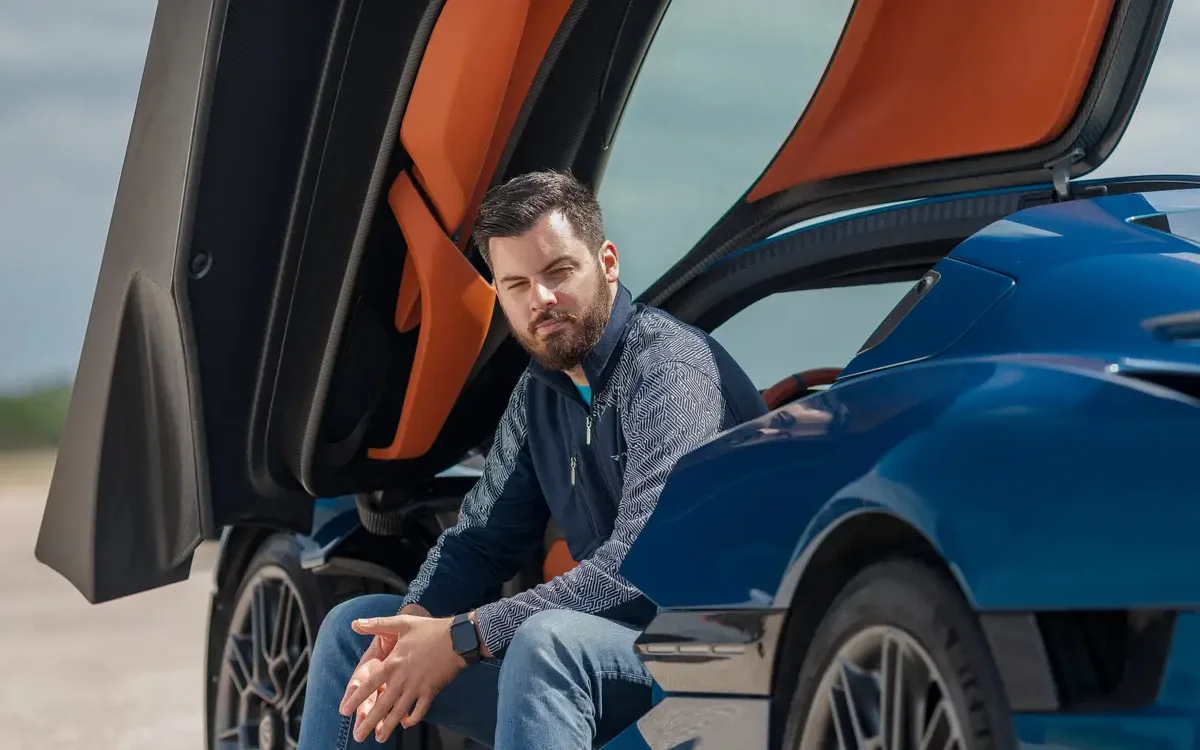
Mate Rimac stepped back from his role as chief executive of Rimac Technology in March, a leadership shift Modern Car Collector covered at the time. That decision now reads less like a reshuffle and more like preparation. The person setting Bugatti’s product direction, model cadence, and allocation strategy is not a new financial sponsor from Abu Dhabi or New York. It is the same engineer-entrepreneur who has been steering Rimac’s hypercar ambitions for over a decade. It’s worth noting that Rimac had previously sought to buy out Porsche’s stake personally and take full ownership of Bugatti Rimac himself. The deal that actually closed brought in outside institutional capital instead, which makes his retained control notable rather than assumed. For collectors evaluating whether a marque’s identity will hold steady through an ownership change, that continuity of leadership is the detail worth weighing, not the equity percentages in a press release.
Where Hypercar Capital Is Actually Coming From
HOF Capital was co-founded by Onsi Sawiris, part of Egypt’s billionaire Sawiris family, and BlueFive Capital is an Abu Dhabi-incorporated firm launched in November 2024 with roughly $15 billion under management across private equity, real estate, infrastructure, and financial products. Tellingly, BlueFive chose to invest only in Bugatti Rimac, the hypercar-making entity, and not in Rimac Group’s broader electric-vehicle technology business. That is a targeted bet on a luxury brand and its scarcity, not a bet on EV drivetrain contracts.
It is also part of a pattern collectors should recognize. Gulf-based and family-office capital has become one of the primary sources of patient money behind ultra-exclusive automotive brands over the past several years, in much the same way it has moved into art, real estate, and other collectible asset classes. Modern Car Collector has already tracked the cultural and financial energy building around hypercar ownership more broadly, from Koenigsegg owners rallying around events like the Ghost Squadron Tour to the way even high-mileage Chirons are being re-evaluated by a market that increasingly treats these cars as engineering statements rather than static trophies. The Bugatti Rimac deal is a corporate-level version of the same shift: capital that understands brand scarcity is now sitting at the ownership table, not just the buyer’s table at auction.
What Serious Collectors Should Actually Watch
None of this changes the value of a Chiron, a Divo, or a Tourbillon sitting in a private collection today. But it does change the questions a serious buyer should be asking about the next five years of the marque. Watch whether Rimac Group’s now-unencumbered control accelerates or slows Bugatti’s model cadence. Watch whether BlueFive’s board seat ever translates into influence over production numbers, a lever that has historically defined Bugatti’s collectability far more than horsepower figures ever have. And watch how the relationship between Bugatti and Rimac’s electric vehicle business evolves now that the two companies’ ownership has diverged rather than converged, since that relationship was the entire premise of the joint venture in 2021.
Collectors have spent years arguing over which Chiron variant matters most: the Super Sport, the Profilee, the one-off Coachbuild commissions. The more consequential question raised by this transaction isn’t which car Bugatti builds next. It’s who has a say in that decision, and for now, the answer is still Mate Rimac. That tells you more about Bugatti’s near-term future than any number in Porsche’s earnings report.
The collector car market, every weekday morning.
Auction results, price moves and what’s crossing the block, read in four minutes. Free, from Modern Car Collector.
No spam, unsubscribe in one click. Or read more about the Brief.



 John Lloyd