

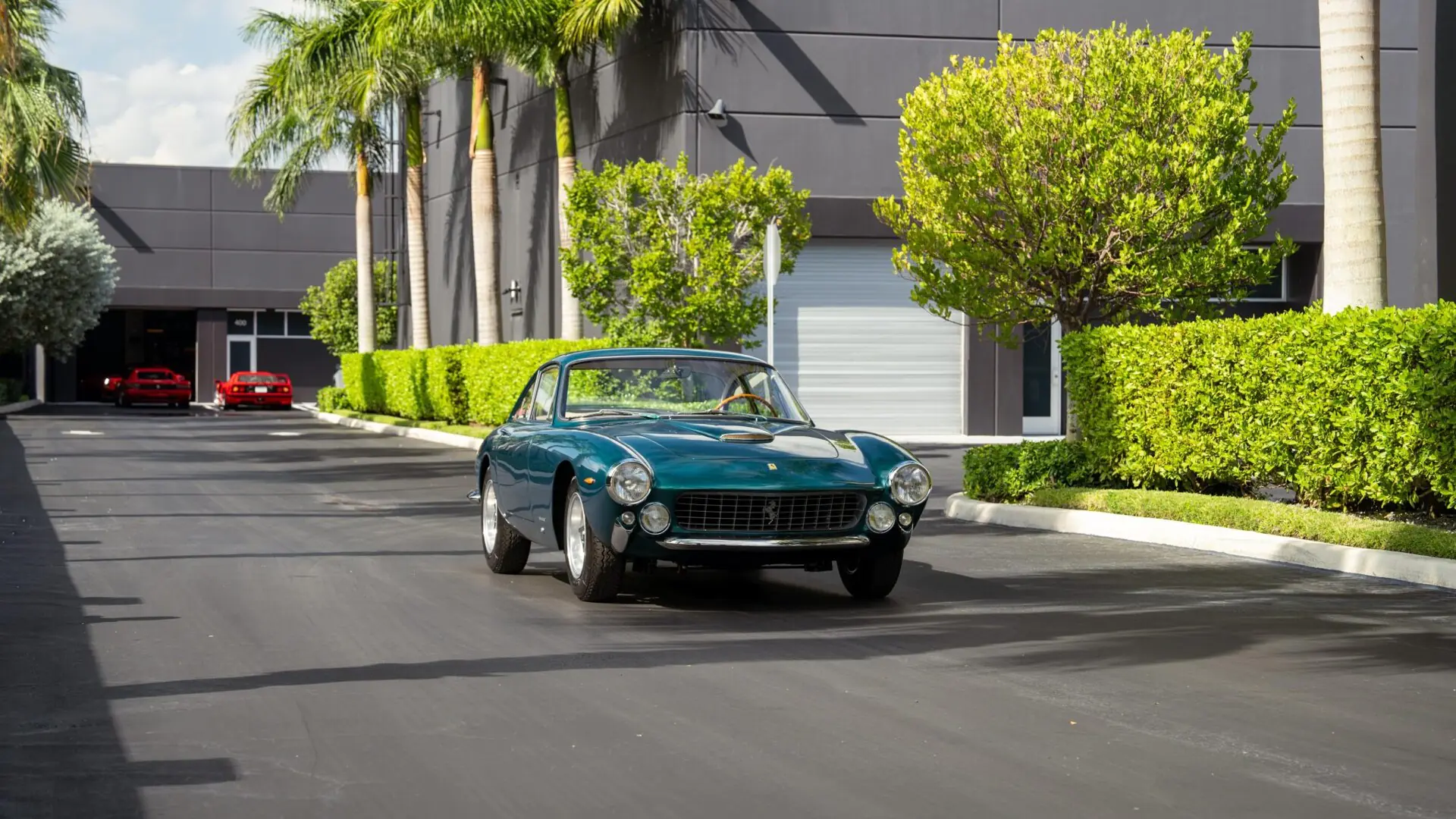
Rétromobile New York opens at Manhattan’s Javits Center on Thursday, and the floor will hold two Ferrari 250 GT Lussos with very different stories. One is a Gooding Christie’s lot carrying a $1.4 million to $1.6 million estimate, part of a debut sale where, as we noted in our preview, the paper trail may matter as much as the pedigree. The other is chassis 5117, the Reggie Jackson Ferrari 250 GT Lusso, which Bring a Trailer is displaying at the show while its online auction runs through Monday, November 23. With five days to go, bidding stood at $725,000.
Jackson’s name is what put this car in the headlines. It is not what will decide its price. The defining fact about 5117 is a decision Jackson made in 2000, when he had the car repainted in Pino Verde Metallizzato and retrimmed in Tobacco leather. Ferrari built it in Marrone. Anyone bidding seriously this week has to answer one question: is the green part of the car’s provenance, or something the next owner will have to pay to undo?
Five Stops Before Mr. October
The history is unusually clear. According to the listing, 5117 was the 125th of 350 Lussos built, completed on October 19, 1963, and delivered to the Rome dealer Gioacchino Veri. A Roman construction company, Società Azionaria Costruzioni Immobiliari, bought it the following month. A Swiss owner took it in May 1964. In 1970 it passed to Luigi Chinetti Motors in Greenwich, Connecticut, the firm that brought so many Ferraris into America, and it then spent 25 years with one owner in Rhode Island.
Jackson bought it in 1998 and sold it in 2008 to a Midwest sports car collector. That owner had Florida Ferrari specialist Greg Jones refresh the car, then showed it at the 2009 Cavallino Classic, where it reportedly took a Platinum award, and at the Meadow Brook Concours d’Elegance. Ferrari Classiche certification followed in 2011, then an appearance at the Ferraris on Oak Street concours in Chicago in 2014. The current owner bought it in 2018. The Miami dealer P1Miami is now selling it on consignment.
So Jackson’s decade is real and documented, but it sits in the middle of a 63-year history. He arrived 35 years into the car’s life, not at its beginning, and that affects how much weight the market will give his name.
The 250 Collectors Can Actually Buy
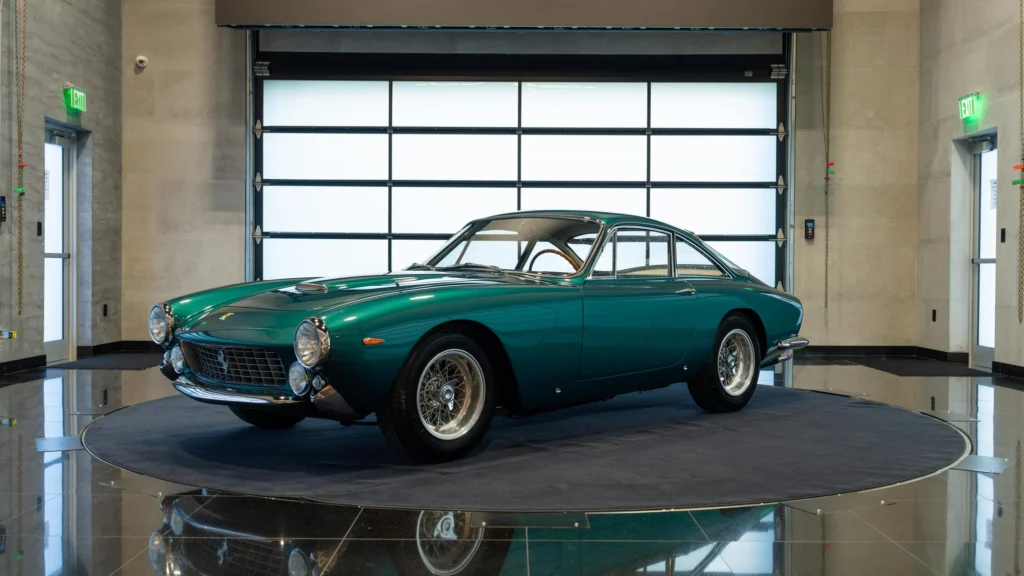
Ferrari introduced the 250 GT/L at the 1962 Paris Motor Show as the last road car in the 250 family. It used the 2,400 mm short-wheelbase tube-frame chassis of the 250 GT SWB, with a Pininfarina design built by Scaglietti in steel and aluminum opening panels. The low nose, fastback roof and Kamm tail with its integrated spoiler make it, for many collectors, the most beautiful closed 250 of all. The 3.0-liter Colombo V12 breathes through three Weber carburetors and drives a four-speed manual gearbox.
The Lusso’s place in the market rests on access more than rarity. The competition 250s and the California Spiders now trade in eight figures: a 1960 SWB California Spider made $16,505,000 at Gooding Christie’s Amelia Island sale in March. The Lusso gives you the same chassis family and the same engine for roughly a tenth of that, in a car built to be driven. By Ferrari standards of the period, 350 cars is a large production run, so Lussos appear at almost every major sale. That liquidity is why each car is priced on its details: color, originality, documentation and condition. Rarity is shared across the model. The differences between cars are what get paid for.
The Paint Is the Provenance
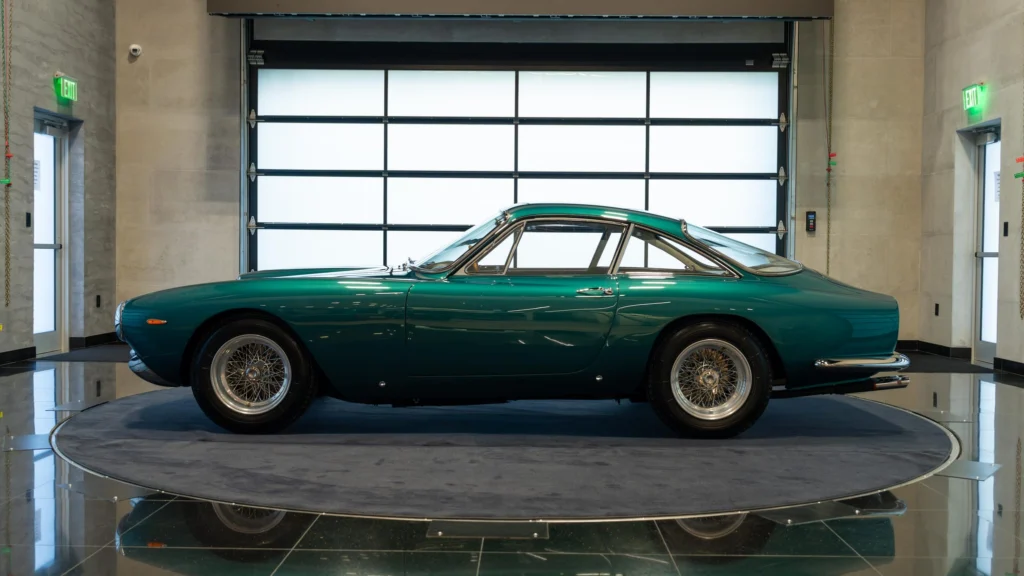
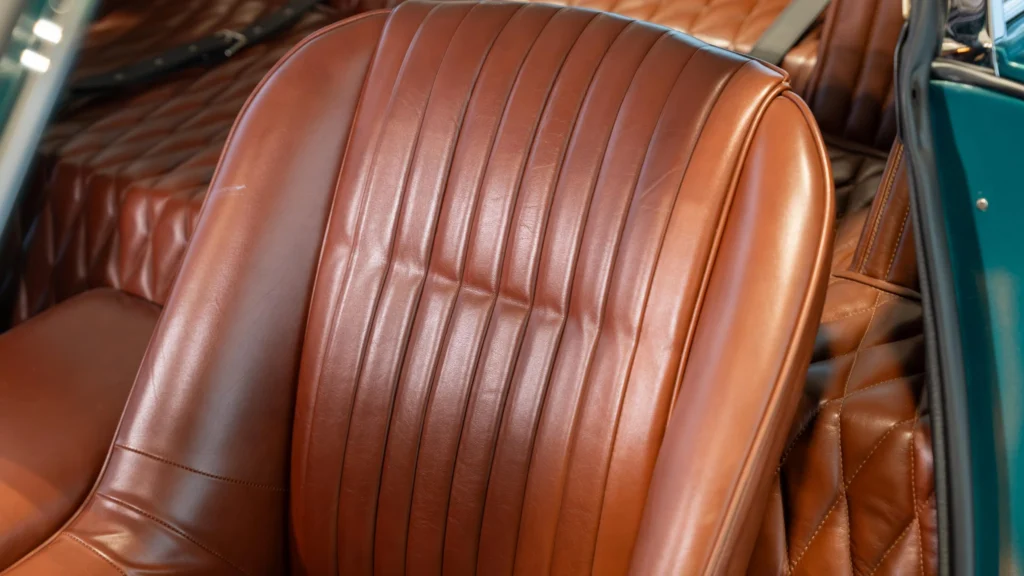
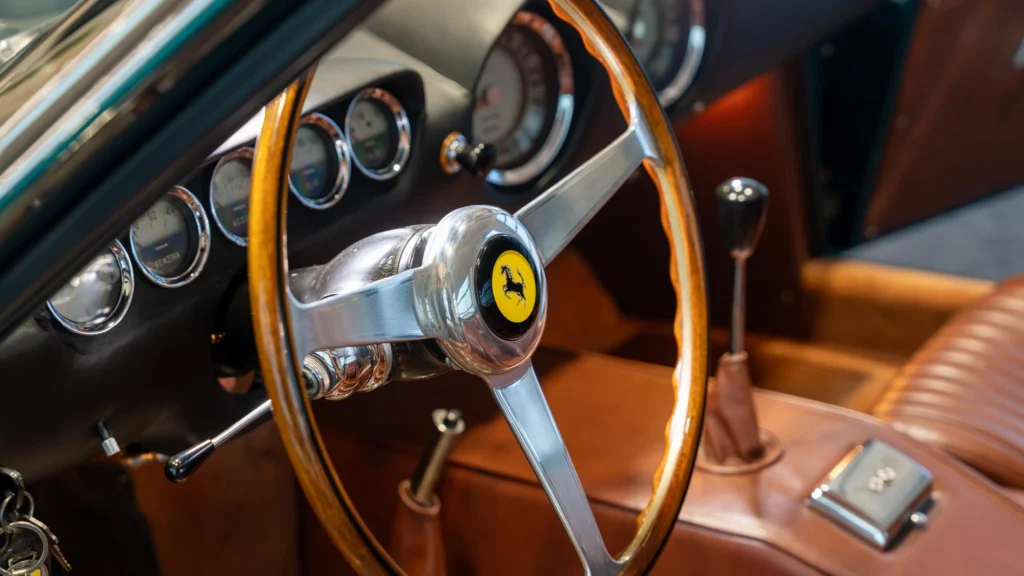
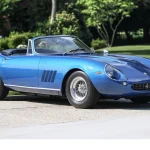
Chassis 5117 has worn three colors. It left Maranello in Marrone, went blue sometime in the 1960s, and became Pino Verde Metallizzato in 2000, when Jackson had Grand Prix Motors of La Jolla, California, refurbish it. The Tobacco leather cabin, with fixed-back buckets, matching console and door panels, dates from the same work. The car you see is, in a literal sense, Reggie Jackson’s specification.
Compare the Lusso that set the standard for celebrity ownership. Steve McQueen ordered chassis 4891 new in 1963 in Marrone Metallizzato with a beige interior, drove it for a decade and traded it in 1973. When Christie’s offered it at Monterey in 2007, it sold for $2.31 million against an $800,000 to $1.2 million estimate. McQueen’s Lusso is valuable because he chose what it is. Jackson’s Lusso is interesting because he changed what it was.
That distinction drives the whole category. A celebrity premium is strongest when the famous owner is built into the car’s identity: they ordered it, raced it, or were photographed with it in period. When the famous owner arrives 35 years after the car was built, the name adds interest but rarely sets the price. As we argued about JFK Jr.’s Saab 900, celebrity provenance pays when the paperwork supports it, and here it does: Jackson’s ownership and the 2000 refurbishment are recorded. The open question is aesthetic and strategic, not evidential.
The next owner of 5117 faces a choice most Lusso buyers never have. Returning the car to Marrone would restore its factory color, documented by Ferrari Classiche, and probably appeal more to top-level concours judges, who reward factory correctness. It would also erase the most visible chapter of the car’s history. Keeping the green preserves the Jackson story, at the cost of a color the factory never put on this chassis. Neither choice is wrong. But bidders will discount for whichever path they intend to take.
What the Documents Do and Don’t Settle
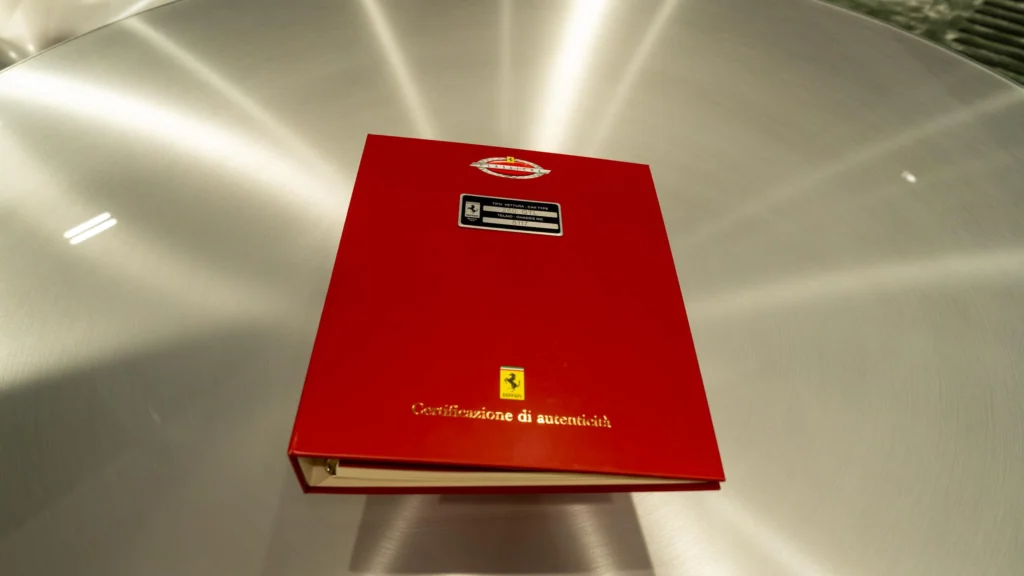
The sale includes a Ferrari Classiche Red Book dated April 2011, a Marcel Massini report, binders of invoices and photographs from earlier owners, a copy of the owner’s manual and a tool kit. The Massini report is the standard independent chassis history for a classic Ferrari, and the Classiche dossier confirms the car’s original and current colors and its October 1963 delivery to Rome. Those two documents are why a 250 like this can trade online at all: they do much of the authentication work an inspector would otherwise do.
Read them carefully all the same. The listing’s summary does not say whether the engine and gearbox are matching-numbers according to Classiche. Many catalogues state that in the first line when it’s true. The Red Book pages are in the gallery, and any serious bidder should confirm what Ferrari certified as original. The differential is described as a replacement limited-slip unit.
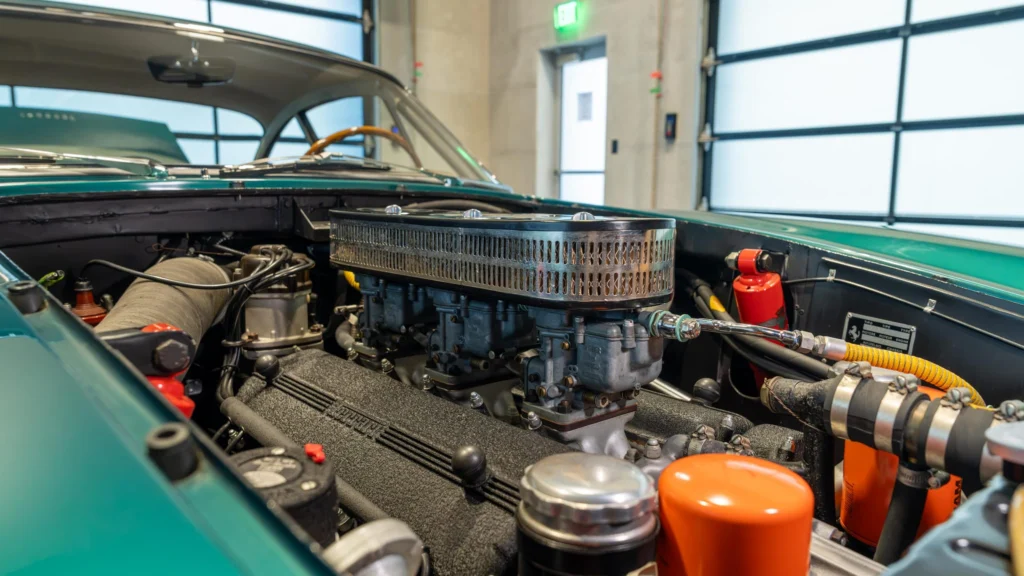
The car’s use and condition are also worth reading closely. The five-digit odometer shows about 30,000 km (roughly 19,000 miles), and the listing says about 50 of those were added by the current owner. On a 63-year-old car, “shows” is the key word: the reading says nothing reliable about total distance. Mechanically, Greg Jones did a valve job during the 2008–2009 refresh, and work this month rebuilt the carburetors and replaced the oil, spark plugs and fuel filter. In the comments, the seller has said the tires carry 2007 date codes. They are cosmetically fine, but nearly two decades old, so a buyer who plans to drive the car should budget for new rubber.
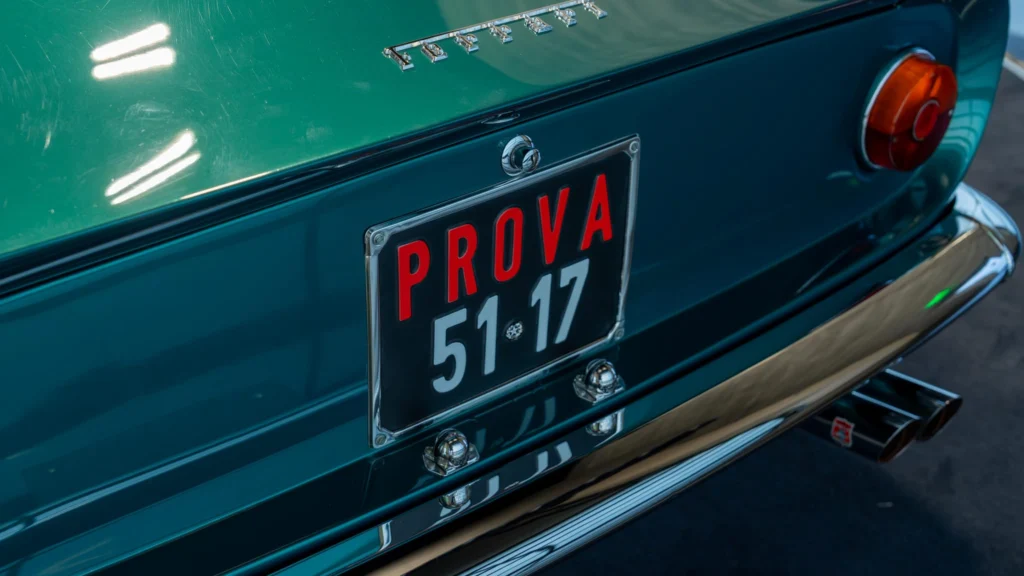
The title needs attention too. The car is titled in Montana under VIN 250GTL5117 and described there as a 1964 model, while Ferrari’s records show it completed in October 1963. A model-year mismatch of this kind is common for cars sold across a calendar year, but the buyer should reconcile the title with the Classiche record. Montana registration is popular among collectors, often through an LLC. It does not by itself relieve a buyer of sales or use tax, or registration rules, in their home state. Get advice before bidding, not after the auction closes.
Where the Lusso Market Actually Is
This year’s public results set a fairly clear range. At Amelia Island in March, Gooding Christie’s sold chassis 5127 GT, finished in Grigio Fumo and fresh from a three-year, show-quality restoration, for $1,765,000. At Pebble Beach in August, the same house offered chassis 5931 GT without reserve against a $1.5 million to $1.8 million estimate, and it sold for $1.27 million, below the $1.43 million it made in a Gooding online sale in 2020. Gooding’s New York Lusso this week carries a $1.4 million to $1.6 million estimate. For a good, documented car, the market runs from about $1.25 million to $1.8 million, and the top of that range goes to freshly restored, correctly presented cars.
Read in that light, $725,000 is not a price signal. On Bring a Trailer, early bids mostly mark interest, and the decisive bidding tends to come in the final minutes. The listing is not a no-reserve sale, and the reserve has not been made public. The real data point arrives Monday afternoon, and it will be easiest to read next to whatever Gooding’s Lusso brings in the same building on November 20 or 21. As RM Sotheby’s record London sale showed, the most useful market signals often sit below the headline lots, and two Lussos sold days apart, one live and one online, make an unusually clean comparison.
What Serious Buyers Should Weigh
- See it in person. The car is on display at the Javits Center from November 19 to 22. Few online Ferrari lots at this level can be inspected in the metal before the auction closes, so use the chance.
- Confirm the numbers. Read the Classiche Red Book pages for engine and gearbox status, and ask how the replacement differential is documented.
- Ask for the invoices. Commenters have already asked for scans of the Greg Jones work. Records of a valve job and a recent carburetor rebuild belong in your file, not just in the seller’s binder.
- Decide on the color first. If you would return the car to Marrone, cost the repaint and retrim into your bid. If you would keep it green, you are paying for the Jackson chapter, so make sure you value it.
- Settle the paperwork. Reconcile the 1964 model year on the Montana title with the 1963 factory record, and understand your home-state tax position.
The broader lesson goes beyond this car. Celebrity provenance compounds when the celebrity chose the car. When the celebrity changed it, the market usually wants a discount before it pays any premium. Chassis 5117 is a well-documented, Classiche-certified Lusso with a clear chain of ownership and a Hall of Famer in the middle of it. Whether it clears its reserve on Monday will show how much today’s buyers value a famous owner’s taste against Maranello’s original specification.
Sources
Ownership history, specification, documentation and bidding are drawn from the Bring a Trailer listing for the ex–Reggie Jackson 1963 Ferrari 250 GT Lusso. Gooding Christie’s Rétromobile New York lots and estimates come from its September 10, 2026 press release and auction page. Amelia Island results come from Gooding Christie’s results release. The McQueen Lusso result was reported by CNN Money in August 2007.
The collector car market, every weekday morning.
Auction results, price moves and what’s crossing the block, read in four minutes. Free, from Modern Car Collector.
No spam, unsubscribe in one click. Or read more about the Brief.

 Shawn Henry