

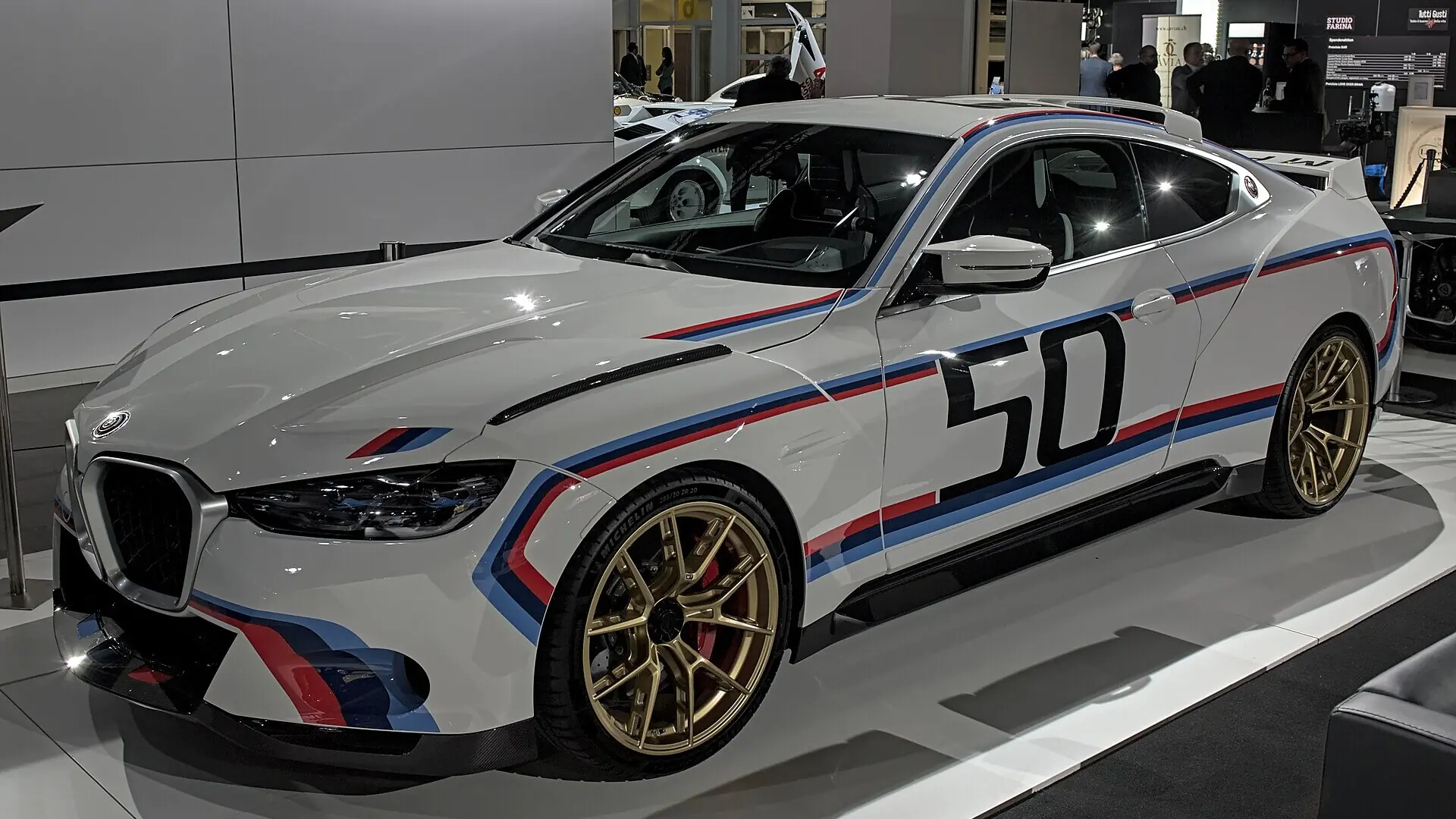
Only 50 BMW 3.0 CSLs were built, and each was a collector car before it turned a wheel. That is why car No. 28 matters. Broad Arrow will offer it at The Zürich Auction on Saturday, 7 November, consigned by its first owner, former BMW Sauber Formula One driver Nick Heidfeld. Bidders will not be pricing a used BMW. They will be pricing a claim: that a modern limited edition, sold well above the cost of its donor car and then barely driven, can hold its value after the anniversary celebrations end.
Broad Arrow’s estimate of CHF 900,000 to CHF 1,200,000 (roughly €966,000 to €1.29 million) says the auction house thinks it can. The more useful question is why, and which parts of this particular car the money is actually paying for. The answer is not horsepower or mileage, and only partly the famous name on the ownership papers. Mostly it is completeness.
A Name Earned on Track, Revived for an Anniversary
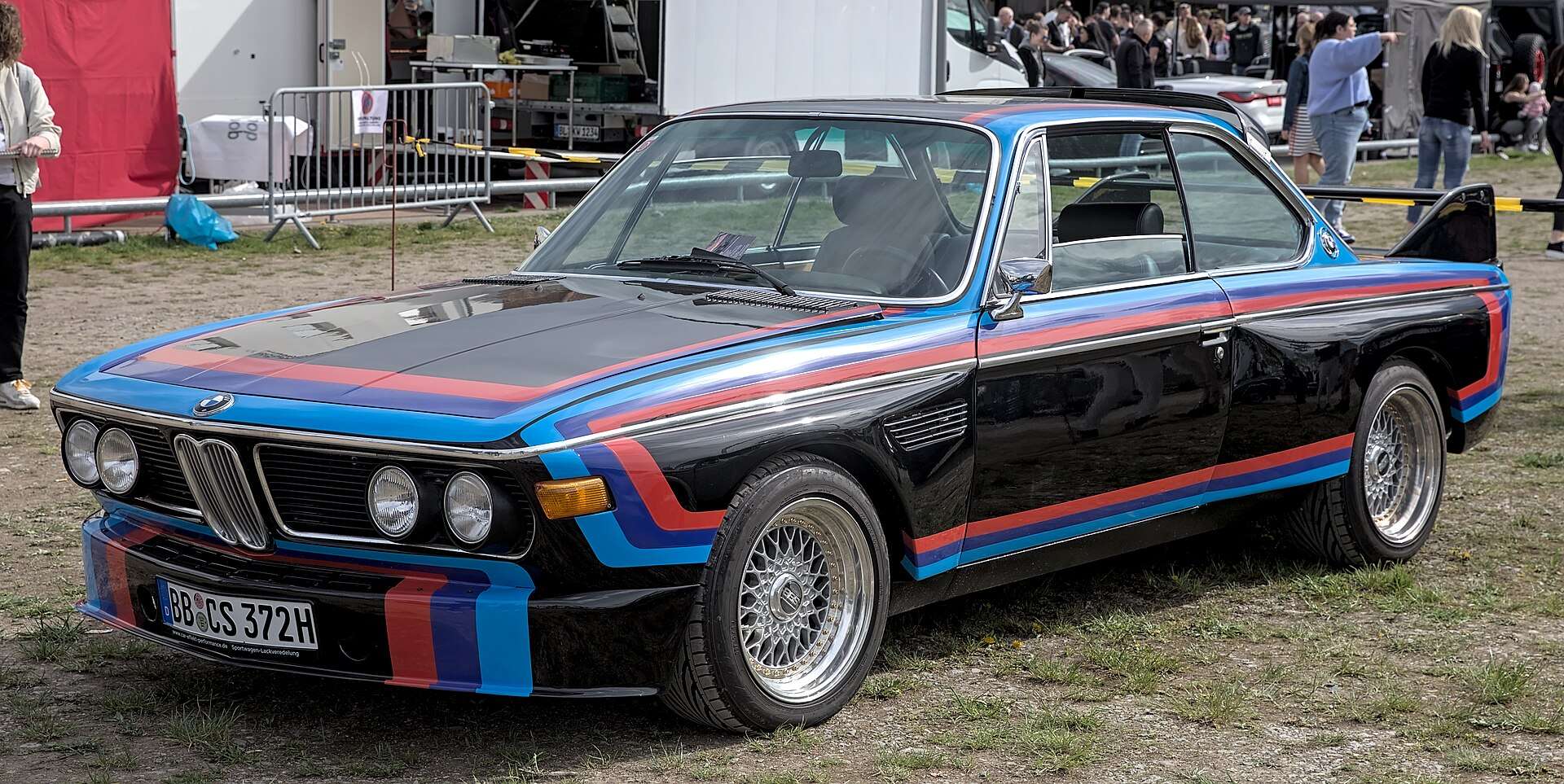
The original 3.0 CSL (the letters stand for Coupé, Sport, Leichtbau) was a homologation special. BMW Motorsport, founded in 1972, needed a lighter E9 coupe it could legally race, and the result went on to win the European Touring Car Championship in 1973 and every year from 1975 through 1979. According to BMW Group’s own heritage material, the road car made 206 hp and weighed 1,270 kg. The rear wing that earned it the “Batmobile” nickname was not approved for road use. The car existed to make a racing program legal, and its collectibility grew out of what that program won. We traced that lineage through one of the most important surviving examples in our coverage of the 1972 3.0 CSL works car offered in the U.K.
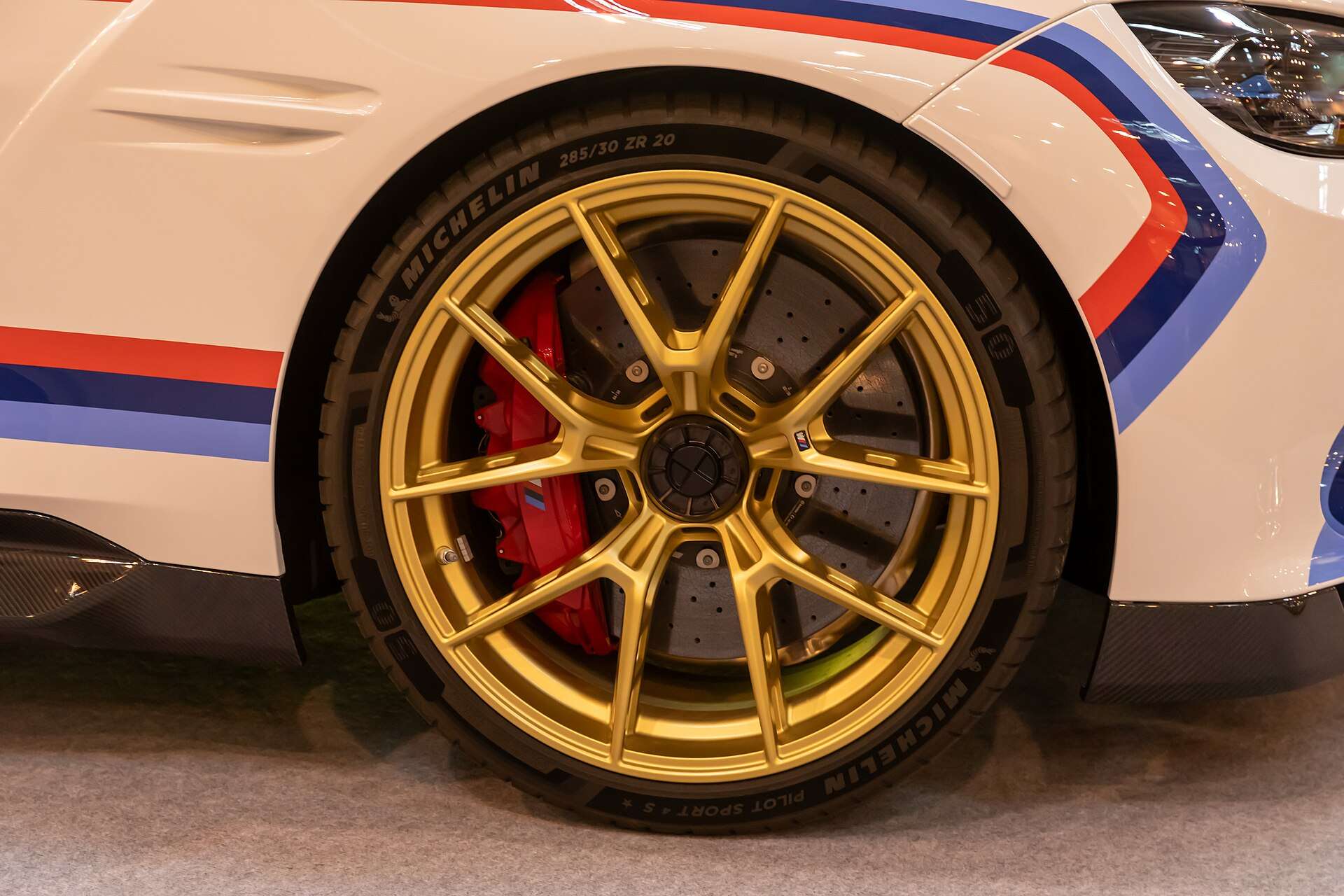
Its 2023 namesake was built to commemorate rather than to compete. After the 3.0 CSL Hommage concept of 2015, BMW revealed the production car in November 2022 to mark BMW M’s 50th anniversary. BMW’s launch documentation describes a six-cylinder S58 raised to 560 hp and 550 Nm, the most powerful inline-six BMW M had put in a road car. It drives the rear wheels only, through a six-speed manual and an Active M Differential. The roof, bonnet, boot lid, aprons, sills, diffuser and wing are carbon fiber. Each car was assembled in a small-series workshop at the Dingolfing plant, where assembly alone took up to ten days and the whole build about three months. The Alpine White paint and M stripes went through 134 paint processes, much of the work done by hand. The interior trim carries the car’s serial number, which matches the last digits of the suspension number. The number 50 appears even on the bespoke Michelin tires, and the laser headlights shine yellow in a nod to the M4 GT3 race car.
None of that is a criticism. It does change what a buyer is acquiring, though. The 1973 car became collectible because of what it did. The 2023 car was collectible because of what BMW said it was. One has a racing record. The other has a ledger.
The Donor-Car Problem
The clearest way to see what the 3.0 CSL premium pays for is to look at the car underneath it. Our September market brief recorded a 2022 BMW M4 CSL selling for £90,376 at Historics. That car shares the S58 engine family, the carbon diet and the CSL badge. The 3.0 CSL trades at roughly ten times that figure.
Mechanical content does not explain the gap. A manual gearbox that BMW never offered in the M4 CSL explains part of it. So does hand-finished coachwork, and so does a production run of 50 numbered cars tied to an anniversary that cannot happen again. The rest is meaning. Collectors are not paying for 560 horsepower. They can buy that for a tenth of the money. They are paying for the number on the dashboard.
That is both the case for the car and its vulnerability. A built-to-collect car has no competition history to fall back on if fashion moves elsewhere. Its value rests on the story staying intact, and on each example keeping the pieces that make it a verified part of that story. BMW has run this play more than once recently. Our analysis of the 100 Jahre Nürburgring Edition argued that a badge alone does not make a collectible. The 3.0 CSL is the opposite case: rarity, engineering and heritage all point the same way.
What Heidfeld Adds, and What He Doesn’t
Celebrity provenance is often decoration. Here it is coherent. Heidfeld drove for BMW Sauber throughout BMW’s four seasons as a Formula One constructor. Broad Arrow’s catalogue notes that he started 70 Grands Prix for the works team and still holds the team records for starts and World Championship points. Across his Formula One career he scored 13 podium finishes, and in 2014 he won a class at Le Mans with Rebellion Racing. A BMW works driver owning BMW M’s anniversary car is a story that makes sense, which is more than can be said for many famous-owner cars.
The ownership trail is also unusually well documented for a modern car. Heidfeld attended a BMW Motorsport presentation of the 3.0 CSL at Monza in May 2023, where BMW Design Director Adrian van Hooydonk gave him a personalized presentation box. He took delivery the following month and brought the car to a BMW-hosted event at Zurich’s Dolder Grand. Three years later it returns to the same hotel for the sale. Those personalized items are part of the lot, and they are what turn a name in a logbook into real provenance.
Collectors should be measured about the size of the premium, though. Heidfeld never raced a CSL, and this is not his race car. Experience with famous-owner cars, from factory-specified McLarens to driver-owned road cars, suggests that a coherent name adds a measurable but modest premium rather than a multiple. In practical terms his most valuable contribution may be custody. The car was kept in a garage in Switzerland for its whole life, serviced twice at the authorized BMW M dealer Sepp Fässler AG in Wil, most recently in August 2026 for an oil change and brake fluid, and has covered 391 km from new.
On a Modern Limited Edition, the Box Is Part of the Car
Here is the overlooked detail. All 50 3.0 CSLs were built to the same specification, in the same color, with the same stripes. Buyers cannot tell examples apart by chassis numbers, options or colors, which is how they judge older cars. That leaves three things: mileage, the ownership chain and the completeness of the delivery kit.
Car No. 28 is strong on the third. Broad Arrow lists several items carrying the matching 28/50 serial:
- an official BMW 1:18 model
- a car cover in a 3.0 CSL-branded bag
- a branded leather folio with the owner’s manuals
- a framed design sketch on canvas signed by BMW M Creative Director Viktor Bär, still in its packaging
- BMW M GmbH’s 260-page 3.0 CSL book, limited to 50 copies and number-matched to the car
Also included are the “BMW M Love” hardcover, both keys and the personalized Monza presentation box.
Twenty years from now, a buyer of a 3.0 CSL will ask whether the numbered book is present. Today’s buyers of earlier modern classics ask the same kind of question about original tool kits, window stickers and factory certificates. The pattern is already visible across BMW M collecting, and you can see it in the way the best-curated M collections are presented at auction. When the cars are identical, the paperwork and the accessories become the way to tell one example from another. A 3.0 CSL missing its numbered book will not stop being a 3.0 CSL. It will stop being the best one in the room.
Mileage is less of an issue than it looks. At 391 km, No. 28 is barely used but not museum-zero. The example RM Sotheby’s sold in Munich in 2023 had 33 km and had never been registered. In our view, a little registered, serviced use is no handicap and may be a quiet virtue. A car that has been registered, maintained by a dealer and driven to an event has proved it works. Sitting still is not free, either. Seals, fluids and tires age on a calendar, not an odometer, which is why the 2026 service record matters more than the last few hundred kilometers. Our recent look at how mileage moves LaFerrari prices showed buyers can be ruthless about distance. At this level, the difference between 33 km and 391 km should be close to irrelevant.
The Market Signal: Steady, Not Spectacular
The most useful public reference point is that Munich sale. RM Sotheby’s sold car No. 44, unregistered and with 33 km, for €1,017,500 including premium, with VAT due on the full purchase price. BMW did not publicize a list price, but the figure widely reported at launch was around €750,000.
Put those together and Broad Arrow’s estimate almost exactly brackets the 2023 result. Three years on, the market for the 3.0 CSL appears to have held a substantial premium over the reported new price without running away. That is a healthier sign than it sounds. Modern limited editions tend to go one of two ways: an early spike that fades, or a premium that slowly erodes as the novelty wears off. A plateau near seven figures suggests a real, if narrow, base of buyers who see the car as the defining modern BMW M collectible rather than a speculative flip.
That makes the result in Zurich useful information. A hammer price near the top of the estimate would suggest that a coherent famous owner and a complete kit can add measurable value on top of low mileage. A result near the bottom would suggest the market prices these cars mainly on the 50-unit scarcity, with provenance as a pleasant extra. Either way, collectors of modern special editions, from BMW’s own manual-gearbox M3 CS to its rivals’ anniversary cars, will learn something about how this kind of car holds its value.
What Serious Buyers Should Check
- Number matching. Chassis WBS81AZ000CM08028 should agree with the 28/50 interior plaque, the suspension number and every serialized delivery item, the book and model included.
- Landed cost. The car is in Switzerland and sells in Switzerland. Buyers based in the EU, the U.K. or elsewhere should budget for import duties, local VAT and registration before comparing bids with the Munich result.
- Service and age-related items. Ask for the Sepp Fässler AG invoices and the tire date codes. The 50-marked Michelins are part of the car’s identity, and replacing them correctly matters for originality.
- The Heidfeld material. Check that the personalized Monza presentation box and event history are documented in the history file. Undocumented provenance tends to lose its value at the next sale.
- Livery and carbon surfaces. The stripes are hand-applied and the body is mostly exposed or painted carbon. Inspect both closely, because they cannot be put back exactly as they left the factory.
The Verdict
The 2023 BMW 3.0 CSL is a significant car, arguably the purest statement BMW M made in its first half-century: rear-wheel drive, a manual gearbox, more hand work than any modern BMW and a direct line back to the team’s first racing program. Its rarity is real and its engineering is serious. But rarity is not the whole story. With every example built identically, the quality of each car’s documentation decides how it is valued.
Car No. 28 has an unusually complete set of that documentation: a first owner whose career ties directly to BMW, a Swiss service record, nearly every numbered delivery item and a provenance trail running from the Monza reveal to the Dolder Grand. Whatever the hammer price on 7 November, the lesson for collectors is the same. When you buy a modern limited edition, buy the box, the book and the paperwork with the car, because they are what will keep it valuable.
The collector car market, every weekday morning.
Auction results, price moves and what’s crossing the block, read in four minutes. Free, from Modern Car Collector.
No spam, unsubscribe in one click. Or read more about the Brief.

 Shawn Henry
 Eve Nowell