
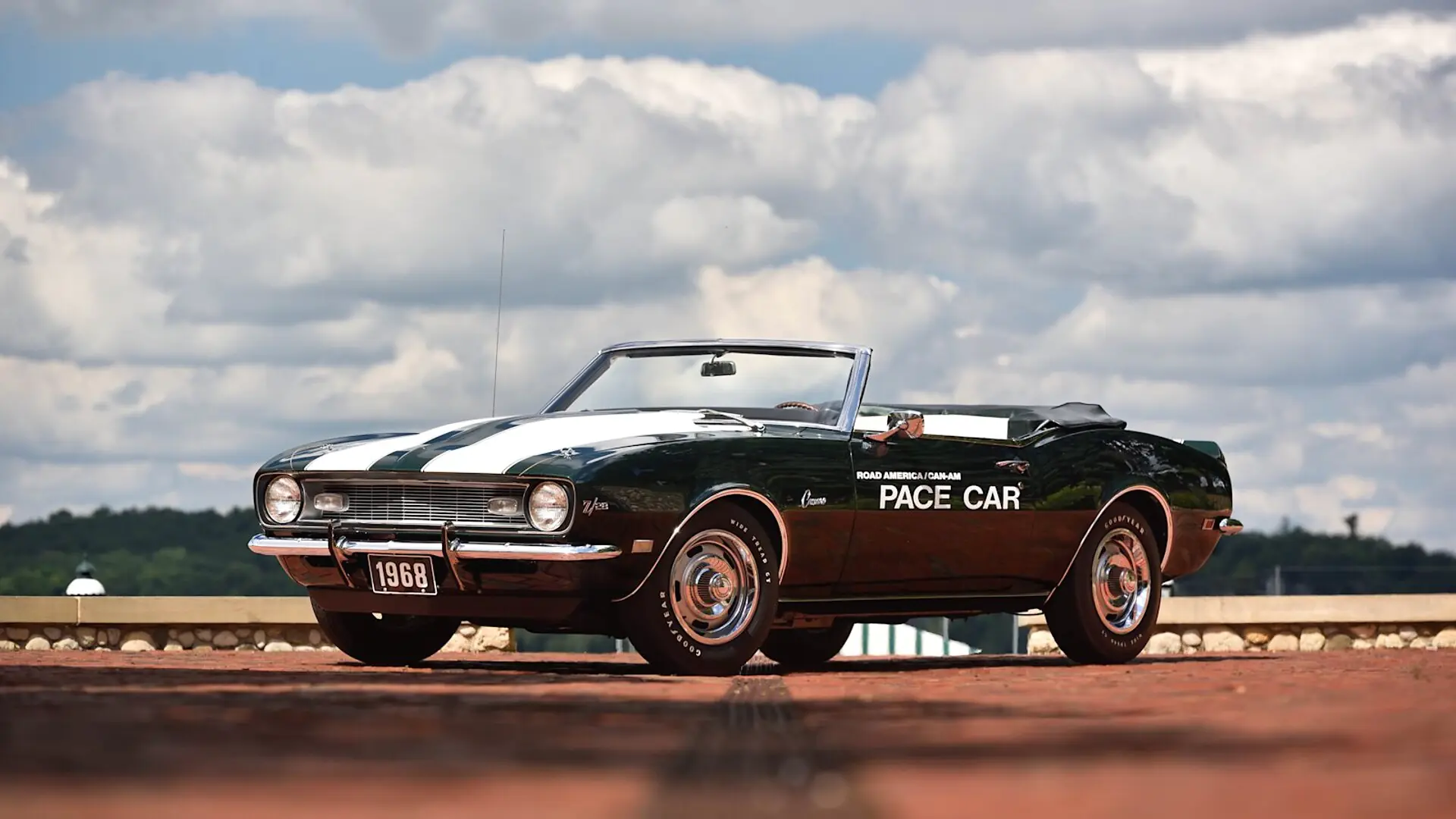
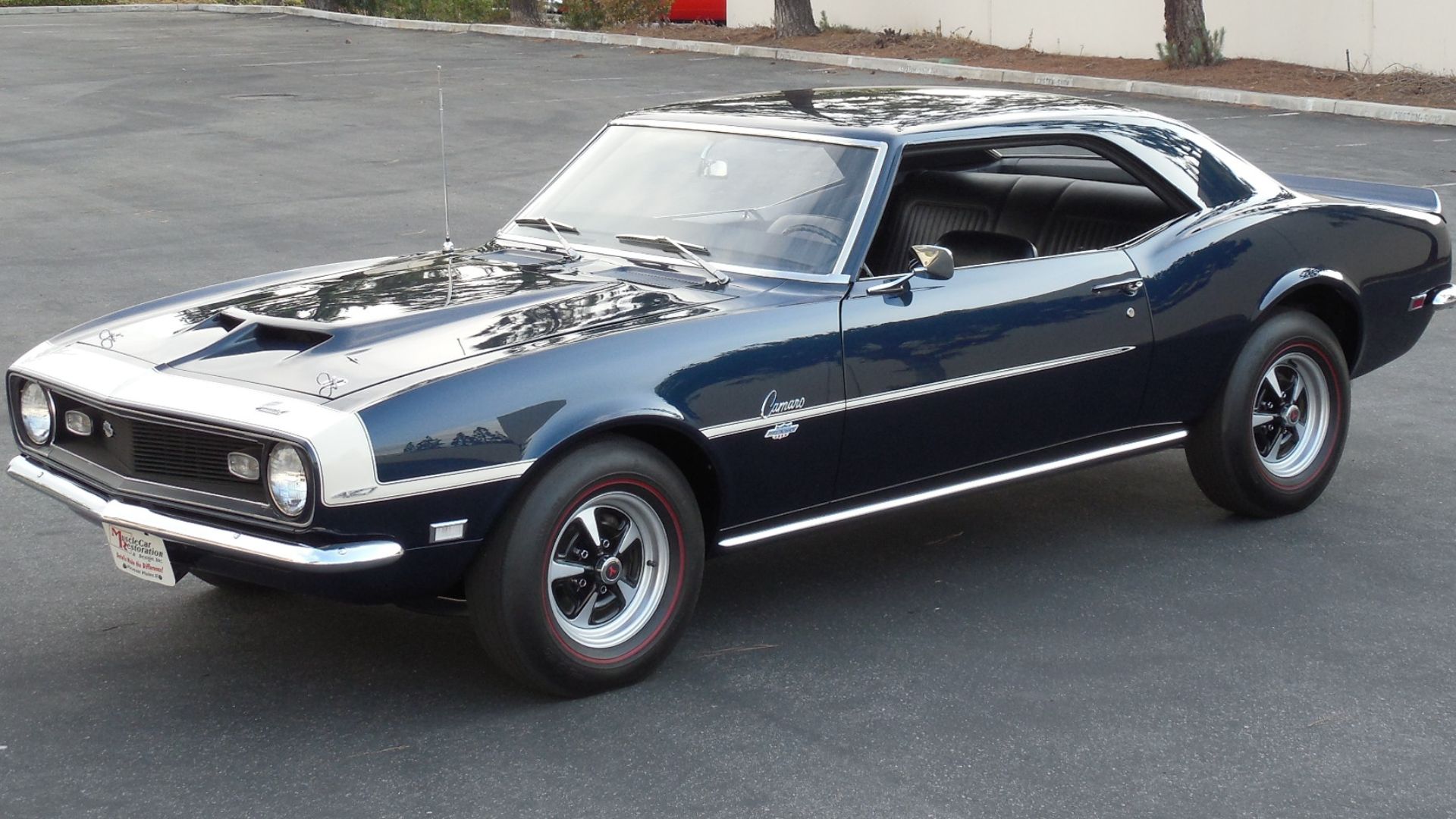
On Sunday, Jan. 17, the final day of Mecum Kissimmee 2027, 23 consecutive lots will cross the block under one banner: The F-Body Collection From Dana & Patti Mecum. The run builds, lot by lot, toward the car most Camaro collectors already know by reputation, the 1968 Chevrolet Camaro Z28 convertible built for Chevrolet general manager Pete Estes, which we examined in detail in our earlier look at the Estes Z28.
The most revealing line about the collection is not in the announcement. It is in that car’s own catalog entry. Dana Mecum recalls that when he acquired the Z28 in December 1990, it was a very original survivor with roughly 40,000 miles and a dented fender, and that the family had it restored anyway. He calls that “a decision I regret to this day.”
It is an unusual admission for an auctioneer to print about his own consignment, and it is the key to reading all 23 cars. Taken as a set, the Mecum F-Body Collection makes an argument about what actually separates an important F-body from a merely scarce one. The first test is a history that began inside General Motors rather than on a dealer’s order form. The second is originality that no restorer, however skilled, can manufacture. Production counts, special-edition badges and delivery mileage all sit further down the scale.
Three Cars No Customer Ordered
The Estes convertible’s story is well rehearsed, so the details worth dwelling on are the ones that can be checked. Mecum’s file includes an NCRS Shipping Data Report confirming a July 15, 1968 build at Norwood, Ohio, and the original Chevrolet invoice dated Dec. 16, 1968, recording the car’s sale out of company service to Cadillac suspension engineer Tom Standen at 2,810 miles, with Estes’ name on the form. Mecum says the car was ordered through Chevrolet’s Fleet Special Order Department by Vince Piggins and that building it briefly stopped the Norwood line; the second claim is Mecum’s account, and the paperwork, not the anecdote, is what bidders should be weighing.
What gives this sale an extra layer is the car’s role in Mecum’s own history. According to the company, the Z28 was its first “Main Attraction,” offered at the 1991 Spring Classic in Rockford, Illinois. It did not sell on the block, but Mecum sold it that August to collector Milt Robson for $100,000 plus a 1965 GTO, and the firm describes it as the first muscle car to change hands for more than $100,000. It later failed to meet a $1.5 million reserve at Kruse’s 2004 Auburn sale, after the factory paperwork was stolen along with the consignor’s purse, and Mecum reacquired it privately in 2007 for a seven-figure sum. Few cars are as bound up with the rise of the modern muscle car market, and with the auction house now selling it.
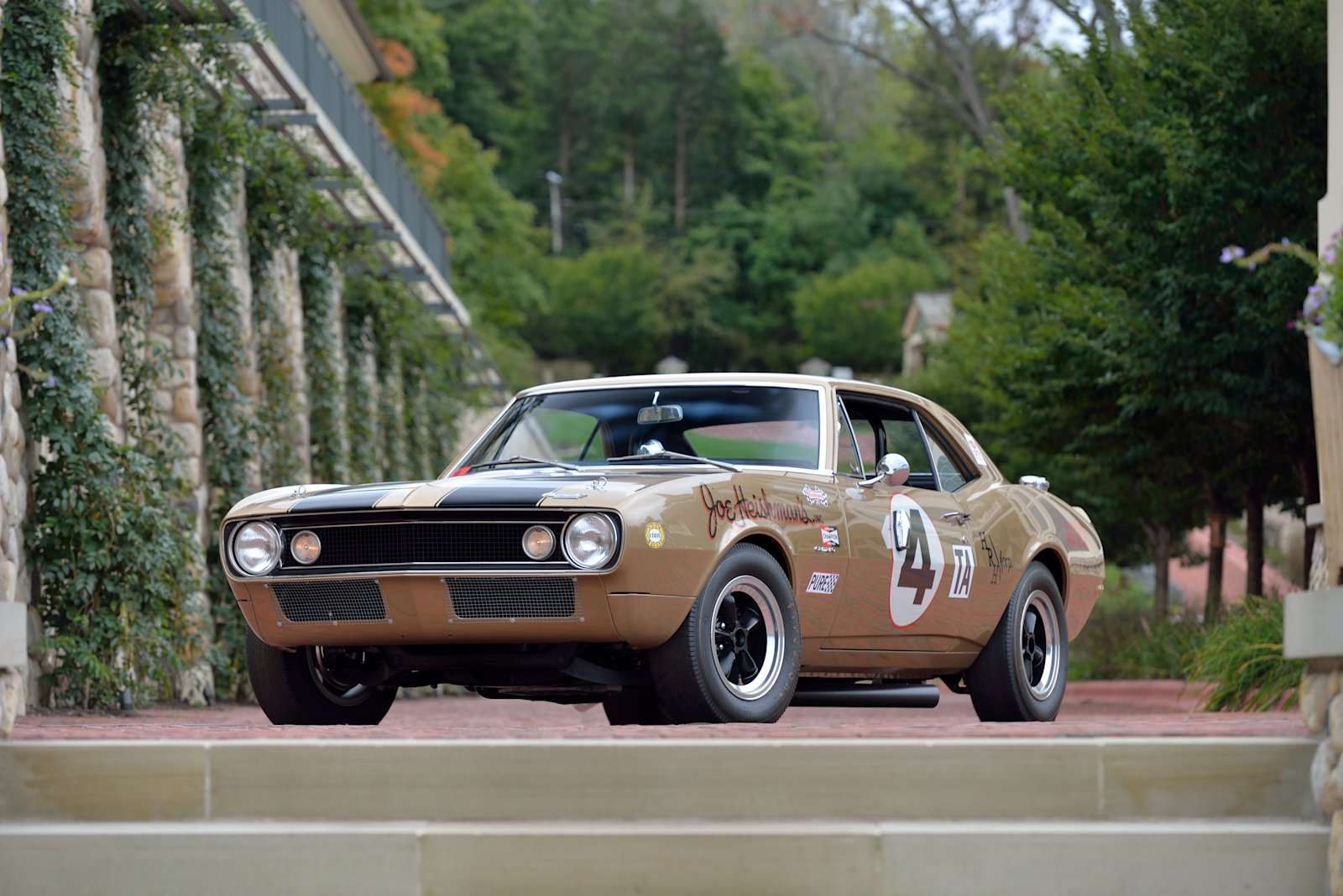
The second car in this category is the first Camaro Z28 built, completed at Norwood on Dec. 29, 1966, and one of 602 Z28s produced for 1967. It went to Aero Chevrolet in Alexandria, Virginia, was bought by team owner Hugh Heishman and was prepared for Johnny Moore, who ran it in six Trans-Am rounds and several SCCA races that season. Mecum’s competition record shows a win at the Cumberland SCCA National on May 13, 1967, a fifth in the Paul Revere 250 at Daytona, and a DNF at the 1968 Daytona 24-hour race. The checkered flag from that first victory remains with the car, which was professionally restored in 2015.
A first serial alone is a trivia point. A first serial that went racing in the series the Z28 was created to contest is a different thing entirely: it is the moment the model’s purpose became real, preserved in a single car.
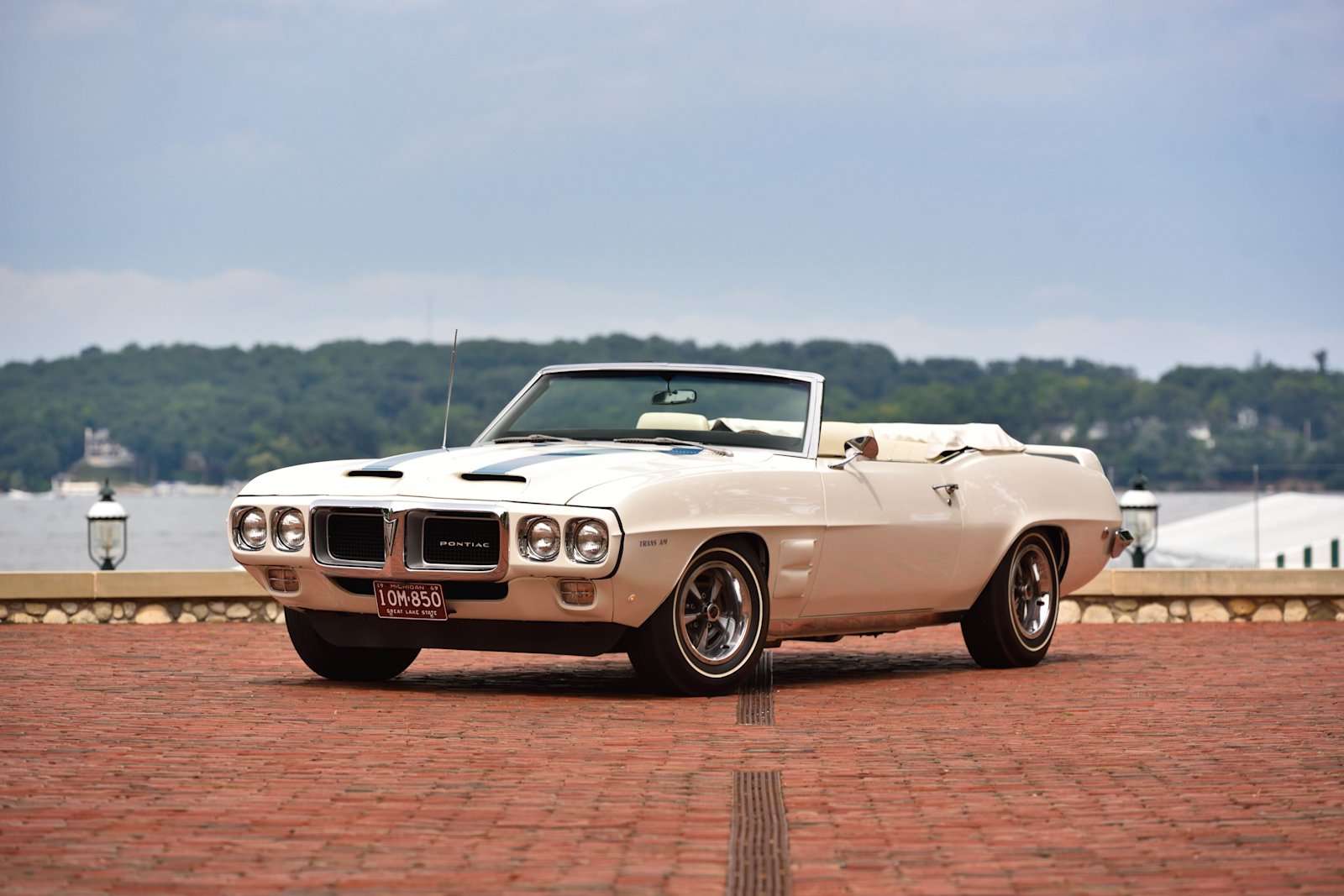
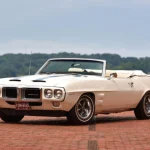
The third is the 1969 Pontiac Trans Am convertible. Pontiac’s widely cited production figures for 1969 put Trans Am output at 697 cars, eight of them convertibles, and Mecum’s lot is supported by Pontiac Historic Services documentation. Within that population of eight, this car stands apart: Cameo White with a white top and Parchment Custom interior, the only triple-white example, and according to Mecum the first of the eight built and the first of four with a 4-speed. It was ordered in June 1969 as a company car for Pontiac engineer Tom Goad, passed through Pontiac’s Pittsburgh zone office in December 1969 and was sold by Arnold Pontiac in Houston, Pennsylvania, in April 1970 with 9,725 miles recorded on the warranty transfer.
That retail paper trail is itself a story. The original dealer invoice, bill of sale and warranty transfer application turned up in late 2015 in Arnold Motor Company’s files, roughly 45 years after the sale. The car had already appeared in Hot Rod in August 1978 and September 1979, was restored by Pontiac specialist Scott Tiemann in a project completed in January 1994, and has covered 321 miles since. Its ownership roll reads like an index of serious muscle car collecting: Dick Bridges, Rick Mahoney, Milt Robson, Brett Torino and, since 2016, the Mecums.
Notice what the two headline convertibles share. Neither was ordered by a retail customer. One was an executive’s car assembled to win an internal argument; the other was an engineer’s company car. The order guide tells collectors what GM was prepared to sell the public. Company cars tell them what GM’s own people wanted to drive, and in the first-generation F-body, the second list is where the most compelling cars live.
The Originality Ladder
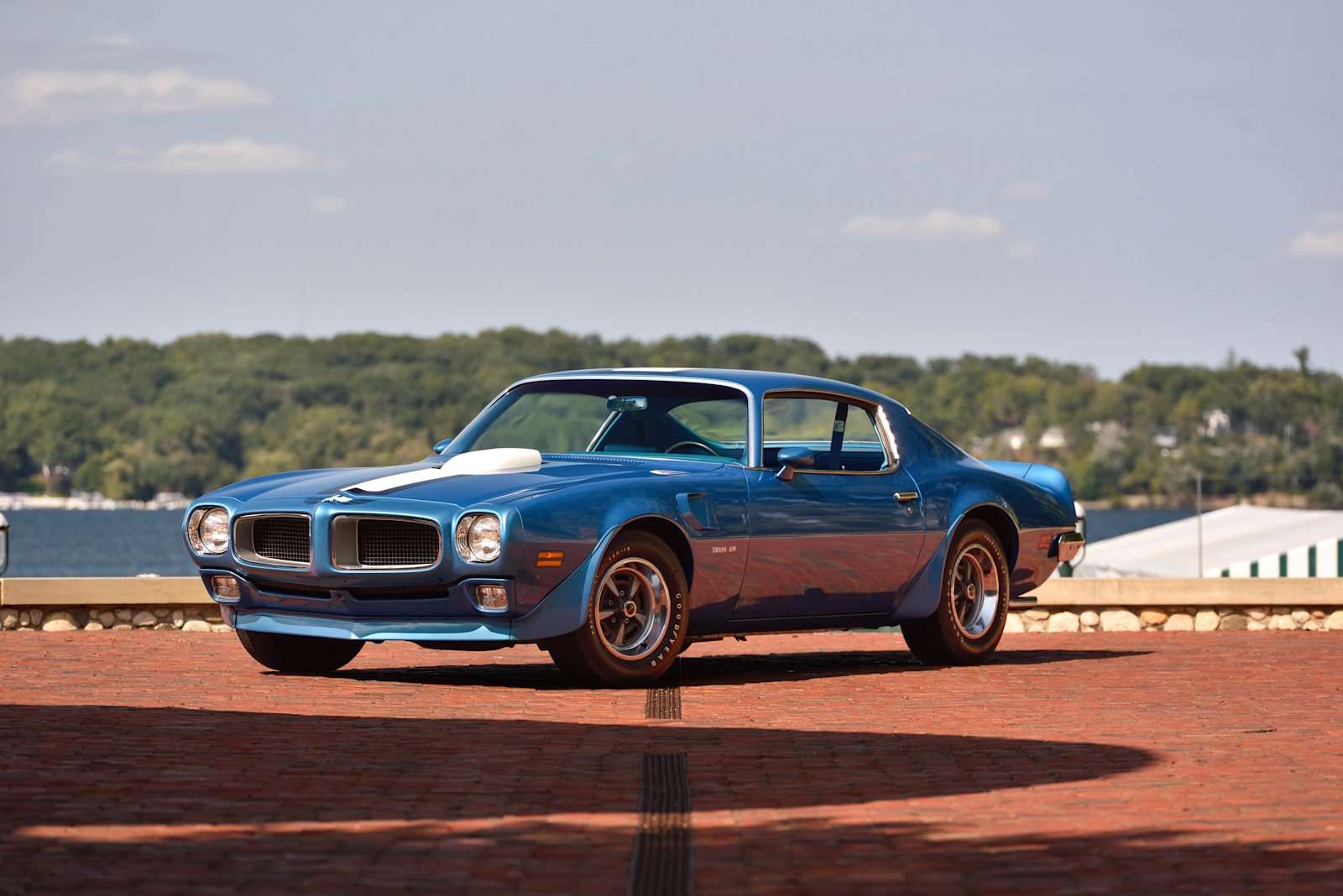
If Dana Mecum’s regret is the thesis, the 1970 Trans Am is the evidence. It is unrestored, with 6,338 miles from new, and still wears its original Lucerne Blue paint and blue vinyl interior. It was sold new at Colonial Pontiac in Philadelphia to Edward Czerw of Gibbsboro, New Jersey, stayed in the Czerw family until 1997, then spent 25 years in Rob Lozins’ Pontiac collection before the Mecums bought it in 2022. It retains its matching-numbers Ram Air III 400 and 4-speed, a combination Mecum puts at 1,769 cars.
By production numbers, that is not a rare Trans Am. Mecum nonetheless calls it the best-preserved original example in the world, a superlative no one can prove, but the reason for the claim is plain. Nothing about this car is valuable because of how it was built. All of its value comes from what happened, and did not happen, afterward.
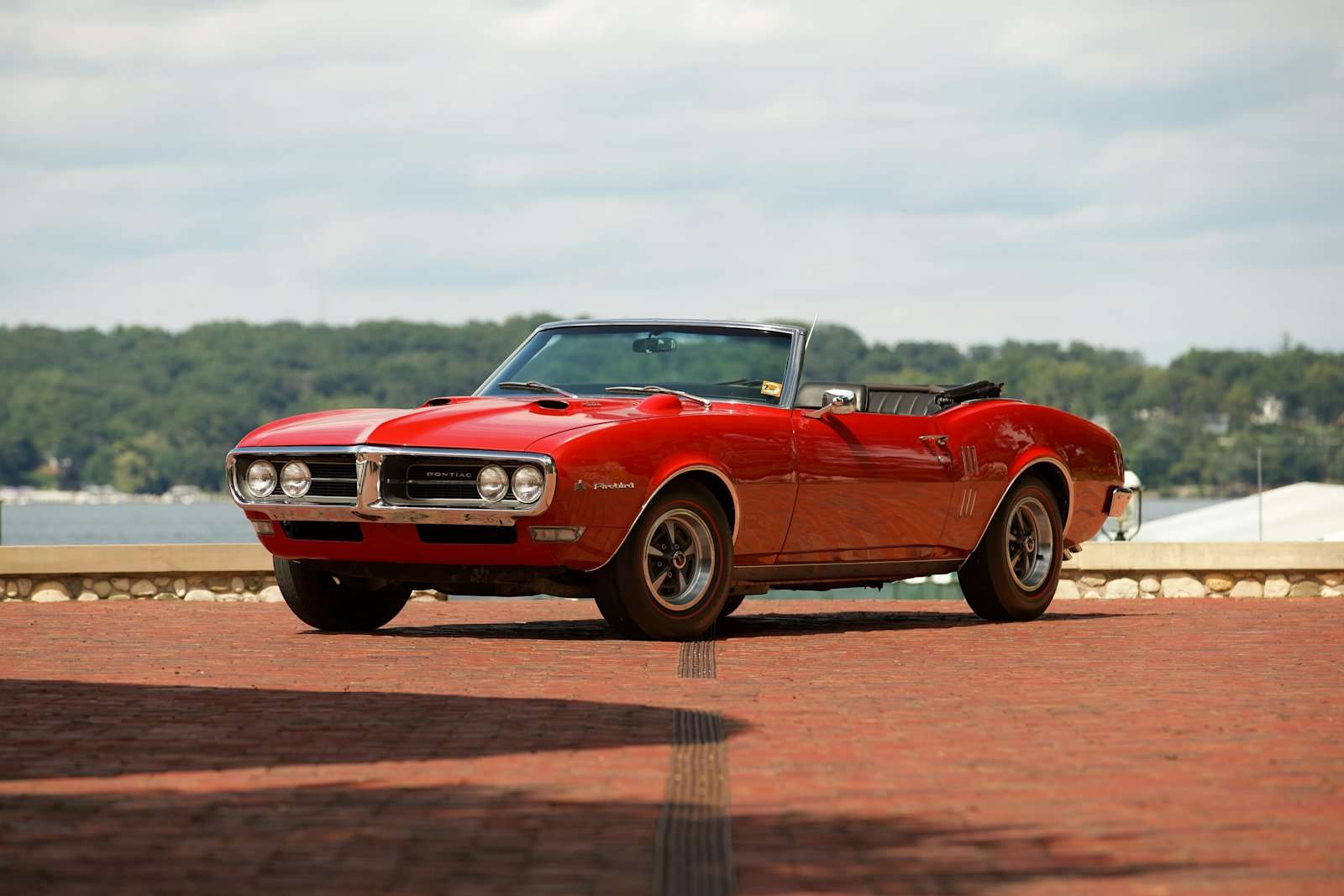
The same logic runs through the Pontiacs that sit around it. The 1968 Firebird Ram Air I convertible shows 19,333 miles and keeps mostly original Solar Red paint, its original top, interior, chrome and matching-numbers L67 400. It was ordered in November 1967 by William Luck, a fire chief from Reading, Pennsylvania, through Nick Ciliberti Pontiac in Kutztown. Mecum cites it as one of 321 Firebirds built with the L67 and a 4-speed for 1968, and repeats a Smoke Signals estimate that about a dozen Ram Air I convertibles were built; treat that second figure as an enthusiast estimate rather than a factory record.
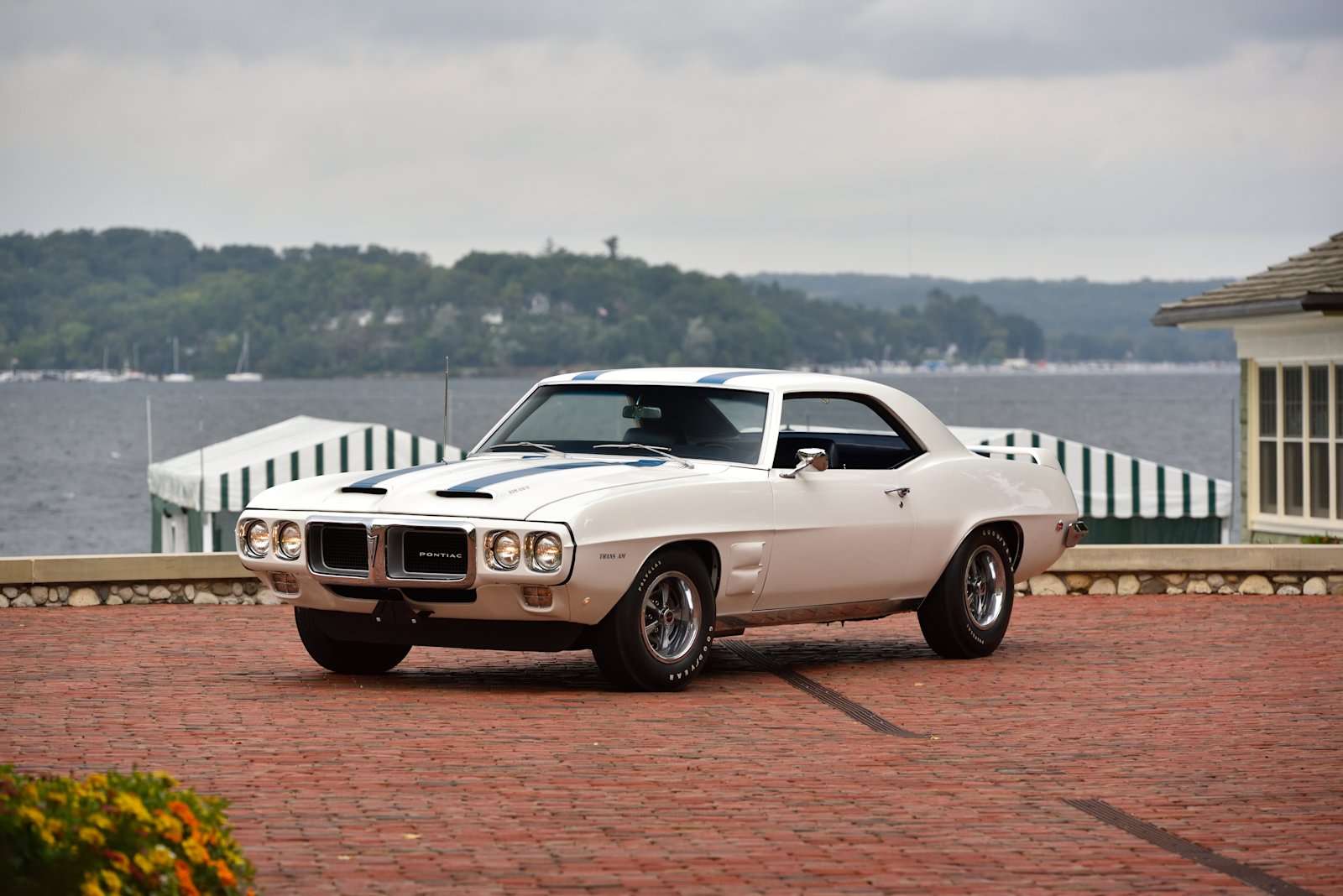
The 1969 Trans Am Ram Air IV is one of 55 built and one of 46 with a 4-speed, and its VIN appears in Pete McCarthy’s reference listing of factory Ram Air IV Trans Ams. Its real distinction, though, is survival: Pontiac enthusiasts estimate only about six still carry their original drivetrains, and this one does, along with its original interior through an otherwise extensive restoration. Add an unrestored 1974 Super Duty with 12,800 miles and an unrestored 1975 455 H.O. Trans Am with 33,096, and the Pontiac half of the Mecum F-Body Collection reads like a study in what remains.
This is the lens the Estes regret supplies. Production numbers are fixed the day the plant stops building a car. Originality is a population that only shrinks. Provenance can be rediscovered, as the Trans Am convertible’s dealer papers were in a filing cabinet in 2015. Original paint, once it is sanded away, cannot. That asymmetry is exactly why the market has been sorting muscle cars by quality rather than moving them as a block.
The Other End of the Lineup
Roughly half the Mecum F-Body Collection comes from later generations, and much of it is the kind of car built to be kept: a 2002 Camaro SS 35th Anniversary convertible with 138 miles, a 2002 Trans Am Collector Edition convertible with 390 miles and the 6-speed, one of 554 so equipped, a 1993 Z28 Indianapolis pace car with 375 miles bought from Roger Penske, a 2013 Camaro SS Hot Wheels Edition convertible that is one of 57 with a 6-speed, a 1996 SS Earnhardt Signature Series listed as No. 3 of 3, and a one-off 2011 Camaro 2SS built by West Coast Customs for the Operation Mend program.
These are honest cars, and several are genuinely interesting. A 1991 Z28 with the competition-oriented 1LE package and 385 miles, or a 1982 Z28 pace car with the rare 4-speed and 532 miles, would be a good find in any collection. But they illustrate a different species of rarity. “One of 554 with a 6-speed” divides a production run by an option code; “one of eight” describes the production run itself. And because many late-model special editions were preserved from day one by owners who expected them to appreciate, delivery mileage in that cohort is common rather than exceptional. Recent history with factory-made limited editions, such as the Dodge Demon 170’s retreat to sticker price, shows how quickly that kind of scarcity can be repriced.
The quietly fascinating car in this group may be the least glamorous. A 1977 Camaro Sport Coupe with a 305, an automatic and 2,764 miles is, by mileage, among the most original cars in the entire sale. A 1978 Trans Am sold new at Mecum Pontiac-Buick in Marengo, Illinois, adds a family connection no outside buyer can replicate. How the room values those two will say a great deal about whether bidders pay for originality on its own or only when it arrives attached to a famous configuration.
What Buyers Should Watch in the Mecum F-Body Collection
No estimates have been published. The seller is the auction company’s founder and his wife, a fact Mecum states openly, and every lot carries Mecum’s standard notice that descriptions come from the consignor, are not independently verified, and are superseded by what is announced on the block. For cars of this caliber, the documentation is the asset: the shipping data report and Chevrolet invoices for the Estes car, the competition record and dealer invoice for the first Z28, and PHS records and the recovered Arnold Motor paperwork for the Trans Am convertible. Bidders should inspect those files in person rather than relying on catalog summaries, including this one.
Mecum is also inviting other Camaro and Firebird owners to consign at Kissimmee for a chance to be displayed alongside the collection. That puts outside cars in direct comparison with benchmark examples, which is good for transparency and demanding for anyone whose car is restored rather than original. Combined with the rest of the Kissimmee docket, including the barn-find Motion Can-Am Spyder and Ken Miles’ “Flip Top” 427 Cobra prototype, the sale is shaping up as a broad test of how American collectors price provenance. As we noted in our MCACN preview, the best of these cars are exceptions rather than simply rarities.
One seller, one platform, one afternoon and 23 cars on a single chassis family make this a rare controlled experiment. Watch the spread between the unrestored cars and the restored ones, and between the cars whose rarity was created by GM’s insiders and those whose rarity was created by an option sheet.
The Estes Z28 will draw the room, and it should; no car in the Mecum F-Body Collection carries more history. It is one of the defining Camaros, and it helped build the company that is selling it. But its own catalog carries the collection’s most useful advice: the man who made it Mecum’s first Main Attraction in 1991 now wishes he had left it alone. The most persuasive car in the collection may be the one that proves him right, a Lucerne Blue Trans Am that nobody ever restored.
Sources
- Mecum Auctions release via Motor Sports NewsWire: Dana and Patti Mecum Invite All F-Body Owners to Consign Their Vehicles to Mecum Kissimmee 2027
- Mecum Auctions: The F-Body Collection From Dana & Patti Mecum
- Mecum lot U100: 1968 Chevrolet Camaro Z28 Convertible
- Mecum lot U99: 1969 Pontiac Trans Am Convertible
- Mecum lot U98: 1970 Pontiac Trans Am
- Mecum lot U94: 1967 Chevrolet Camaro Z28 Trans-Am Racer
- Mecum lot U95: 1969 Pontiac Trans Am Ram Air IV
- Mecum lot U97: 1968 Pontiac Firebird Ram Air I Convertible
The collector car market, every weekday morning.
Auction results, price moves and what’s crossing the block, read in four minutes. Free, from Modern Car Collector.
No spam, unsubscribe in one click. Or read more about the Brief.

 Eve Nowell
 Kyle Matthews