

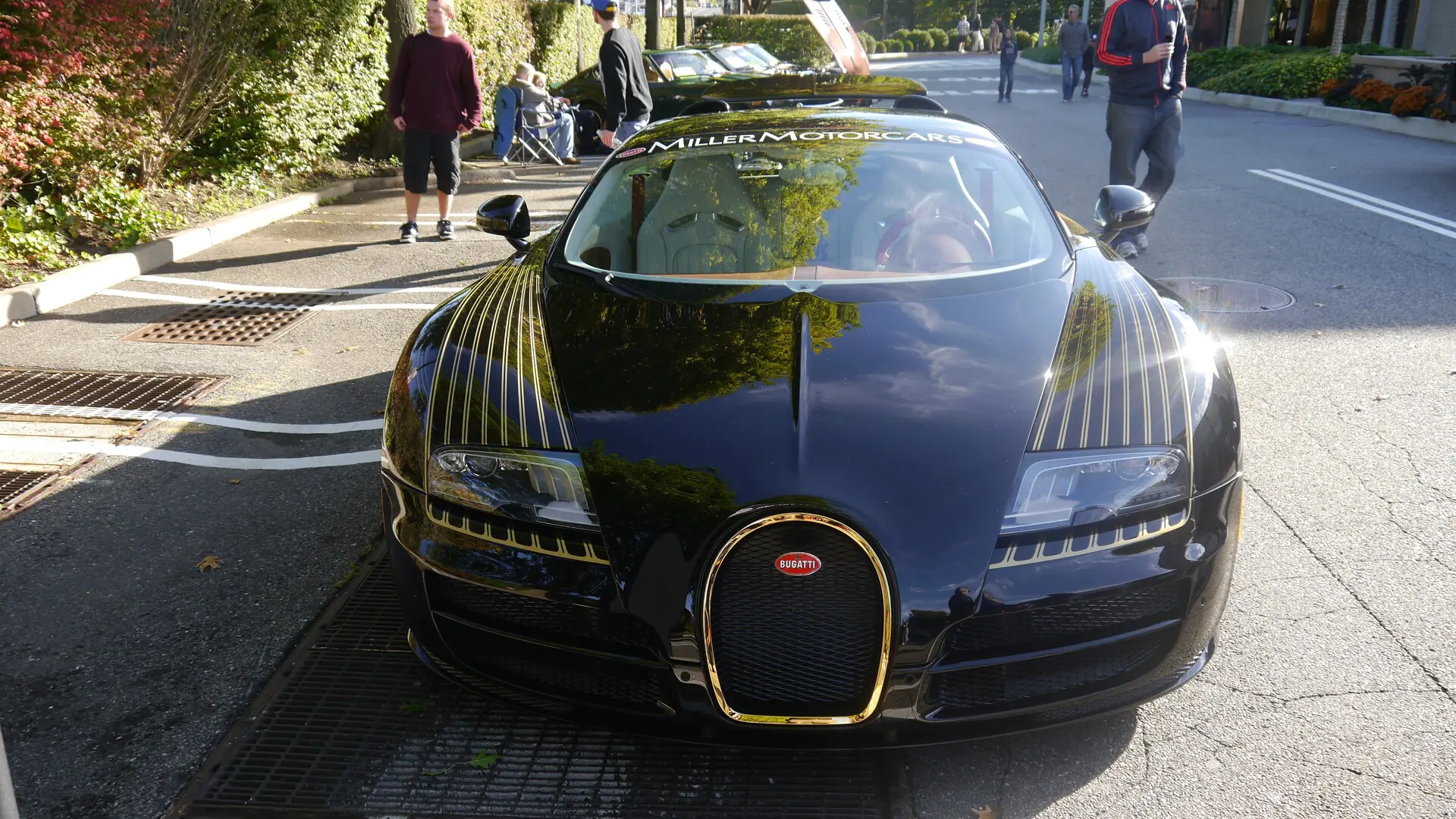
A Cologne dealer has marked as sold one of the three Bugatti Veyron Grand Sport Vitesse ‘Black Bess’ cars built in 2014. Amian Cars describes a one-owner example, first registered in July 2014, finished in black, showing 2,600 miles and inspected at a Bugatti dealer before handover. The price was “on request.” The buyer, the date and the number were never published.
That silence matters more than usual this autumn. In September, a ‘Jean-Pierre Wimille’ Legend sold for CHF 4,505,000 at RM Sotheby’s in Zurich, a public auction record for any Veyron. We argued then that Zurich re-rated one chapter of Bugatti’s Legends series, not the whole set. The Black Bess is a chapter whose case has never been argued in public, and this sale did nothing to change that.
The Black Bess may be the tidiest idea in Les Légendes, and nobody can tell you what one is worth. Quiet dealer trades like this one keep it that way.
The Only Legend That Honors a Car
Bugatti built six Legends editions of three cars each in 2013 and 2014, all on the open Grand Sport Vitesse. Five honor people: Jean-Pierre Wimille, Jean Bugatti, Meo Costantini, Rembrandt Bugatti and Ettore Bugatti himself. The fifth edition, unveiled at Auto China in Beijing in April 2014, honors a machine.
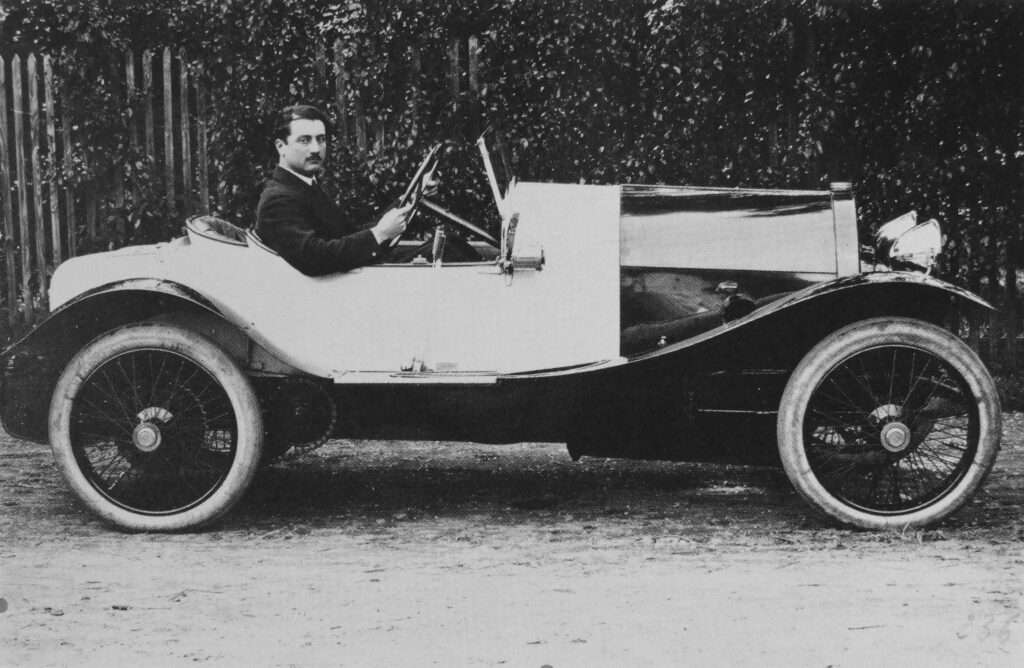
That machine is the Type 18. According to Bugatti’s heritage material, only seven were built between 1912 and 1914. Ettore Bugatti drove one to a class win at the 1912 Mont Ventoux hill climb, and that result caught the attention of Roland Garros, the aviator who wanted to travel as fast on the ground as he did in the air. Garros took delivery of chassis 474 on September 18, 1913. Its 5-litre four-cylinder made more than 100 PS and reached about 160 km/h, and Bugatti describes it as the fastest road vehicle of its day. The name ‘Black Bess’ came later. The car survives as one of three Type 18s still in existence, and Evert Louwman lent it from his museum in The Hague for the 2014 premiere.
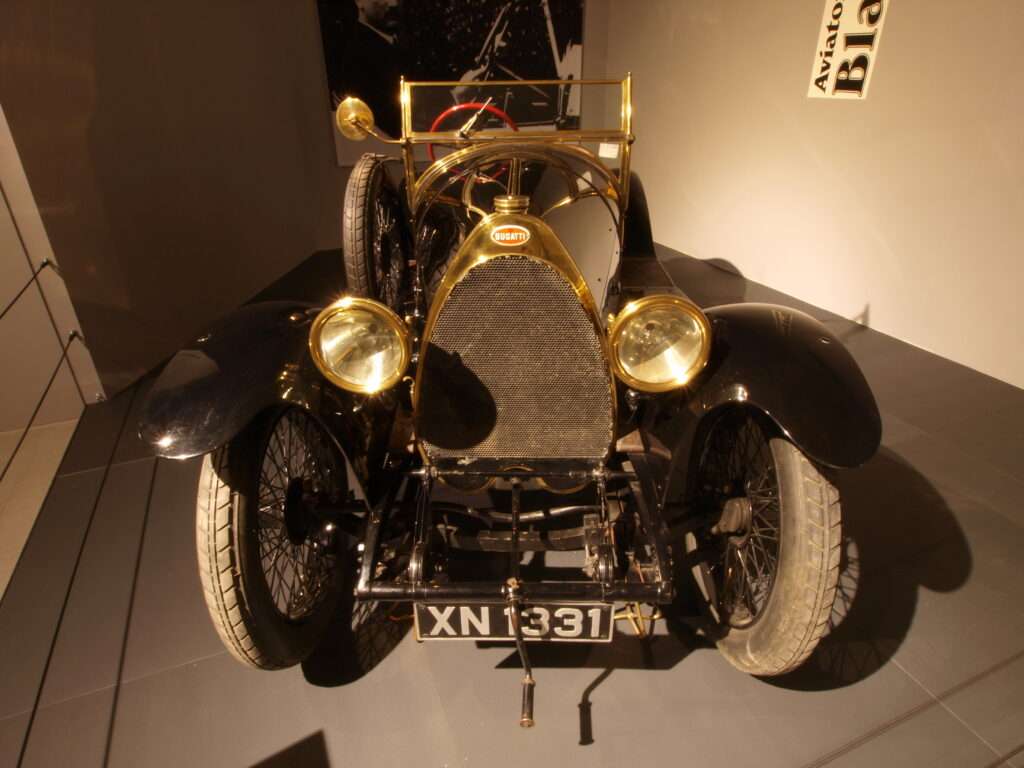
Read that description again and it could be the Veyron’s brief. The Veyron existed to be the fastest road car in the world, and the Grand Sport Vitesse set the roadster record at 408.84 km/h with its roof off. Bugatti’s then-president, Wolfgang Schreiber, called the Type 18 the Veyron’s “legitimate forerunner.” Of the six tributes, this is the only one where the subject and the platform make the same argument. The Wimille car borrows Le Mans. The Black Bess borrows the Veyron’s own reason for existing.
What Bugatti Actually Built
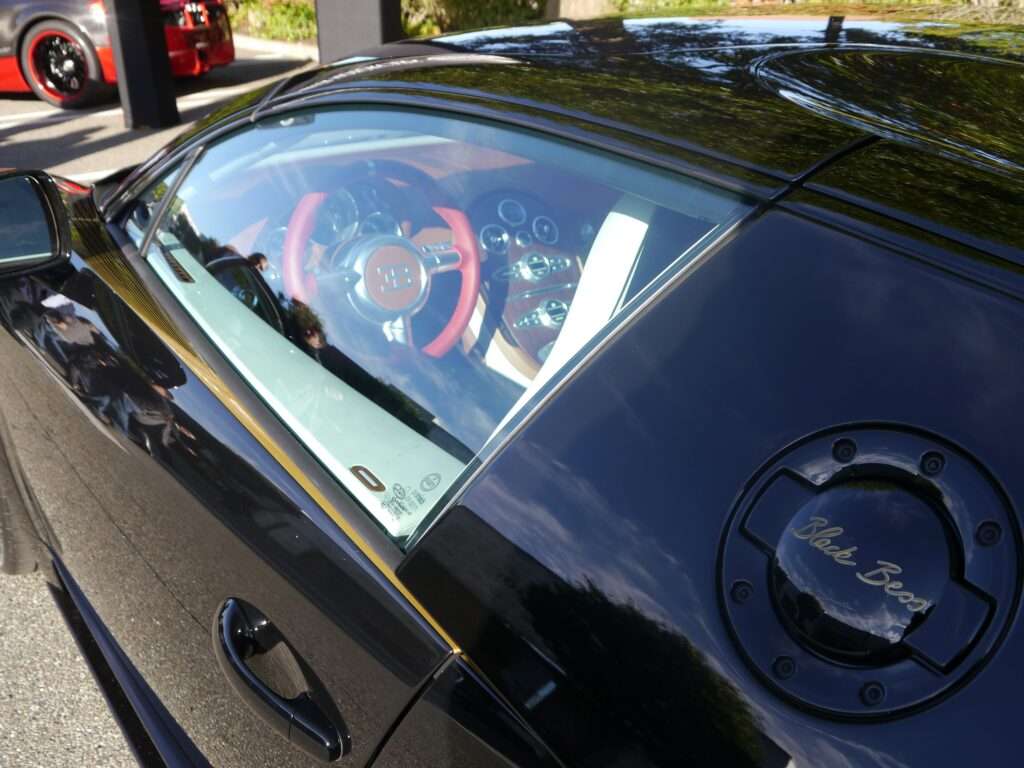
Mechanically, the Black Bess is a standard Grand Sport Vitesse: the 8.0-litre, quad-turbocharged W16 with 1,200 PS and 1,500 Nm. The work is in the finish. The exposed carbon body is painted entirely black, as the Type 18 was. Bugatti then added 24-carat gold to the horseshoe, the rear EB badge and the hub covers, and ran gold stripes from below the headlights across the front wings, tapering out at the door line. Bugatti says it was the first time real gold had been used on a Bugatti body. The fuel and oil caps are engraved ‘Black Bess’.
Inside, the headliner, seats and centre console are light beige, the dashboard and door trims are Havanna leather, and the steering wheel rim is red Crimson leather with matching stitching. The selector and console panel are rosewood. The door panels carry hand-painted scenes of the Type 18 and Garros’s Morane-Saulnier Type H monoplane, made with an ink and impregnation process Bugatti developed for the car. The net price at launch was €2.15 million, slightly below the roughly €2.2 million Bugatti quoted for the first three editions.
The Door Panels Are the Fingerprint
One detail in Bugatti’s 2014 announcement deserves more attention from buyers than it gets. Bugatti says no two of the six door panels across the three cars are identical. That makes the artwork a means of identification as reliable as a chassis plate. Anyone buying a Black Bess should be able to match the panels in the car against factory delivery photography and Bugatti’s own records.
That matters here because the Amian listing documents very little. It calls the car a “Veyron 16.4” coupe instead of a Grand Sport Vitesse. It quotes 1,250 Nm, the figure for the original Veyron, not the Vitesse’s 1,500 Nm, and it describes the W16 as twin-turbocharged, not quad-turbo. It gives no chassis number and describes the interior only as “bespoke.” None of this suggests anything wrong with the car. Dealer listings often run on generic templates. But it does mean the public record says nothing a buyer at this level should rely on. For a car like this, the paperwork is the factory file, the Bugatti inspection, the delivery records and a complete service history through Bugatti’s network.
The listing is also undated. Its gallery images sit in a July 2023 upload folder on the dealer’s website, which suggests the car was photographed and offered well before Zurich. We cannot say when it sold, so it should be read as evidence of how these cars trade, not as a post-Wimille price signal.
Why Private Trades Keep This Chapter Unpriced
The public record for the Legends is thin. Bonhams sold a ‘Meo Costantini’ car online in August 2020 for $1,750,000, less than its price when new. RM Sotheby’s sold the Wimille car this September for more than three times that. Both are racing tributes. We are not aware of a public auction result for a Black Bess, and with only three built, there may not be one for years.
When the non-racing Legends change hands through dealers at “price on request,” the market learns that demand exists and nothing about how deep it is. Sellers have obvious reasons to prefer it that way: a confidential sale cannot set a public benchmark that disappoints. The cost is borne by everyone else. Price discovery is a choice, and the owners of the quieter Legends keep choosing not to make it.
Before You Ask for the Price
- The nature of the story. The Black Bess’s argument is lineage, not victory. Racing pedigree is the premium the market has proven it will pay for. Lineage is untested. A buyer paying close to Wimille money is betting that collectors will learn to value the idea.
- Mileage. At 2,600 miles across roughly a decade, the Amian car has been used without being used up. For a modern hypercar that is a reasonable balance between mechanical health and originality.
- Identity. Insist on the chassis number, Bugatti’s confirmation of the car’s build, delivery records, and door-panel artwork that matches the factory’s images of that specific car.
- Liquidity. With three cars in existence, any resale is a rare event. The first Black Bess to cross a public block will set its benchmark from scratch, and whoever consigns it takes that risk.
Not every Veyron that has changed hands lately has been bought for its badge. A Grand Sport Vitesse with Geneva show provenance went to Broad Arrow in Zürich on the strength of its stand number, and one museum traded its Veyron for a Gullwing. The pattern is consistent: the market pays for a specific, documented reason a particular car matters. The Black Bess has one of the best reasons in the series. What it lacks is a public price that says so.
The Type 18 sits in the Louwman museum, where nobody will ever bid on it. Its Veyron namesake has ended up in much the same spot, just with ‘price on request’ where the number should be. If you’ve watched a Black Bess change hands, or know where the other two live, tell us. We’ll keep names out of it.
Sources
- Amian Cars: Bugatti Veyron 16.4 “Black Bess Edition” listing
- Bugatti Newsroom: “Les Légendes de Bugatti”: World premiere for “Black Bess” at Auto China Beijing 2014
- Bugatti Newsroom: All three Legends model series presented so far have been sold (February 2014)
- Bugatti: Les Légendes de Bugatti
The collector car market, every weekday morning.
Auction results, price moves and what’s crossing the block, read in four minutes. Free, from Modern Car Collector.
No spam, unsubscribe in one click. Or read more about the Brief.
Related Posts:
- Zurich Didn't Re-Rate Bugatti's Legends Veyrons. It…
- Collector Car Market Brief: A One-of-Three Veyron…
- The Record Veyron in Zurich Wasn't Bought for 1,200…
- A Veyron Without a Legends Badge Heads to Zürich.…
- Bugatti’s One-of-One Aluminum Veyron Went Home to…
- KITT Stalls at CHF 200,000 in Zürich, and the…
 Shawn Henry
 Kyle Matthews