
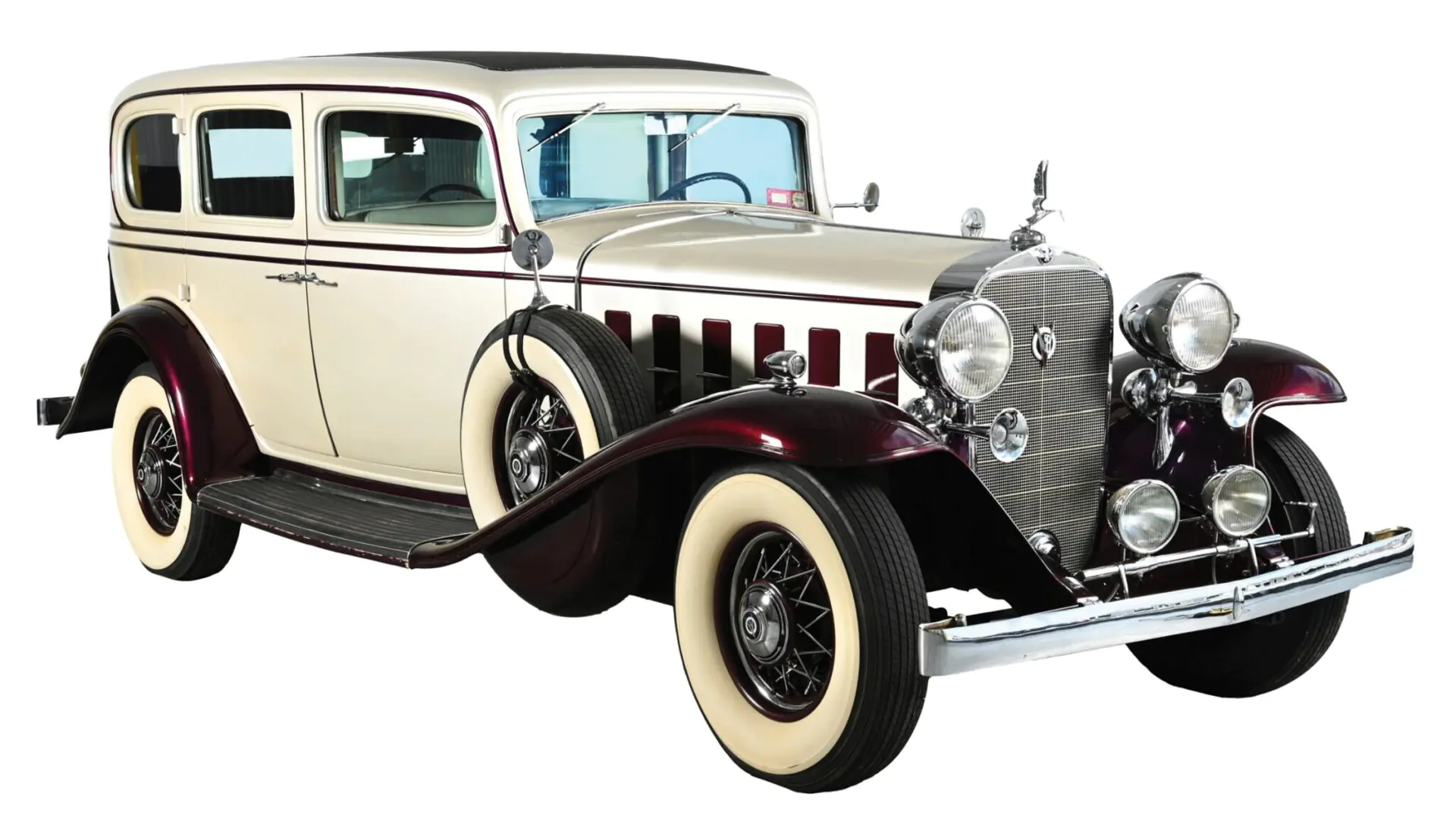
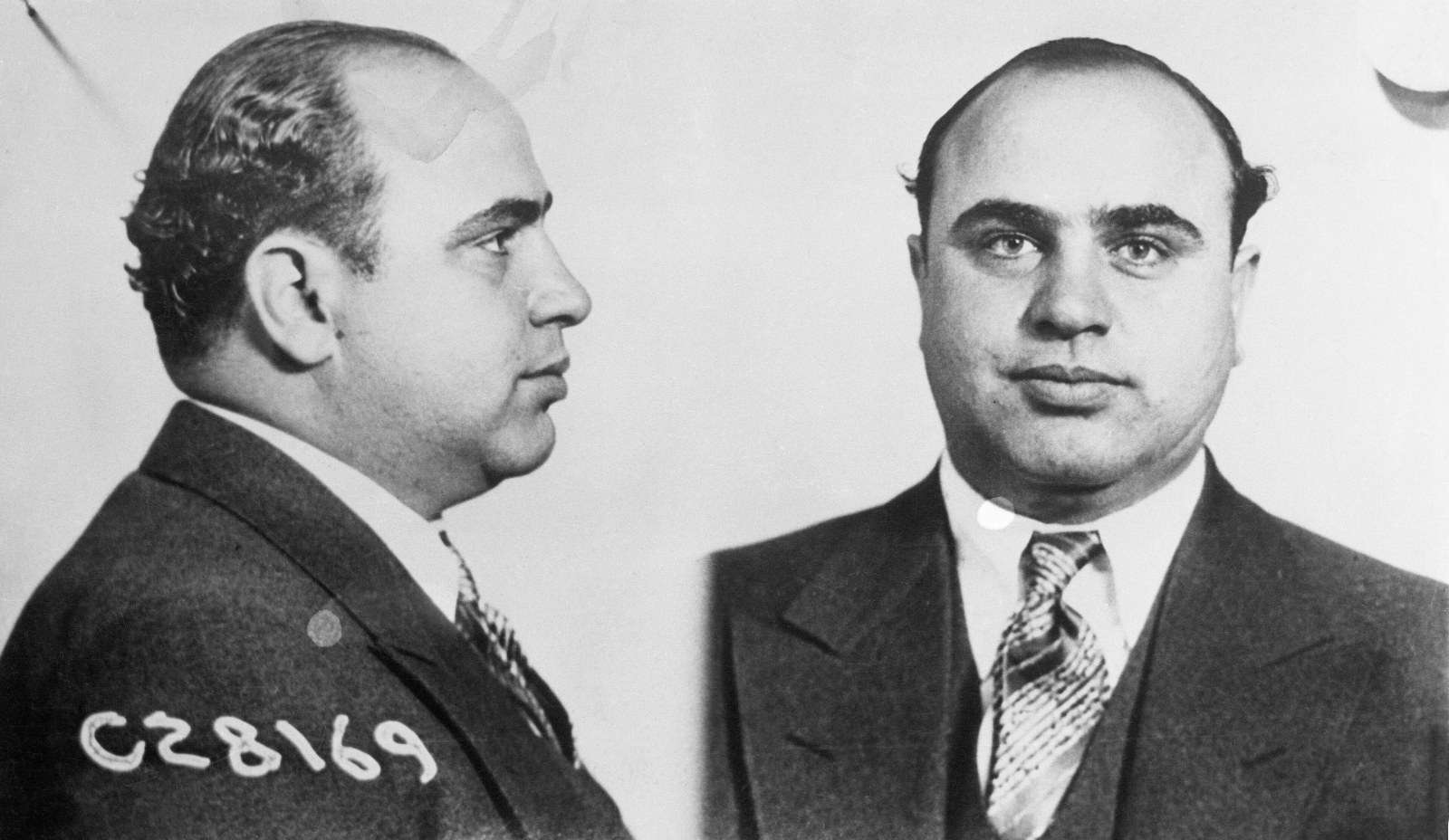
The 1932 Cadillac 355-B Imperial limousine that Morphy Auctions sold on October 4 is not a rare car. It is not a coachbuilt one, and it is not the most important Cadillac of its year. What it has is a piece of paper: a New York Certificate of Sale, with a raised notarial seal, naming Alphonse Capone as the purchaser through Rochelle Cadillac Co. of New Rochelle. The lot closed at $79,950, buyer’s premium included, against an estimate of $50,000 to $80,000.
That outcome is the story, and it is not really about Capone. It is about how much a collector car can be worth when its history lives in a document rather than in the metal. A certificate of sale is provenance you have to trust. Provenance you can touch is another matter, and the market prices the two differently.
A Cadillac built for volume, not for show
Start with what the car is, because the catalog does. According to Morphy’s lot description, this is a Fisher-bodied, seven-passenger Imperial limousine on a 140-inch wheelbase, powered by a 353-cubic-inch L-head V-8 rated at 115 horsepower and paired with a three-speed synchromesh manual. It is finished in cream with burgundy fenders, with dual enclosed side mounts, wire wheels, a Goddess radiator mascot, auxiliary lighting, dual horns and a rear luggage trunk. The lot also notes a stained-glass panel on the passenger side.
In 1932, Cadillac sold three engine families in parallel. The New Cadillac Database’s accounting of that model year puts V-8 sales at 2,096 cars, against 1,709 V-12s and just 296 V-16s. Fisher produced thirteen V-8 body styles across two wheelbases; Fleetwood supplied eight custom bodies, all on the longer chassis. A Fisher-bodied Imperial on the 140-inch chassis is therefore a catalog Cadillac, not a one-off. It is a handsome, formal, usable one, and very different from the V-16 flagships Cadillac wanted the marque judged by. Collectors who pay prewar Cadillac money for the sixteens, as in our look at the 1930 V-16 Sport Phaeton set for Indy 2026, are paying for engineering and scarcity. This car offers neither.
The question the certificate raises
Here is the detail that deserves more attention than the name on the paper. Capone was convicted in October 1931 and imprisoned in May 1932, a timeline RM Sotheby’s laid out when it researched the 1928 armored Cadillac it sold in 2012. A 1932 Cadillac sold through a dealer in Westchester County, New York, to a man who spent most of that year facing prison or in it, is not impossible. Orders were routinely placed through agents, and RM’s own research traced that earlier car through a Chicago agent believed to be connected to Capone. But it is the first question an experienced buyer should ask, and the lot description, as published, presents the certificate rather than any account of Capone taking delivery or using the car.
That is not an accusation. It is a reminder of what a certificate of sale proves: that a transaction was recorded, and in whose name. It does not, on its own, prove who sat in the back seat.
Provenance you can see versus provenance you must believe
The comparison is instructive. The 1928 Cadillac V-8 Town Sedan that RM Sotheby’s sold at St. John’s in 2012 for $341,000 carried nearly 3,000 pounds of armor plating, bulletproof glass and a drop-down rear window. Even there, RM’s catalog said that definitive proof of the Capone connection had not been established beyond reasonable doubt until new research and an eyewitness account arrived. The armor made the story physical. The research made it credible. Together they brought a price more than four times the one this limousine realized.
These are different cars from different years, and it would be a mistake to treat the gap as a formula. But the pattern is consistent with what we saw when Paul Newman’s Mustang outsold a DB5 at Mecum Nashville: the market rewards provenance it can verify and see, and discounts the rest. It is also why a presidential limousine with a documented White House history can command real money, while a name on a bill of sale commands a conversation.
This one sold in an automobilia and petroliana sale, among signs and gas-station memorabilia, rather than in a catalog built around concours buyers. That likely shaped the audience. Collectors of Americana and Prohibition-era material will pay for a Capone connection in ways a prewar Cadillac specialist might not.
What the restoration tells you
The lot description cites nearly $95,000 in mechanical restoration, refurbishment and detailing by Classic & Exotic Service in 2011 and 2012, supported by an extensive binder, along with service invoices, manuals and keys. Morphy rates the condition as older restored, with minor paint imperfections, age-appropriate wear and minor cracks in the passenger-side stained-glass panel. The car starts easily and drives smoothly.
Note the arithmetic. The restoration bill alone exceeded the final price. That is a familiar pattern in prewar restoration, where cost rarely round-trips at auction, and it is a useful corrective for anyone who assumes a famous name changes the math. For the buyer, the upside is practical: the expensive mechanical work has been done and documented. The market did not pay a premium for the name large enough to cover it. Our report on the Buck Jones Cadillac V-12 Speedster shows the same dynamic at a higher level of the prewar Cadillac market.
What serious buyers should verify
Anyone considering a car with a celebrity or notorious owner should start with the document. Confirm that the engine and serial numbers on the certificate match the car, and ask how the certificate itself came to be preserved. Look for corroboration outside the vehicle’s own file: dealer records, delivery paperwork, factory production records, period accounts. Establish who actually took delivery. Verify the Fisher body identification, and ask whether the stained glass is factory, dealer-installed or later work, because the answer affects originality as much as it affects the story. Finally, separate the restoration from the history; a thorough older restoration is an asset, but it is not evidence.
The takeaway
The most useful lesson in this sale is not what a Capone name is worth. It is how the market weighs a claim against evidence. A Cadillac V-8 limousine of this quality, restored and running, sold at the top of its estimate. The paper added interest. It did not add a multiple. Armor is provenance you can touch. A certificate is provenance you have to trust, and collectors, rightly, price those two things differently.
Lead image via Morphy Auctions
Lead image: Morphy Auctions
The collector car market, every weekday morning.
Auction results, price moves and what’s crossing the block, read in four minutes. Free, from Modern Car Collector.
No spam, unsubscribe in one click. Or read more about the Brief.
Related Posts:
- Record Ferraris, Rare Icons and 15,000 RPM: The Week…

- The Buck Jones Cadillac V-12 Speedster Sold for…
- The First Auburn 851 Speedster Heads to Hershey. Its…
- The Collector Car Market Paid Up for Certainty This…

- Collector Car Market Brief: A One-of-Three Veyron…
- Cadillac's Junkyard Dream Car Returns to Auction.…
 Eve Nowell
  Shawn Henry