

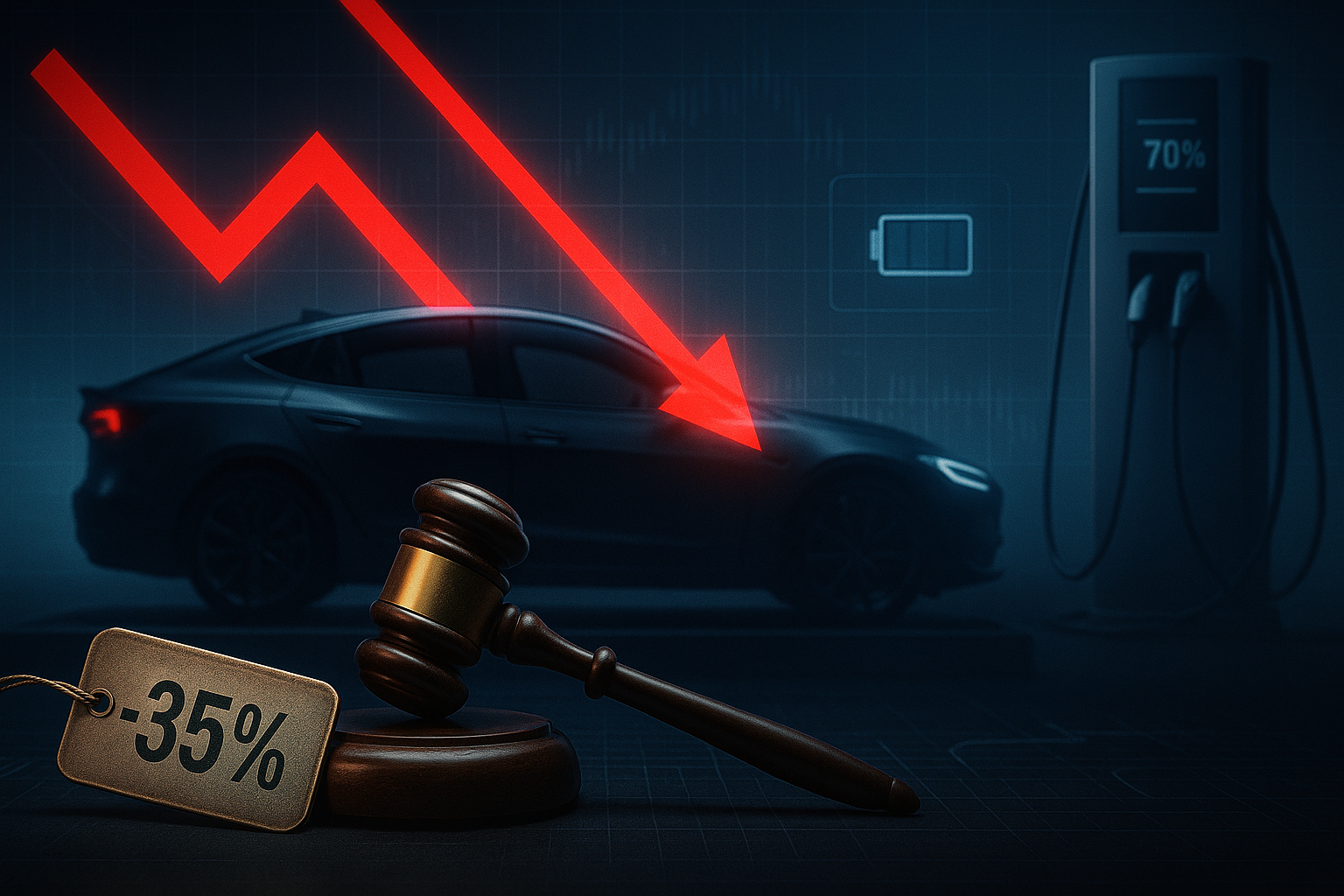
Electric cars are having a rough moment. Shopper interest is down, dealer lots are heavy with unsold EVs, and used prices keep softening, especially for high-volume models. To most people that screams “avoid.” To collectors, it sounds like opportunity. This guide lays out the reality: why resale is weak, where the long-term bright spots might be, and how to buy and preserve an electric vehicle like a pro. It’s a little controversial because it needs to be, most of the market is still treating EVs like disposable appliances. You don’t have to.
EVs are ice-cold with shoppers—and it shows up in prices
- Buyer intent for fully electric vehicles has slipped to multi-year lows.
- Used EV prices are down year over year while used ICE cars have generally stabilized or ticked up.
- New-EV days’ supply sits meaningfully higher than ICE, which pressures transaction prices and future residuals.
- Repeated new-car price cuts (especially from leaders) have poisoned used values and lease residuals.
A near-term shock: federal incentives end September 30, 2025
- The $7,500 new-EV and $4,000 used-EV credits are scheduled to sunset on 9/30/25.
- Expect pull-ahead demand before the deadline and a post-deadline air pocket.
- Translation for collectors: soft primary market + incentive sunset = continued pressure on late-model used values—prime hunting season.
Why EV resale is weak (the mechanics, not the memes)
1) Pricing whiplash & rapid tech cycles
- When the “new” car suddenly gets cheaper or much better, yesterday’s used example gets punished.
2) Inventory & incentives
- High days’ supply and elevated incentives drag on values and signal tepid mainstream demand.
3) Insurance/repair realities
- Battery assessment and repair can push up claim severity; borderline collisions can total cars that would be fixable in ICE land.
4) Standards churn & charging politics
- The rapid pivot to NACS has left CHAdeMO-only cars increasingly orphaned at public fast-chargers.
5) Software & ownership frictions
- OTA decisions can add or remove features; salvage or policy flags may block fast charging on some platforms.
Bottom line: depreciation is mostly about market dynamics and technology turnover—not batteries spontaneously dying at year seven.
What this means if you’re collecting (not daily-driving)
Your edge is buying what regular buyers won’t touch—on purpose. You’re not chasing TCO; you’re hunting significance, scarcity, and narrative. Use this framework:
Tier 1: Historically significant, limited, or technically singular
- 2008–2012 Tesla Roadster — First modern lithium-ion production sports EV; small production; genuine cultural milestone.
- BMW i3 (especially i3s and unusual specs) — Carbon-fiber architecture, rear-motor, city-car oddball with real engineering intrigue.
- Porsche Taycan (early, well-optioned cars) — The first electric Porsche. Provenance and spec will matter to future Porsche people.
Tier 2: First-wave/first-edition trucks & oddities
- Rivian R1T Launch Editions, early VINs — First credible adventure EV pickup; launch-trim lore.
- Compliance-era curios (Fiat 500e, Spark EV, e-Golf) — Charming and often dirt-cheap; buy for story, not convenience.
Caution (for collectors, not commuters)
- CHAdeMO-only cars (many early Leafs) — Shrinking fast-charge ecosystem hurts usability and, eventually, liquidity.
- High-volume commodity crossovers — Today’s appliances become tomorrow’s commodities.
Due-diligence checklist (EV-specific)
- Battery health proof — Demand a recent third-party battery report/telemetry; focus on capacity trend, not a single snapshot.
- Warranty runway — Confirm remaining battery warranty (commonly 8 years/100k miles with a capacity threshold) and transferability.
- Charging standard & rate — Know whether it’s NACS/CCS/CHAdeMO and the peak DC rate; adapters help but don’t fix everything.
- Software/feature status — Verify OTA feature set, fast-charging eligibility, and any salvage/policy flags.
- Insurance & repair plan — Get quotes before you buy; line up a shop certified for that platform.
- Market context — Track days’ supply and incentive levels; they’re leading indicators for near-term value moves.
Storage & care (collector-garage realities)
- SOC sweet spot: Store at roughly 40–60% state of charge; avoid parking for long periods at 0% or 100%.
- Temperature: Cool, stable environments slow degradation; minimize frequent DC fast charging on garage queens.
- Exercise it: Batteries age with time as well as miles; give the car a short monthly drive and a gentle charge cycle.
Exit strategy: where these actually sell
- Special EVs (Roadster, rare specs): Online enthusiast auctions attract EV-literate bidders and reward documentation.
- Mainstream late-model EVs: Expect offers anchored to whatever’s happening in the new-car market. Time your sale around inventory and incentive waves.
So…should you collect an EV right now?
If you’re chasing pure investment, recognize the deck is stacked for depreciation: high incentives (until 9/30), rapid tech turnover, and policy risk. That’s exactly why the best plays are story, scarcity, and firsts—not another discounted commuter crossover.
If I were building a tiny EV sub-collection in 2025, I’d:
- Hunt a clean, documented Tesla Roadster with recent battery service.
- Buy the smartest BMW i3 I can find (late, low-mile i3s in interesting colors/options) and preserve it as the archetypal weird EV.
- Cherry-pick a Taycan with a great spec at today’s softened prices, betting “first electric Porsche” provenance.
- Skip CHAdeMO-only cars unless it’s for a museum-style slice—and price in dwindling fast-charge support.
Enthusiasts say modern cars are appliances. In resale terms, EVs are the most appliance-like right now—rapidly obsoleted by software and pricing, not by mechanical wear. That’s brutal for owners—and a playground for collectors who buy the right examples because they’re out of fashion today.
The collector car market, every weekday morning.
Auction results, price moves and what’s crossing the block, read in four minutes. Free, from Modern Car Collector.
No spam, unsubscribe in one click. Or read more about the Brief.



 EL Puckett
  Kyle Matthews