

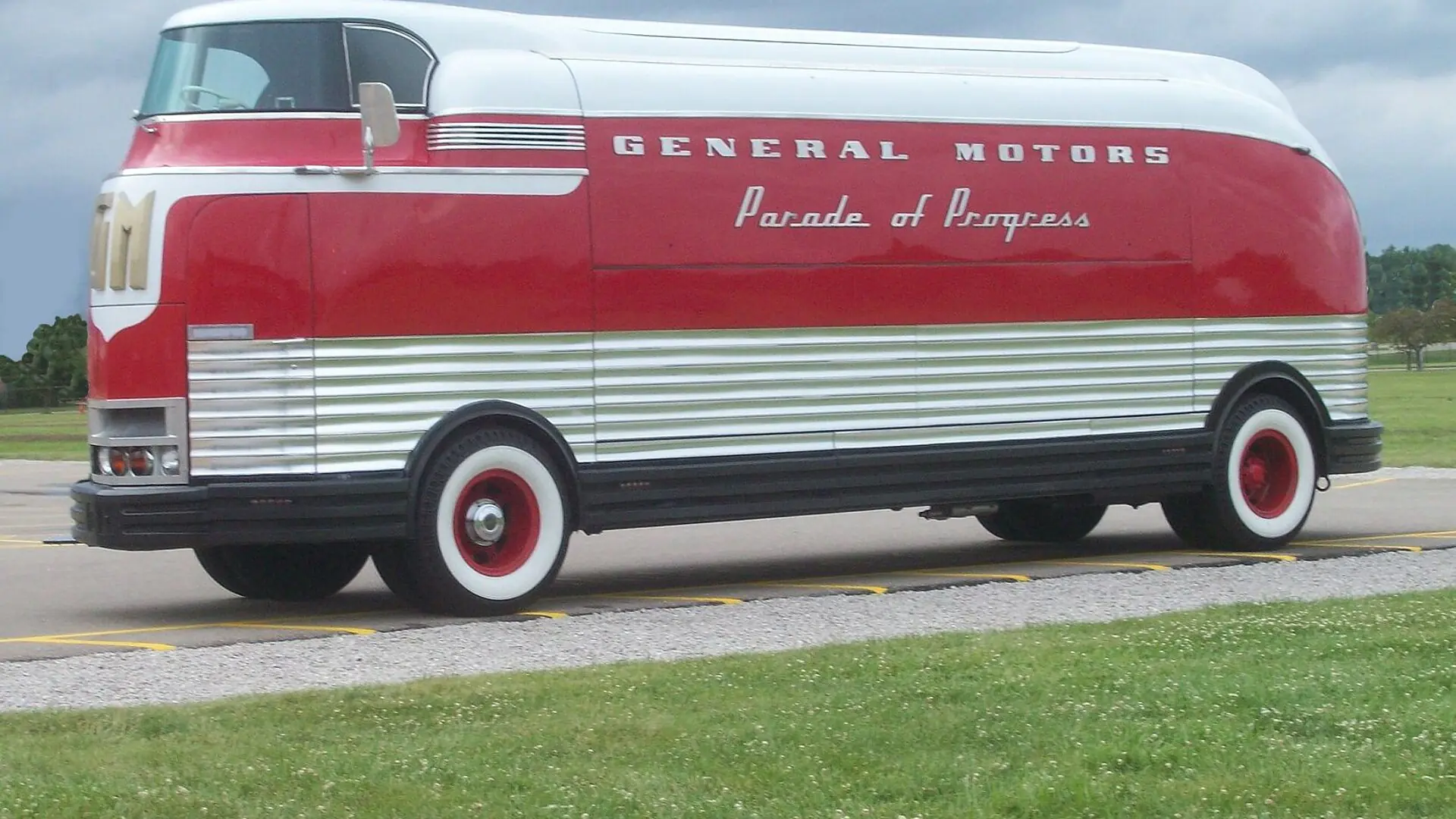
Rétromobile has spent half a century teaching Paris how to shop for old cars indoors in the dead of winter. On Thursday it began teaching New York. The first American edition of the salon opened at the Javits Center on November 19 and runs through Sunday, with more than 300 cars on the floor, a restored General Motors Futurliner, four screen-used cars from the Fast & Furious films and an official sale by Gooding Christie’s, whose New York catalogue pits a matching-numbers D-Type against an Alloy Gullwing.
It would be easy to cover all of this as a very good car show. That misses what the organizers actually shipped across the Atlantic. The cars are the inventory. The real import is the format, and the format is a bet on how Americans will want to buy collector cars over the next decade.
The Salon, Not the Lawn
The American collector calendar is built around two settings: the lawn and the tent. Concours events such as Pebble Beach and Amelia Island tell collectors what a car should be. The auctions in Scottsdale and Monterey tell them what someone will pay for it on a given afternoon. Dealers, restorers, parts specialists and booksellers orbit both, but they rarely share a floor with them on equal terms.
Rétromobile, founded in Paris in 1976, has always put everyone in the same hall. Dealers show stock beside restorers demonstrating their craft, museums mount exhibitions a few aisles from automobilia stalls, and the auction runs alongside rather than above it all. Gérard Neveu, who runs the New York edition, rejects the comparison to a concours, a rally or a club meet and calls the show “the world’s most exciting pop-up garage.”
The distinction matters more than it sounds. At a concours, a collector admires. At an auction, he competes against a room under a falling hammer. At a salon, he compares. He can walk from a dealer’s 250 GT Lusso to an auction-preview Lusso to a coachbuilder who knows exactly what Lusso sills tend to hide, all in ten minutes. Price discovery stops being theater and becomes research. That is the habit Rétromobile has cultivated among European buyers for decades, and it is the habit the show is trying to transplant.
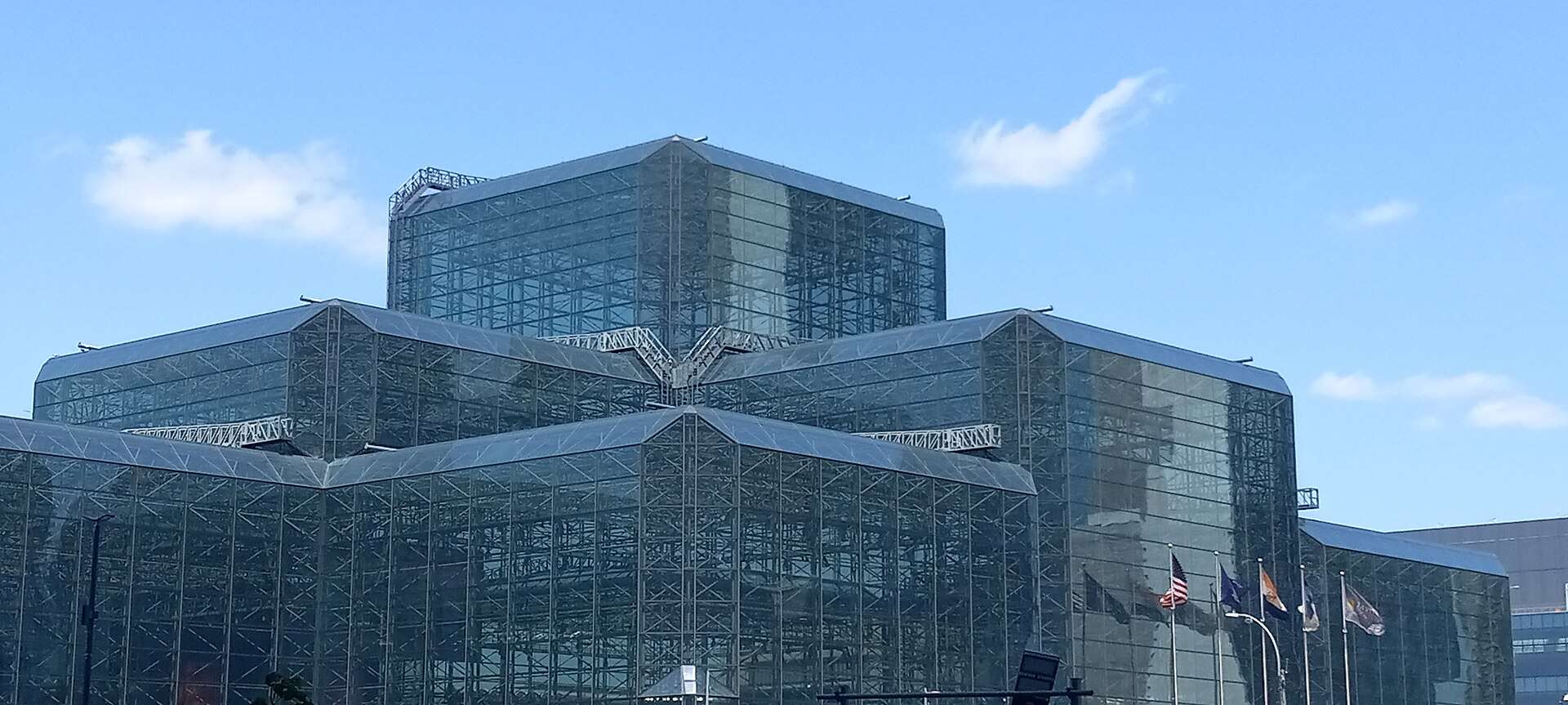
The commercial structure supports that reading. Comexposium, which owns the Paris show, is producing New York with the duPont REGISTRY Group; Richard Mille is the presenting partner; and Gooding Christie’s is the official auction house under a multi-year agreement that also covers Paris, where its first sale earlier this year realized more than €50 million. The New York show is described by its organizers as an annual event. Nobody signs a multi-year auction partnership for a one-off.
The Headline Lot Is a Lesson in Preservation
Gooding Christie’s offers more than 160 vehicle, motorcycle and automobilia lots across two sessions, Friday, November 20, and Saturday, November 21, both starting at 11 a.m. The car at the top of the catalogue explains, better than any press release could, why this audience was worth crossing an ocean for.
Chassis 10453 is a 1967 Ferrari 275 GTB/4*S NART Spider, the sixth of ten built and the first of two finished in Blu Sera. It was completed in September 1967, invoiced to Luigi Chinetti Motors and sold through Hollywood Sport Cars to Steve McQueen, who promptly made it his own. He had it repainted in a darker metallic blue and the seats retrimmed with distinctive stitching, among other changes. After he crashed it on the Pacific Coast Highway, Junior Conway repaired it. By 1971 it belonged to J. David Kopf of Tujunga, California, and in 1986 it entered its current collection through the Long Island dealer Grand Prix SSR. It has never been offered at public auction. The estimate is $15 million to $20 million.
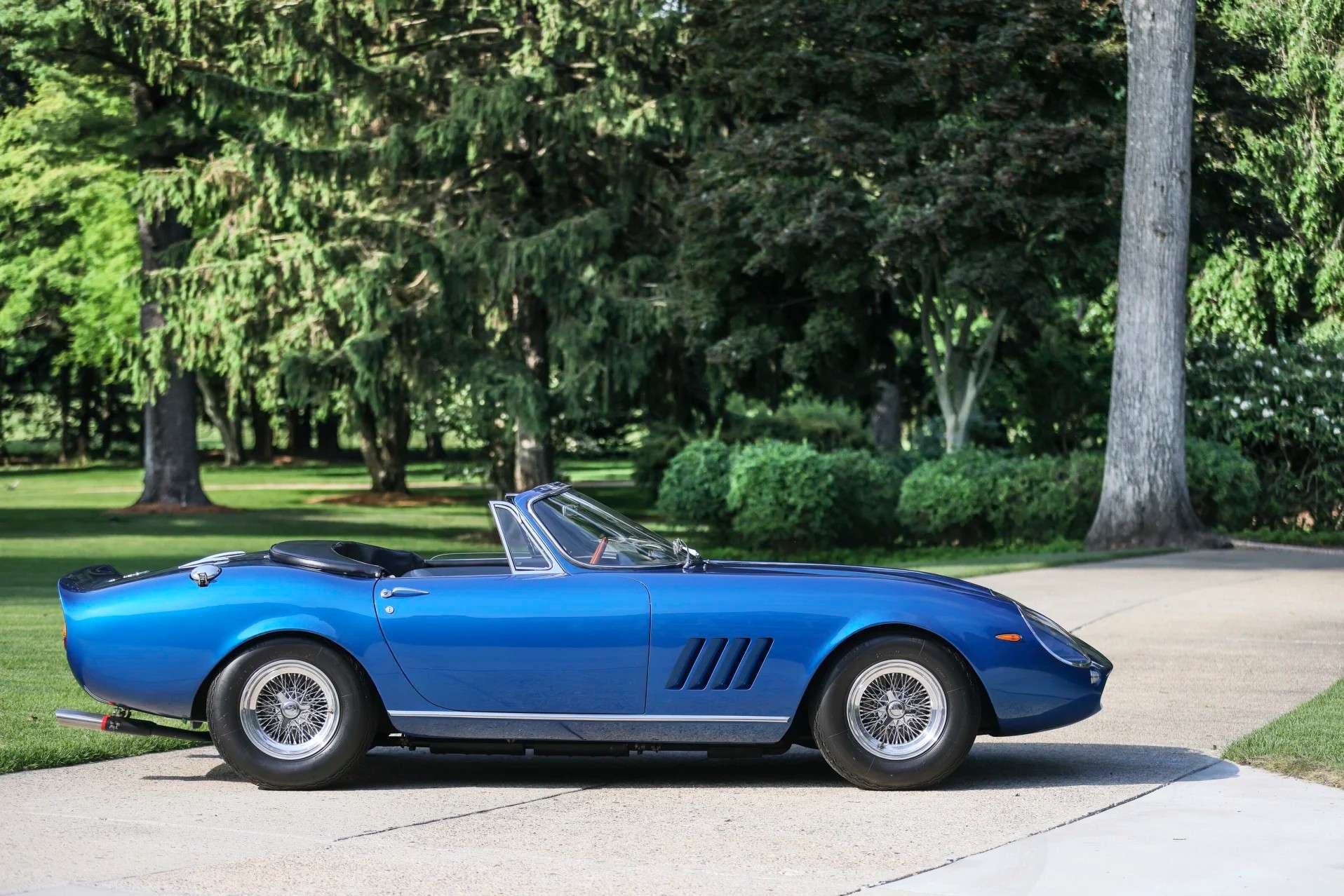
The rarity is real, but it is not the point. Ten NART Spiders exist, and every one of them is a blue-chip Ferrari. What separates this one is that McQueen’s choices are still on the car. According to Gooding Christie’s, it has been preserved rather than restored, retaining its matching-numbers engine and transaxle, its original Scaglietti body, the metallic blue and the McQueen-era details. A restorer chasing points could have returned it to factory Blu Sera at any time in the past four decades. The car is worth what it is worth because nobody did.
That is the most useful lesson on the Javits floor this weekend. A restoration can return a car to the day it left the factory. Only preservation can return it to the day it mattered. We have made the same argument about Reggie Jackson’s green 250 GT Lusso, and the McQueen car is the high-water mark of the principle. For readers who want the full chassis history, our earlier examination of chassis 10453 goes deeper.
The rest of the Ferrari offering frames the premium neatly. A 1965 275 GTB carries an estimate of $2.25 million to $2.5 million and a 1963 250 GT Lusso $1.4 million to $1.6 million, both with Scaglietti coachwork. The distance between those numbers and the NART Spider’s is not explained by horsepower or production figures alone. It is the price of a documented story that survived intact.
No Reserve, and a Different Kind of Buyer
If the NART Spider tests the top of the market, the Billy Joel Motorcycle Collection tests its entry point. More than 70 lots from the musician’s garage, much of it once displayed at his now-closed 20th Century Cycles in Oyster Bay, will be sold entirely without reserve. The marques run from Ducati and Moto Guzzi to BMW, Harley-Davidson and Yamaha.
No-reserve celebrity collections are useful precisely because they remove the seller’s floor. Every result will be a clean reading of how much a famous name adds to a machine that, absent the name, would trade quietly among specialists. In New York, of all rooms, that premium should be visible. Collectors of postwar motorcycles should study the results closely, because the comparable sales they generate will be cited for years.
The Futurliner and the Supra Are Making the Same Argument
The two exhibits drawing the widest audiences look like opposites. One is a 33-foot, nearly 12-ton exhibition vehicle from the 1940s. The other is a group of cars that became famous as young adults’ fantasies in 2001. They are making the same case.
The Futurliners were a dozen streamlined giants built for General Motors’ Parade of Progress, the traveling exhibition that carried GM’s vision of science and technology to towns across North America. Styled under Harley Earl, with an elevated cockpit roughly ten feet above the road, they toured in the early 1940s and again from 1953 until GM ended the program in 1956, after which the vehicles were dispersed. The example at the Javits, restored by New Jersey’s Rob Ida to Earl’s original configuration rather than its later 1950s appearance, is making its first public appearance since the work was completed. The Futurliner’s name and design owe a debt to the 1939 New York World’s Fair, which makes Manhattan an unusually fitting place for the unveiling. Futurliners have changed hands only rarely, and one brought $4.32 million at Barrett-Jackson in 2006.
A Futurliner is not a car anyone buys to drive. It is an artifact of how America was sold the future, and its value lies in what it meant to the families who lined up to walk through it.
The Petersen Automotive Museum, working with Universal Pictures, has brought four screen-used vehicles from its exhibition A Fast & Furious Legacy: 25 Years of Automotive Icons. Neveu’s rationale is straightforward: a large share of today’s collectors first fell for cars by watching those films. The market has already confirmed it. We have tracked the top Toyota Supra sales and the move in Mitsubishi Eclipse GSX values, and the pattern is consistent: buyers who came of age in that era are now spending serious money on the cars of their youth, and they reward low mileage and originality just as their parents did.
Put the Futurliner and the Supra side by side and the curatorial logic is plain. Each sold a generation a vision of what was possible. Collectors rarely pay for metal alone. They pay to own the moment a car first meant something to them, and the moment keeps moving forward.
The rest of the program follows the same line. Four Porsches from Jerry Seinfeld’s collection, which has lived in New York for decades, are on view, as are art cars from Larry Warsh’s CART Department. European dealers such as Fiskens have brought stock. The show is deliberately addressing several collector generations at once.
What Serious Buyers Should Watch
Three readings will matter more than any single hammer price this weekend. First, whether the NART Spider clears its estimate. A strong result would confirm that the top of the market still pays a meaningful premium for preserved, unrestored provenance over concours perfection. Second, how the no-reserve Joel lots perform relative to comparable bikes without a famous owner. That is the cleanest available measure of celebrity provenance at accessible prices. Third, and least visible, whether the European dealers transact on the floor. Rétromobile Paris works because buyers come to do business, not merely to look. If the dealer stands in New York leave with fewer cars than they brought, the annual promise becomes credible.
The timing helps. Late November sits in the long gap between Monterey in August and the Arizona sales in January, and the East Coast has had few events of this scale at this point in the season. A city with deep collector wealth and a short drive from much of the Northeast’s collector population is a sensible place to test whether Americans want a salon alongside the lawn and the tent.
The verdict on the format will take more than one edition. But the opening lineup makes its thesis clear. Rétromobile has not come to New York to show Americans rare cars; they have plenty of those. It has come to show them a way of buying them, in a room where originality, provenance and generational memory are all on display at once, and where the most valuable car in the building is the one nobody restored.
Sources: Gooding Christie’s, Rétromobile New York Auctions; Gooding Christie’s press release on the ex-McQueen NART Spider; Gooding Christie’s and Rétromobile partnership announcement; Gooding Christie’s Rétromobile Paris 2026 results; GM News on the Futurliner and the Parade of Progress; Rétromobile New York.
The collector car market, every weekday morning.
Auction results, price moves and what’s crossing the block, read in four minutes. Free, from Modern Car Collector.
No spam, unsubscribe in one click. Or read more about the Brief.


 Kyle Matthews
 Eve Nowell