

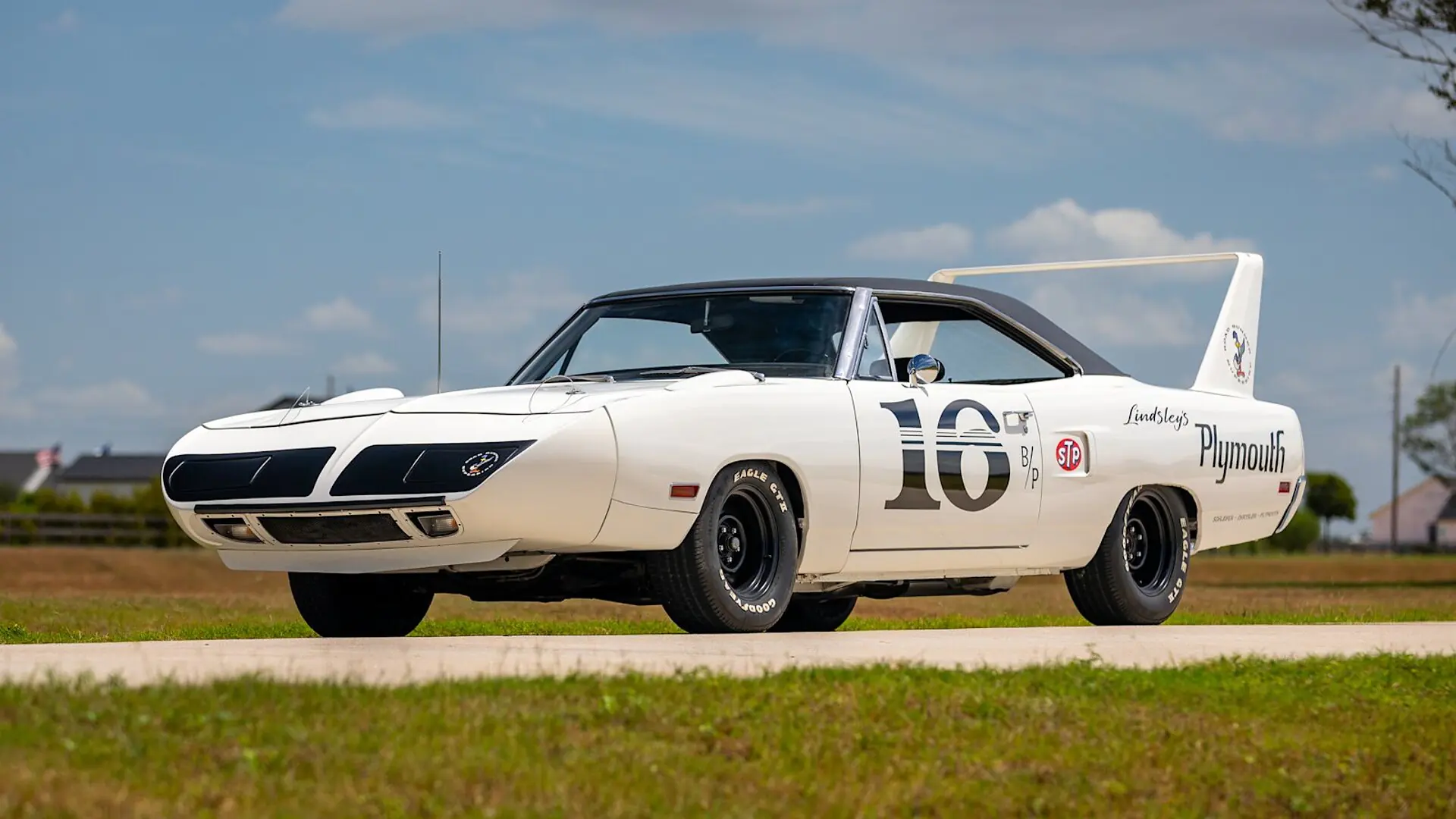
Anyone who has bought a 1970 Plymouth Hemi Superbird learns to judge the car by what it has kept: the original engine, the broadcast sheet, the factory sheetmetal, the paint that matches the fender tag. By that measure, the Alpine White Superbird crossing the block as Lot R615 at Mecum Kissimmee on Friday, January 15, has some explaining to do. There are holes drilled in its taillamp panel and more in the passenger-side front fender. For most of two decades it ran engines Chrysler never installed.
It is also one of the most consequential Superbirds to reach the market in years, and those marks are the reason. This is the Lindsley car, the Hemi Superbird Jim Lindsley bought new and took to the dry lakes and the salt instead of the street, then campaigned with his son Larry from 1970 to 1988. In 1975 it went past 220 mph at Bonneville. On this car, the departures from factory spec aren’t deductions. They are the documentation.
That distinction matters more today than it did during the pandemic run-up. As we argued recently, the muscle car market isn’t cracking; it’s sorting, and the cars that come through a sorting market well are the ones with a reason to exist beyond being correct. The Lindsley Superbird has one of the strongest reasons in the wing-car world.
A NASCAR homologation car that found a different job
The Superbird existed to make a pointed nose and a towering rear wing legal on NASCAR’s superspeedways, the same aerodynamic logic Chrysler had applied a year earlier with the Dodge Charger Daytona. Plymouth built a little under 2,000 for 1970 to satisfy homologation. Just 135 of those had the 426 Hemi, and of the Hemi cars only 58 had the four-speed, which leaves 77 automatics like this one.
Jim Lindsley was not a typical Superbird buyer. A veteran of Speed Week who co-founded the Gear Grinders club, he already belonged to Bonneville’s 200 MPH Club, having set a record averaging 202 mph back in 1954, according to a period Salt Flat News report. He seems to have seen what NASCAR saw: a showroom car whose bodywork had been shaped for 200 mph. He bought a bench-seat Hemi automatic and took it to El Mirage and Bonneville to compete in the Southern California Timing Association’s production classes.
Reading the timing slips
The speeds attached to this car are easy to repeat and easy to misread, so it helps to know how Bonneville keeps score. A single pass through the traps isn’t a record. A car has to run faster than the existing class record just to qualify, then back it up; the record is the average of both runs. Membership in the 200 MPH Club, the most exclusive fraternity on the salt, comes only with a record above 200 mph.
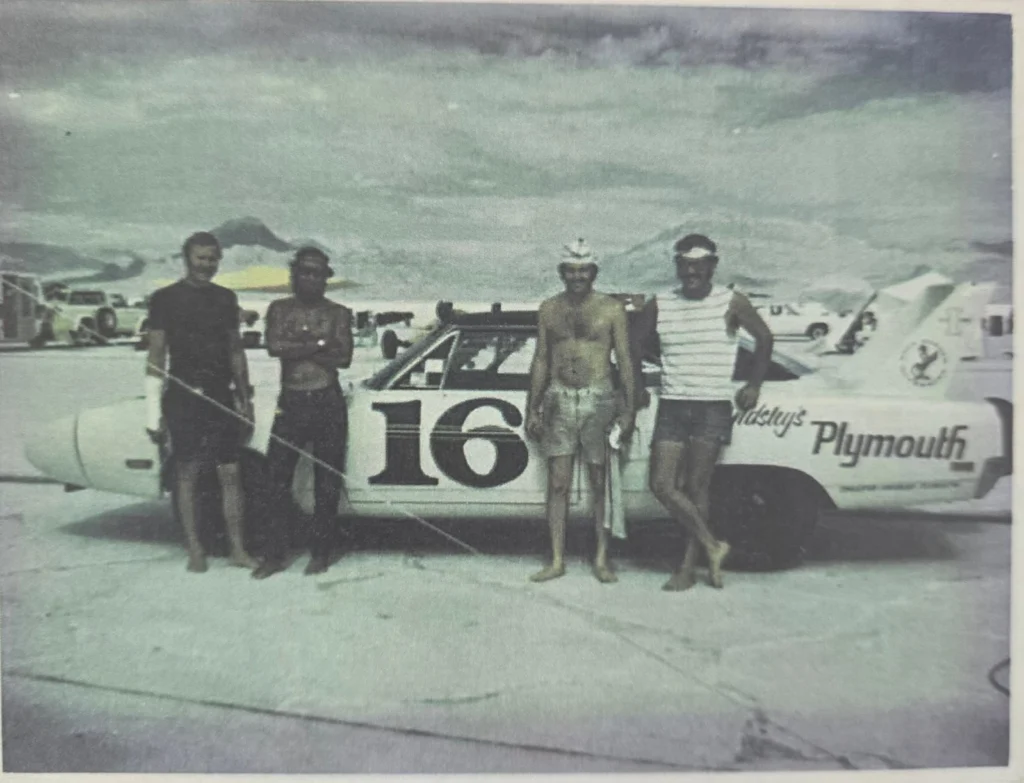
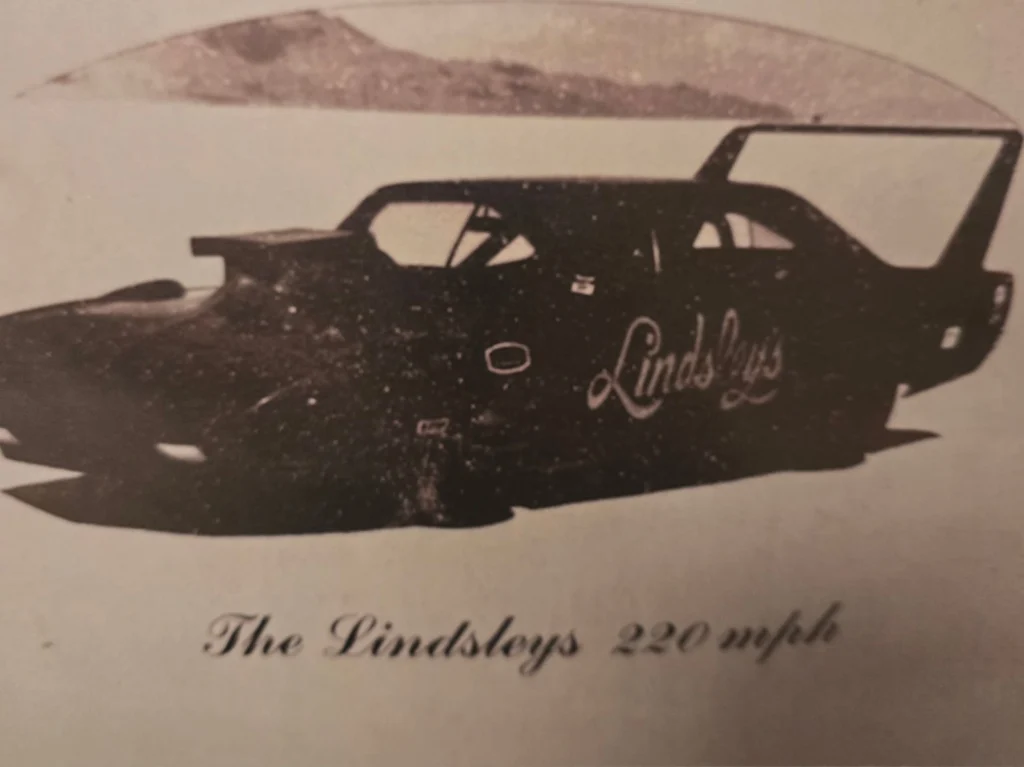
Seen that way, the Lindsley car’s record makes sense. In 1971 it logged a fastest one-way pass of 206 mph and took the B Production record at 204.779 mph. That made Larry the club’s first second-generation member and the Lindsleys its first father-and-son pair. In 1972 it ran a best one-way pass of 211.76 mph. In 1973, Larry ran 209.91 mph in A Production and 210.52 mph in B Production, enough to qualify over the 210.048-mph class record and take First in Class. Then, in 1975, the car topped 220 mph, which Mecum describes as making it the world’s fastest production car at the time, a mark it says held for several years.
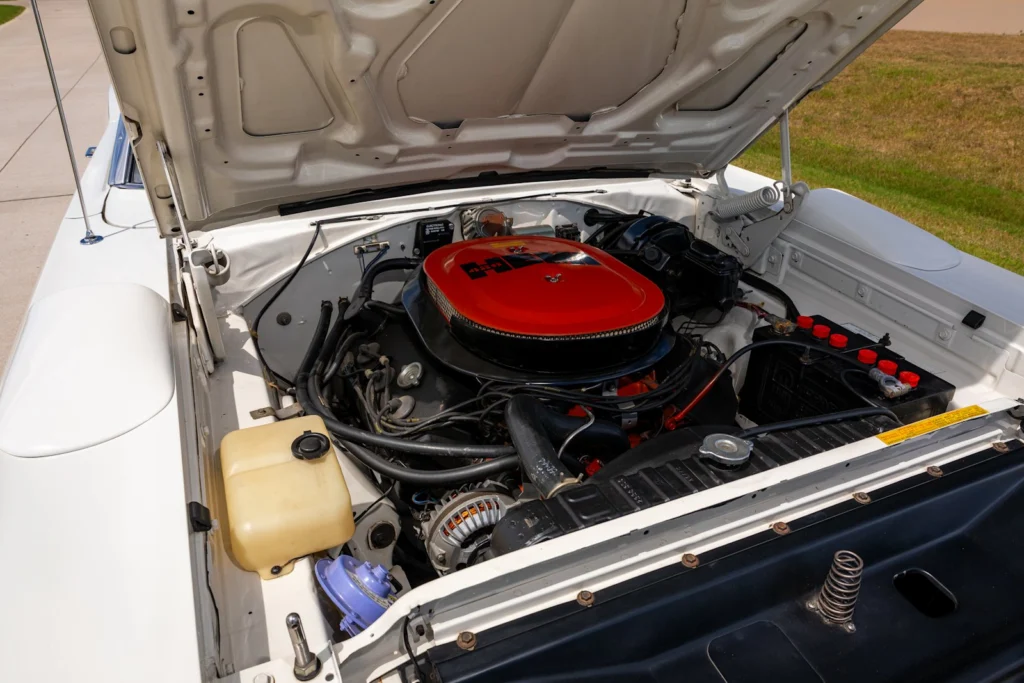
That last phrase needs care. “Production” here means an SCTA class: a car that kept its factory body and interior but was otherwise built for the salt. It doesn’t mean a showroom car on a public test track. The 1975 run also came after the original engine had been retired. Mecum says the factory Hemi powered the car for its first two seasons before being pulled and stored while race-prepped engines took over. The 220-mph headline was made with a race engine. The numbers-matching Hemi now in the car belongs to the earlier chapter, the one that put a father and son in the 200 MPH Club together.
That is the overlooked detail, and to us it is the better story. The 220-mph run makes the headline. The 1971 record, set by a nearly stock Hemi Superbird bought off a showroom floor, is what makes this car matter historically.
Why the holes matter more than the odometer
On any other Hemi Superbird, a restorer would weld a drilled taillamp panel shut and charge for it. Here the parachute-cable access holes stay, as do the holes in the right front fender from a period fuel-cell installation used to test weight distribution. They are physical evidence that matches the photographic record, and in a market increasingly wary of cars that have been “given” histories, that correlation is worth more than paint.
The 2000 restoration put the original engine back in, and a 2021 refresh returned the car to its circa 1970–71 EW1 Alpine White racing livery. That choice deserves credit. The car could have been dressed in a later and faster guise, but the early livery lines up with the original Hemi, the factory bench-seat interior, and the record that matters most. Race wheels are fitted, and the original 15×7 Rallye wheels come with the car.
Pre-sale coverage puts the odometer at roughly 14,500 miles. Mecum’s listing doesn’t certify that figure as actual, and on this car it barely matters. The miles that define the Lindsley Superbird were measured in timing traps, not on a dash.
Paper, honors and what a buyer should verify
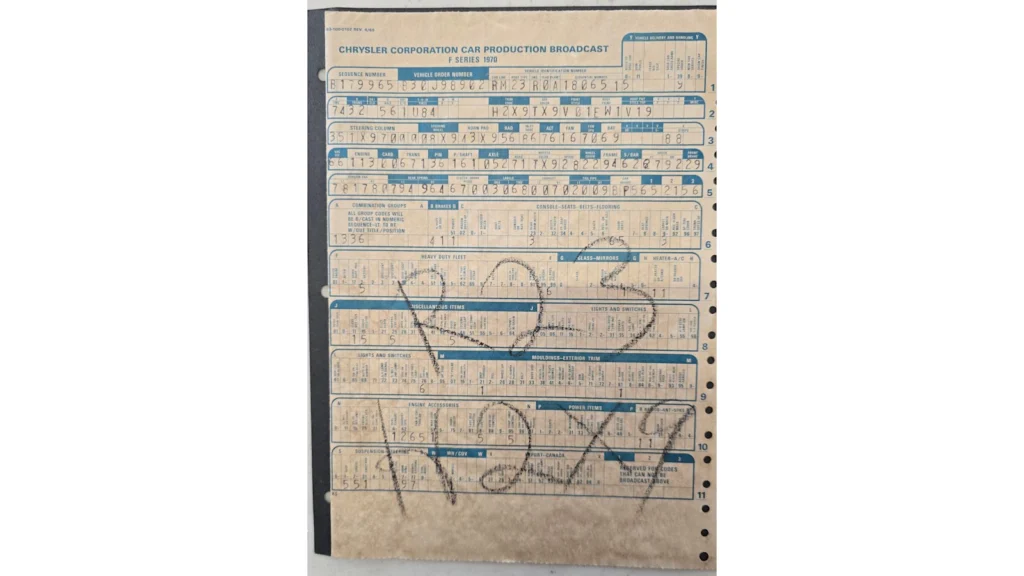
The paperwork is strong where it needs to be. The car comes with its original broadcast sheet, the original California pink slip in Jim Lindsley’s name tying it to the man who raced it, and an archive of period racing photographs. The window sticker is a reproduction and should be valued as one. Since retiring, the car has built a show résumé: it was part of the Wings Over America Invitational at MCACN in 2022, Tim Wellborn picked it as his Personal Best of Show at his final winged-car event, and in 2023 it paced NASCAR races at Houston Motorsports Park. Those honors mean the car has already been examined closely by people who know wing cars well. (Mecum’s wider muscle-car lineup for this sale is covered in our MCACN-to-Kissimmee preview.)
A serious bidder should still do the homework that race cars demand. Match the original engine’s stampings to the broadcast sheet and VIN RM23R0A180651. Line up the period photographs against the fender and taillamp evidence. Ask whether SCTA timing slips or record certificates survive. The 1971 B Production record is published in period reporting and should be documented. It is the same discipline we apply to Ford’s rival aero car, the Torino Talladega: the story only counts once the paper and the metal agree.
What it’s worth, and to whom
Mecum hasn’t published an estimate. For context, at Kissimmee in 2025 a 31,000-mile Hemi Superbird automatic sold for $627,000, while a 28-mile four-speed car was bid to $700,000 without selling. Those are the reference points for exceptional conventional examples. The Lindsley car isn’t a conventional example, and that cuts both ways. A buyer who wants the most original Hemi Superbird will see a race car with holes in it. A buyer who collects motorsport history will see the only Hemi Superbird with a Bonneville class record and a family’s 200 MPH Club story attached.
Kissimmee 2027 is shaping up as a sale where competition provenance leads the catalog. Ken Miles’ Flip Top Cobra prototype is on the same docket. The Lindsley Superbird belongs in that conversation more than it belongs among the Superbirds sold on low miles and correct chalk marks. Collectors rarely pay a premium for a wing alone. They pay when the wing was used for exactly what it was designed to do, and someone wrote down the speed.
Sources: Mecum Auctions, Lot R615, Kissimmee 2027; Salt Flat News, Speed Week 1971 report, via the University of Utah’s Digital Newspapers collection.
The collector car market, every weekday morning.
Auction results, price moves and what’s crossing the block, read in four minutes. Free, from Modern Car Collector.
No spam, unsubscribe in one click. Or read more about the Brief.
Related Posts:
- A Documented 440 Superbird Tests What Wing-Car…
- Two Plymouth Rapid Transit System Caravan Road…
- On a Hemi 'Cuda, the Broadcast Sheet Outranks the…
- The 10 Most Expensive Mopars Ever Sold at Auction
- Record Ferraris, Rare Icons and 15,000 RPM: The Week…

- Is the Alpine A110 a Future Collector Car? Only Some of Them
 Eve Nowell
 Kyle Matthews