

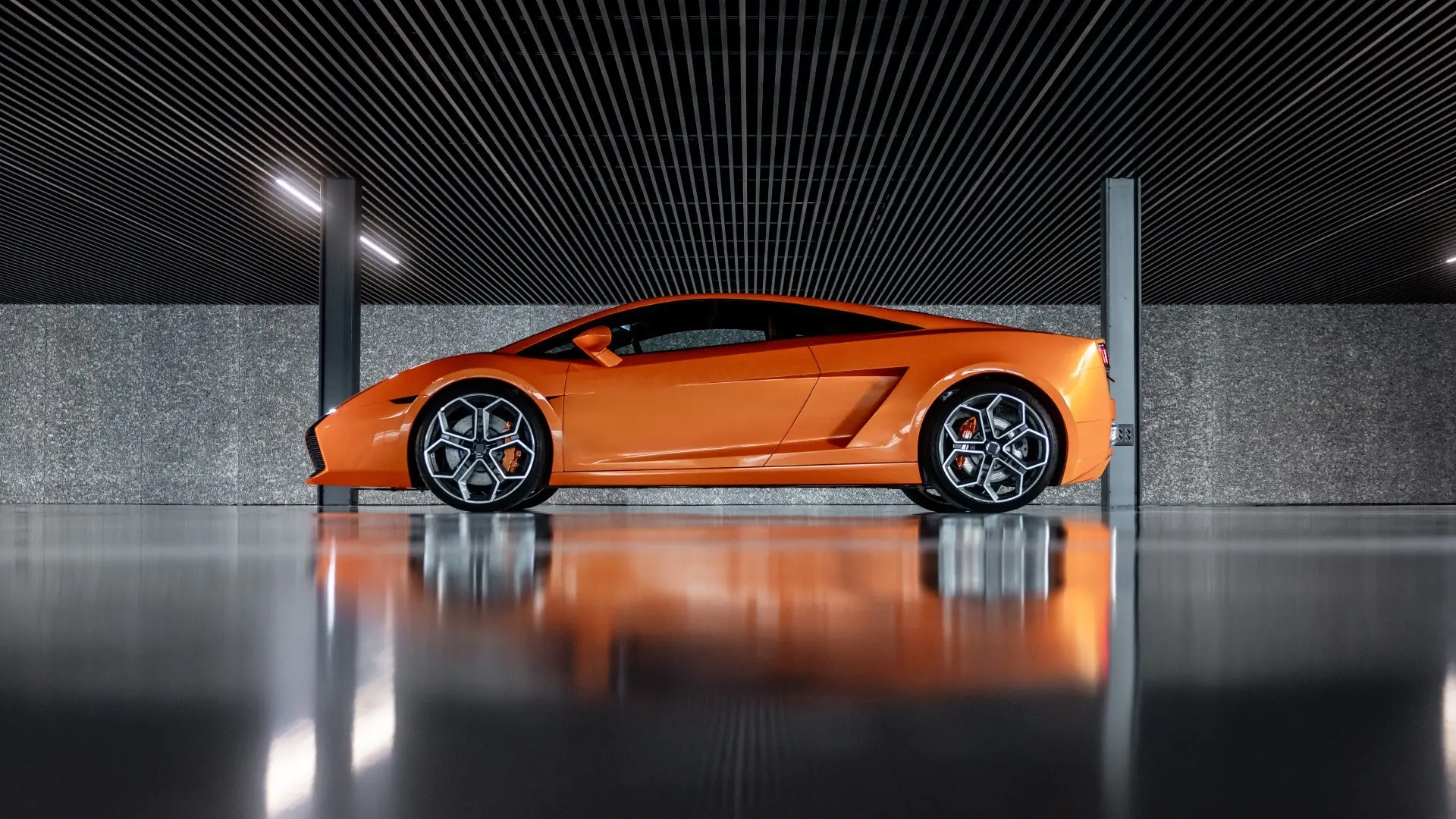
When CAVËN Atelier uncovered the Hommage 26 at the Concours at Wynn Las Vegas on October 31, the headline more or less wrote itself. The man credited with drawing the Lamborghini Gallardo has redesigned it nearly three decades later: 25 numbered cars, a carbon-fiber body, a naturally aspirated V10 and a manual gearbox, from €900,000 before taxes and before you supply the car. Every word of that is accurate. For anyone who has watched the modern exotic market sort itself rather than rise together, though, the more useful question is not what the Hommage 26 costs. It is what a buyer is actually paying for.
The answer is authorship. And the Gallardo’s authorship has always been more complicated than a single name on a press release.
A Shape With Two Signatures
The Gallardo began at Italdesign. Lamborghini’s own history traces the shape to the Calà, the one-off Italdesign showed at Geneva in 1995, and states plainly that the project was then handed to the newly formed Centro Stile in Sant’Agata, under Luc Donckerwolke, to develop and define the final form. When the small-Lamborghini program restarted under Audi ownership, Italdesign was asked for a new proposal. Fabrizio Giugiaro, the project manager on that work, later recalled a brief that amounted to little more than: how would you imagine a smaller Lamborghini? GFG Style dates his original drawing to 1998; Lamborghini dates the start of the design project to 2000. Both accounts agree on who started it, and on who finished it.
Donckerwolke was candid about the second half of that story in 2003. Italdesign’s idea was interesting, he told Auto&Design, but a brand has to manage its own image, and after Lamborghini’s revisions the tail and flanks ended up looking rather different from the full-size chalk model Italdesign had delivered. The Gallardo’s nose, cab-forward stance and steep windshield trace to Giugiaro. A good part of its rear half belongs to Sant’Agata.
Read the Hommage 26 against that history and the design brief becomes obvious. According to GFG Style, the front keeps the original identity and draws on Giugiaro’s early sketches. The rear, the part Lamborghini redrew, is entirely new. This is not a designer freshening a finished design. It is a designer restating the car he proposed before someone else completed it. That is a far more interesting proposition than a restomod, and it is the one CAVËN is selling.
What Changes, and What Survives
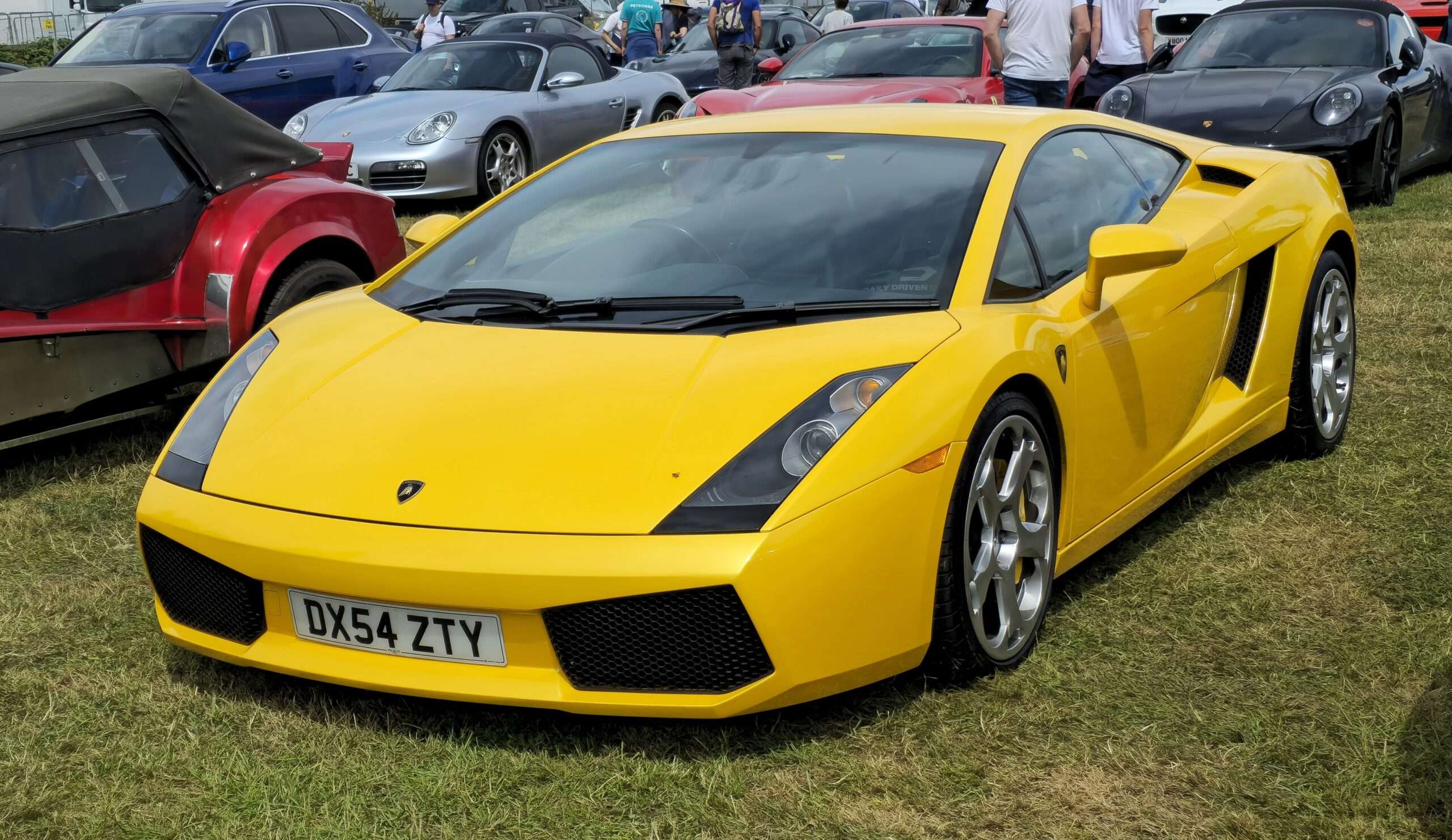
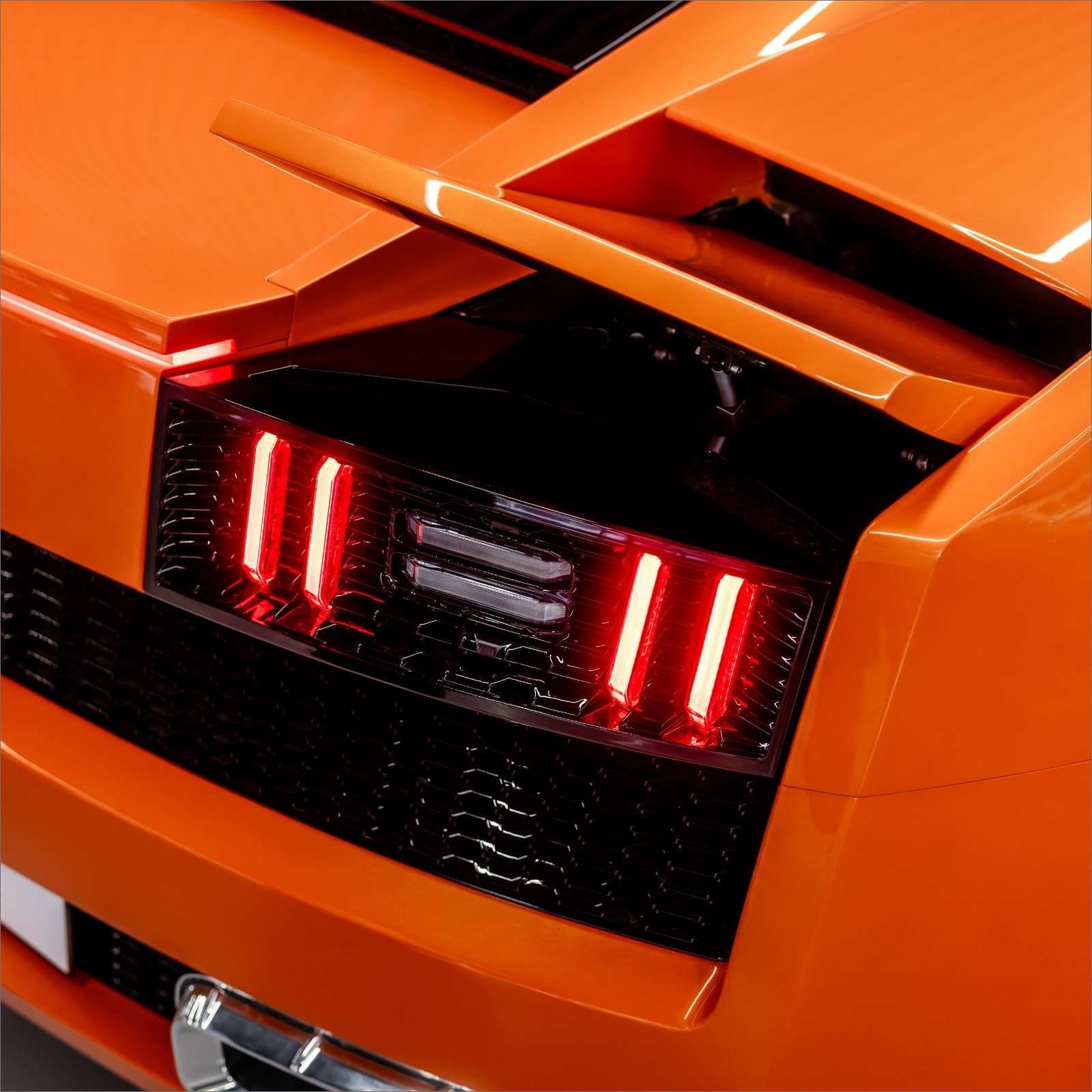
Each Hommage 26 starts as a first-generation Gallardo, the pre-facelift 2003–2008 car, either supplied by its owner or sourced by CAVËN. Details shared at the launch indicate that only five parts of the donor’s exterior survive: the windshield, the roof, the side windows, the mirrors and the mirror bases. Everything else is new and made in carbon fiber. The headlamps and front air intakes are joined by a concealed lighting system that drops away when not in use, an idea GFG Style says could not be engineered in 1998. At the back there is a rear spoiler, two active side flaps and a new opening window between the cabin and the engine bay, there to let the V10 be heard rather than merely felt. Inside, the layout is recognizably Gallardo, with new graphics and redesigned seats.
Mechanically, the work is restrained and well judged. Italtecnica has reworked the 5.0-liter V10 to rev to 8,500 rpm, producing 540 PS (397 kW) in GT form and 560 PS (412 kW) in Performance form. The original car made 500 PS at 7,800 rpm. Suspension is electronically controlled, with Comfort and Sport modes; the brakes are upgraded and the wheels grow from 19 to 20 inches. CAVËN has not published weight or performance figures, has not given a delivery date and says final specifications may still change as prototype testing concludes. Buyers should read the current numbers as intentions.
The Gearbox Is the Tell
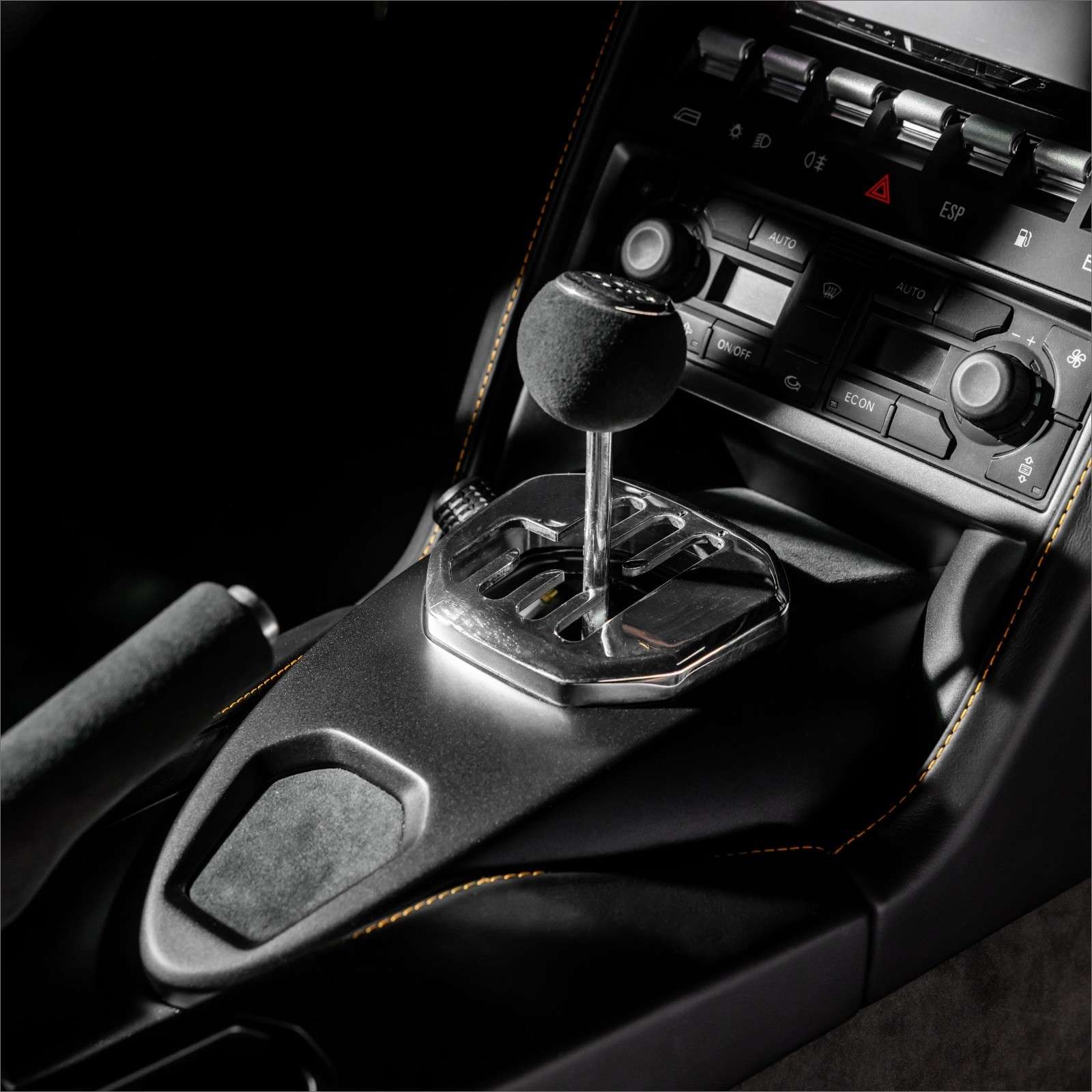
The single most revealing decision on the specification sheet is the one CAVËN did not offer. There is no paddle-shift Hommage 26. When the Gallardo was new, buyers could choose a six-speed gated manual or the E-gear automated manual, and most chose E-gear. Two decades later the market has reversed that verdict. Hagerty has observed that manual Gallardos typically command around 50 percent more than equivalent E-gear cars, and comparable sales of 2004 six-speed coupes have recently ranged from roughly $108,000 to $169,000, with condition, mileage and documentation doing most of the separating. The rarest late Gallardos sit in a different bracket again.
CAVËN has looked at the same data and drawn the obvious conclusion. Collectors of this era are not paying for lap times. They are paying for the three-pedal, naturally aspirated experience that factories no longer sell, and that the end of the V10 has made more precious still.
What It Means for Original Manual Gallardos
The natural worry is that projects like this consume the cars collectors most want to keep. Here, the arithmetic says otherwise. Twenty-five cars against a total production of 14,022 is less than 0.2 percent of every Gallardo built. More importantly, the donor contributes almost nothing visible to the finished car, and its transmission choice is overruled by the specification. CAVËN has not said whether it requires a manual donor. If it does not, the rational buyer will supply the cheapest sound first-generation car available, which is almost always an E-gear coupe. On that logic, the Hommage 26 is more likely to retire E-gear Gallardos than original manual ones.
The more meaningful effect is on perception. A €900,000 car whose entire pitch is a manual, naturally aspirated V10 in a first-generation Gallardo shape is, in effect, an expensive advertisement for the original car’s best attributes. A well-documented, unmodified manual coupe still delivers the engine, the gearbox and most of the shape for a fraction of the money. Some of the buyers who are drawn in by the Hommage 26 and balk at its price will end up shopping that same short list of honest cars.
That is not a forecast of a price spike, and it would be a mistake to treat it as one. Gallardo values remain governed by condition, service history and originality, and the Hommage 26 will not turn a tired, modified car into a blue chip. What it does is sharpen the distinction the market already makes between the original, preserved manual cars and everything else.
A restomod cannot make the original car any rarer. All it can do is remind the market what the original was.
€900,000 for What, Exactly?
Add a good donor and local taxes, and a finished Hommage 26 will cost well over €1 million, several times the price of the best original manual Gallardos. That gap is not explained by carbon fiber or 60 extra horsepower. It is explained by the signature.
The comparison with San Marino’s Eccentrica is instructive. Its Diablo-based V12 is limited to 19 cars at €1.2 million before the donor, and it asks buyers to value craftsmanship and an enthusiast’s vision. CAVËN is asking something different: that buyers value the return of the original designer. The Michelotto Gruppo 4 Tributo made a similar argument with a builder’s name rather than a designer’s. In both cases, the name confers legitimacy. It cannot confer history.
Prospective buyers should weigh three further points. First, CAVËN is a new company, based in Marbella, and the Hommage 26 is its first complete car; its long-term support, build quality and documentation are unproven. Second, Lamborghini is not named as a partner in the launch materials, so these cars will sit outside the factory’s heritage and certification structure. Third, CAVËN gives Hommage 26 buyers priority access to future Designer Series chapters, which means part of what is being sold is membership in a program whose later chapters do not yet exist. In the United States, the cars will be represented by the collector-car specialist CURATED.
The Verdict
As a piece of design history, the Hommage 26 is genuinely significant. It is rare for a living designer to return to a contested production car and put his own resolution of it into metal, and the Gallardo’s divided authorship gives this one real substance. As a collector car, it is too early to judge. Its value will depend on the quality of the 25 builds and on whether the Designer Series becomes a serious body of work or remains a single, beautiful chapter.
The cars most likely to benefit, in the near term, are the ones CAVËN is not building. Original, documented, manual first-generation Gallardos already carry a premium for exactly the qualities the Hommage 26 is now charging €900,000 to recreate. Las Vegas has simply made that premium easier to explain.
Sources: GFG Style, “Fabrizio Giugiaro and CAVËN Atelier Unveil Hommage 26 in Las Vegas”; CAVËN Atelier; Automobili Lamborghini, “2003–2023: 20 Years of the Lamborghini Gallardo”; Automobili Lamborghini, Gallardo history; Auto&Design no. 140 (2003), “A Matter of Genetics”; Hagerty valuation commentary on the Gallardo.
The collector car market, every weekday morning.
Auction results, price moves and what’s crossing the block, read in four minutes. Free, from Modern Car Collector.
No spam, unsubscribe in one click. Or read more about the Brief.
Related Posts:
- Lot of the Day: A 1,700-Mile Gallardo Squadra Corse,…

- Record Ferraris, Rare Icons and 15,000 RPM: The Week…

- Three LaFerraris, Three Rooms, and the Estimate That…

- Collector Car Market Brief: A $6–7 Million Miura SV,…
- The Collector Car Market Paid Up for Certainty This…

- Everything Modern Car Collector Covered Last Week

 Eve Nowell
 Shawn Henry