

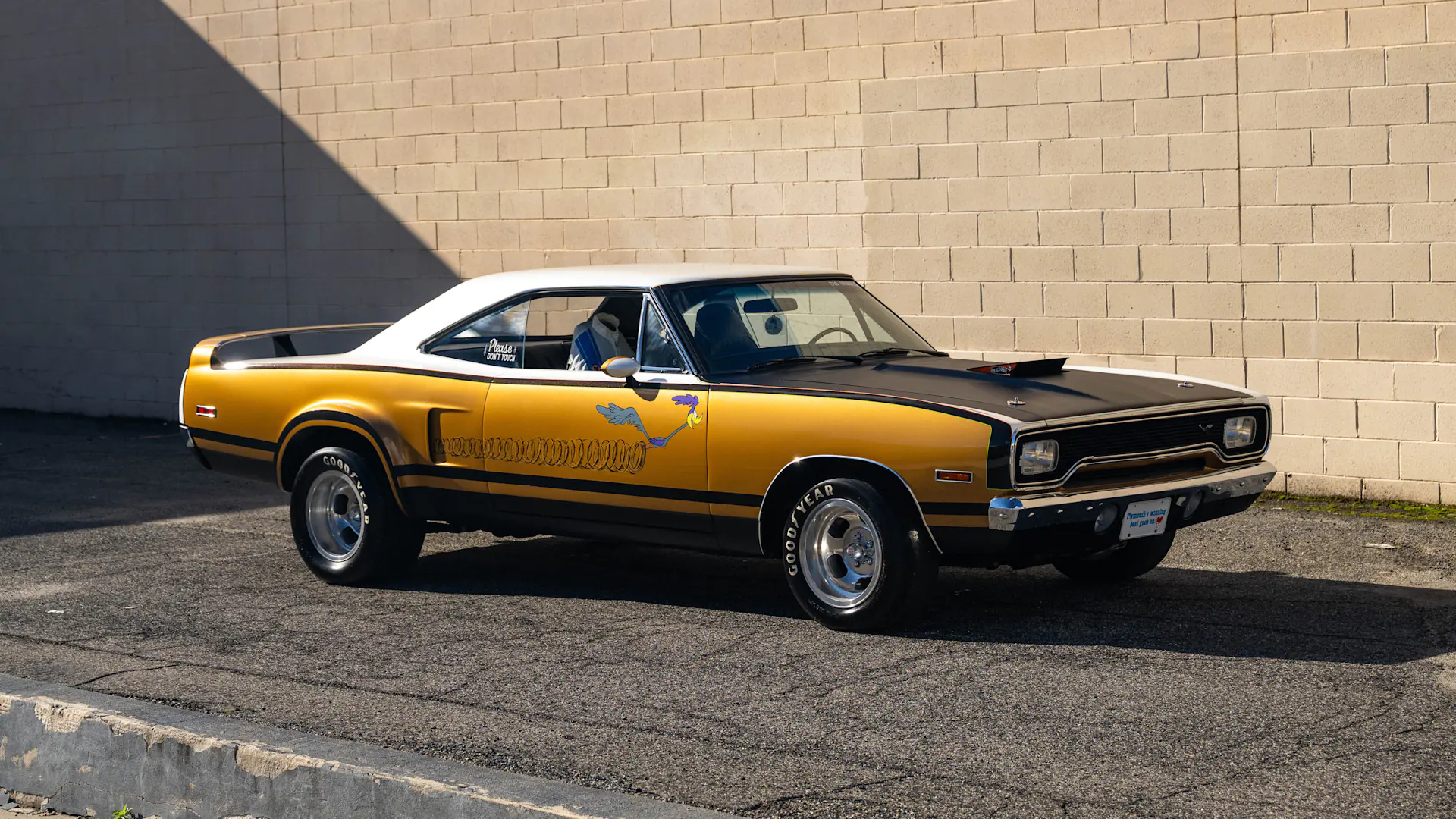
Mecum’s Kissimmee 2027 docket already includes one-offs like Ken Miles’ “Flip Top” Cobra prototype, but one of its quieter consignments may say more about how collectors should value promotional cars. The One and Only Collection is a pair of customized Road Runners that toured with the Plymouth Rapid Transit System Caravan, and both cross the block on Saturday, January 16: a restored 1970 Hemi car as Lot R896 and an unrestored 1971 car as Lot R800.
Neither car was built to be sold. Chrysler commissioned them as rolling advertisements aimed at young buyers, and their value now rests on what survived: the bodywork, the paperwork and the story. That makes the pair a useful test of a question every collector of factory show cars eventually faces. When a car was never a product, what exactly is the buyer paying for?
What the Plymouth Rapid Transit System Caravan Was
Plymouth launched the Rapid Transit System for 1970 as an umbrella over its performance lineup, a group that included the ’Cuda, Road Runner, GTX and the compact Duster 340. The Caravan was the traveling version: a road show of customized cars and parts that visited auto shows and Chrysler-Plymouth dealers. Mopar Action credits show promoter Bob Larivee Sr. with pitching Chrysler on the idea in 1969 and reports that it debuted at the 1970 New York Auto Show. Fox News reports that former Hot Wheels designer Harry Bradley styled the cars, and Chrysler hand-picked outside customizers to build them.
The results were one-offs by design. Mecum’s listing for the 1970 Road Runner says Plymouth gave a real Hemi car to Roman’s Chariot Shop in Cleveland, Ohio, for factory-authorized custom bodywork. Detroit customizer Chuck Miller of Styline Custom built the 1971 car.
The Two Cars in the Collection
Lot R896: The 1970 Hemi Road Runner
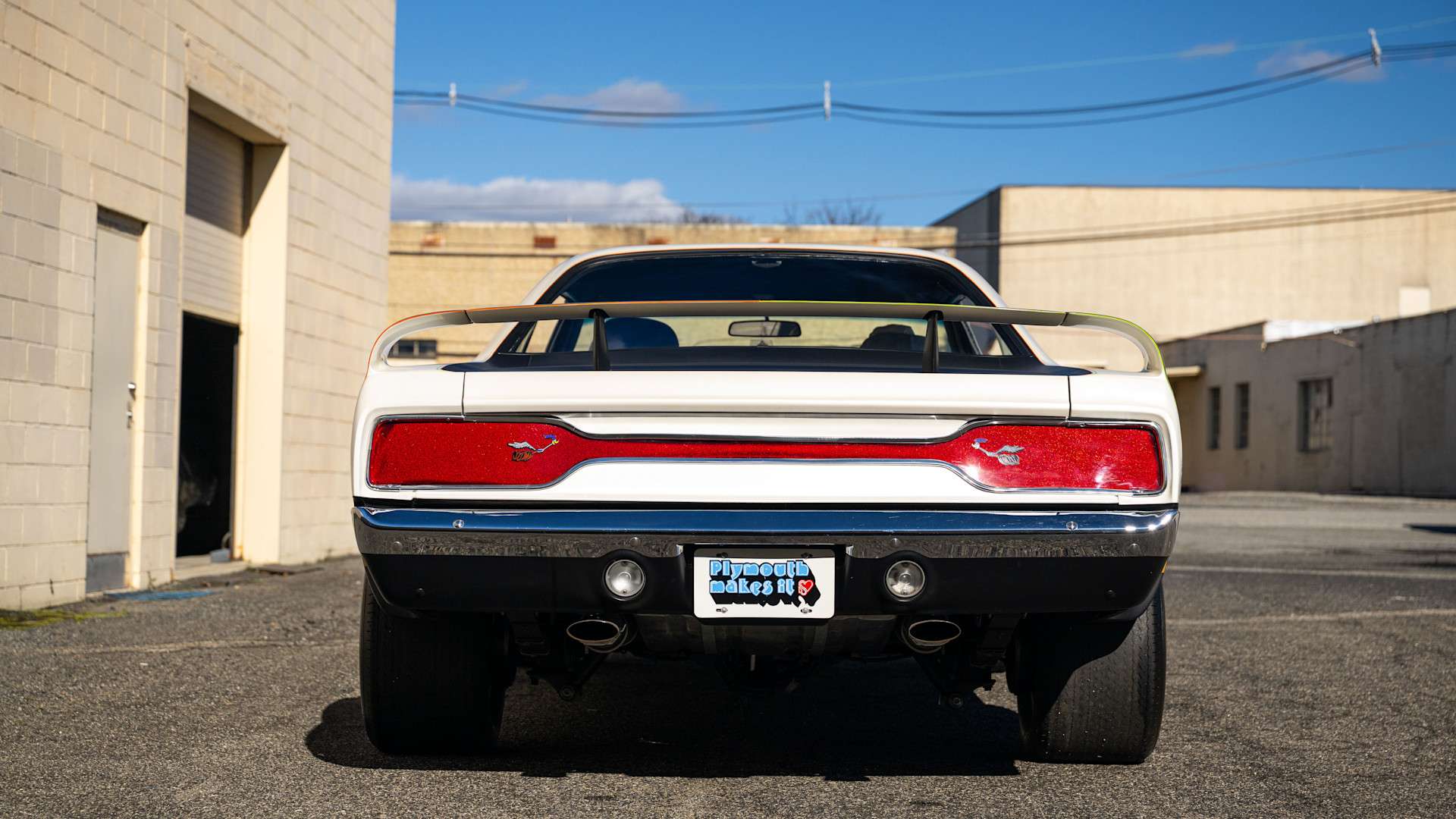
Lot R896 is the louder of the two. According to Mecum’s listing, Roman’s Chariot Shop finished it in Candy Gold with a pearl white roof and a flat black hood and decklid, painted oversized Road Runner birds into the body sides and flared the rear wheel wells four inches over Ansen Sprint wheels. The shop also enlarged the air scoops, added a molded rear spoiler, shaved the door handles and fitted 9-inch square Cibie headlights behind a plastic honeycomb grille.
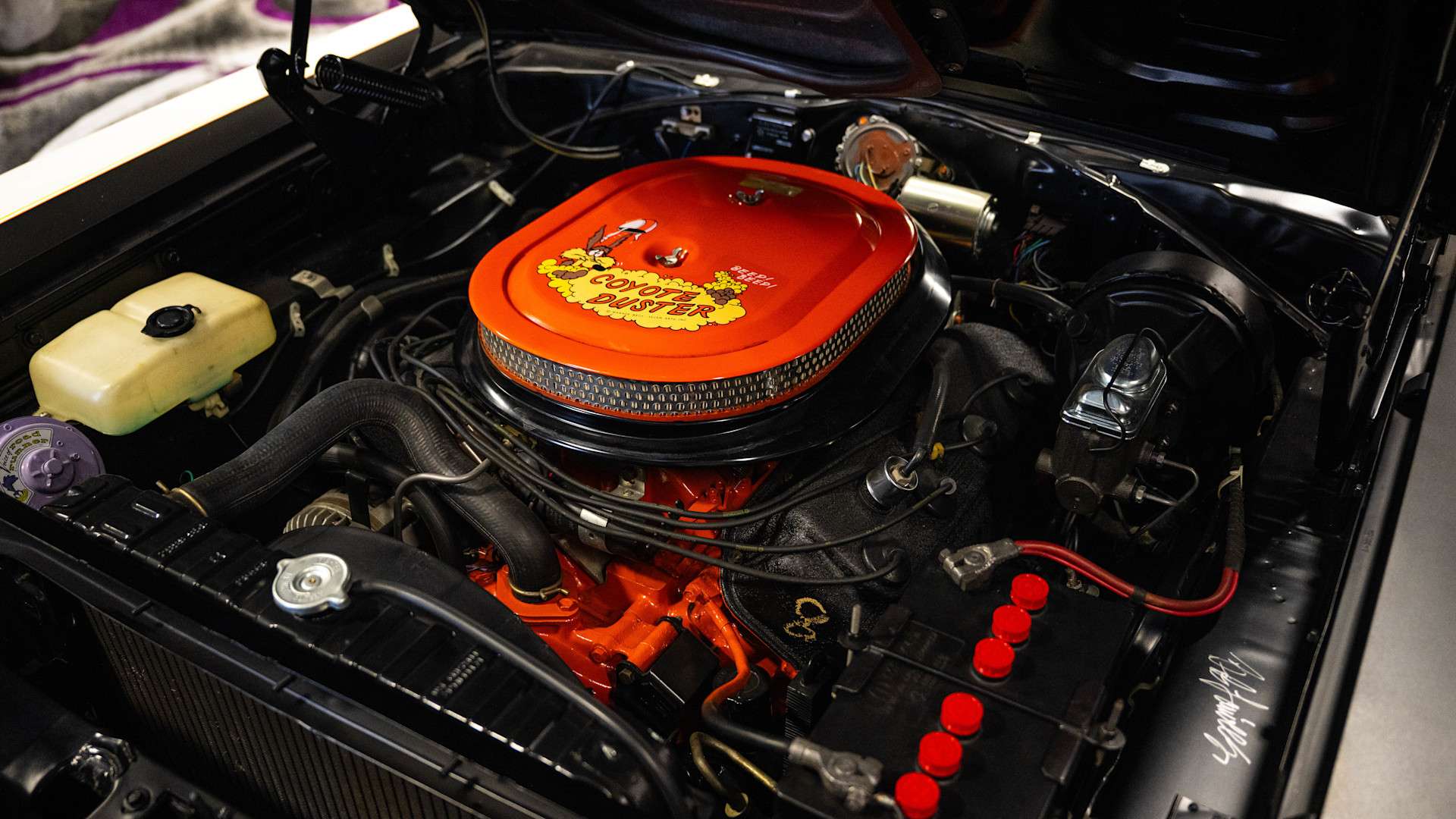
Under the Air Grabber hood sits a 426/425 hp Hemi with a TorqueFlite automatic and a 4.10 Sure Grip rear axle, with power steering and power brakes. Mecum says the drivetrain was left as the factory released it for ease of movement on the show circuit, and adds that no other car modified for the RTS program was a factory Hemi build. That claim is what most separates this car from its siblings. The odometer reads 1,700 miles, a figure Mecum notes only reflects what the instrument shows.
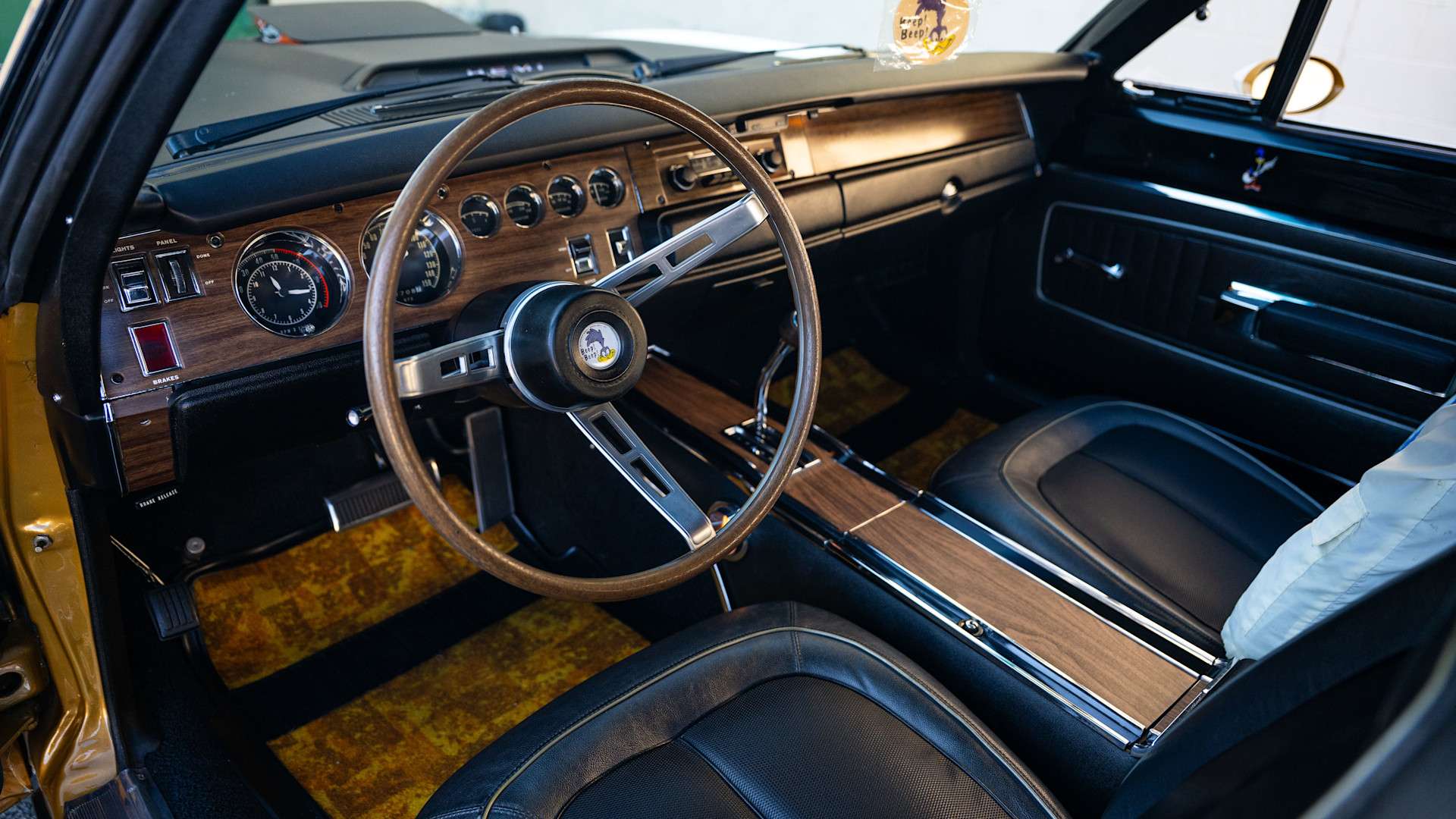
The paper is part of the offering. Mecum lists a letter from the Chrysler-Plymouth News Bureau and says the original one-of-a-kind Rapid Transit floor runners for both sides of the car are included. After touring for that one year, the car’s whereabouts were largely unknown until the late Steven Juliano and collector Ed Meyer found it in Kalamazoo, Michigan, in 1991, the listing says. Ken Heckett restored it for Juliano in 2000. Other published accounts of how the car resurfaced differ in the details; Mopar Action’s version describes a sale to a mechanic and a later purchase by Juliano in Battle Creek, for example. A buyer should ask for the documented chain rather than rely on the retelling.
Lot R800: The 1971 “Chicken Head” Road Runner
Lot R800 is the quieter car in color and the more radical one in shape. Mecum says Miller built it for Chrysler in late 1970 on the just-released 1971 Road Runner body. Its front end is molded and extended more than six inches behind a hand-formed steel mesh grille, its hand-formed rear roll pan hides red, green and amber tail lenses, and its decklid is recessed more than four inches. Ram Air scoops, a molded spoiler and Orange Candy over pearl paint with a white pearl break-line complete the look. The car is lovingly known as the “Chicken Head” for the 3D Road Runner heads that serve as side marker lights at all four corners.
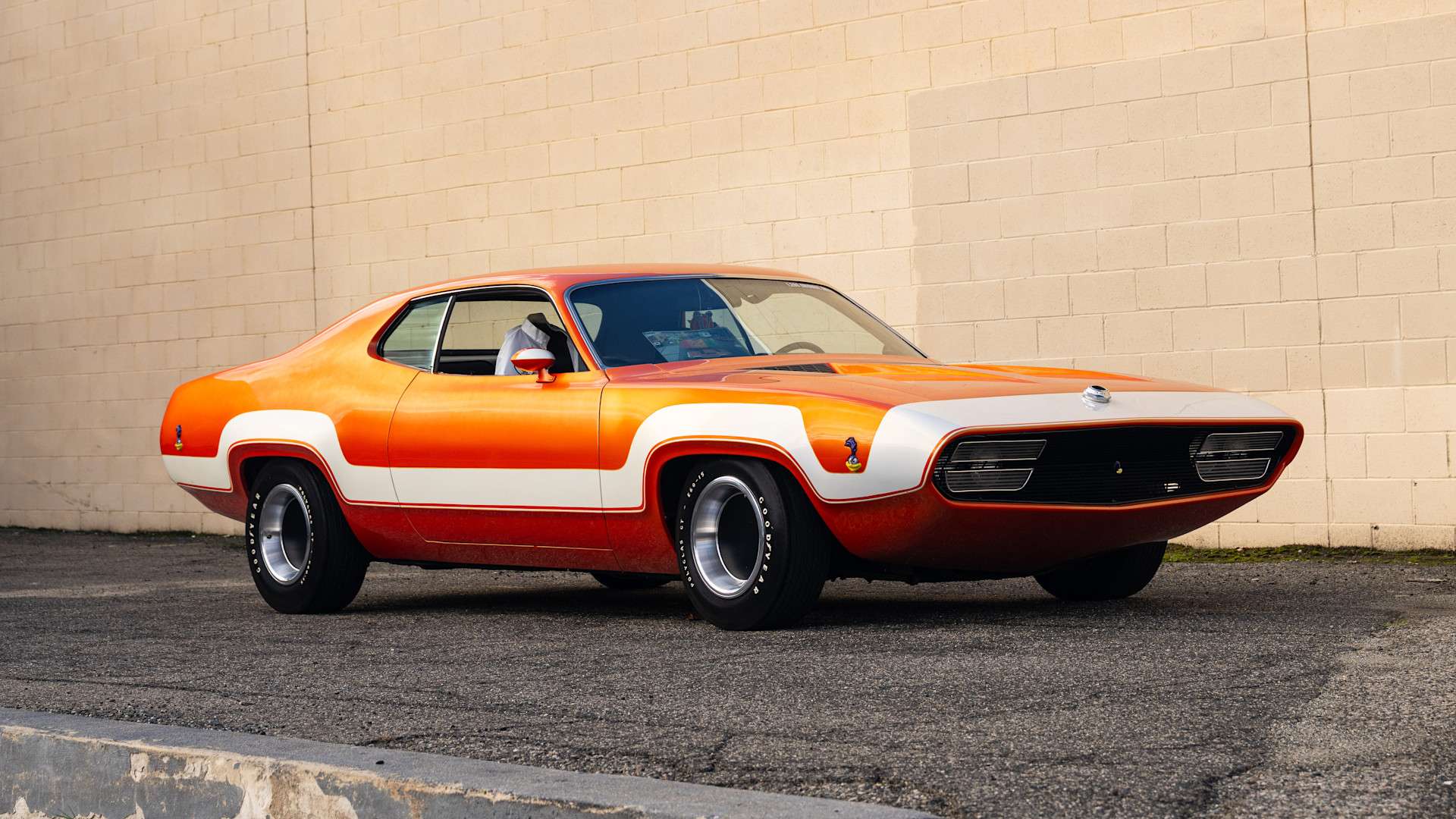
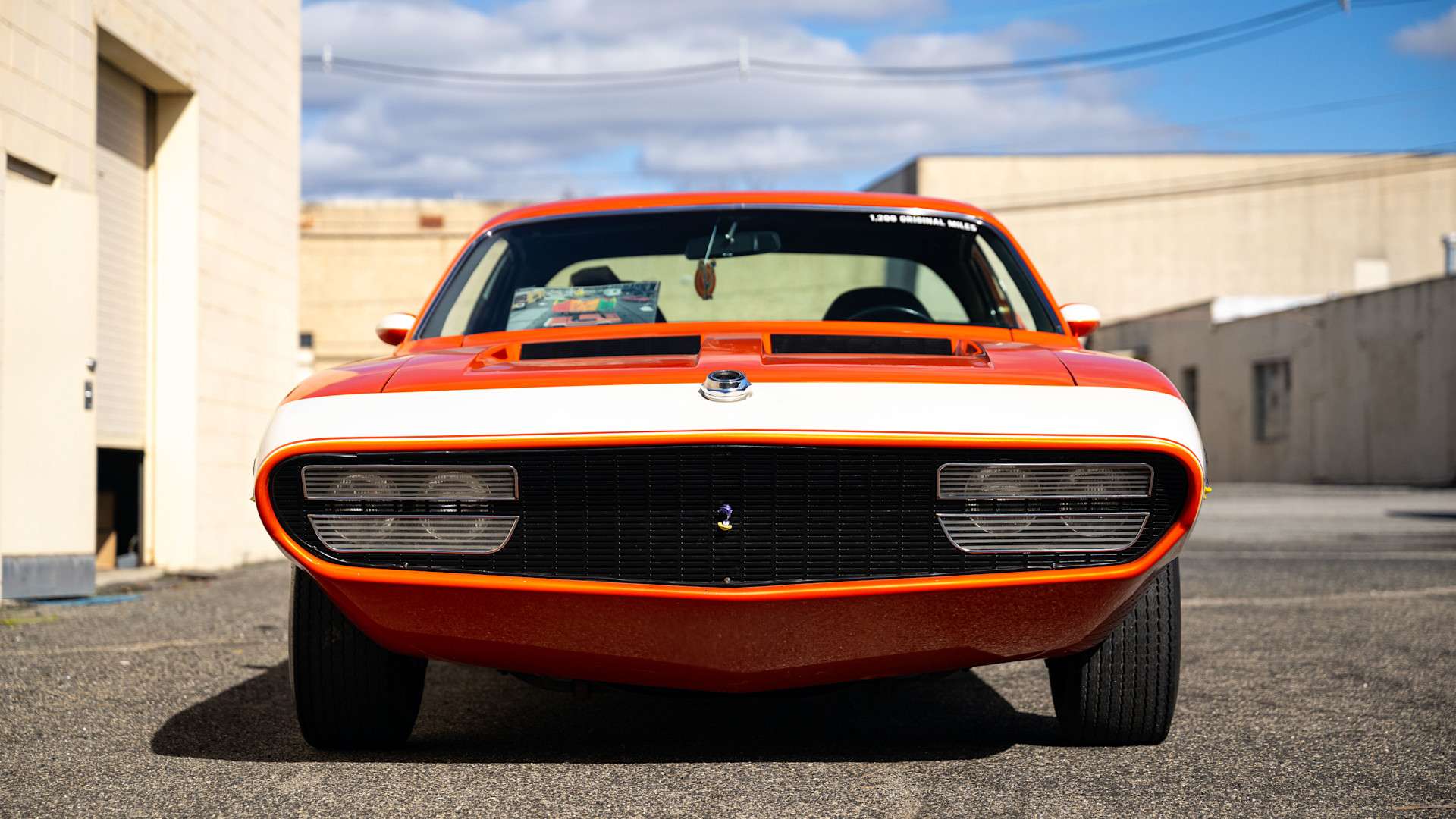
Miller’s résumé explains why Chrysler called. Mecum notes that he won the Ridler Award with his C-Cab Fire Wagon and followed it with the Red Baron roadster, and that he was one of three builders chosen for the first RTS tour, modifying a new 440 Six Barrel ’Cuda. After the tour the Road Runner stayed in Miller’s possession for many years before Juliano acquired it.
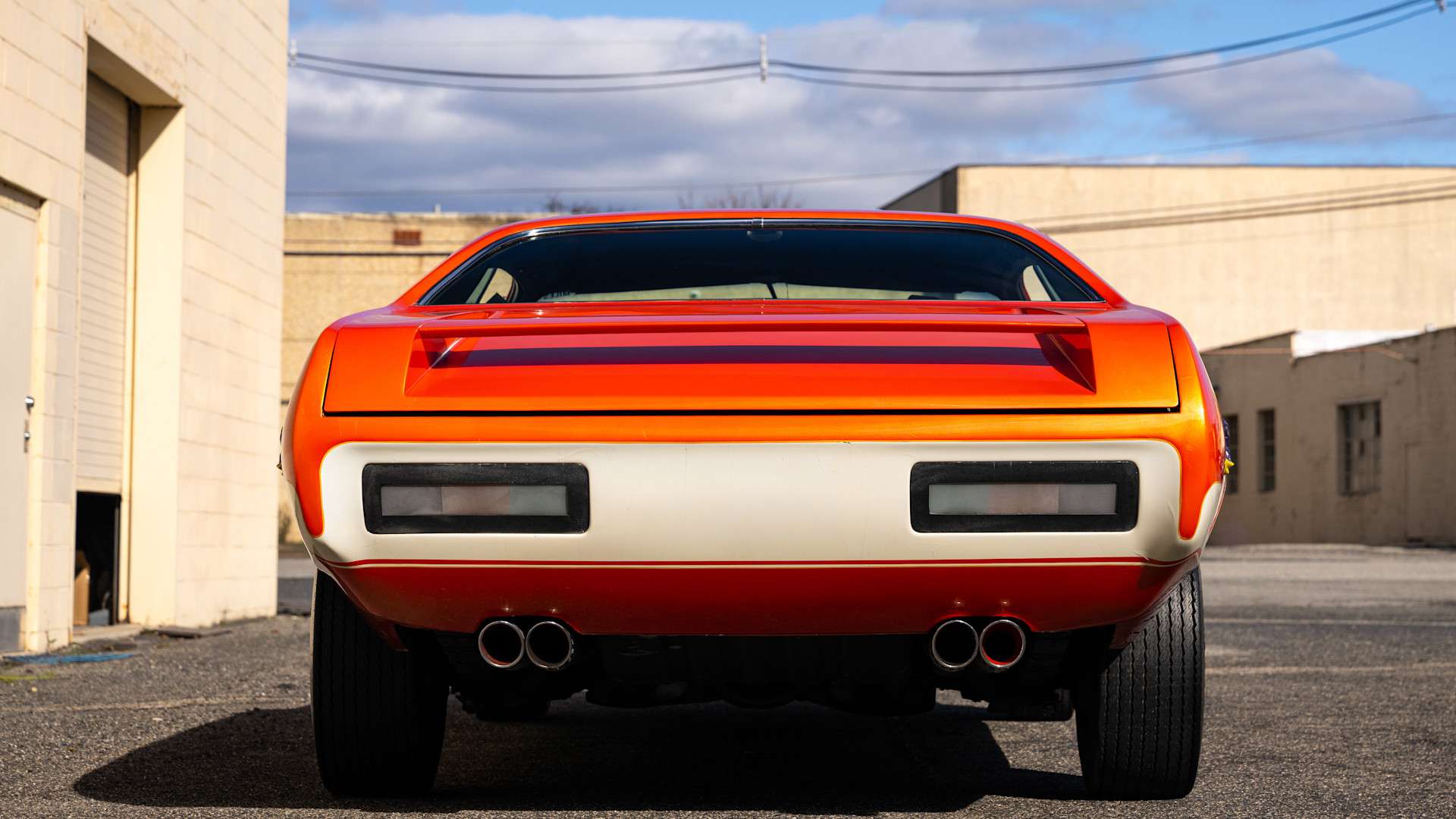
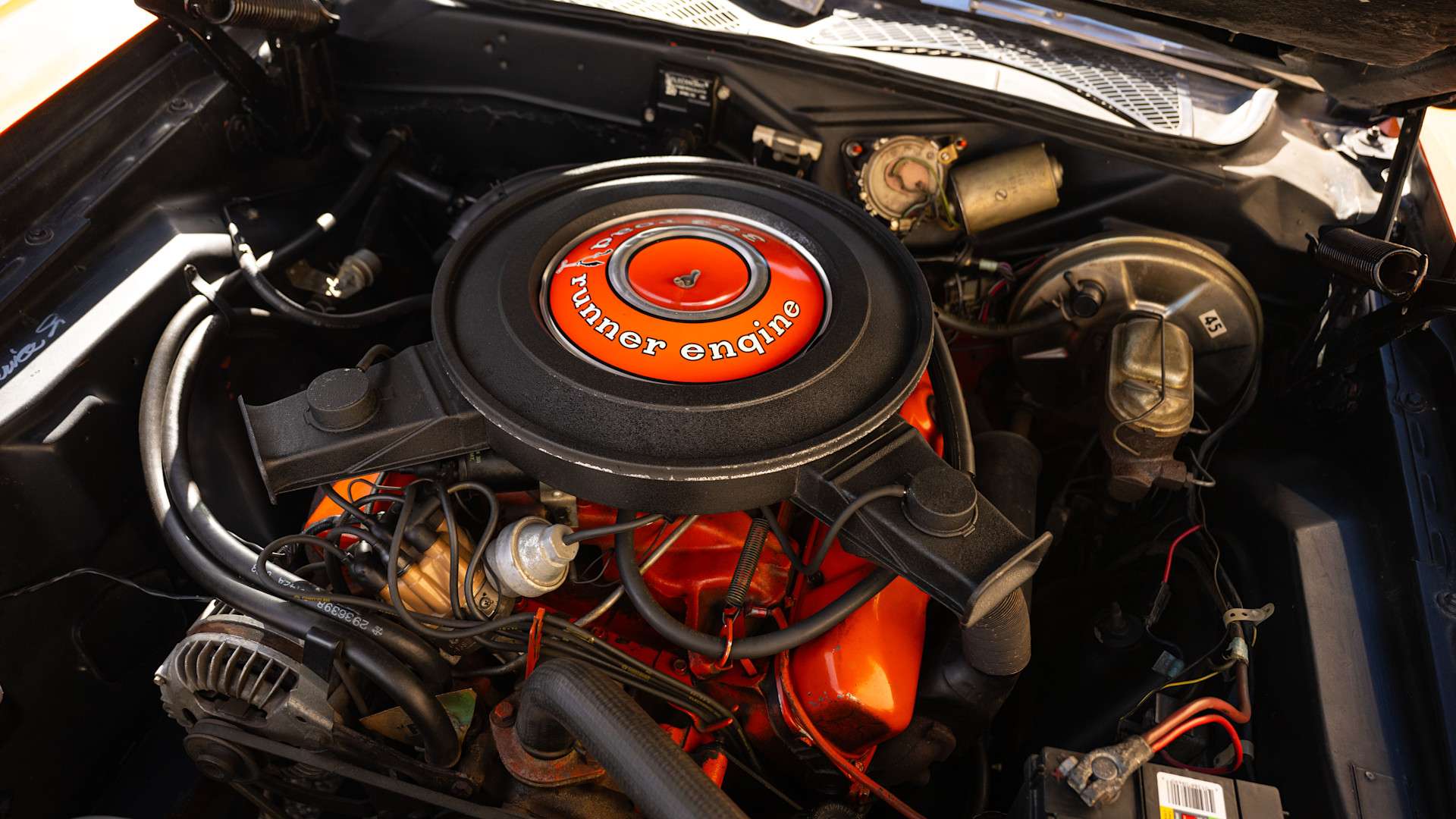
It remains unrestored, with a 383-cubic-inch V-8, an automatic transmission, a black interior with bucket seats and a console, and an odometer reading of 1,200 miles. Mecum lists it at no reserve and on its historic title: ownership will transfer by bill of sale, and titling the car will require surrendering that historic title.
The Collector Who Tracked Them Down
Both cars passed through the same hands. Mecum’s listings describe Steven Juliano’s gathering of factory promotional material as unsurpassed, and it included the RTS cars. After his death in 2018, Mecum sold his estate at its 2019 Indianapolis auction. The three Juliano-owned caravan cars brought $841,500 combined, according to Hagerty: the 1971 Road Runner sold for $236,500 against a pre-sale estimate of $250,000 to $400,000, the 1970 Duster for $264,000 and the 1970 Hemi Road Runner for $341,000.
The fourth caravan car, a 1970 ’Cuda 440 that had not been seen since 1976, sold at Mecum Indianapolis in May 2023 for $2.2 million including fees, Fox News reported. Its hammer price was $2 million with no reserve. For context on where Mopar prices top out, see our list of the 10 most expensive Mopars ever sold at auction.
Why the Pair Matters as a Collection
Most collections express a collector’s taste. This one expresses a sales tool, and that changes how it should be read. A standard Hemi Road Runner is valued on options, condition and documentation. These cars are valued on what the factory built them to do, which makes provenance, not specification, the main asset. Our Boeckmann Collection spotlight made a related point about a Ford dealership that used customizing and shows as marketing; the Plymouth pair is the factory-commissioned version of that idea.
The two cars also offer a rare comparison, though not a clean one. In 2019 the restored Hemi car outsold the unrestored 383 car by $104,500, and it is tempting to read that as the market paying for restoration or for the Hemi. It cannot be both, and it may be neither. The cars differ in engine, builder and condition, and the 1971 car sold below its estimate. A cautious reading is that the program’s only factory Hemi carried a premium within it. The 2023 ’Cuda result suggests that body style and a decades-long disappearance can matter as much as engine or condition, though a single sale proves little.
A restored car shows what Plymouth wanted the public to see in 1970. An unrestored car shows what the builder actually delivered. Both are valid ways to own history, but they ask the buyer for different kinds of trust. Mecum does not say who assembled this pairing or why, and the listings do not describe ownership since 2019, so this article does not guess.
What Buyers Should Verify
- The chain of ownership and what transfers. Neither listing identifies the consignor or describes ownership since the 2019 sale. Ask Mecum to confirm the history and which accessories, including the News Bureau letter and the floor runners, go with the 1970 car.
- How much of the 1970 car is original show-car work. The listing documents Heckett’s 2000 restoration but does not say how much of the Roman’s Chariot Shop metalwork and paint was retained or recreated.
- The 1971 car’s historic title. Because ownership transfers by bill of sale and titling requires surrendering the historic title, confirm what that means for registration in your state before you bid.
- Odometers, reserves and estimates. Mecum says the 1,700-mile and 1,200-mile readings only reflect what the odometers show. The 1971 car is listed at no reserve; as of November 23, 2026, the 1970 listing carries no no-reserve designation, and neither listing publishes an estimate.
Paper outranks paint on other Mopars, too. See our pieces on how the broadcast sheet outranks the fender tag on a Hemi ’Cuda and why a Superbird’s nose is replaceable but its paper is not.
Auction Details
Mecum Kissimmee 2027 runs January 5–17 at Osceola Heritage Park in Kissimmee, Florida. Lot R896, the 1970 Hemi Road Runner, and Lot R800, the 1971 Road Runner, both cross the block on Saturday, January 16. Mecum presents them together as The One and Only Collection.
Kissimmee will not settle how the market values restoration against originality on promotional cars; two sales cannot do that. It will show whether buyers still pay for factory intent, the idea that a car built to be seen rather than sold carries its own category of history.
Sources
- Mecum Auctions: 1970 Plymouth Hemi Road Runner, Lot R896; 1971 Plymouth Road Runner, Lot R800; The One and Only Collection; Kissimmee 2027
- Hagerty Media: 3 Rapid Transit Plymouths go for big bucks at Mecum Indianapolis
- Motor Sports Newswire: Mecum Indy 2019 Exceeds $70.4 Million in Overall Sales
- Fox News: Classic “Rapid Transit System” Plymouth ’Cuda muscle car sold for $2.2 million
- Mopar Action: 1970 Plymouth RTS Road Runner
- HowStuffWorks: Plymouth muscle cars
The collector car market, every weekday morning.
Auction results, price moves and what’s crossing the block, read in four minutes. Free, from Modern Car Collector.
No spam, unsubscribe in one click. Or read more about the Brief.

 Kyle Matthews
 Eve Nowell