

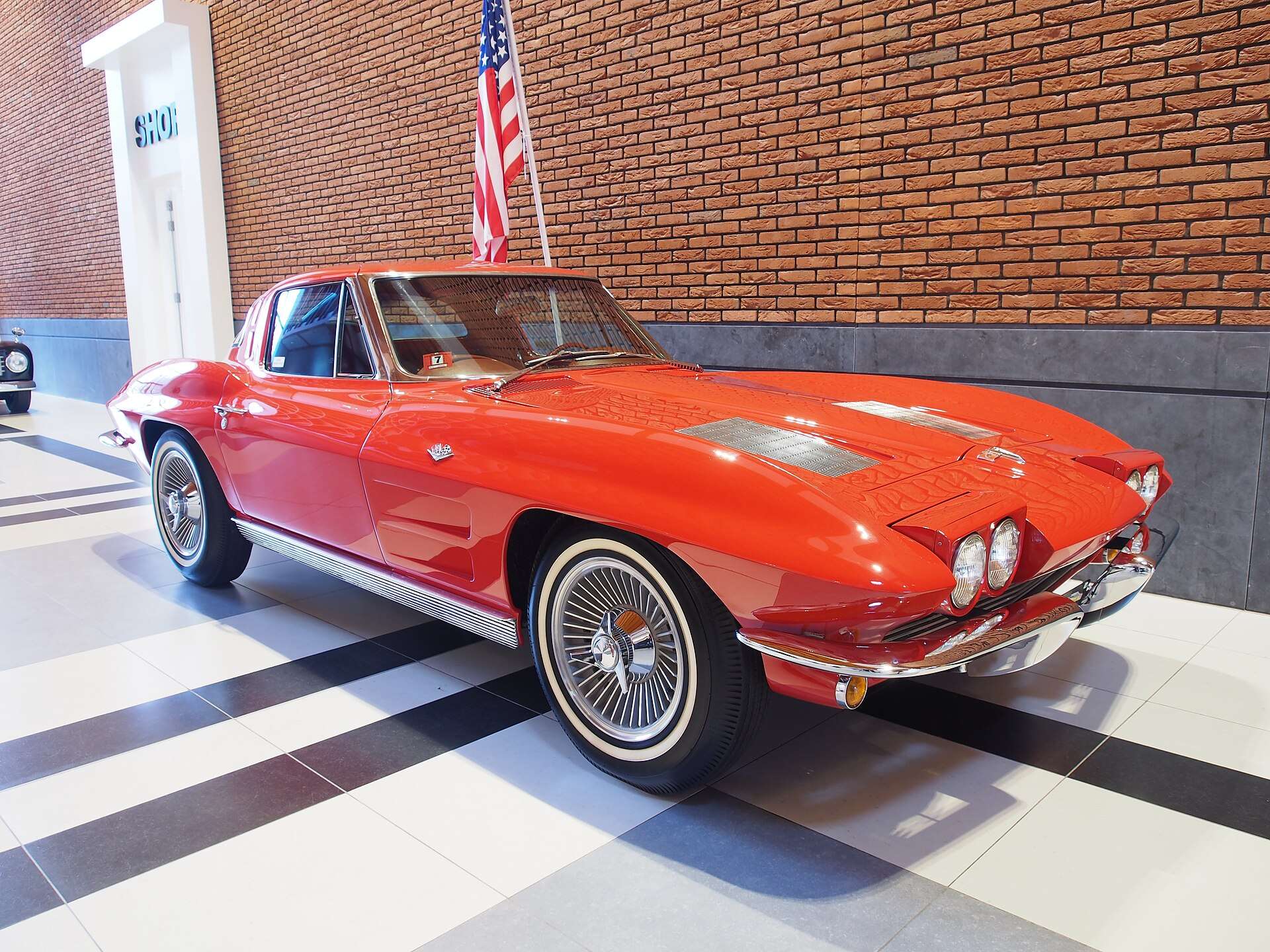
The C2 Corvette is usually discussed as a styling triumph, and it was. But styling alone does not explain why a 1963 Sting Ray, a 1965 big-block car and a 1967 L88 sit in three very different tiers of the collector market. What separates them is factory intent. Chevrolet built the 1963–1967 Corvette Sting Ray as a design statement, an engineering project and, in a handful of cases, a barely disguised race car, and those motives did not always agree with one another. The tension is what collectors are really pricing.
Here are ten details that explain it.
1. Sales nearly tripled in a single year
Corvette production in 1962, the final year of the first generation, was 14,531. In 1963 Chevrolet built 21,513 Sting Rays, an increase of roughly 148 percent, split almost evenly between 10,919 convertibles and 10,594 coupes. Across the five-year run, the C2 totaled just under 118,000 cars. That is a large number, and it matters: the C2 is not scarce as a model. Scarcity lives in specific bodies, engines and options, which is where careful buyers should spend their attention.
2. The split window lasted one year, over an internal objection
The 1963 coupe is the only C2 with a divided rear window. Bill Mitchell, GM’s styling chief, wanted the central spine because it carried the roofline into the tail. Zora Arkus-Duntov, the engineer responsible for Corvette performance, disliked it because it compromised rear visibility. Duntov won the argument for 1964. A one-year feature that its own engineer wanted gone is a recipe for lasting desirability, and the market has treated the split-window coupe accordingly. It is the car most people picture when they hear “Sting Ray,” even though it is not the best one to drive.
3. The shape began as a private racing project
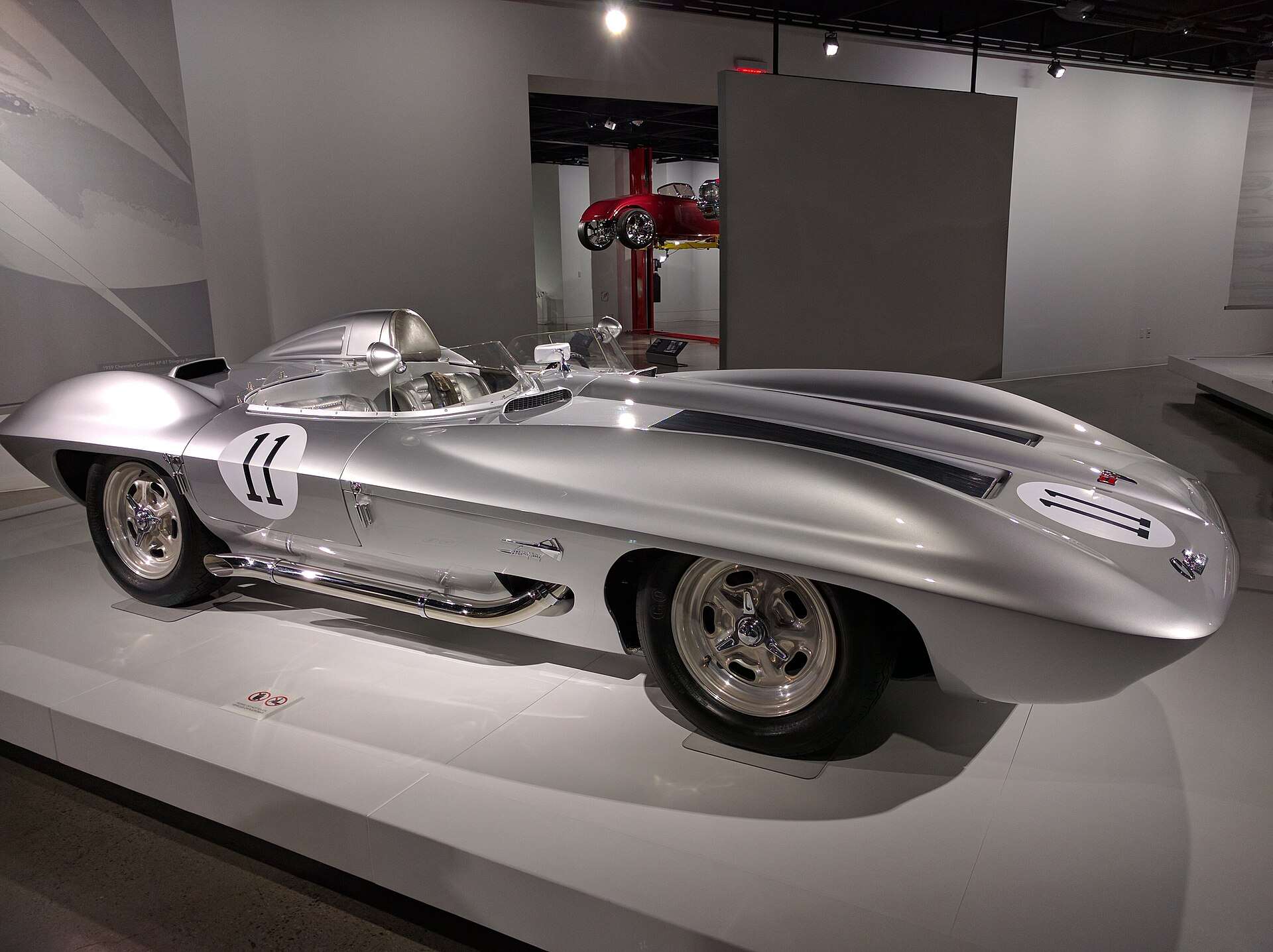
The Sting Ray’s lineage runs through the 1959 XP-87 Stingray Racer, a race car Mitchell pursued after General Motors withdrew from factory racing. Peter Brock’s early sketches informed the body, and Larry Shinoda, whose career we recently looked at in our Today in Collector Car History entry on the designer behind the Sting Ray, turned it into the roadster that became the production car’s visual blueprint. The tapered, fin-flanked silhouette was not invented for a showroom. It was invented for a racetrack and domesticated afterward.
4. The roof has a German ancestor
The coupe’s pointed, tapering greenhouse is attributed to the streamlined 1937–1938 Adler-Trumpf. It is a useful reminder that Detroit design in this period was global in its references, and that the C2’s look owes as much to prewar European aerodynamics as to American jet-age styling.
5. Independent rear suspension changed what a Corvette was
Beneath the fiberglass, the 1963 car replaced the old solid rear axle with fully independent rear suspension, using a single transverse leaf spring. It made the Sting Ray the first American production sports car with four-wheel independent suspension. For collectors, this is the detail that turns the C2 from a pretty roadster into a serious driver’s car, and it is why the model holds up so well when it is actually used. Four-wheel disc brakes followed as standard equipment in 1965, which is part of why 1965–1967 cars drive more convincingly than their early siblings.
6. The Z06 was a race package disguised as an option code
Regular Production Option Z06 for 1963 paired the fuel-injected 327 rated at 360 horsepower with a four-speed, upgraded brakes and suspension, and a 36.5-gallon “Tanker” fuel tank for endurance racing. Only 199 were built. The Z06 is the earliest example of a pattern that defines the C2 market: the most valuable cars are those on which Chevrolet spent the least effort making them comfortable.
7. Five Grand Sport cars were built, and they are not really Corvettes
Duntov’s lightweight Grand Sport program was meant to take on Carroll Shelby’s Cobra, but corporate policy against factory racing ended it after five cars. That scarcity, and the fact that these were purpose-built competition machines, is why the result in our recent report on the $18.7 million Grand Sport repriced one car rather than the model line. Chassis 003 totaled $18,705,000 with commission at RM Sotheby’s Monterey sale. The lesson for buyers is that the headline belongs to the Grand Sport. The market for a standard 1965 convertible, such as the Sunfire Yellow example Freije & Freije offered, trades on entirely different logic.
8. The big-block arrived late, and in small numbers
The 396-cubic-inch engine arrived in late 1965 in 425-horsepower form, and only 2,157 Corvettes were built with it that year. A 427 followed in 1966, and for 1967 the top street engine was the 427/435. These are the cars many collectors consider the C2’s performance peak, and the low 1965 count makes that first big-block year worth knowing about even among enthusiasts who assume all big-blocks are equally common.
9. The L88 was rated below the engine it was meant to beat
Chevrolet rated the 1967 L88 at 430 horsepower, five less than the 435-horsepower 427 offered on the same car. The figure was deliberately modest; real output is generally estimated at 550 to 600. Only 20 L88 Corvettes were built in 1967, followed by 80 in 1968 and 116 in 1969, for 216 across the three years. Chevrolet discouraged casual buyers with a price roughly $2,000 over the $4,388 base car, mandatory competition hardware, and no heater. A red-on-red 1967 L88 coupe sold for $3.85 million at Barrett-Jackson Scottsdale in 2014. Later cars are also instructive: read our analysis of a 1969 L88 convertible at auction with a replacement engine to see how much weight collectors place on original drivetrains.
10. Preservation is the real tie-breaker
Because the C2 was built in large numbers, documentation and originality separate good cars from great ones. Tank stickers, build sheets, matching-number drivetrains, factory color combinations and judged results from the NCRS or Bloomington Gold all move value. Corvette history is also well curated; the National Corvette Museum’s collections facility shows how seriously the community treats the record of these cars.
What it means for collectors
The C2 is not one market. It is at least four: the split-window coupe that buyers want for design, the 1965–1967 car that drivers want for capability, the Z06 and big-block cars that performance specialists chase, and the L88 and Grand Sport cars that function as race-car artifacts. Collectors rarely pay a premium for horsepower alone. They pay for evidence that Chevrolet meant it. If you strip the prices from this story, what remains is a simple guide for any buyer: find the cars where the factory’s intent is documented and original, and be skeptical of anything that is merely beautiful.
The collector car market, every weekday morning.
Auction results, price moves and what’s crossing the block, read in four minutes. Free, from Modern Car Collector.
No spam, unsubscribe in one click. Or read more about the Brief.

 Shawn Henry
 EL Puckett