

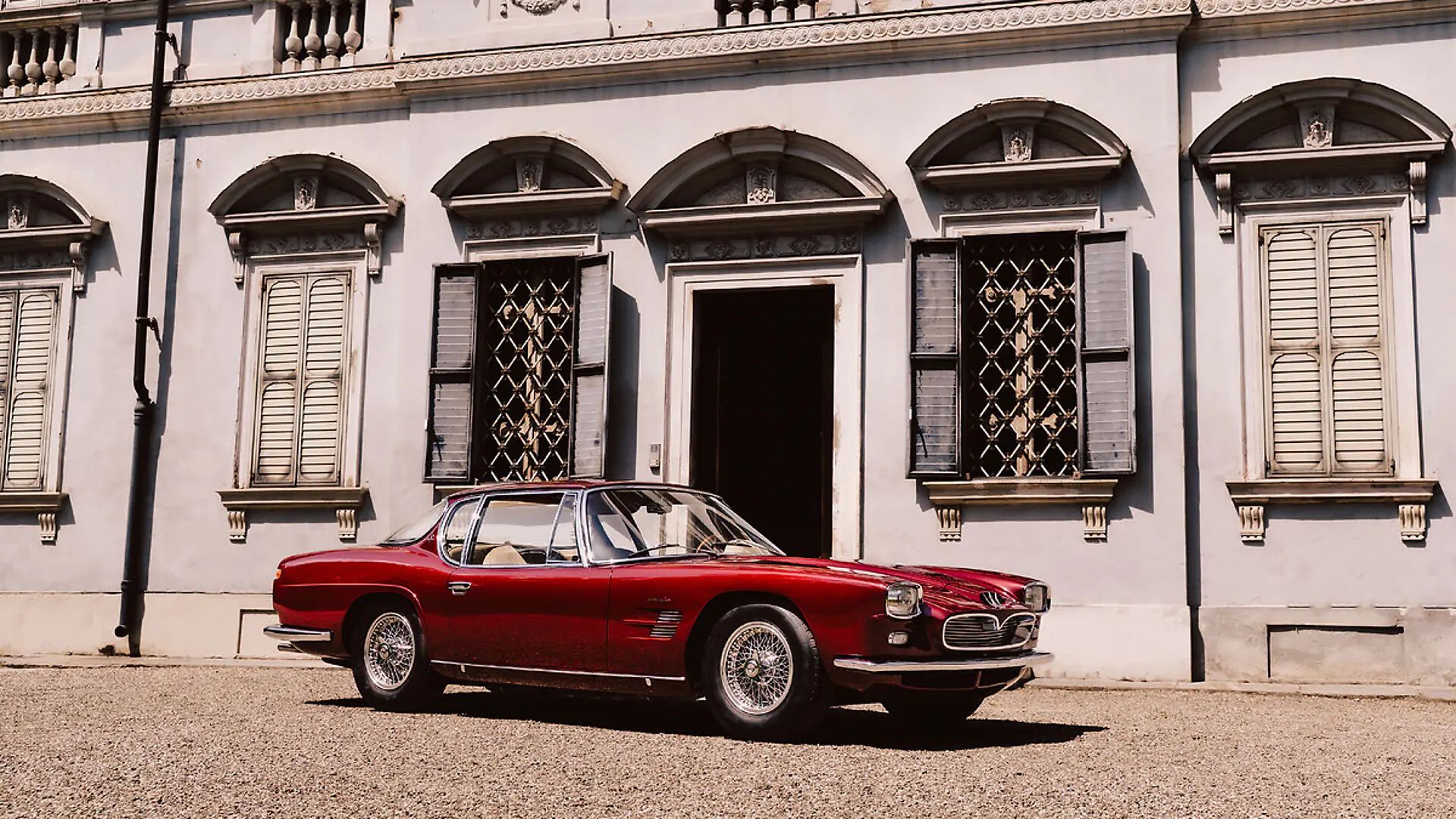
The first Maserati 5000 GT bodied by Pietro Frua has the kind of history that sells itself: a Geneva show stand, a turn in the hands of the Aga Khan, a Saudi king in exile, and more than 30 years shut inside a Cairo warehouse. Set the warehouse aside for a second. This autumn Maserati Classiche issued its Certification of Authenticity for chassis 103.064, and that piece of paper does a job the Aga Khan and an exiled king can’t.
It settles who the car is. As the market keeps relearning with cars from the Austin-Healey 100S upward, the question is never whether a car looks right. It is whether the record holds. For 103.064, the record has been unusually tangled, and the factory has now put its own archive behind one version of it.
A Car for Kings, Built 34 Times
The 5000 GT was never part of Maserati’s plan. According to the factory’s own account, the Shah of Persia drove a 3500 GT and asked for something more refined and more powerful. Technical director Giulio Alfieri answered with project AM103, built around a 5.0-litre V8 derived from the 450S sports-racing engine. Early cars ran carburettors and made more than 350 horsepower; later examples moved to Lucas indirect fuel injection and chain-driven camshafts at roughly 340 horsepower.
Maserati built 34 of them between 1959 and 1964, and almost none are alike. Touring bodied the first car, shown at Turin in 1959 and nicknamed the “Shah of Persia.” Allemano, Pininfarina, Monterosa, Ghia and Frua followed, and Michelotti built one for Briggs Cunningham. Frua, whose hand would later shape the Mistral, built three in 1962. This was the first.
That fragmentation is the key to understanding the model as a collectible. There is no standard 5000 GT for the market to price. Each car is effectively a commission, valued on its own body, its own owner and its own paper trail. In a 34-car series with no standard body, the chassis number is the car.
One Car, Two Numbers
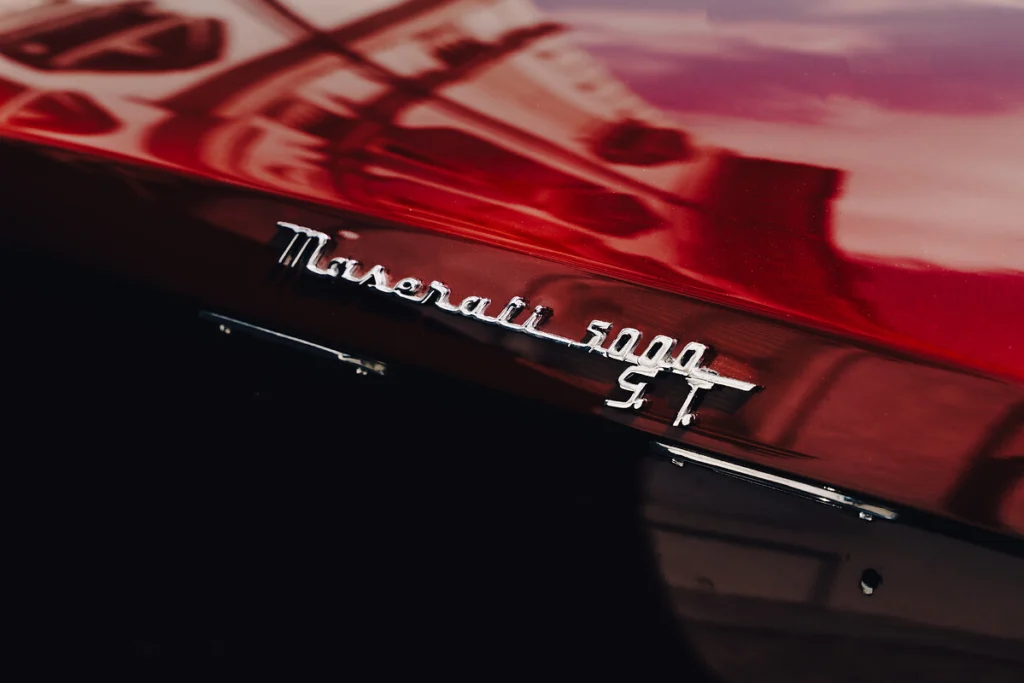
When RM Sotheby’s offered this car at Monterey in 2014, its catalogue described a show car that first appeared at Geneva in March 1962 wearing chassis number AM103.048, served as a demonstrator through Maserati’s French importer, then was refurbished by the factory and sold new in the autumn of 1963 as AM103.064. The engine is stamped 103.064 and was described as believed to be the original, matching-numbers unit.
The published record did not agree with itself. RM’s catalogue called it the first of only two Frua-bodied 5000 GTs. Gooding’s 2007 catalogue for chassis 103.060, another Frua car, called it one of three. Maserati’s new account says three, places the car’s formal presentation at the 1963 Geneva show after a period of factory trials and demonstrations, and records its original livery as Luci di Mezzanotte with Camoscio interior.
None of this is scandalous. Italian factories of the period routinely refreshed show and demonstration cars and sold them on. But a renumbering is exactly the kind of fact that makes a careful buyer pause when it is explained only by an auction catalogue. Explained by the manufacturer, from its own archive, it stops being a question and becomes provenance.
From Rome to a King in Exile to a Cairo Warehouse
The ownership chain is where the car earns its reputation. Maserati records that after Geneva it went to the French importer, where Karim Aga Khan IV drove it and then commissioned a Frua 5000 GT of his own. At the end of 1963 it returned to Modena and was sold to an owner in Rome. In January 1966 that owner bought a new Maserati and handed the 5000 GT back to the factory, which serviced it and, in February 1966, repainted it Rosso Rubino Chiaro at the request of its next owner.
That owner was the Saudi prince Maserati identifies as Magid Ben Saoud, who gave the car to his father, King Saud bin Abdulaziz Al Saud, then living in exile in Cairo. When the king left Egypt in the aftermath of the 1967 Six-Day War, Egyptian authorities seized the car; RM’s catalogue says it was impounded over tax and import levies. It then sat in a Cairo warehouse for more than three decades.
It resurfaced in 2000, offered at auction in Monaco according to RM, with 12,700 kilometres on the odometer and, in Maserati’s words, largely original and complete. A Texas collector, identified in the RM catalogue as the Maserati collector John Bookout, acquired it and sent it back to Modena, where craftsmen Franco Bacchelli, Roberto Villa and Giuseppe Candini spent four years restoring it. It debuted at the 2004 Concorso d’Eleganza Villa d’Este, where it received a First Diploma and Silver Plaque and a place in the event’s Roll of Honour.
What the Warehouse Actually Preserved
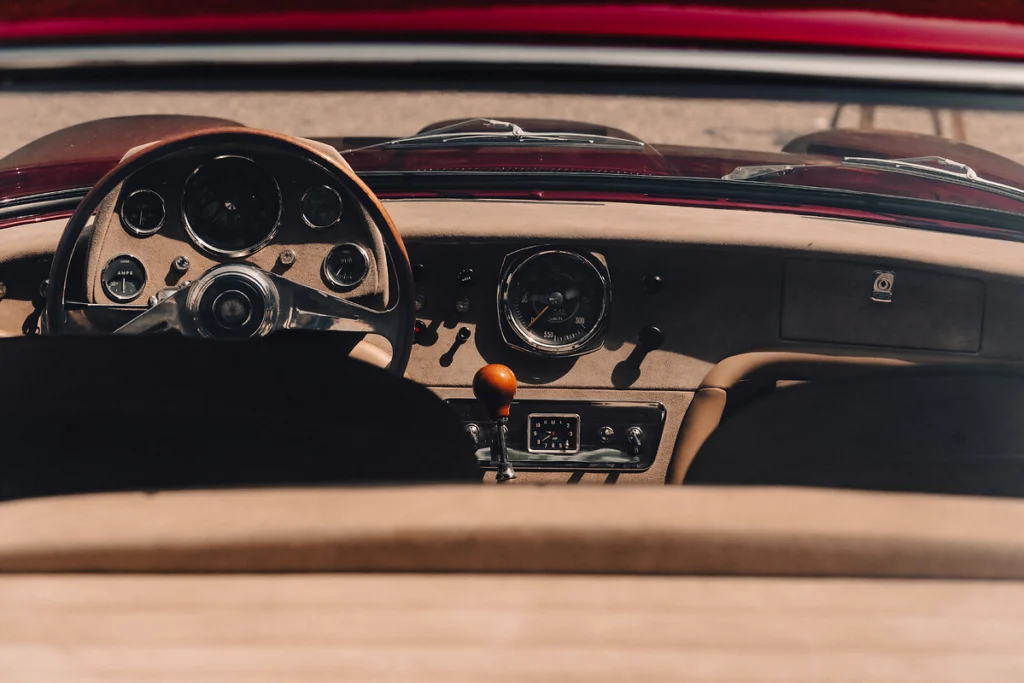
It is tempting to read 12,700 kilometres as a preservation story. It isn’t, quite. The car was fully restored, so the low figure says nothing about original paint, trim or patina. What three decades of impoundment did preserve was completeness. A car that is driven gets crashed, modified, parted out and re-engined. A car locked in a government warehouse simply waits. Neglect protected what use would have consumed, and that is why a matching-numbers engine and a complete body were still there in 2000 for a restorer to work with.
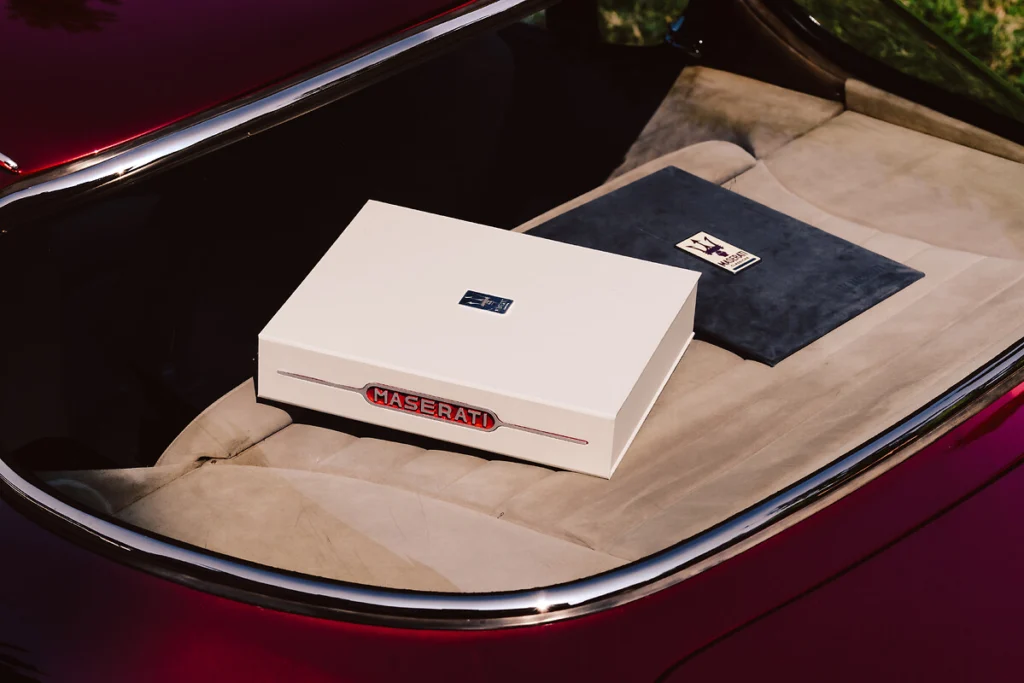
That completeness is also what made a factory certification possible. Classiche, launched in Modena in 2021 and now part of Maserati’s BOTTEGAFUORISERIE division, convenes a committee that compares a car’s technical characteristics against historical documentation and the company’s archives. A car that had been heavily reworked over 60 years of ordinary ownership would have given that committee far less to confirm.
Why the Paper Matters Now
The market has already shown what an unresolved story costs. At Monterey in 2014, against a $2.2 million to $2.9 million estimate and with its title listed as in transit, 103.064 did not sell. A buyer at that level was being asked to accept a renumbered chassis, conflicting accounts of how many Frua cars existed, and an ownership chain that ran through a foreign government’s impound lot, all on the strength of a catalogue.
Recent 5000 GT results show how much the individual car, not the model, drives value. Briggs Cunningham’s Michelotti car sold for $1,017,500 at RM’s 2017 Monterey sale. Ghia’s one-off sold for $533,000 there in 2019. Allemano-bodied chassis 103.040 brought $1,540,000 in Arizona in 2016, then $885,000 at Monterey two years later. With so few cars and so few transactions, every sale is close to a private negotiation over one story. In that kind of market, a factory certificate isn’t decoration. It is the one document every future buyer will ask for first.
What Serious Buyers Should Watch
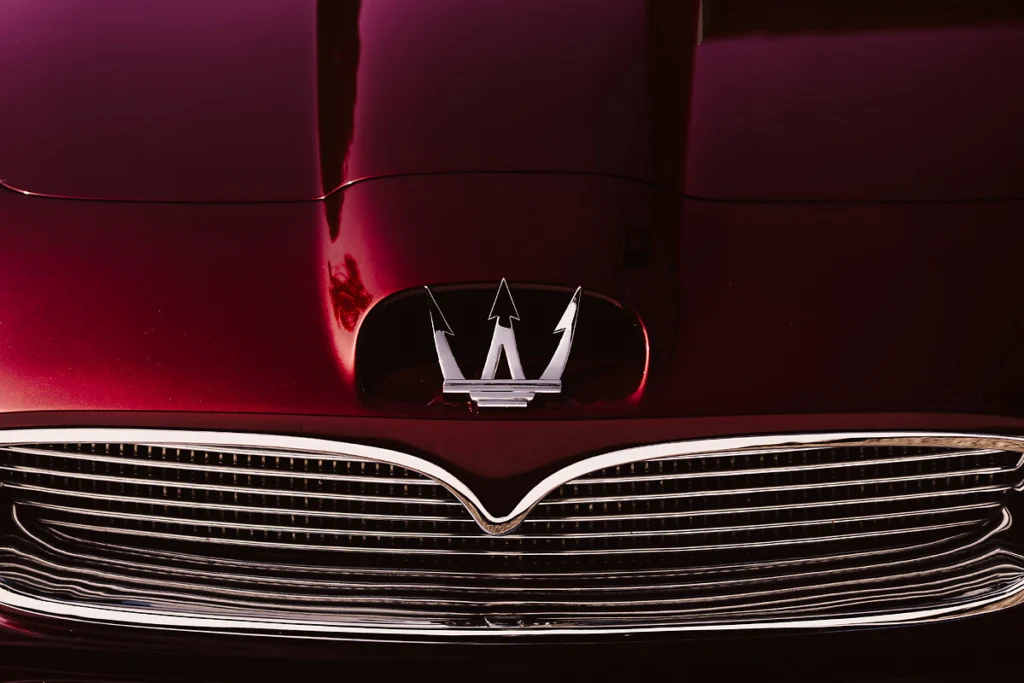
The colour is the first decision any future owner inherits. The car left the factory in Luci di Mezzanotte and wears the red Maserati itself applied in 1966. As Reggie Jackson’s green 250 GT Lusso has shown, a non-original colour can either cost a car or define it. Here the argument for keeping the red is strong: it was a factory finish, applied for the owner whose story gives this car its identity. Returning it to show-car spec would erase the part of the history that made it famous.
The Modena restoration is now more than 20 years old. Its quality was recognised at Villa d’Este and again at Schloss Bensberg in 2013, where RM reports it won its class, but a buyer should expect to evaluate it as a mature restoration not a fresh one. Then there’s the file. RM described restoration photography, engine-rebuild invoices and dyno sheets accompanying the car. Together with the Classiche certificate, that is the dossier that turns a famous story into a transferable asset, much as documentation did for the seawater-damaged Delahaye 165 that won Newport.
The Cairo years will always sell this car. The certificate is what lets someone pay for them. Now the hard question: would you keep the 1966 Rosso Rubino Chiaro or take it back to Luci di Mezzanotte? We’ve made our case for the red. Make yours.
Sources
- Maserati: The First Maserati 5000 GT Frua. The Story of a Legend (press release, October 2026)
- RM Sotheby’s: 1963 Maserati 5000 GT by Frua, Monterey 2014 catalogue
- Gooding & Company: 1962 Maserati 5000 GT by Frua, chassis 103.060, Pebble Beach 2007
- RM Sotheby’s: 1964 Maserati 5000 GT Coupe by Michelotti, Monterey 2017
- RM Sotheby’s: 1961 Maserati 5000 GT Coupe by Ghia, Monterey 2019
- RM Sotheby’s: 1962 Maserati 5000 GT by Allemano, Monterey 2018
- Hagerty sales record: 1962 Maserati 5000 GT Allemano, AM103.040, RM Sotheby’s Arizona 2016
The collector car market, every weekday morning.
Auction results, price moves and what’s crossing the block, read in four minutes. Free, from Modern Car Collector.
No spam, unsubscribe in one click. Or read more about the Brief.
 Kyle Matthews
 Shawn Henry