

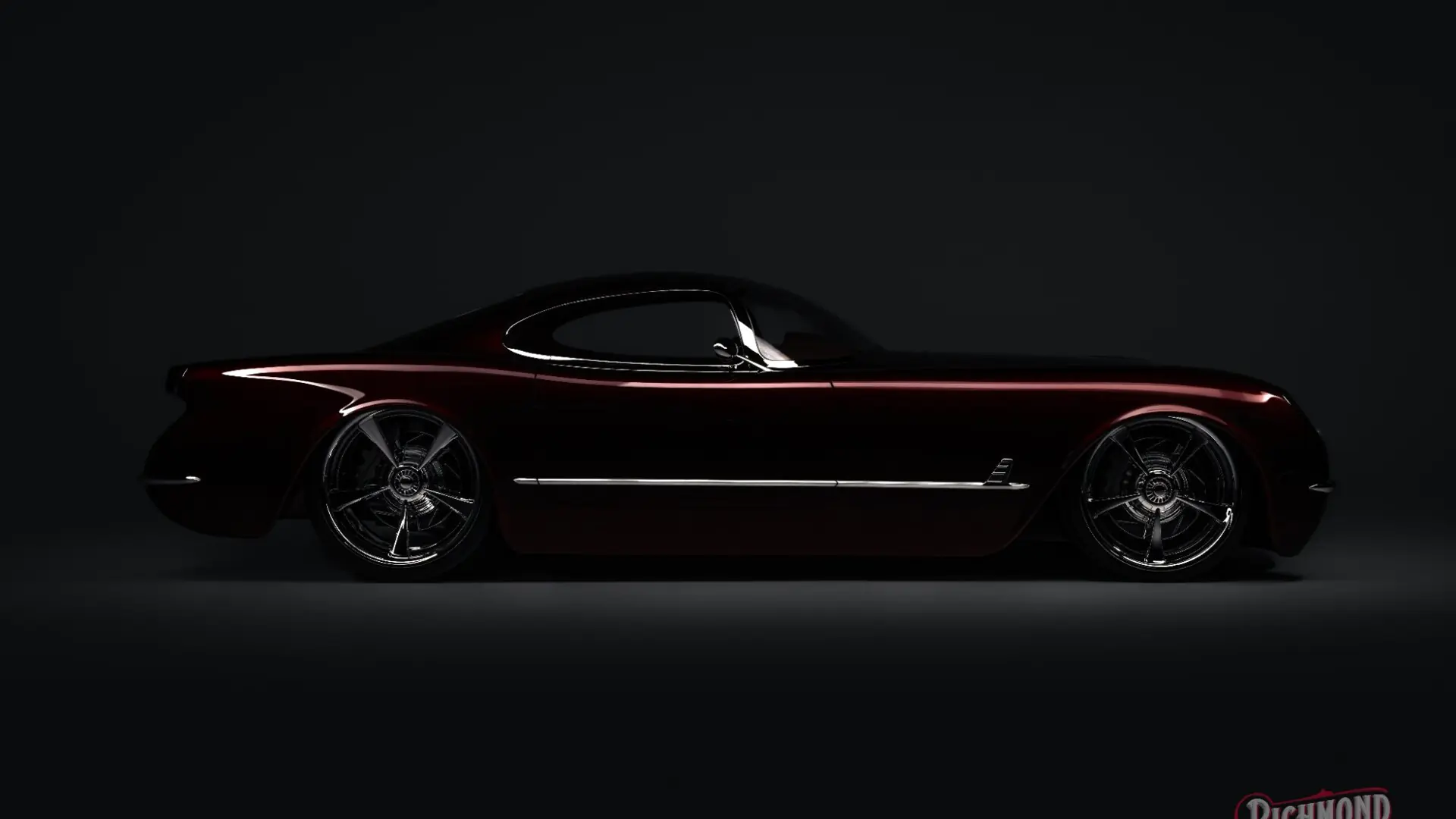
When Dave Kindig’s TwelveAir crossed the block at Richmond Auctions’ inaugural Fall Spectacular at the Savoy Automobile Museum, it did so as the most decorated American custom of the past two years. The car had won the 2024 Don Ridler Memorial Award and collected more than 20 major titles since. Kindig-It spent 54 months building it from scratch, and the build reportedly cost around $4 million, though that figure remains a rumor. In the end, TwelveAir sold for $930,000.
However, depending on where you sit, that number is a disaster, a bargain, or a record. It is all three. So here is how we read it, and what it tells collectors, builders, and anyone thinking about commissioning a seven-figure custom.
The Car: Not a Modified Corvette
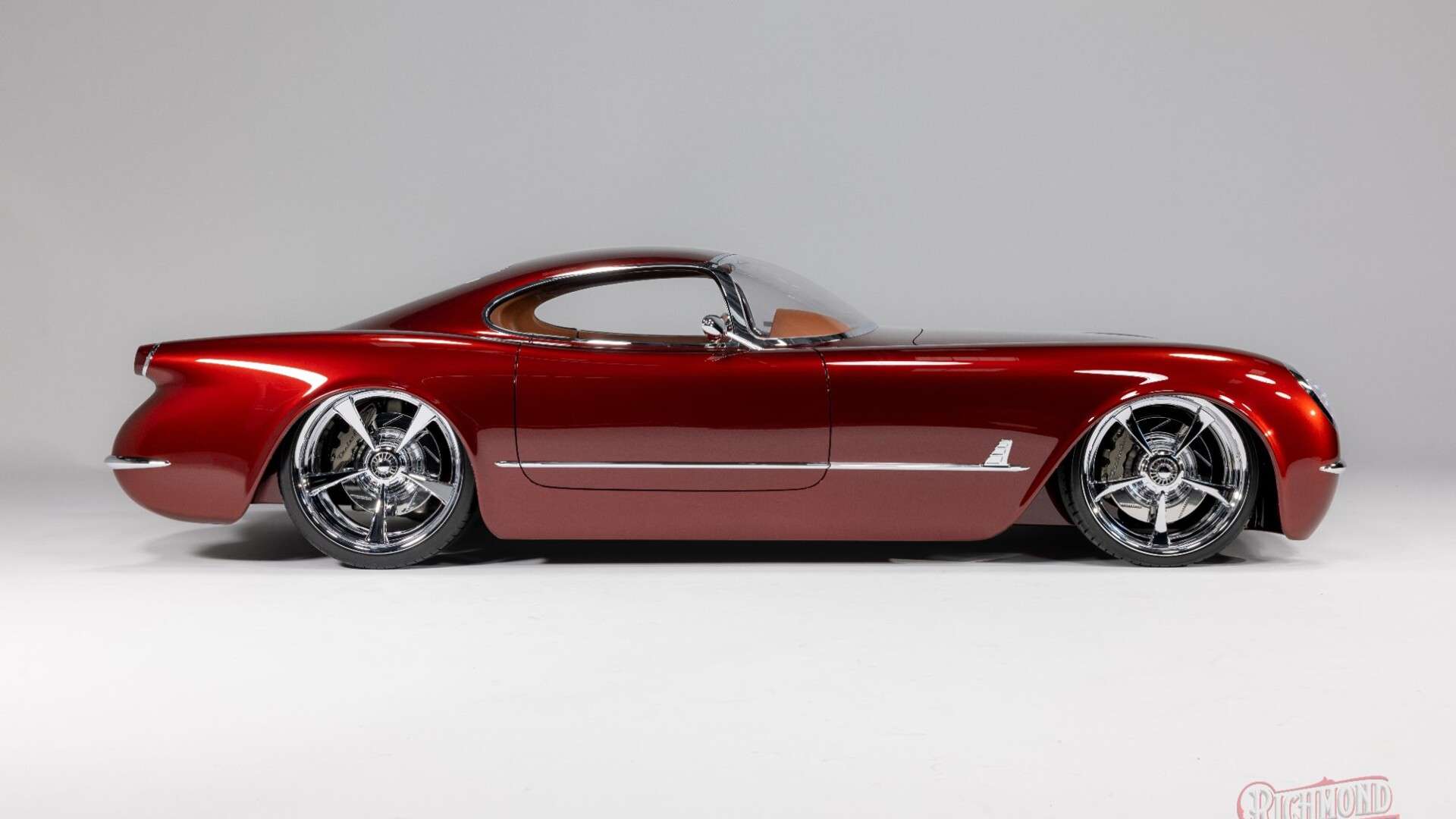
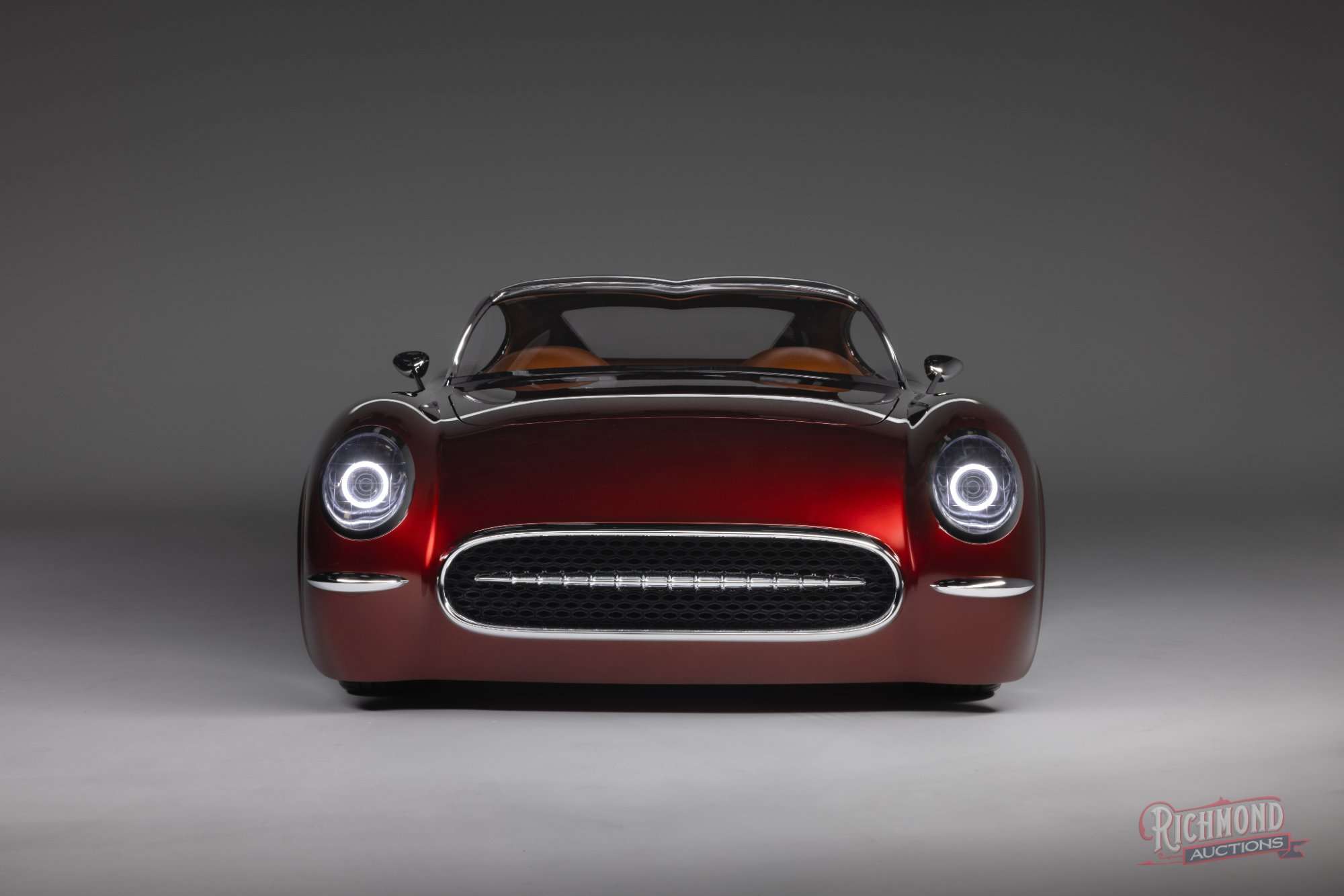
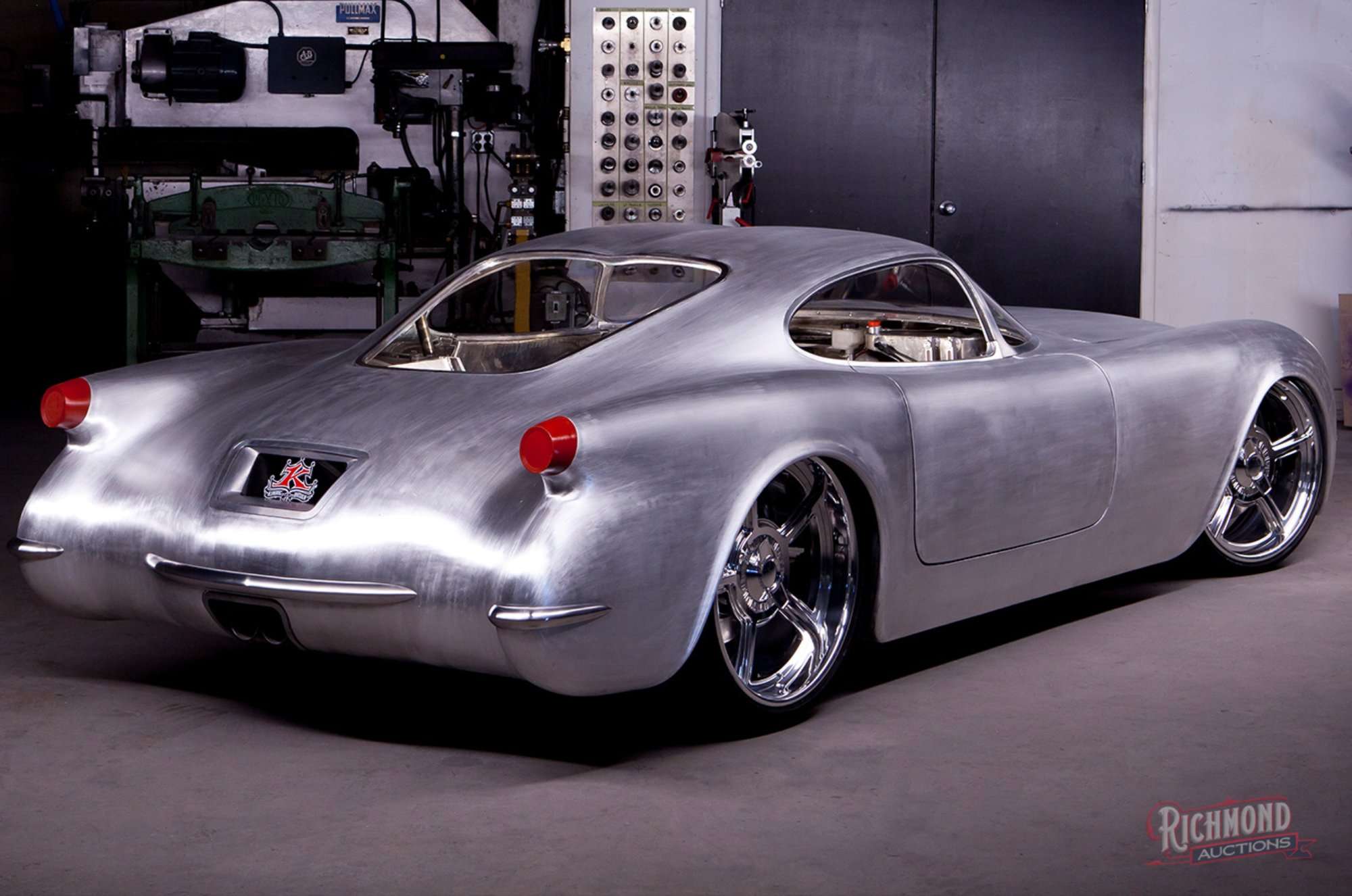
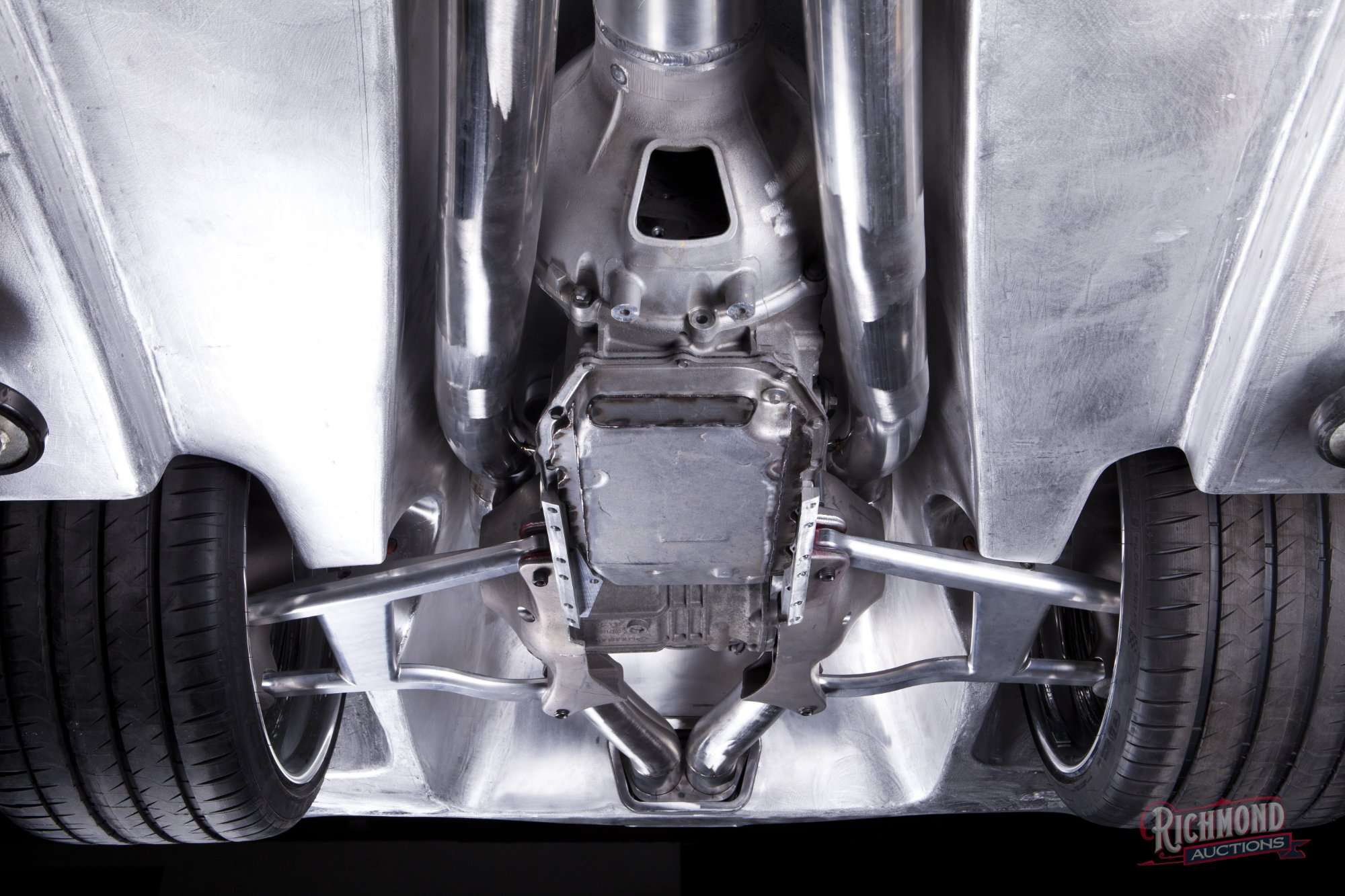
The VIN says 1953 Corvette, but TwelveAir is not a modified Corvette in any meaningful sense. Built for Dave and Tracey Maxwell, it was inspired by the Corvette-based Corvair fastback concept from GM’s 1953 Motorama. Instead, Kindig-It formed the structure from scratch as a 3003 and 6061 aluminum monocoque. According to the listing, it uses no original Corvette body panels and no components from Kindig’s own production CF1 roadster.
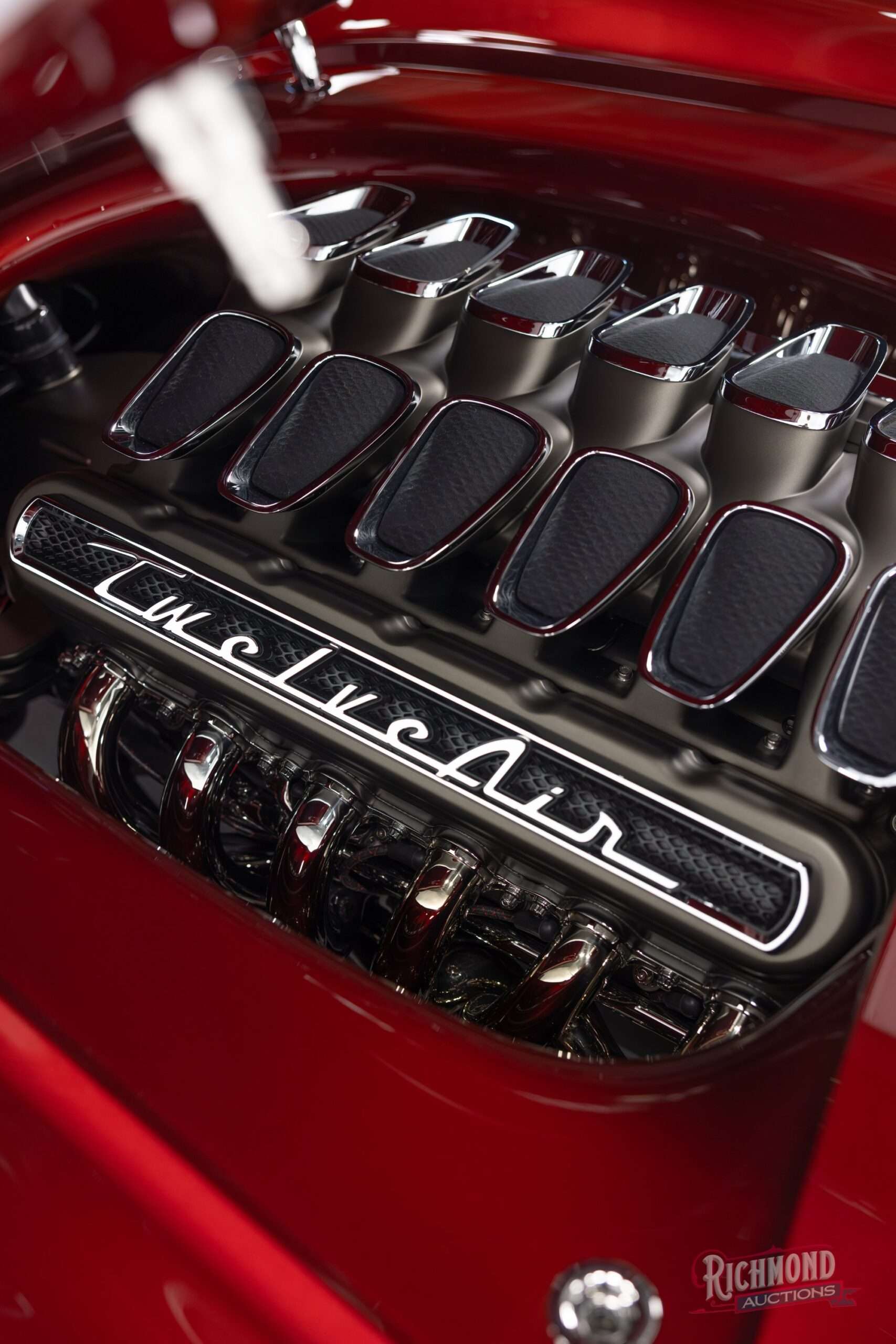
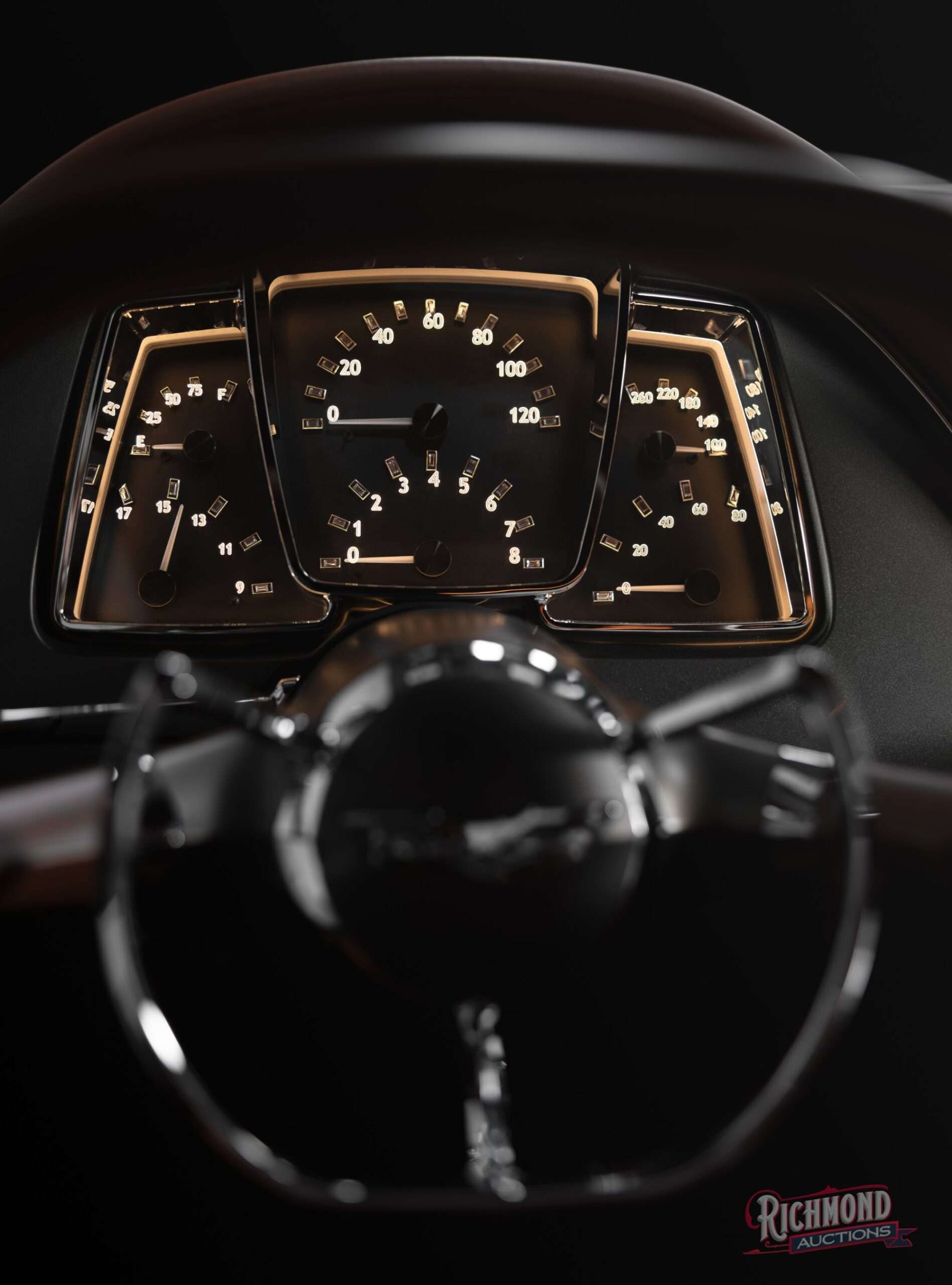
Power comes from a bespoke all-aluminum 9.2-liter Race Cast Engineering V12LS making roughly 650-plus horsepower. That engine drives through a 2017 Corvette seven-speed converted to a conventional automatic. The rest of the spec sheet reads like a show-car wish list: custom EVOD monolug wheels, Wilwood brakes, and Kindig’s Modern Classikk Infrared paint with Sagebrushed satin-bronze accents. Inside are Sienna leather, extensive 3D-printed trim, a one-off aluminum steering wheel, and a white-gold, diamond-inlaid gauge cluster.
Then there is the trophy case. TwelveAir debuted at the 2024 Detroit Autorama, made the Great 8, and took the Ridler. After that, it won the Chicago Legends Cup and Goodguys’ Most Bitchin’. Judges also named it Triple Crown of Rodding Street Cruiser of the Year and ISCA Grand Champion. On the West Coast, it won the Portland Grand Sweepstakes Rose Cup and the Sacramento Autorama’s Sam Barris Memorial Award. In 2025, it took both Pro Builder of the Year and Grand Champion at Hot August Nights. In short, few modern customs have won so broadly.
The Result in Context
We could find no published pre-sale estimate from Richmond, and the house did not announce a reserve status. As a result, that leaves the comparable sales as the fairest yardstick. There is also one caveat on the number itself: the lot page shows “Sold $930,000,” and Richmond charges a 10 percent buyer’s premium on vehicles (12 percent on phone bids). If $930,000 is the hammer, the buyer’s all-in cost was roughly $1.02 million.
| Car | What it is | Reported build cost | Result |
|---|---|---|---|
| TwelveAir (2024 Ridler winner) | Scratch-built one-off, aluminum monocoque, bespoke 9.2L V12, 20+ major awards | ~$4M (rumored) | $930,000 (Richmond, Oct. 2026) |
| CadMad (2019 Ridler winner) | One-off 1959 Cadillac Eldorado Brougham wagon | ~$2.3M | $302,500 (2020) |
| Kindig CF1 Roadster #005 | Kindig’s series-built ’53 Corvette-style roadster | n/a | $770,000 (Mecum Kissimmee, Jan. 2024) |
| Kindig CF1 Roadster #004 | Same platform | n/a | $605,000 (Barrett-Jackson Scottsdale) |
| Kindig CF1 Roadster #008 | Same platform | n/a | $572,000 (Barrett-Jackson Scottsdale, 2023) |
| Historic hot rods (McMullen roadster, Coddington’s Whatthehaye) | Landmark customs, decades old | n/a | ~$670,000–$700,000 |
Three Takeaways From the Comps
The seller took a historic haircut. If the rumored $4 million build figure is close, roughly 23 cents on the dollar came back. In other words, that is a loss north of $3 million on a car that had done everything a custom can do.
It still beat Ridler history. CadMad, the 2019 Ridler winner, reportedly took 15 years and about $2.3 million to build. It sold in 2020 for $302,500, or about 13 percent of its cost. By comparison, TwelveAir recovered close to double that share. On a dollar basis, it also clears the legendary hot rods that have long topped the auction charts, such as the Tom McMullen roadster and Boyd Coddington’s Whatthehaye. That makes it one of the strongest public results we know of for a modern American custom.
The Ridler premium is thin. This is also the most telling comparison. Kindig’s own CF1 is a series-built ’53 Corvette-style roadster, and three of them have sold for $572,000 to $770,000. TwelveAir is a scratch-built one-off with a unique V12, the top prize in American customizing, and more than 20 national awards. Even so, it brought only about 20 to 60 percent more than a CF1. Bidders mostly paid for the Kindig name and the Corvette look. (For context, see the 10 most expensive Corvettes ever sold at auction.) The one-off engineering and the trophies added a few hundred thousand dollars, not millions.
Why $4 Million Became $930,000
The show career is spent. The Ridler can only be won by a car making its public debut at Autorama, and TwelveAir has already run the national circuit and won nearly everything on it. In effect, part of what the Maxwells paid for was the chance to compete, and that is gone. Consequently, the next owner buys a finished career, not a contender.
Build cost is not value. Much of a car like this goes to hand-formed metal, prototype parts, and design hours, and nobody else can resell any of that. The same goes for show-level finishes built for judging under lights and for the commissioning owners’ personal taste. A bespoke V12 and a custom aluminum structure are extraordinary achievements. At the same time, they make the car harder to service, insure, and eventually sell again.
The venue narrowed the field. This was Richmond’s first sale at the Savoy, at a house better known for petroliana and advertising than for seven-figure cars. Bidders needed a bank Letter of Guaranty to register, and published reports put online bidding at about $170,000 before the live session. Mecum Kissimmee or Barrett-Jackson Scottsdale would have put the car before a much larger crowd of high-end bidders. That might have added a meaningful premium. Still, no venue would have closed the $3 million gap.
What It Means for the Industry
The ceiling is real, and it sits near $1 million. No matter what a modern custom cost or what it won, public-auction buyers have been reluctant to go much past seven figures. TwelveAir nudged that ceiling up; however, it did not break it.
The builder’s name holds value; the hours do not. Kindig, Ringbrothers and Foose builds all trade at real money, as our look at eight high-dollar restomods shows. This sale suggests the market pays for the shop’s name and the shape, not for the labor behind a specific build. That is good news for Kindig’s broader valuations; a Ridler car near $1 million is a strong data point for every CF1 owner. On the other hand, it is sobering news for anyone financing a one-off on the theory that awards create equity.
Series builds look smarter by the day. Series-built cars like the CF1 recover far more of their cost than one-off show cars. Therefore, expect more shops and clients to move toward repeatable platforms with personalized finishes, and away from ground-up one-offs.
What It Means for Heavily Modified Cars
For the wider world of high-dollar customs and restomods, TwelveAir confirms what experienced collectors already know. Simply put, commissioning a car like this is spending, not investing. Losing 75 to 90 percent of the build cost is the normal outcome, and TwelveAir losing “only” about 77 percent counts as one of the good ones. So if you are budgeting a seven-figure build, plan on enjoying it, showing it, and driving it, not getting your money back. For more on how the market prices expensive builds, see our coverage of Robert Downey Jr.’s electric Corvette restomod and an 809-hp Chevy II Nova SS restomod.
That said, there is one long-term exception. Customs with real cultural weight can come back in value once they become historic. Barris-era show cars now trade as historic artifacts, and the original Batmobile brought $4.62 million at Barrett-Jackson. Whoever bought TwelveAir may be making exactly that bet: that a Kindig-built, Ridler-winning, V12 Corvair tribute will be a landmark of 2020s customizing a generation from now. It is plausible, but it is a long and uncertain bet. (We look at which corners of the market could gain value in five segments that could appreciate over the next five years.)
The Verdict
For the Maxwells, $930,000 is a painful number, the cost of having commissioned and campaigned one of the great customs of its era. The market, meanwhile, got a strong result and likely one of the best public outcomes for a modern American custom. The buyer arguably got a bargain, since no one could recreate TwelveAir for anything close to this price. Ultimately, the lesson for the industry is plain: a custom is worth what bidders will pay, not what it cost to build.
Photos courtesy of Richmond Auctions. The $4 million build figure is rumored and has not been confirmed by the builder or owners. Comparable sales are drawn from published auction results reported by Hagerty and CorvSport.
The collector car market, every weekday morning.
Auction results, price moves and what’s crossing the block, read in four minutes. Free, from Modern Car Collector.
No spam, unsubscribe in one click. Or read more about the Brief.




 Eve Nowell
 Shawn Henry