

Every November, the Muscle Car and Corvette Nationals turns a convention hall outside Chicago into the most unforgiving room in American collecting. MCACN is where date codes are read with flashlights, where tank stickers and broadcast sheets are passed hand to hand, and where a car’s story either holds up or quietly falls apart. It is an unusual place to preview an auction. That is exactly why it works.
Mecum Auctions returns as title sponsor of the 2026 show, Nov. 21–22 at the Donald E. Stephens Convention Center in Rosemont, Illinois, and it is bringing 14 muscle cars and Corvettes that will cross the block at Mecum Kissimmee 2027, Jan. 5–17, at Osceola Heritage Park in Florida. The Kissimmee docket has already produced one extraordinary competition story in Ken Miles’ one-of-one “Flip Top” Shelby 427 prototype Cobra. The MCACN group tells a different, and in some ways more instructive, one.
Exceptions, Not Rarities
Read the list closely and a pattern emerges. These are not merely low-production cars. Most are cars that no ordinary dealer order could have produced: an executive’s one-off, a factory race-package Corvette, tuner cars transformed after they left Chevrolet, and a Corvette deliberately cut open so the public could see inside it.
That distinction matters more than any headline number. Production figures tell you how few were built. Only provenance tells you why. And at the top of the American muscle market, the why is what serious collectors are actually buying.
The F-Body Collection From Dana & Patti Mecum
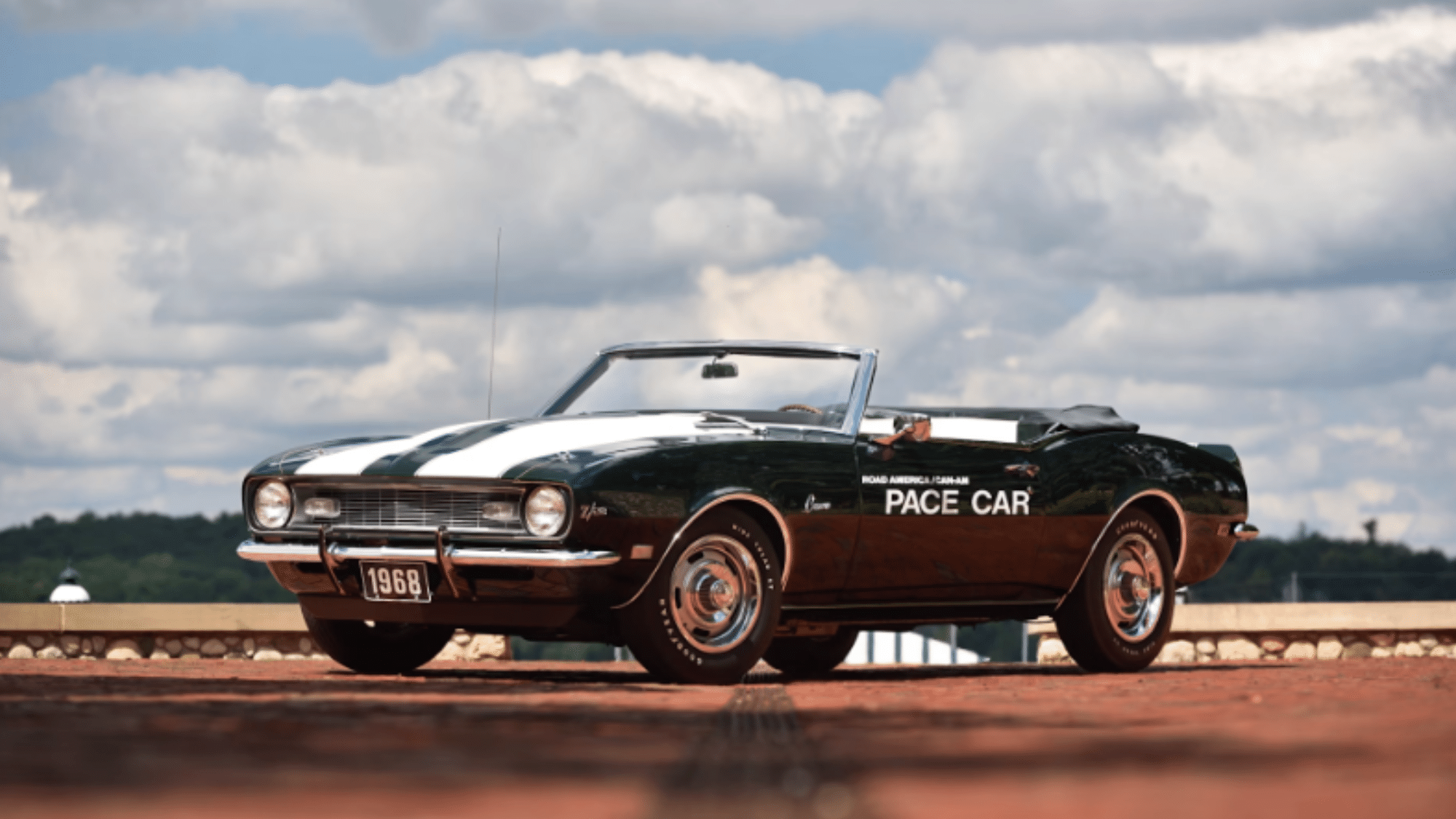
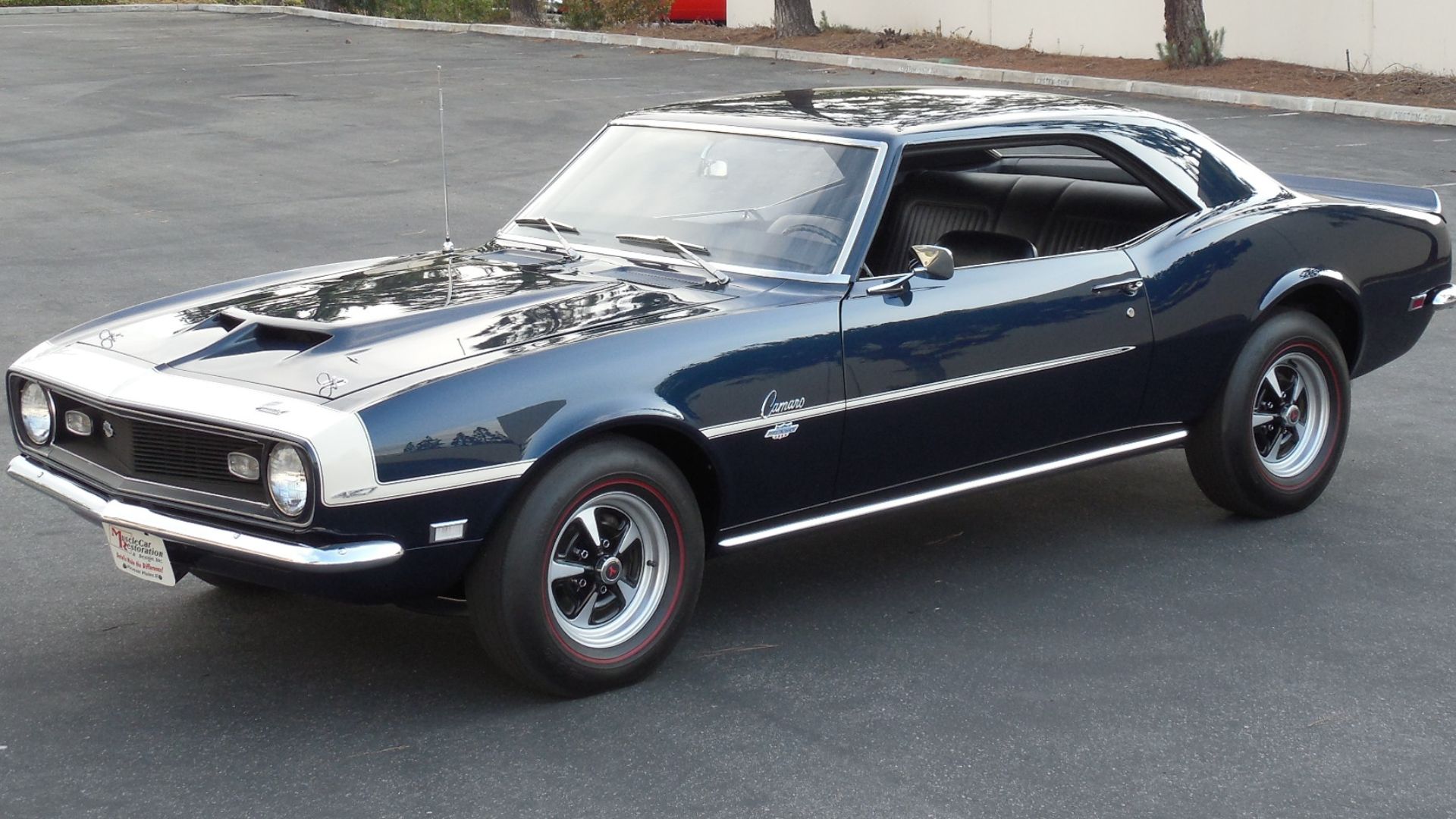
Two of the most significant cars come from The F-Body Collection From Dana & Patti Mecum, and the first is arguably the most important Camaro in private hands. The 1968 Chevrolet Camaro Z28 Convertible is the only first-generation Z28 convertible produced. According to Mecum, it was built specifically for Chevrolet General Manager Pete Estes and gifted to him by Vince Piggins, Chevrolet’s Product Promotions Manager.
Context is everything here. The Z28 was conceived as a coupe, a homologation vehicle for SCCA Trans-Am racing powered by a high-revving 302 V8. A Z28 convertible made little sense as a product. It made a great deal of sense as a car for the executive whose support Chevrolet’s performance programs depended on. That is why it is collectible: not because it is unique, but because it sits at the intersection of the Z28’s origin story and the internal politics of 1960s Chevrolet. We examined the car’s background in more depth in our earlier look at the Pete Estes Z28 convertible.
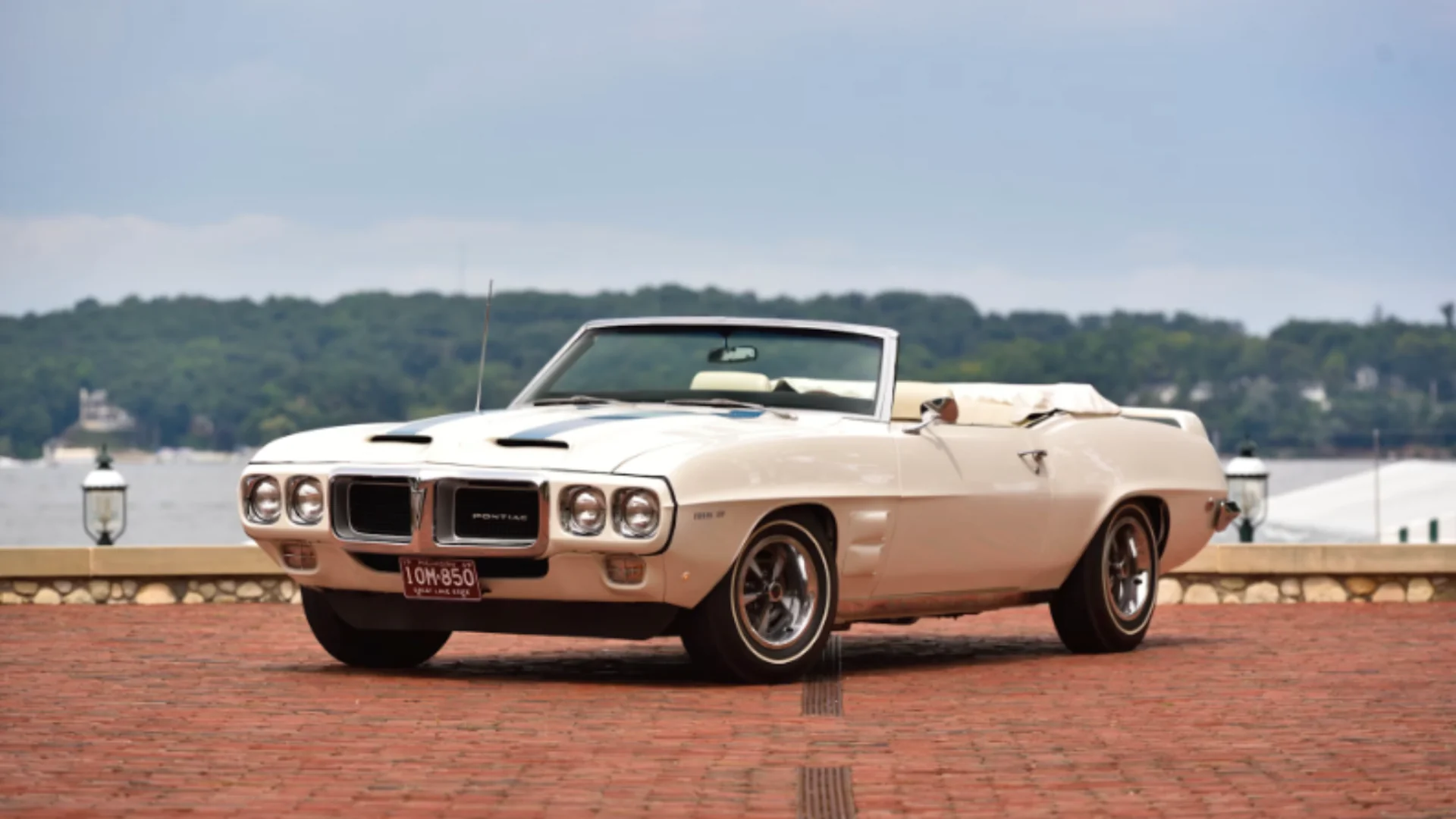
The second F-body headliner is a 1969 Pontiac Trans Am Convertible, the only triple-white example produced and one of just eight Trans Am convertibles built for the model year. Pontiac launched the Trans Am that year with remarkably little fanfare, and Mecum’s own catalog records put first-year production at 697 cars. In a population of eight convertibles, a unique color and trim combination is not a cosmetic footnote. It is the difference between one of eight and one of one.
For cars of this caliber, factory documentation is the foundation of value. Pontiac buyers have the advantage of Pontiac Historic Services, which can supply copies of original factory paperwork, and any serious bidder should expect the car’s configuration to be supported by that kind of record rather than by reputation alone.
There is also a detail sophisticated readers will notice: these two cars are consigned from the collection of the auction company’s founder. That is not unusual in the collector car world, but it does place a premium on transparency. Showing the cars first at MCACN, in front of the most knowledgeable muscle car audience in the country, is the right way to invite scrutiny before the bidding starts.
Corvettes From the Margins of the Factory
The Corvette portion of the display reads like a short history of how the car earned its credibility. The 1956 Chevrolet Corvette SR-1 is one of only two known to exist. The SR cars belong to Chevrolet’s 1956 effort to prove the Corvette as a genuine competition machine, a turning point that helped transform a struggling boulevard roadster into America’s sports car. With a car like this, survival itself is the rarity.
Then come the tuner cars, and here the story shifts from Detroit to Long Island. The 1970 Chevrolet Corvette Baldwin-Motion GT Coupe is one of only 10 produced between 1969 and 1971 and one of three still extant. Joel Rosen, founder of Baldwin-Motion, nicknamed it “The Golden Egg.” Alongside it is a 1970 Chevrolet Corvette Motion Performance Maco Shark Coupe, the last of just six produced in the Motion Performance shop and one of three known to remain.
Baldwin-Motion cars occupy a particular place in the market. Because the transformation happened outside the factory, the VIN alone cannot prove what the car became. Builder documentation, period records, and verified ownership history are the only bridge between a Corvette and a Baldwin-Motion Corvette. It is the same principle that governs Yenko and other dealer-built cars, a subject we explored in what “re-bodied” means for a Yenko Deuce, and one that also shapes the market for Motion’s rarer creations, such as the Motion Can-Am Spyder also bound for Kissimmee.
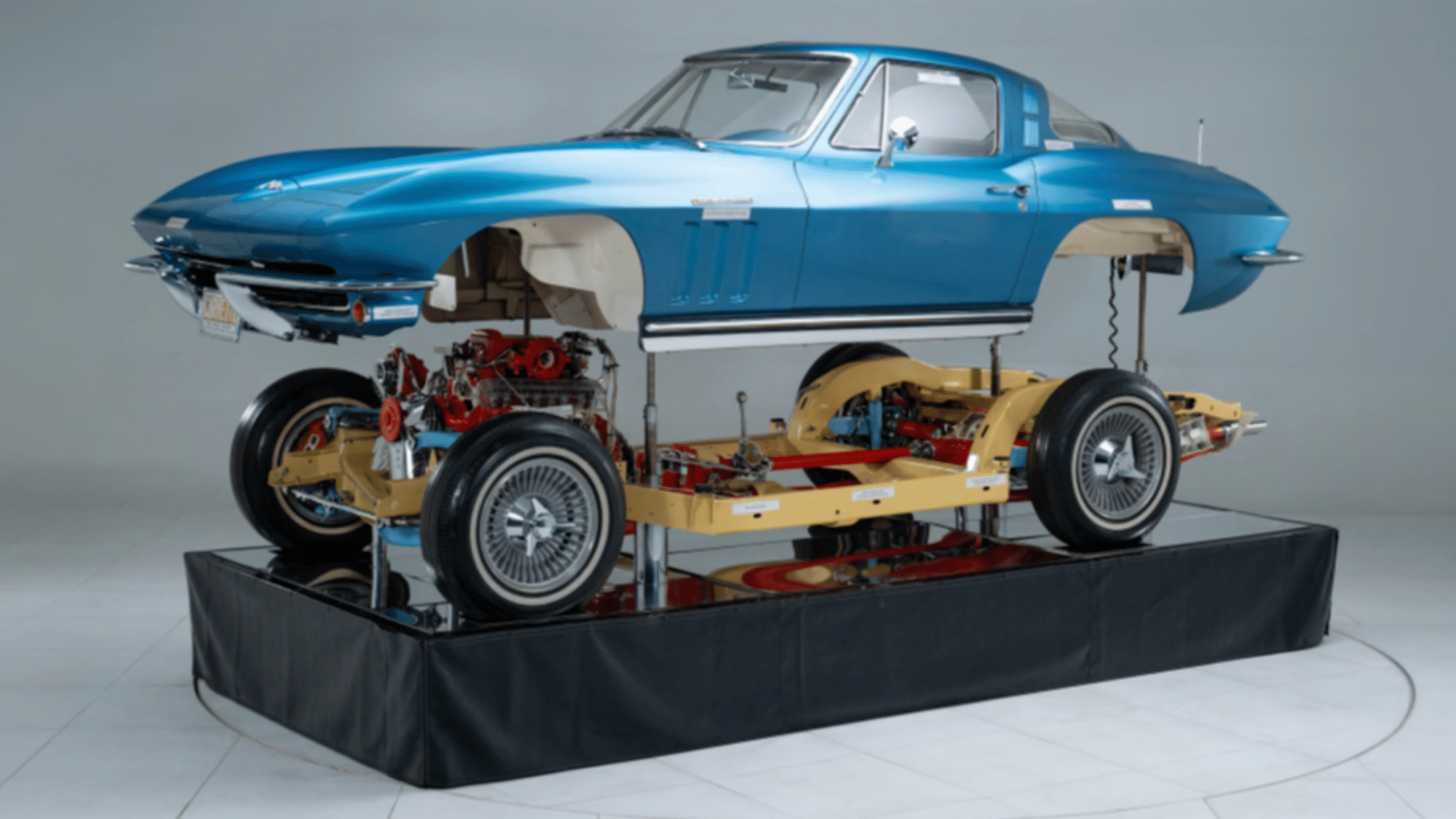
The most unusual Corvette of the group is the 1965 Chevrolet Corvette “Cutaway” Show Car. Mecum says it was taken directly from the assembly line and converted into a functioning mechanical display, and with four miles on the odometer it describes the car as the lowest-mileage example of any C1, C2, or C3 Corvette. The mileage is a curiosity, not the point. This is a factory artifact, an object Chevrolet built to explain the Sting Ray’s engineering to the public, and its natural audience includes museums and corporate collections as much as private garages. Readers new to the generation can start with ten things collectors should know about the C2 Corvette Sting Ray.
The Blue-Chip Benchmarks
Not every car in the display is a one-off, and that is useful. The 1969 Chevrolet Camaro ZL1, number 15 of just 69 produced, is the closest thing the muscle car world has to a gold standard. Built through Chevrolet’s Central Office Production Order system with an all-aluminum 427, the ZL1 has a long, well-documented public sales record. It is the benchmark against which the exceptions in this group will inevitably be measured.
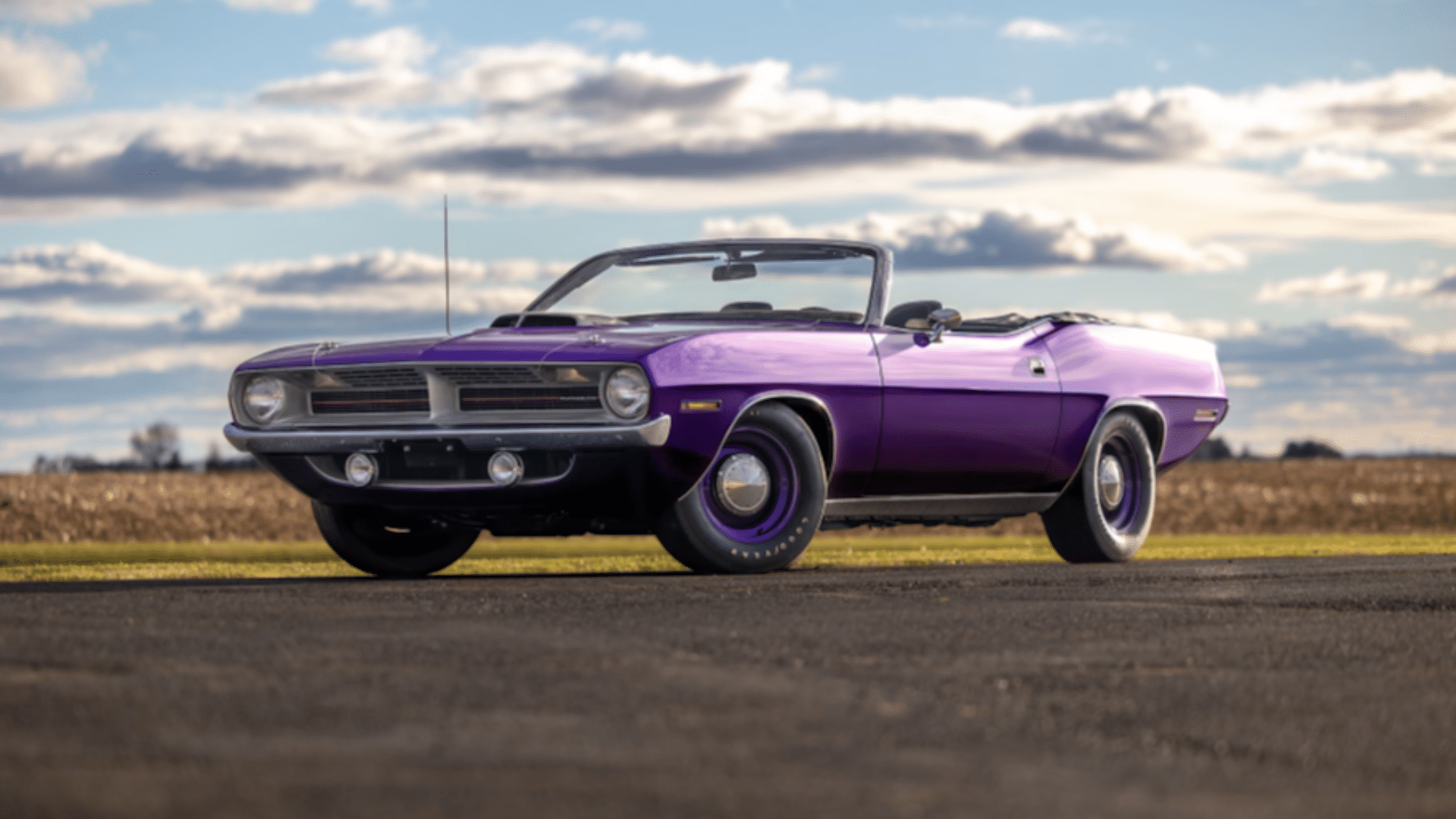
The same is true of the 1970 Plymouth Hemi Cuda Convertible, finished in In-Violet, Plymouth’s name for the shade Dodge marketed as Plum Crazy. It is one of only five Hemi four-speed convertibles produced for 1970. The combination of the 426 Hemi, a manual gearbox, an open body, and a period high-impact color is precisely the specification that defines the top of the Mopar market.
What Serious Buyers Should Watch
Cars like these demand a different kind of due diligence. Three points deserve attention before January.
- Documentation over description. Build records, factory invoices, broadcast sheets, and builder letters carry more weight than catalog language. The stronger the paper, the stronger the car.
- “Known to exist” is a census, not a production figure. Survivor counts reflect what the hobby has found so far. They are meaningful, but they are not the same as factory records, and buyers should understand which figure they are relying on.
- One-offs have no comparables. A ZL1 can be valued against decades of sales. A one-of-one Z28 convertible cannot. Price discovery for the exceptions will happen in the room, which makes the preview at MCACN unusually valuable for anyone planning to bid.
A one-of-one has no comparable sales. It has only its story, and the story is only as good as the paper behind it. As we noted when Paul Newman’s Mustang outsold a DB5 at Mecum Nashville, provenance often does more work in this market than specification ever could.
Why MCACN, and Why Now
Kissimmee opens the collector car calendar and tends to set the tone for the year. Placing the most important consignments in front of the MCACN audience two months earlier gives the hobby’s most exacting experts a chance to weigh in before the first bid. Mecum has highlighted eight of the 14 cars so far; the full lineup will be on display in Rosemont.
The real message of this display is not that these cars are rare. Plenty of cars are rare. It is that the rarest muscle cars are often not the ones the factory built least of, but the ones it never intended to build at all.
MCACN is open to the public Saturday, Nov. 21, from 9 a.m. to 8 p.m. and Sunday, Nov. 22, from 9 a.m. to 5 p.m. Event information is available at MCACN.com. Consignment details, descriptions, and photography for Mecum Kissimmee 2027 are available at Mecum.com or by calling (262) 275-5050.
Source: Mecum Auctions press release, Nov. 18, 2026. Historical production data for the 1969 Trans Am from Mecum Auctions catalog records.
The collector car market, every weekday morning.
Auction results, price moves and what’s crossing the block, read in four minutes. Free, from Modern Car Collector.
No spam, unsubscribe in one click. Or read more about the Brief.




 Eve Nowell