

Get the collector car market every weekday morning: sign up for the free Brief.
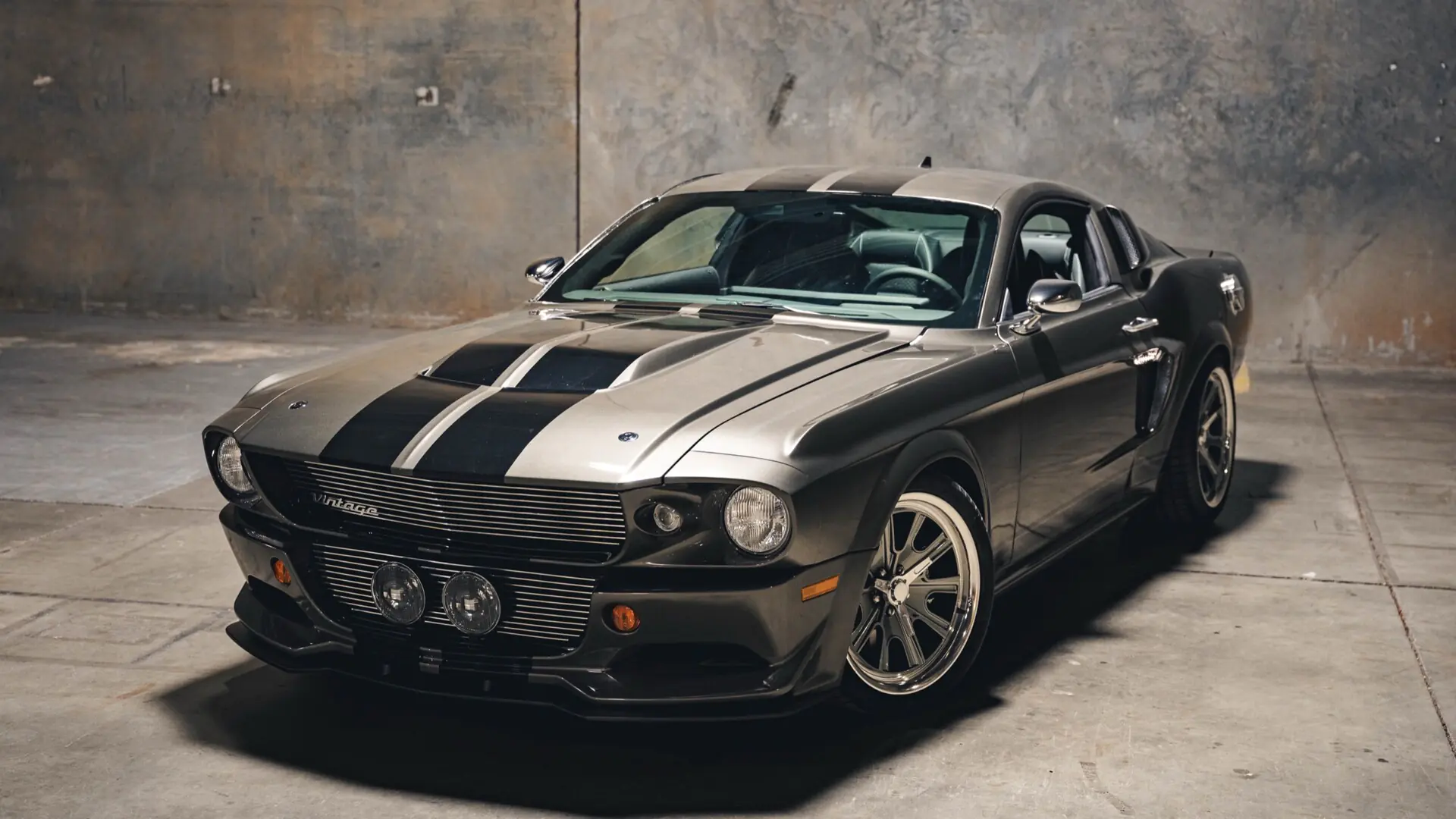
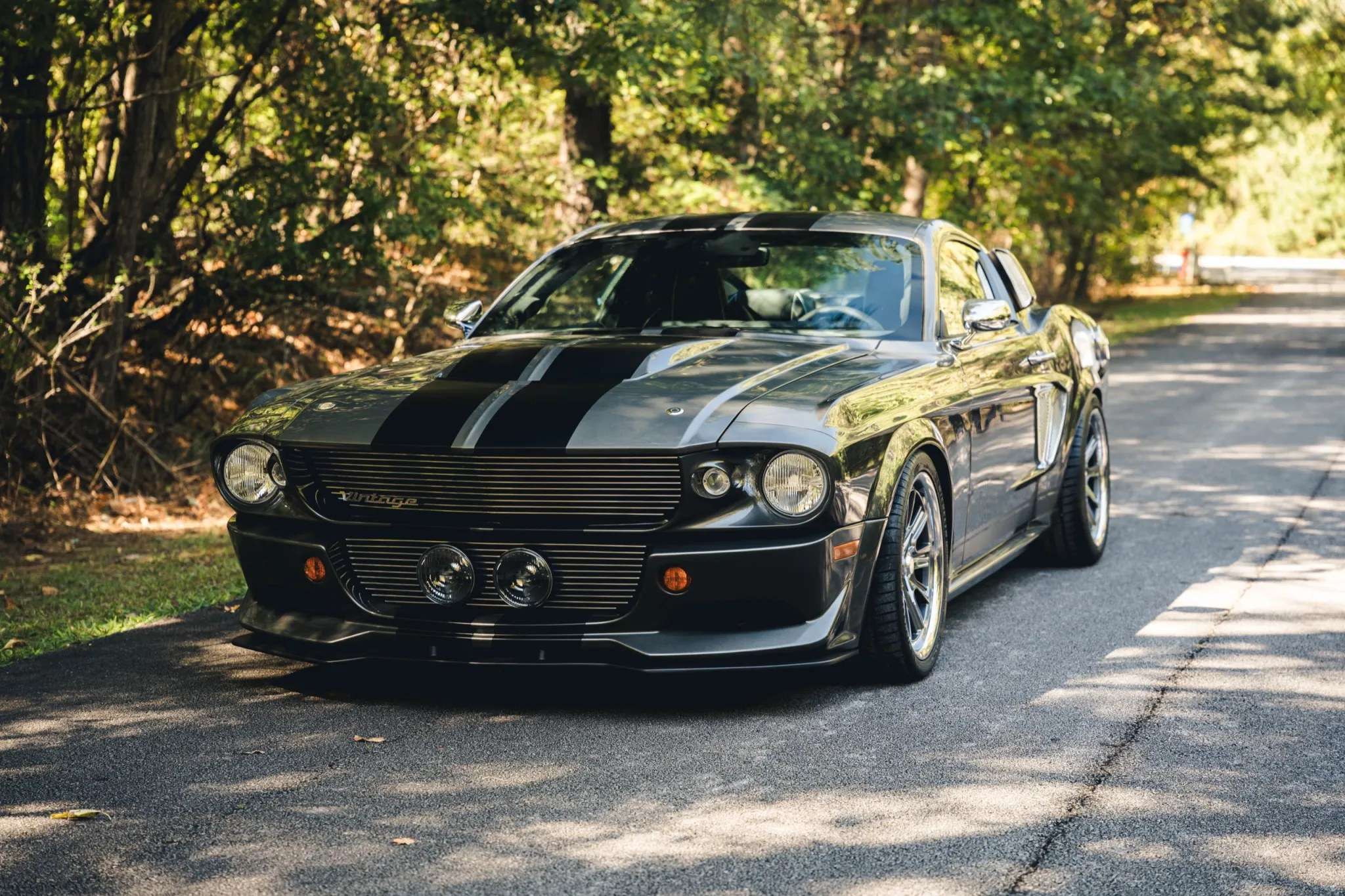
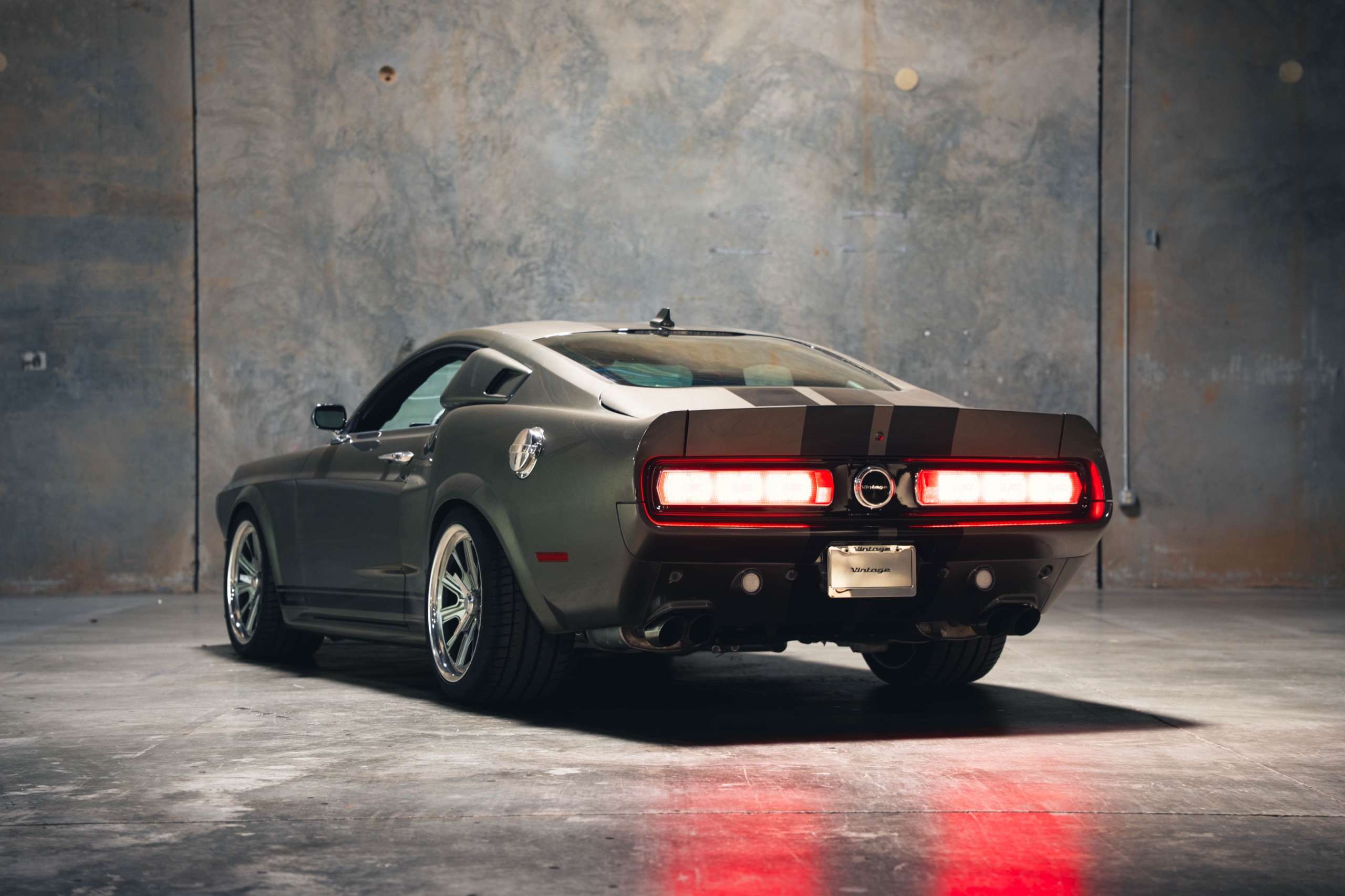
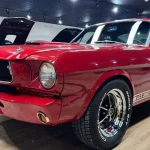
The most revealing thing about the car Vintage Modern brought to the Javits Center this week is a word that never appears in its announcement. The Atlanta builder’s new Vintage Modern Fastback, officially the Vintage Fastback, wears a gray body with black center stripes, a billet grille flanked by twin driving lights, sculpted side scoops and a full-width taillight bar. Nearly everyone who walks past it at Rétromobile New York will say the name. The company does not.
That silence is the story. In May 2025 the Ninth Circuit held in Carroll Shelby Licensing v. Halicki that Eleanor, the star car of Gone in 60 Seconds, is not a copyrightable character, and the Supreme Court declined to hear the appeal that November. As we noted when an officially licensed Eleanor tribute was consigned to Barrett-Jackson Scottsdale, the ruling changed what the word “official” is worth. The Vintage Fastback is the first well-funded, new-production response to that ruling, and it makes the point more plainly than any auction result could: once anyone may build the shape, the shape stops being the thing collectors pay for.
What the Vintage Modern Fastback Actually Is
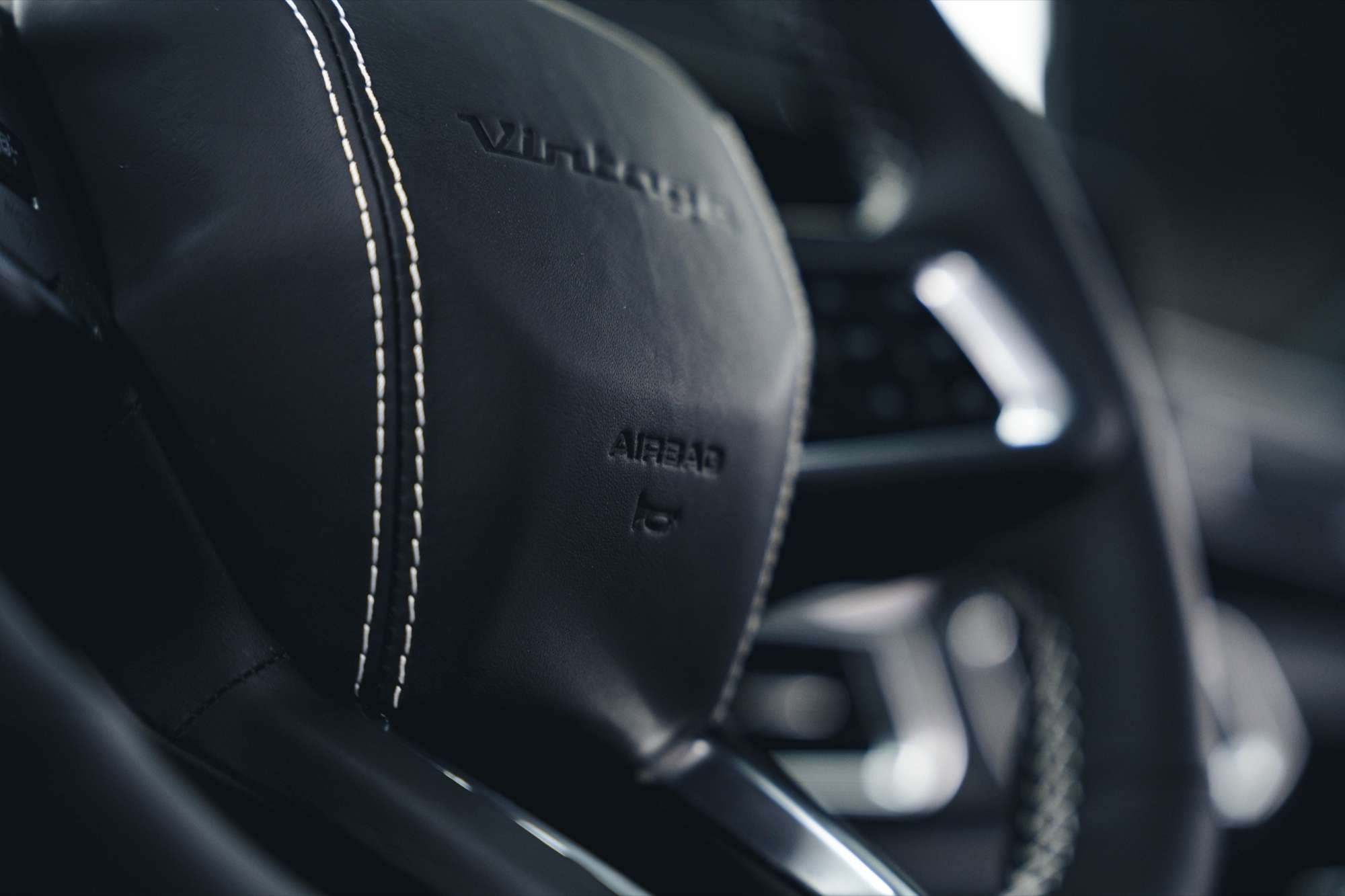
Vintage Modern made its name with the Modern Classic, a hand-built truck in the image of the early Bronco on a modern platform, and the company says more than 500 are now on the road. The Fastback applies the same method to the Mustang. Each car begins as a factory 2026–27 S650 Mustang GT. The donor’s safety structure stays in place, including eight airbags, crumple zones, side-impact beams, stability and traction control and anti-lock brakes. Carbon-fiber body panels are hand-laid in Detroit, then fitted and finished in Atlanta, and the company puts the labor at more than 900 hours per car.
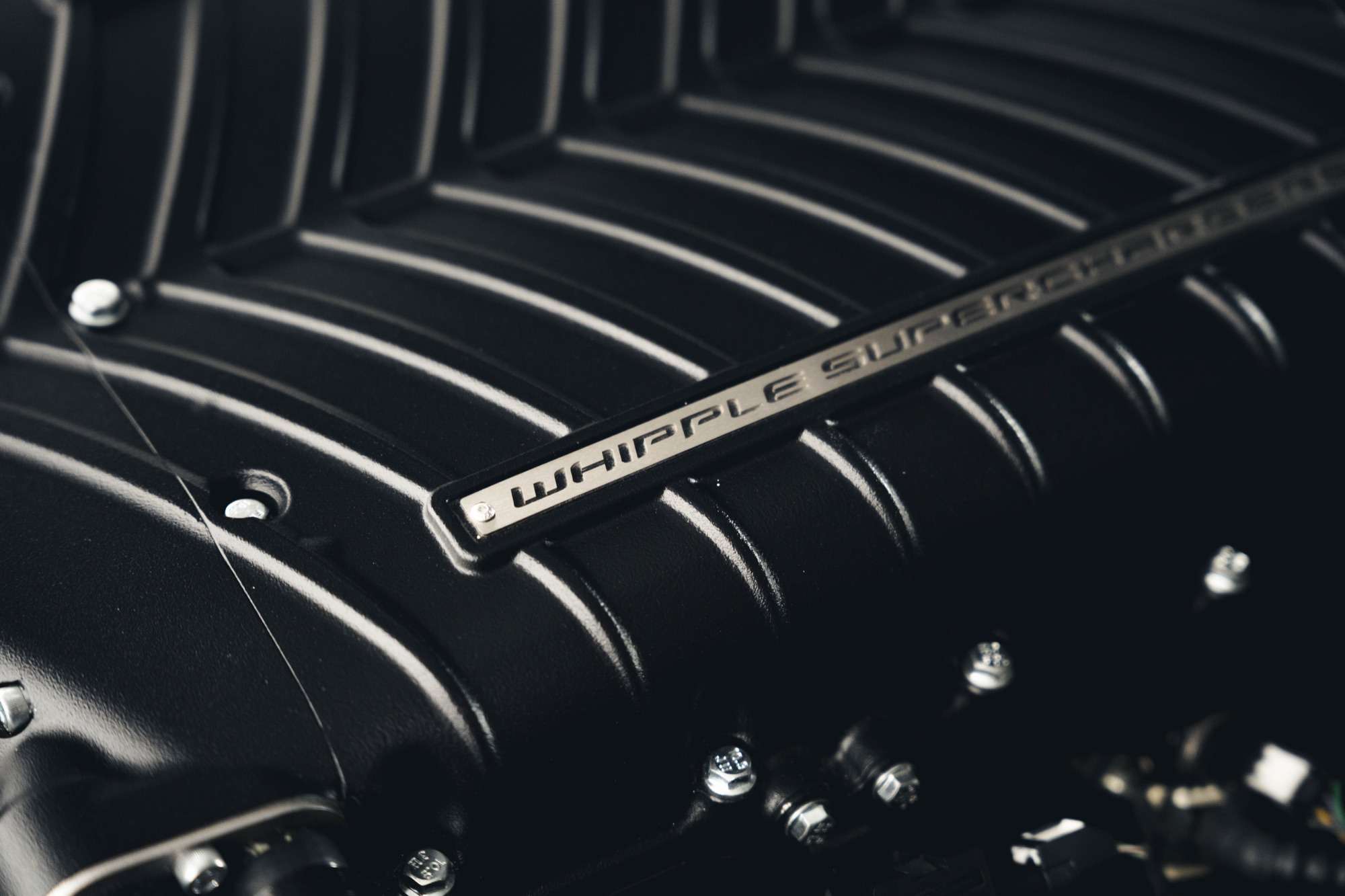
The standard engine is the 5.0-liter Coyote V8 at 486 hp and 418 lb-ft. An optional 3.0-liter Whipple supercharger raises that to 840 hp and 615 lb-ft on 93-octane fuel, both company figures. Buyers choose a six-speed manual with rev matching or the 10-speed automatic, and the car keeps MagneRide adaptive dampers, Brembo brakes and an active-valve exhaust. Inside, leather, Alcantara and billet aluminum come with three seat designs. More than 40 standard colors are offered alongside paint-to-sample, and pricing starts at $295,500.
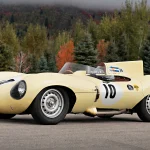
The car was previewed privately on November 18 before its public debut at Rétromobile New York, which runs through November 22 as the first American edition of the Paris salon. It shares the hall with blue-chip metal such as the D-type and alloy Gullwing headlining Gooding Christie’s New York sale. That contrast is useful. Few places make the difference between a car with a history and a car with a look easier to see.
A New Car Wearing an Old Silhouette
Collectors should be precise about what this is. A restomod in the traditional sense starts with a 1967 body, its identity and its title. However much is changed, a vintage car remains underneath. The Vintage Fastback reverses that order: a current car sits underneath a vintage outline. Vintage Modern makes the distinction itself, describing its approach as neither restoration nor restomod. For an owner who intends to drive, that is the honest choice. A modern crash structure and stability control are not things a 1967 shell can be made to offer, however good the build.
For a collector, it changes the question. A vintage-shell tribute ages with the classic market, for better or worse. The Fastback begins life as a new Mustang GT, and it will be judged as a new luxury car first. Scarcity is not the pitch either. Vintage Modern says it builds more than 250 vehicles a year and plans a factory three times the size of its current one. The limit on supply here is the build queue, not a numbered run. Compare Cinema Muscle Recreations’ licensed Eleanor: Gone Again series, capped at 25 cars built on factory 1967 fastbacks and reportedly starting near $500,000. One is selling a coachbuilt product. The other is selling a limited edition with paperwork.
We made a similar argument about the Michelotto Gruppo 4 Tributo: a builder can lend craftsmanship and even its own name to a new car, but it cannot lend history. The Vintage Fastback does not attempt to. That is to its credit, and it also defines its ceiling as a collectible.
Where the Pressure Lands
The Eleanor market has always been three markets sold under one name, and a credible $295,500 new build affects each one differently.
The screen cars are untouched, and arguably stronger. Cinema Vehicle Services built 11 cars for the 2000 film, to a design by Steve Stanford. The principal hero car sold for $1 million at Mecum’s Indianapolis sale in 2013, and another screen-used car brought $852,500 at Kissimmee in 2020. No carbon body can manufacture that provenance. If anything, every additional Eleanor-shaped car on the road puts more weight on the handful that were actually in the film. Abundance has always been the friend of provenance.
Licensed and continuation cars face the sharpest question. Their premium has been permission: the license, the certificate, the right to the name. Since the ruling, permission is a feature, not a moat. A buyer can now spend $295,500 on modern engineering without the name, or pay more for a vintage-shell car with the paperwork. The Fastback does not set the price of that paperwork, but it gives the middle of the market a reference point it did not have. That is why the no-reserve licensed car at Scottsdale in January will be worth watching closely.
Unlicensed vintage-shell tributes are the most exposed. Their buyers are mostly drivers, and the Fastback offers that buyer what a 1967 body cannot: airbags, a crumple structure and a factory drivetrain. Their defense is a genuine early fastback body and title. Well-documented builds on solid original shells should hold their ground. Middling ones now compete with a new car.
Why the Name Still Matters
The Ninth Circuit answered a copyright question. It also read the 2009 settlement between Shelby and Halicki narrowly, holding that it restricts Shelby only from two Eleanor design elements: the raised hood hump and the specific inset dual headlights. Halicki’s side still holds merchandising rights to Eleanor as she appears in the 2000 remake, and licensed builders continue to sell under the name. A builder that wants no ambiguity at all leaves the word off the car, and Vintage Modern has.
For collectors, the result is a cleaner market than the one that existed before the ruling. The shape is now effectively public. The name and the license belong to licensed builders. The history belongs to the film cars. These used to be sold as a single bundle, and buyers paid one price without asking which part they were paying for. They will have to ask now.
What Serious Buyers Should Watch
Crash testing and compliance. Vintage Modern says the Fastback will undergo physical crash testing and meet applicable Federal Motor Vehicle Safety Standards. Both are stated in the future tense. Because safety is central to the pitch, a buyer should ask for the results before taking delivery.
The body. Hand-laid carbon panels are the most expensive and least familiar part of the car. Ask about replacement-panel supply, approved repair facilities and how an insurer will value the car. Agreed-value coverage matters more here than on the donor Mustang.
Documentation. These cars are commissioned individually, with 16 configuration steps and dozens of colors. Keep the build sheet, the specification and the delivery records. A future buyer will want to know exactly how each car was ordered, and that record is the closest thing the Fastback will have to provenance.
Resale evidence. Modern-platform reinterpretations have a short public auction record compared with vintage-shell builds. Until that record grows, the sensible approach is to buy the Fastback as a luxury car you intend to use, not as a store of value.
The Real Number
The headline figure is $295,500. The more important number is what it now costs, legally, to use the Eleanor shape, and that number is effectively zero. When reproduction is free, value retreats to what cannot be reproduced: a screen car’s history, an original body’s identity, a license’s paperwork. The Vintage Fastback is not an Eleanor and does not claim to be. It may still be the clearest evidence yet that Eleanor’s value was never in the shape.
For the broader Mustang picture, our analysis of softening early Mustang GT values explains why popularity and scarcity are not the same thing, and the ten most expensive Mustangs sold at auction shows which kinds of history the market rewards most. For the trucks Vintage Modern built its business on, see our comparison of the Scout II, K5 Blazer and early Bronco.
Photos, specifications and company figures: Vintage Modern press release and Vintage Fastback specifications. Court decision: U.S. Court of Appeals for the Ninth Circuit, Carroll Shelby Licensing v. Halicki. Event: Rétromobile New York.
The collector car market, every weekday morning.
Auction results, price moves and what’s crossing the block, read in four minutes. Free, from Modern Car Collector.
No spam, unsubscribe in one click. Or read more about the Brief.

 Kyle Matthews