

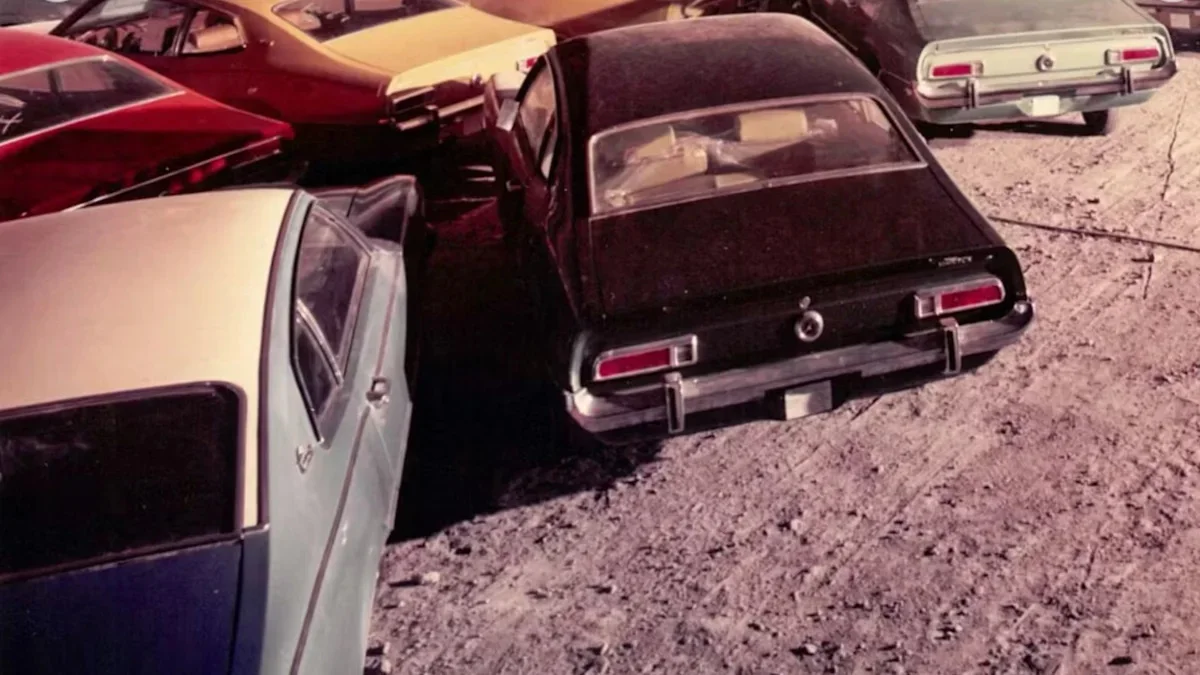
Somewhere beneath Kansas City, in total darkness, sits one of the strangest untold stories in American car history. During the 1970s, Ford didn’t discount its way out of a surplus of unsold Mavericks, and it didn’t scrap the extras either. It drove them into a limestone mine and left them there, sometimes for months, while executives figured out what to do next. This wasn’t a rumor whispered at car shows. It happened, and it reveals exactly how far a major automaker will go to avoid admitting it built too many cars.
A Compact Car That Ran Into Bad Timing
The Maverick arrived in 1970 as Ford’s answer to a shifting market: buyers wanted something smaller, cheaper to run, and easier on gas than the land-yacht sedans dominating American driveways. Early sales backed up the bet, and Ford ramped up production to match. Then consumer appetite shifted again, the way it always does, and by the middle of the decade Ford had built far more Mavericks than dealers could move. Lots filled up fast, and storage became a real problem instead of a hypothetical one.
Why a Limestone Mine Beat a Parking Lot
SubTropolis, the underground complex carved out beneath Kansas City, wasn’t some abandoned hideout. It was already part of Ford’s supply chain, used to store parts for nearby plants, with naturally stable temperatures and none of the overhead a climate-controlled surface warehouse would demand. Rolling unsold Mavericks into the mine kept them dry, out of sight, and off dealer lots, all without forcing Ford to make a single permanent decision about what to do with them.
It’s a theme collectors run into more often than you’d think: vehicles disappear from view for years, sometimes decades, and resurface later with a story nobody expected. The Mercedes-Benz 450SEL 6.9 that spent twenty years tucked away before a full recommissioning is a recent reminder of how much can happen to a car in the dark before the world sees it again.
This Was Never Just Storage
Call it inventory management if you want a polite term, but what Ford was actually doing was protecting the Maverick’s value by keeping the surplus invisible. Dumping thousands of cars onto the market at once, or slashing prices to move them, would have signaled weakness to buyers, dealers, and competitors alike. Hiding the excess underground let Ford drip cars back into circulation on its own schedule instead of reacting to a crisis everyone could see.
Collectors already understand how much a car’s condition and history affect what it’s worth decades later. Just look at how a 3,062-mile Ford F-250 Harley-Davidson Edition draws attention today largely because it was barely touched. Ford’s Maverick gamble in the 1970s was the industry-scale version of the same idea: control the story, and the value takes care of itself.
Overproduction Is Detroit’s Oldest Secret
Automakers build to forecasts, and forecasts are wrong more often than anyone likes to admit. When demand falls faster than an assembly line can adjust, the cars keep coming anyway, and someone has to deal with the overflow. Historically that meant fleet sales, rental companies, panic discounts, or the scrapyard. Ford’s Kansas City arrangement gave it a fifth option nobody else was using at that scale, and it says something about how creative a company gets when the alternative is admitting a mistake in public.
Ford’s back catalog is full of reminders that the brand has weathered plenty of rough patches before. A 1931 Ford Model A Budd Cab and a 1934 Ford Cabriolet Street Rod both represent eras when Ford had to adapt fast or get left behind, long before the Maverick ever became a headache.
Where Did All Those Buried Mavericks Go?
The full paper trail on what happened to every stored Maverick doesn’t survive in any tidy public record. Some were almost certainly redistributed once regional demand caught up. Others may have moved through channels Ford never advertised. What’s clear is that the company avoided a very public inventory collapse, and an underground mine in Missouri did a lot of the heavy lifting to make that happen.
It’s a strange footnote for a car that was supposed to be the practical, no-drama choice. Fifty years later, the Maverick’s real legacy might not be the car itself, but the lengths Detroit was willing to go to protect appearances. That’s a lesson worth remembering the next time an automaker insists a slowdown is nothing to worry about.
The collector car market, every weekday morning.
Auction results, price moves and what’s crossing the block, read in four minutes. Free, from Modern Car Collector.
No spam, unsubscribe in one click. Or read more about the Brief.




 Kyle Matthews
  John Lloyd